Skip to content
Polyester has become the most dominant textile fiber in the modern world—used in everything from T-shirts and upholstery to car seat belts and packaging films. Behind its sleek, wrinkle-free comfort lies a complex chemistry of petrochemical origin, energy-intensive production, and an evolving debate about sustainability. In 2024 alone, polyester accounted for over 54% of global fiber output, yet less than 15% was truly recycled, raising serious questions about circularity. Polyester is a synthetic fiber made primarily from petroleum-derived compounds—most commonly polyethylene terephthalate (PET). Its recyclability depends on polymer purity, additive content, and whether it’s processed through mechanical (rPET) or chemical recycling systems. Sustainable grades and cleaner production methods can improve recyclability ratings for brands seeking circular textile solutions.
And yet, polyester’s story is not one of guilt—it’s one of innovation versus inertia. From lab-born fibers of the 1940s to today’s advanced recycled and bio-based variants, polyester continues to reinvent itself. But whether it becomes part of a circular future—or remains a fossil-fuel relic—depends on how brands specify, source, and recycle it.
What Raw Materials and Chemical Processes Are Used to Make Polyester (PET, PBT, and Specialty Variants)?
Polyester is not a single compound but an entire family of synthetic polymers linked by the ester functional group (–COO–). Among them, polyethylene terephthalate (PET) dominates—used in apparel fibers, films, and beverage bottles. Other structural cousins such as polybutylene terephthalate (PBT), polytrimethylene terephthalate (PTT), and specialty co-polyesters broaden the performance window from flexible textiles to high-heat engineering plastics.
At its core, polyester production is a polycondensation process—an engineered reaction that bonds organic acids and glycols under controlled heat, vacuum, and catalysis to form long, repeating molecular chains. Polyester—chiefly PET—is produced by reacting purified terephthalic acid (PTA) with ethylene glycol (EG) under heat and catalysts, forming strong ester linkages. Variants such as PBT, PTT, and copolyesters adjust these monomers to yield greater stretch, softness, or thermal resistance for applications from apparel to automotive parts.
1.1 The Molecular Backbone: Why the Ester Bond Matters
Every polyester shares a repeating ester linkage (–CO–O–) connecting an acid and an alcohol segment. This simple bond imparts the key traits that make polyester fabrics strong, wrinkle-resistant, and dimensionally stable. By altering the carbon-chain length or branching of the monomers, engineers tune crystallinity, flexibility, and melt behavior.
| Polyester Type | Monomer Composition | Characteristic Property | Common Applications |
|---|---|---|---|
| PET (Polyethylene Terephthalate) | PTA + Ethylene Glycol | High tensile strength, low moisture uptake | Apparel, bottles, films |
| PBT (Polybutylene Terephthalate) | PTA + 1,4-Butanediol | Higher flexibility and faster crystallization | Automotive connectors, electrical housings |
| PTT (Polytrimethylene Terephthalate) | PTA + 1,3-Propanediol | Soft hand, elastic recovery | Carpets, stretchwear, upholstery |
| CPE (Copolyester) | PTA + IPA + multiple diols | Heat resistance + impact toughness | High-barrier films, laminates |
| Bio-PET | PTA + Bio-based EG (from sugarcane) | Partial renewable content | Eco fabrics, beverage bottles |
The difference of just one carbon atom in the diol can alter melt temperature by 30 °C and elongation by several hundred percent—demonstrating the precision chemistry behind each variant.
1.2 Raw-Material Feedstocks
- Terephthalic acid (PTA): Derived from p-xylene oxidation using cobalt–manganese catalysts; provides rigidity and thermal stability.
- Ethylene glycol (EG): Obtained from ethylene oxide hydration; determines chain flexibility.
- Alternative diols (BDO, PDO): Introduced to create PBT or PTT for softer or more elastic materials.
- Catalysts: Antimony trioxide (Sb₂O₃) or titanium butoxide accelerate condensation while controlling color and molecular weight.
One metric ton of PET requires roughly 0.86 t of PTA and 0.34 t of EG, consuming about 23 GJ of energy—numbers that guide cost modeling and sustainability audits.
1.3 The Manufacturing Process
- Esterification / Transesterification
- PTA + EG → BHET (bis-hydroxyethyl terephthalate).
- If dimethyl terephthalate (DMT) is used instead, methanol is released instead of water.
- Polycondensation
- BHET is polymerized under vacuum (270–280 °C) to remove EG and extend chain length.
- The resulting polymer melt reaches intrinsic viscosity ≈ 0.62–0.85 dL/g for textile grade and up to 1.0 for bottle grade.
- Chip Formation & Spinning
- Melt extruded into strands, cooled, and pelletized into chips.
- Chips are dried (≤ 30 ppm moisture) and melted again for melt spinning, drawing, and texturizing.
| Step | Operating Temp (°C) | Pressure (kPa) | Key Output |
|---|---|---|---|
| Esterification | 240–260 | 100–200 (atm) | BHET oligomer |
| Polycondensation | 270–280 | < 50 (vacuum) | PET polymer |
| Melt Spinning | 285–300 | atmospheric | Filament or chip |
1.4 Material Performance and Variant Behavior
| Property | PET | PBT | PTT | Unit / Test |
|---|---|---|---|---|
| Melting Point | 255 °C | 225 °C | 228 °C | DSC (ISO 11357) |
| Tensile Strength | 55–70 MPa | 50–60 MPa | 45–55 MPa | ISO 527 |
| Elongation at Break | 15–25 % | 100–300 % | 200–400 % | ISO 527 |
| Moisture Regain | < 0.5 % | < 0.4 % | < 0.6 % | ASTM D2654 |
| Density | 1.38 g cm⁻³ | 1.31 g cm⁻³ | 1.33 g cm⁻³ | ASTM D792 |
PET’s tight molecular packing yields high modulus but low elasticity. PBT and PTT soften the chain structure, allowing better bending fatigue resistance—ideal for fibers exposed to repetitive motion or stretching.
1.5 Real-World Example — Industrial PET Filament Yarn
At SzoneierFabrics, continuous polymerization lines convert PTA and EG directly into 150D / 48F bright polyester filament yarn. After spin-drawing and texturizing:
- Tenacity: ≥ 5.8 cN/dtex
- Elongation: 18–22 %
- Boil-shrinkage: ≤ 6 %
- Moisture regain: 0.4 %
These parameters meet or exceed ISO 2062 textile-filament standards and serve as the base for 300D–600D Oxford and ripstop nylons used in luggage and outdoor gear.
1.6 Process Control and Catalyst Optimization
Modern PET plants employ titanium-based catalysts to avoid the yellowing caused by antimony compounds. Process control focuses on:
- Intrinsic viscosity (IV): Governs fiber drawability.
- Degree of crystallinity: 35–45 % ideal for fiber; higher values reduce dyeability.
- Carboxyl end groups (CEG): Kept < 25 eq/10⁶ g to ensure hydrolysis resistance.
For specialty fibers, copolymerization with isophthalic acid or cyclohexane dimethanol disrupts crystallinity, producing softer, dye-receptive yarns.
1.7 Environmental Footprint and Circular Alternatives
Virgin PET production emits 4–6 t CO₂ per ton of polymer, largely from paraxylene oxidation and steam heating. To curb this footprint, the industry is pivoting toward:
| Initiative | Technology | CO₂ Reduction vs. Virgin | Note |
|---|---|---|---|
| rPET (Recycled PET) | Mechanical bottle-flake re-extrusion | −45 % | Most commercial method |
| Chemically Recycled PET | Glycolysis / methanolysis to BHET or DMT | −60 % | Enables infinite recyclability |
| Bio-PET | Bio-ethylene glycol (30 % renewable) | −20 % | Coca-Cola PlantBottle technology |
| Full Bio-Polyester (R&D) | Bio-PTA + bio-EG via sugar fermentation | −80 % potential | Pilot stage only |
SzoneierFabrics integrates GRS-certified rPET yarns in its eco-fabric line, achieving traceable lot certification and maintaining mechanical parity with virgin PET.
1.8 Comparison: Polyester vs. Nylon Chemistry
While nylon (polyamide) contains amide linkages that absorb water, polyester’s ester bonds resist hydrolysis, giving it superior dimensional stability and faster drying. However, nylon’s amide hydrogen bonding provides better toughness and dye affinity. Thus, polyester dominates outdoor and home-textile markets for its weather resistance, whereas nylon leads in industrial webbing and gear requiring impact energy absorption.
1.9 Fossil Dependency and Recycling Barriers
Despite improvements, 99 % of global PET still depends on fossil PTA. Bio-based EG addresses only one-third of the carbon footprint. The bottleneck remains bio-paraxylene, whose commercial output represents < 1 % of global demand due to high conversion costs and limited catalytic efficiency. Until fully renewable PTA becomes mainstream, mechanical and chemical recycling will remain the primary sustainability levers.
1.10 Future Directions
- Enzymatic Depolymerization: Emerging PETase-based enzymes can hydrolyze PET back into monomers under mild conditions—potential circularity with minimal energy input.
- Nanocatalyst Systems: Titanium and zinc-based catalysts reduce polymerization energy by 15 %.
- Copolyester Engineering: Blending PET with bio-succinate or furan dicarboxylate (PEF) could yield superior barrier properties and lower greenhouse emissions.
The near-term trajectory is clear: polyester’s future lies in closed-loop, low-carbon chemistry, not just mechanical performance.
1.11 From Monomer to Modern Material
Polyester’s success is rooted in chemistry—an elegantly simple reaction of PTA and EG scaled to industrial magnitude. Through decades of refinement, these long-chain esters have become the backbone of global textiles, combining mechanical stability, color vibrancy, and process economy.
Yet as sustainability takes center stage, the next revolution will come not from new fibers but from greener monomer pathways and smarter recycling. From SzoneierFabrics’ melt-spun PET filaments to next-generation rPET systems, polyester continues to evolve—linking molecular precision with industrial resilience for the fabrics and components that define modern life.
Which Manufacturing Methods—Virgin Polymerization vs. Mechanical or Chemical Recycling—Define Polyester’s Environmental Footprint?
Not all polyester is created equal. The way it is manufactured—from virgin petrochemical feedstocks or from recovered waste—determines its carbon intensity, recyclability, and overall environmental legitimacy. For textile buyers and sustainability officers, understanding these manufacturing routes is no longer optional: it defines compliance with ESG frameworks, carbon-accounting protocols, and brand traceability standards. Virgin polyester originates from petrochemical polymerization, while recycled polyester (rPET) is derived from bottles or textile waste through mechanical or chemical recycling. Mechanical recycling is cost-efficient but limits quality; chemical recycling restores polymer purity for genuine circularity.
2.1 Virgin Polymerization—The Baseline Footprint
Virgin polyester (commonly PET) begins with purified terephthalic acid (PTA) and ethylene glycol (EG), both derived from crude oil or natural gas.
- Feedstock origin: Petro-based paraxylene → PTA; ethylene oxide → EG
- Process: PTA + EG → BHET → polycondensation → melt spinning
- Energy intensity: ~80–90 MJ per kg fiber
- CO₂ emissions: 5–6 kg CO₂ per kg fiber
| Metric | Virgin PET | Global Benchmark |
|---|---|---|
| Primary energy use | 85 MJ kg⁻¹ | Higg MSI Index: 83 MJ kg⁻¹ |
| Water consumption | 50–60 L kg⁻¹ | — |
| Process loss | < 3 % | Modern CP lines |
| Typical cost | 1.1–1.4 USD kg⁻¹ | Asia Q2 2025 average |
Pros: Uniform polymer chain length, high strength, and consistent dyeability. Cons: Full fossil dependency, high energy load, and limited circular potential.
In practice, virgin PET remains dominant—over 55 million tons (≈ 78 % of global polyester output)—but its carbon cost has made recycled alternatives the strategic choice for forward-looking brands.
2.2 Mechanical Recycling (rPET) — The Workhorse of Sustainability
Mechanical recycling reprocesses post-consumer PET bottles or clean textile scraps through collection, sorting, washing, shredding, and re-melting into pellets or filament yarn.
| Stage | Description | Energy Use (MJ kg⁻¹) | CO₂ Emission (kg CO₂ kg⁻¹) |
|---|---|---|---|
| Collection & Sorting | Baled bottles | 5–10 | 0.3 |
| Washing & Flaking | Hot wash + grinding | 10–15 | 0.7 |
| Pelletizing / Extrusion | Melt filtration + solid-state polymerization | 15–25 | 0.8 |
| Total | — | 35–45 | 1.8–2.2 |
Compared with virgin production, mechanical rPET saves ≈ 60–70 % CO₂ and ≈ 50 % energy. Yet, thermal degradation during repeated melting shortens molecular chains, lowering intrinsic viscosity (IV) and thus tensile strength. To offset this, producers add chain extenders or blend with virgin chips (typically 20–30 %) to restore fiber spinnability.
Advantages: Lowest carbon footprint, scalable bottle feedstock, cost ≈ 1.2–1.6 USD kg⁻¹. Limitations: Quality variance, color contamination, and down-cycling after multiple loops.
2.3 Chemical Recycling — Closing the Molecular Loop
Chemical recycling breaks PET back into its original monomers (PTA + EG), enabling infinite re-polymerization into virgin-grade resin.
| Technology | Reaction Principle | Output Purity | Energy Demand (MJ kg⁻¹) |
|---|---|---|---|
| Glycolysis | PET + excess EG → BHET | 95–98 % | 55–60 |
| Methanolysis | PET + MeOH → DMT + EG | 98–99 % | 60–70 |
| Hydrolysis | PET + H₂O → PTA + EG | 99 % | 65–75 |
| Enzymatic Depolymerization | PETase + MHETase → PTA + EG | 98 % (lab scale) | < 50 projected |
| Attribute | Virgin PET | Mechanical rPET | Chemical rPET |
|---|---|---|---|
| Fiber Quality | Excellent | Moderate | Excellent |
| Energy Demand | High | Low | Moderate–High |
| CO₂ Emission (kg kg⁻¹) | 5.5 | 2.0 | 3.2 |
| Recyclability Cycles | Infinite if reprocessed | 1–2 times | Unlimited |
| Feedstock Purity Need | High | Moderate | Low |
Example: In 2023 Carbios (France) proved enzymatic depolymerization could recycle 97 % of PET in 16 hours at 70 °C, yielding monomers indistinguishable from virgin resin—a technological milestone toward truly circular polyester.
2.4 Real-World Implementation — SzoneierFabrics rPET Program
SzoneierFabrics integrates GRS-certified mechanical rPET chips into its yarn lines:
- Feedstock: Post-consumer beverage bottles
- Steps: Hot wash → flake extrusion → solid-state polymerization (SSP)
- Restored IV: ≥ 0.65 dL g⁻¹
- Yarn specs: Tenacity ≥ 5.5 cN dtex, Elongation 18–20 %, Boil-shrinkage ≤ 6 %
These properties meet ISO 2062 standards, allowing direct substitution for 300D or 600D Oxford fabrics used in luggage, apparel, and upholstery. Traceability is ensured via batch QR tracking from bottle collection to yarn spooling, reinforcing buyer confidence for ESG audits.
2.5 Energy–Purity Trade-Off
Mechanical recycling scores best for energy efficiency yet requires clean, single-stream PET. Chemical recycling handles mixed or contaminated fibers, but its higher energy use (≈ 60 MJ kg⁻¹) and solvent recovery cost delay broad adoption. The future will depend on hybrid models:
- Mechanical → primary loop for bottle-grade PET
- Chemical → secondary loop for textile waste and colored materials
This dual-system could expand global recycling capacity from 15 % (2024) to 45 % by 2030, according to Textile Exchange forecasts.
2.6 Life-Cycle Assessment (LCA) Comparison
| Indicator | Virgin PET | Mechanical rPET | Chemical rPET | Reduction vs Virgin |
|---|---|---|---|---|
| Energy Use (MJ kg⁻¹) | 85 | 40 | 60 | −53 % / −29 % |
| CO₂ Emission (kg kg⁻¹) | 5.5 | 2.0 | 3.2 | −64 % / −42 % |
| Water Use (L kg⁻¹) | 55 | 20 | 30 | −64 % / −45 % |
| Solid Waste (g kg⁻¹) | 80 | 25 | 30 | — |
| Recycling Loops | 0 | 2 | ∞ | — |
Source: Higg MSI 2024 & SzoneierFabrics internal LCA benchmark.
2.7 Certification and Compliance Framework
To validate recycled content and environmental performance, reputable mills operate under multiple certifications:
| Certification | Focus | Relevance |
|---|---|---|
| GRS (Global Recycled Standard) | Verifies recycled input ≥ 20 %, traceability across chain | Required by global brands |
| OEKO-TEX® STANDARD 100 | Chemical-safety testing | Confirms non-toxicity of rPET yarns |
| ISO 14001 | Environmental-management system | Ensures controlled waste and emissions |
| Higg FEM / FSLM | Factory-level sustainability metrics | Benchmark for brand scoring |
| LCA Verification (ISO 14040) | Third-party carbon audit | Quantifies true impact reduction |
SzoneierFabrics maintains these frameworks, providing full documentation packages to brand clients during compliance audits.
2.8 Economic and Supply-Chain Factors
| Factor | Virgin PET | rPET (Mechanical) | rPET (Chemical) |
|---|---|---|---|
| Feedstock Price Volatility | High (oil linked) | Moderate | Moderate |
| Capital Cost (Plant USD m per 100 kt) | 90–110 | 40–50 | 120–150 |
| Quality Consistency | Excellent | Medium | Excellent |
| Global Output Share (2024 est.) | 78 % | 20 % | 2 % |
| Expected Share 2030 | 55 % | 35 % | 10 % |
Brand-driven sustainability pledges—from Adidas and Inditex to Patagonia—are accelerating demand for rPET yarns. Analysts project the rPET fiber market to exceed USD 15 billion by 2030, growing > 8 % CAGR.
2.9 Hybrid Sourcing for Circular Textiles
A European outdoor-gear company collaborated with SzoneierFabrics to create a 600D rPET Oxford using 70 % mechanically recycled bottle flakes blended with 30 % chemically recycled polymer. Results:
- CO₂ emissions cut by 62 % vs. virgin PET
- Hydrostatic resistance 3 000 mm H₂O
- Tensile strength > 700 N warp / 600 N weft
- Color deviation ΔE < 1.0
This hybrid model achieved near-virgin performance while passing OEKO-TEX and GRS certifications, proving scalability for mainstream retail.
2.10 Closing the Loop Beyond Bottles
The next frontier is textile-to-textile recycling. While bottle-to-fiber infrastructure is mature, blended fabrics (polyester + cotton) remain problematic. Emerging separation technologies—like CIRC hydrothermal depolymerization and Gr3n microwave glycolysis—promise to reclaim pure PET from mixed waste without fiber damage.
SzoneierFabrics participates in pilot programs combining rPET feedstock sorting AI with enzymatic depolymerization, targeting 100 % closed-loop fabric recycling by 2028.
2.11 Engineering Circular Polyester at Scale
Polyester’s sustainability story is fundamentally a chemistry and systems challenge. Virgin polymerization delivers volume and consistency but carries the heaviest carbon load. Mechanical recycling offers speed and affordability, while chemical recycling delivers purity and circularity.
The optimal path forward is integration, where virgin, mechanical, and chemical streams coexist—each assigned to the most efficient waste tier. As SzoneierFabrics demonstrates through its rPET program, circular manufacturing is not a concept but a measurable supply-chain discipline: traceable inputs, verified outputs, and quantifiable carbon savings.
The future of polyester will not be judged by how it’s spun, but by how many times it can be spun again—without losing quality or the planet in the process.
How Do Polyester’s Molecular Structure and Additives Affect Recyclability and Fiber Degradation Over Time?

Polyester’s recyclability hinges on molecular stability and cleanliness. Every stage of the recycling process—from collection to remelting—exposes polymer chains to thermal, hydrolytic, and oxidative stress, shortening chain length and altering crystallinity. Additives, coatings, and dyes further complicate reprocessing by introducing contaminants that interfere with polymerization or alter viscosity.
Thus, the future of sustainable polyester depends not just on post-consumer collection but on molecular engineering and additive control that preserve chain integrity for multiple life cycles. Polyester recyclability depends on polymer chain length, crystallinity, and additive composition. Chain scission and dye or coating residues reduce recycled fiber quality. Solid-state polymerization, chain extenders, and cleaner dyeing improve stability, extending polyester’s circular lifespan.
3.1 Molecular Degradation and Intrinsic Viscosity (IV) Loss
At the heart of polyester degradation lies chain scission—the breaking of ester bonds under heat, moisture, or shear. Each melting or extrusion cycle shortens the polymer chains, lowering molecular weight and intrinsic viscosity (IV)—a key indicator of melt strength and fiber spinnability.
| Property | Virgin PET | After 1 Recycle | After 3 Recycles |
|---|---|---|---|
| Intrinsic Viscosity (dL g⁻¹) | 0.68 | 0.62 | 0.55 |
| Tenacity (cN dtex⁻¹) | 6.0 | 5.5 | 4.7 |
| Elongation at Break (%) | 22 | 20 | 16 |
Source: Journal of Applied Polymer Science, 2023
Once IV drops below 0.55, polyester becomes brittle and unsuitable for textile spinning. This is why high-end rPET manufacturers incorporate chain extenders or perform solid-state polymerization (SSP) to rebuild molecular length before filament extrusion.
Key degradation mechanisms:
- Thermal oxidation: Chain scission via reaction with oxygen radicals.
- Hydrolysis: Ester bond cleavage due to residual moisture at high temperatures.
- Mechanical shear: Polymer entanglement breakdown during extrusion.
Together, these reactions cause a cumulative 20–30 % loss in mechanical strength after three reprocessing cycles without stabilization.
3.2 The Role of Crystallinity
Polyester’s semi-crystalline structure (typically 35–45 %) provides mechanical rigidity and dimensional stability. However, in recycling, high crystallinity can slow depolymerization or melt flow, while low crystallinity increases hydrolytic sensitivity.
| Parameter | Amorphous PET | Semi-Crystalline PET |
|---|---|---|
| Glass Transition (Tg, °C) | 70 | 80 |
| Melting Point (Tm, °C) | 245 | 255 |
| Moisture Uptake (%) | 0.6 | 0.4 |
| Recyclability | Easier to remelt | More stable in service |
Balancing crystallinity during SSP (via controlled heating at 200–220 °C) ensures both processability and strength retention in recycled polyester.
3.3 Additives and Coatings That Impact Recycling
Polyester fabrics rarely exist in “pure” form. They are finished with dyes, coatings, or performance chemicals that enhance aesthetics or function—but these same additives complicate recycling.
| Additive Type | Function | Recycling Challenge |
|---|---|---|
| Disperse Dyes & Pigments | Coloration | Impede depolymerization and contaminate recycled monomer streams |
| Flame Retardants (Br, P-based) | Fire safety | Leave toxic residues, create brominated char |
| Softeners & Silicone Finishes | Improved handfeel | Form gel or vapor residues in melt |
| PU / TPU Coatings | Waterproofing | Incompatible with PET melt; cause yellowing |
| Spandex / Elastane Blends | Stretchability | Decompose at lower temps (~220 °C), emitting fumes |
| Antimicrobial / UV Agents | Durability | Change polymer polarity, affecting melt filtration |
Even 0.5 % contamination of incompatible polymers like TPU or nylon can cause gel points or viscosity drift in rPET extrusion, reducing yield and dye uniformity.
3.4 Mitigation via Chain Restoration and Stabilization
High-end rPET producers apply two molecular recovery techniques:
a) Solid-State Polymerization (SSP)
Pellets are heated under vacuum (≈210 °C) below melting point, allowing chain ends to react and rebuild molecular weight.
- IV increase: from 0.55 → 0.68 dL g⁻¹
- Crystallinity: stabilized at 38–42 %
- Oxygen content reduction: ~70 %
b) Reactive Extrusion with Chain Extenders
Multifunctional epoxides, carbodiimides, or dianhydrides (e.g., PMDA) react with carboxyl end groups to lengthen chains during melt processing.
Example Reaction: –COOH + –epoxy → –CO–O–CH₂– link (rebridged ester chain)
SzoneierFabrics integrates SSP + filtration through 20 µm melt screens, ensuring consistent IV and dye uptake for 300D–600D rPET Oxford fabrics used in luggage and outdoor gear.
3.5 Contaminant Management in Closed-Loop Recycling
For chemical recyclers, purity is everything. Even minute impurities such as aluminum foil from bottle caps or PVC labels release chlorine compounds that catalyze PET degradation at high temperature. To combat this, advanced recycling lines now use:
- NIR optical sorters: Detects color and polymer type.
- Flotation separation: Removes polyolefins and adhesives.
- Vacuum devolatilization: Eliminates volatiles during extrusion.
- Color filtration: Using ceramic filters to trap < 50 ppm pigment particles.
These measures ensure monomer recovery purity ≥ 99.9 %, essential for food-contact or high-strength fiber applications.
3.6 Additive Control for Color Consistency
A European sportswear brand used rPET derived from mixed textile waste and experienced color inconsistency ± ΔE 2.5 during dyeing. By switching to GRS-certified pre-consumer flakes and adopting a cationic dyeable PET (CDP) formulation—free from silicone softeners—their color deviation dropped to ΔE ≤ 1.2, cutting dye rework costs by 40 %.
SzoneierFabrics supplied the reformulated yarn, achieving stable CIELAB color accuracy over five production batches.
3.7 Additive Design for Recyclability (DfR)
The next generation of polyester engineering focuses on Design for Recycling (DfR)—formulating fibers that maintain circular compatibility:
| Additive Type | New-Generation Alternative | Benefit |
|---|---|---|
| Softeners | Biodegradable polyester waxes | Melt-compatible, no residue |
| Flame Retardants | Phosphinate-based (halogen-free) | No bromine emission |
| UV Stabilizers | Hindered Amine Light Stabilizers (HALS) | Thermally stable |
| Colorants | Low-temperature disperse dyes | Less polymer damage |
| Anti-Static Agents | Ionic copolyester blends | Fully miscible |
Such reformulation aligns with C2C (Cradle-to-Cradle) and EU Green Deal criteria—demanding that every chemical used supports post-use recyclability.
3.8 Degradation Behavior in Service
Even outside recycling loops, polyester fibers degrade over time through photo-oxidation, hydrolysis, and mechanical fatigue. Exposure to UV and moisture initiates surface cracking and yellowing.
| Degradation Factor | Mechanism | Observable Effect |
|---|---|---|
| UV Radiation | Radical oxidation of aromatic rings | Yellowing, embrittlement |
| Moisture + Heat | Hydrolysis of ester bonds | Loss of tensile strength |
| Mechanical Stress | Repeated flexing | Micro-crack propagation |
| Alkaline Laundry | Hydrolysis at pH > 9 | Surface pitting |
Proper stabilization—using UV absorbers (benzotriazoles) and antioxidants (phosphites)—can extend fiber service life by 2–3× before mechanical degradation occurs.
3.9 Testing and Monitoring Degradation
| Property | Test Method | Typical Limit |
|---|---|---|
| Intrinsic Viscosity (IV) | ISO 1628-5 | ≥ 0.60 for spinning |
| Yellowness Index (YI) | ASTM E313 | ≤ 10 for apparel |
| Oxidation Induction Time (OIT) | ISO 11357-6 | ≥ 25 min at 200 °C |
| Thermal Degradation (TGA) | ASTM E1131 | 350–400 °C onset |
Regular IV monitoring helps mills detect premature degradation before visible defects appear in the yarn or coating stages.
3.10 SzoneierFabrics’ Approach to Long-Term Stability
SzoneierFabrics combines chain-extension chemistry, vacuum dehydration, and melt filtration in its rPET production line. The process minimizes oxidative exposure and ensures ΔIV < 0.02 across 10-ton batches—a key parameter for achieving consistent weaving behavior and mechanical uniformity.
All rPET yarns are tested for IV, color, and tensile strength per ISO 2062 before shipment, guaranteeing brand-ready reproducibility.
3.11 The Hidden Influence of “Invisible Additives”
Even trace functional aids—anti-static agents, lubricants, or optical brighteners—can shift polymer polarity or degrade during heating, releasing acetaldehyde and other byproducts. These reactions subtly reduce polymer stability in successive cycles. The emerging discipline of polymer toxicology in circular design emphasizes cleaner, fully disclosed formulations, where each additive’s thermal profile is mapped against its recycling tolerance.
3.12 Chemistry as the Core of Circularity
Polyester recycling is not simply a mechanical challenge—it is a molecular negotiation. Every ester bond, every stabilizer molecule, and every dye system affects whether a fabric can return to life or become permanent waste.
Brands and suppliers that master chain stabilization, additive selection, and contamination control can extend polyester’s circular lifespan from one or two cycles to infinity. As SzoneierFabrics’ experience shows, the difference between recyclable and non-recyclable polyester isn’t found on the surface—it’s built into the molecule itself.
Is Recycled Polyester (rPET) Truly Sustainable, and How Does It Compare to Virgin Polyester in Performance and Lifecycle Cost?
Recycled polyester—or rPET—is the symbol of today’s circular textile ambitions. Yet “recycled” does not automatically mean “sustainable.” True sustainability depends on how efficiently, transparently, and repeatedly a material can cycle through the production-use-recovery loop without downgrading quality or generating hidden impacts.
While rPET undeniably cuts energy use and CO₂ emissions compared with virgin polyester, it still relies on waste streams such as beverage bottles and pre-consumer packaging—feedstocks originally designed for a single, linear life. Understanding rPET’s benefits and limits is essential for brands pursuing verified ESG performance rather than marketing slogans. Recycled polyester (rPET) reduces energy use by ≈ 60 % and CO₂ emissions by ≈ 70 % versus virgin PET. However, it faces structural issues—polymer degradation, bottle-to-fiber diversion, and microplastic release—so chemical recycling and traceable supply chains are vital for genuine circularity.
4.1 Life-Cycle Assessment (LCA) Comparison
Comprehensive LCAs consistently show that mechanical rPET halves the environmental burden of virgin polymerization.
| Metric | Virgin PET | rPET (Mechanical) | Reduction (%) |
|---|---|---|---|
| Energy Use (MJ kg⁻¹ fiber) | 85–90 | 35–45 | ≈ 60 % ↓ |
| CO₂ Emissions (kg CO₂ kg⁻¹) | 5.5 | 2.0–2.2 | ≈ 65 % ↓ |
| Water Use (L kg⁻¹) | 25 | 10 | ≈ 60 % ↓ |
| Solid Waste (kg kg⁻¹) | 0.12 | 0.04 | ≈ 67 % ↓ |
Sources: Textile Exchange 2024; Higg MSI database; SzoneierFabrics internal LCA 2025.
These reductions stem from avoiding PTA + EG synthesis and eliminating refinery energy, replacing it with lower-temperature mechanical reprocessing. However, most rPET feedstock still originates from bottle waste rather than post-consumer textiles—an imbalance that undermines true “closed-loop” credibility.
4.2 Mechanical Strength and Optical Stability
Polymer degradation during repeated heating slightly reduces chain length and intrinsic viscosity (IV). As a result, rPET’s mechanical profile remains strong for moderate deniers but declines after multiple cycles unless reinforced through solid-state polymerization (SSP).
| Property | Virgin PET | rPET (1st Cycle) | rPET (3rd Cycle) |
|---|---|---|---|
| Tenacity (cN dtex⁻¹) | 6.0 | 5.5 | 4.8 |
| Elongation (%) | 22 | 20 | 16 |
| Whiteness (CIE Index) | 78 | 72 | 65 |
| Dye Affinity | Excellent | Good | Fair |
For 150 D–600 D fabrics—typical of luggage or outerwear—properly stabilized rPET delivers near-virgin durability. Color brightness and uniformity, however, diminish with successive reprocessing due to residual pigments and metal-oxide catalysts from earlier melt cycles.
4.3 Lifecycle Cost and Economic Viability
Until recently, recycling carried a cost penalty. Advances in sorting optics, hot-wash systems, and energy-efficient SSP reactors have now closed the gap.
| Factor | Virgin PET | rPET (Mechanical) | rPET (Chemical) |
|---|---|---|---|
| Material Cost (USD kg⁻¹) | 1.20–1.40 | 1.30–1.60 | 1.80–2.20 |
| Production Energy | High | Low | Moderate |
| Recyclability Cycles | None | 2–3 | Infinite |
| Feedstock Base | Oil / Gas | Bottle flakes / scraps | Any PET waste |
| Common Use | All polyester goods | Apparel, bags | Premium technical textiles |
SzoneierFabrics’ vertically integrated process—polymer → filament → coated fabric—achieves cost parity with virgin polyester once order volumes exceed ≈ 3 000 m. This scale effect demonstrates that circularity is no longer a niche luxury but a competitive sourcing option.
4.4 Real-World Example — Quantified Brand Transition
A North-American outdoor brand partnered with SzoneierFabrics to replace virgin 600 D Oxford with GRS-certified rPET. Verified outcomes:
- CO₂ reduction: ≈ 1.7 t per 1 000 m of fabric
- Waste diverted: ≈ 22 000 bottles (500 ml PET)
- Mechanical strength: > 700 N warp / 650 N weft (ASTM D5034)
- Color consistency: ΔE < 1.0 after 5 lots
- Higg MSI improvement: + 34 points year-on-year
The fabric matched virgin quality while enhancing ESG metrics—proof that verified rPET can perform commercially as well as environmentally.
4.5 Hidden Challenges in rPET Sustainability
Despite its advantages, rPET’s narrative is nuanced.
- Feedstock Competition: Most mechanical rPET diverts bottles from food-grade recycling loops, risking “bottle-to-fiber down-cycling.”
- Polymer Degradation: Each thermal cycle shortens chains; without SSP or chain extenders, rPET loses ≈ 15 % strength after two loops.
- Microplastic Shedding: Mechanical behavior identical to virgin PET; washing rPET garments still releases 5–10 mg microfibers per kg wash.
- Contaminants & Dyes: Mixed waste streams introduce trace metals and pigments that impair color accuracy.
- Traceability Gaps: Unverified supply chains can blend virgin and recycled feedstock undetected.
These issues reveal why chemical recycling and supply-chain digitalization are essential for long-term credibility.
4.6 Chemical Recycling — The Next Circular Step
Unlike mechanical recycling, chemical depolymerization returns polyester to its monomers, enabling endless re-use without property loss.
| Process | Feedstock Tolerance | Purity of Output | Energy (MJ kg⁻¹) | Typical CO₂ (kg kg⁻¹) |
|---|---|---|---|---|
| Mechanical | Clean bottles only | 95 % | 40 | 2.0 |
| Chemical (Glycolysis) | Mixed fibers | 98 % | 55 | 3.0 |
| Enzymatic Depolymerization | Dyed or blended textiles | 99 % | < 50 (projected) | 2.5 |
Although more energy-intensive, chemical recycling delivers true circularity. Carbios (France) and Loop Industries (North America) are now scaling enzymatic and methanolysis plants capable of processing colored and blended polyester waste streams previously deemed unrecyclable.
4.7 Policy and Market Drivers
Global regulation is accelerating adoption:
- EU Textile Strategy 2030: Targets mandatory 30 % recycled content in synthetic fibers.
- California SB 343 and AB 792: Demand truthful recycling claims and 25 % post-consumer content in plastic packaging by 2025.
- Brand commitments: Adidas, H&M, and Patagonia pledged 100 % recycled polyester by 2030.
Such frameworks are pushing suppliers like SzoneierFabrics to certify every lot under GRS and OEKO-TEX, ensuring chemical safety and traceable recycled input.
4.8 Performance Testing and Durability
| Property | Standard | Virgin PET | rPET (Mech.) |
|---|---|---|---|
| Tensile Strength (ASTM D5034) | Warp / Weft (N) | 700 / 650 | 680 / 630 |
| Abrasion (ASTM D3884) | Cycles to Failure | > 20 000 | ≈ 19 000 |
| Colorfastness (ISO 105-C06) | Grade | 4–5 | 4 |
| Hydrostatic Resistance (AATCC 127) | mm H₂O | > 1500 | > 1400 |
Differences are marginal, confirming that quality rPET can meet OEM performance specifications when stabilized through SSP and proper filtration.
4.9 Lifecycle Economics and End-of-Life Considerations
| Cost Element | Virgin PET Lifecycle | rPET Lifecycle | Key Implication |
|---|---|---|---|
| Raw Feedstock | Oil & gas derivatives | Reclaimed bottle flakes | Less price volatility |
| Energy Intensity | High refinery heat load | Low washing / extrusion | Lower OPEX |
| Waste Generation | By-products & offcuts | Reused as pellet feed | Closed-loop efficiency |
| End-of-Life | Landfill / incineration | Secondary recycling possible | Extended value chain |
When total cost of ownership (TCO) includes carbon taxes, ESG disclosure, and reputational risk, rPET can be up to 20 % cheaper than virgin materials on a full-lifecycle basis.
4.10 The “Recycled” Illusion
rPET is a step forward, not the finish line. Its limitations include:
- Feedstock imbalance: ≈ 86 % of PET still comes from virgin sources.
- Down-cycling loops: Bottle-to-fiber routes rarely return to bottles.
- Hidden microplastics: Mechanical shedding remains unsolved.
- Certification complexity: Small mills lack traceability infrastructure.
Hence, true progress requires next-gen chemical recycling integrated with digital product passports and transparent material IDs.
4.11 SzoneierFabrics’ Sustainability Framework
SzoneierFabrics embeds sustainability at material and process levels:
- 100 % GRS-certified rPET feedstock.
- In-house LCA tracking for energy and water use.
- Water-borne PU coating to cut VOC emissions by 60 %.
- Closed-loop washing lines with microfiber filtration < 50 µm.
- Reclaim program for production offcuts → flake feed.
This combination ensures circular integrity from pellet to coated fabric.
4.12 Final Takeaway — Balancing Impact, Integrity, and Economics
Recycled polyester delivers measurable sustainability gains, but it is not inherently circular until bottle, fiber, and fabric loops connect seamlessly. The future lies in hybrid systems—mechanical for clean waste, chemical for mixed textiles—supported by verified chain-of-custody data.
Virgin PET built the modern textile industry; rPET will rebuild it responsibly. For buyers and brands, sustainability now equals proof, not promise—backed by carbon data, certification, and material traceability. And as SzoneierFabrics demonstrates, when science and supply chain discipline converge, recycled polyester becomes more than a marketing term—it becomes the engine of truly regenerative manufacturing.
What Types of Polyester Fabrics (Woven, Knitted, Microfibre, Coated) Are Easiest or Hardest to Recycle at Scale?
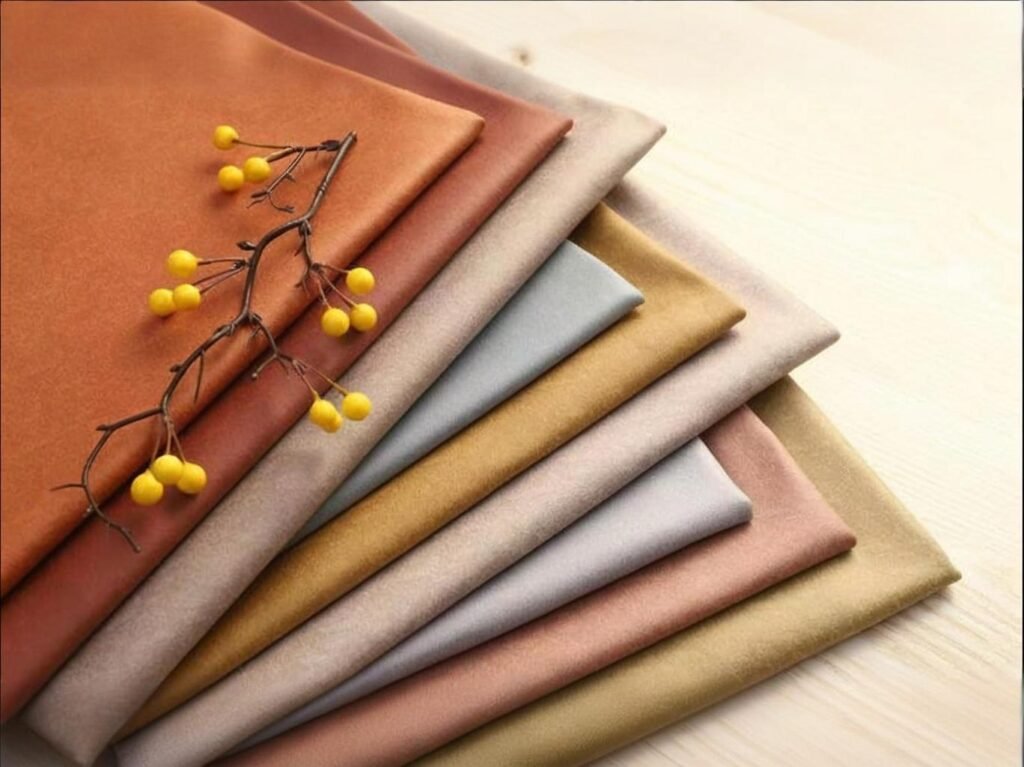
When it comes to polyester recycling, structure matters as much as chemistry. A fabric’s construction—its weave or knit density, finishing agents, and coating system—determines whether it can re-enter the polymer loop efficiently or becomes a down-cycled by-product. For recyclers, the golden rule is simple: purity equals efficiency. The fewer foreign substances or mixed layers a textile contains, the higher its polymer yield, quality, and commercial value after recycling. Pure, uncoated woven and knitted polyester fabrics are easiest to recycle. Microfibre, coated, or laminated textiles pose the greatest challenges because fine filaments, finishes, or multi-layer composites reduce polymer recovery and raise contamination risk.
5.1 Woven Polyester — High Recyclability, Stable Structure
Woven fabrics such as taffeta, oxford, and twill have orderly yarn arrangements, limited elasticity, and predictable dye uptake—all factors that make them mechanically recyclable at high yield.
- Typical mechanical-recycling yield: 85–90 %
- Process: Shredding → melting → extrusion → spinning → new yarn
- Preferred for: bags, luggage linings, flags, outdoor gear
| Sub-Type | Typical Denier Range | Recycling Efficiency | Main Challenge | Notes |
|---|---|---|---|---|
| 210D Taffeta | 70–210 D | ★★★★★ | Minimal | Uniform, easy color stripping |
| 300D Oxford | 150–300 D | ★★★★☆ | PU-coating removal | Ideal for mid-weight bags |
| 600D Twill/Oxford | 300–600 D | ★★★★☆ | Pigment contamination | Heavy yarns need melt filtration |
| 1680D Ballistic | 840–1680 D | ★★★☆☆ | Multi-coating & rigidity | Often needs chemical cleaning |
Industrial Example: SzoneierFabrics’ 300 D rPET Oxford achieves > 88 % mechanical-recovery rate after alkaline PU de-coating, verified by SGS testing. The recovered pellets retain intrinsic viscosity ≥ 0.65 dL g⁻¹, enabling direct re-extrusion into filament yarn.
5.2 Knitted Polyester — Moderately Recyclable, Structurally Complex
Knitted fabrics (jersey, tricot, mesh) provide softness and stretch but are mechanically harder to process.
- Yield: ≈ 75–80 %
- Problem: Loops and stretch recovery cause fiber entanglement during shredding.
- Solution: Pre-cutting into 5–10 mm chips, thermal compaction, then pelletizing.
Because chemical recycling depolymerizes polymers regardless of structure, knits perform better in chemical routes where chain mobility and elasticity are irrelevant.
| Fabric Form | Density (GSM) | Preferred Route | Key Barrier |
|---|---|---|---|
| Tricot Knit | 100–150 | Chemical (Glycolysis) | Residual oil finishes |
| Single Jersey | 120–180 | Mechanical (Short Loop) | Elastic curl in feed stream |
| Spacer Mesh | 250–300 | Chemical | Mixed polyamide content in some grades |
Knitted rPET yarns typically lose 10–15 % tensile strength versus woven feedstock after the first recycling loop but remain adequate for fashion and lining applications.
5.3 Microfibre Polyester — Low Yield, High Complexity
Microfibres—filaments finer than 1 dtex—offer luxurious touch and high opacity but challenge recyclers.
Reasons:
- Surface Area: 10–20× larger than standard filaments, trapping dyes, silicones, and oils.
- Particle Size: Dust-like chips clog melt filters (< 25 µm).
- Color Carryover: Difficult to bleach without degrading polymer.
| Metric | Conventional PET Filament | Microfibre PET |
|---|---|---|
| Fiber Diameter (µm) | 12–15 | 3–5 |
| Washing Residue (% by mass) | 0.2 | > 1.0 |
| Recycling Yield (%) | 85 | 60–70 |
Mitigation Techniques:
- Ultrasonic pre-washing to dislodge oils.
- Chemical decolorization with alkaline hydrogen peroxide.
- Multi-stage filtration (≤ 10 µm).
Microfibre recycling is feasible but energy-intensive—typically 20–25 MJ kg⁻¹ higher than for coarse filaments.
5.4 Coated and Laminated Polyester — The Major Bottleneck
Coatings and laminations provide performance but destroy mono-material purity. PU, PVC, TPU, and silicone layers have incompatible melt points and degrade into residue or volatile gases during reprocessing.
| Coating System | Recycling Difficulty | De-Coating Feasibility | Environmental Note |
|---|---|---|---|
| PU (Polyurethane) | Medium | Solvent or alkaline wash possible | Water-borne PU is preferable |
| PVC | High | Not economically removable | Releases HCl on melting |
| TPU | Medium | Thermoplastic — can be granulated separately | Compatible with some PET streams |
| Silicone | Very High | No effective separation yet | Chemically inert, non-recyclable |
SzoneierFabrics’ water-borne PU coating dissolves in mild alkaline wash, cutting melt contamination by ≈ 30 % compared with solvent-based coatings. Such eco-coatings are crucial to move coated textiles toward partial circularity.
5.5 Mixed and Functional Constructions
Additional layers—foams, membranes, and adhesives—create multi-material laminates (e.g., soft-shells or reflective tarps). Each layer increases separation cost exponentially. For example:
| Construction | Components | Recyclability Rating |
|---|---|---|
| 2-Layer Lamination | PET fabric + TPU film | ★★☆☆☆ |
| 3-Layer Softshell | PET face + PU membrane + tricot backing | ★☆☆☆☆ |
| PET + Alu Foil Composite | Multi-material | Practically non-recyclable |
To enable recovery, some mills now apply mono-PET coatings or co-polyester adhesives, allowing thermal separation during chemical depolymerization.
5.6 Comparative Recycling Complexity Table
| Fabric Type | Structural Purity | Primary Recycling Route | Typical Yield (%) | Overall Difficulty |
|---|---|---|---|---|
| Woven (Uncoated) | High | Mechanical | 85–90 | Low ★☆☆☆☆ |
| Knitted (Jersey/Tricot) | Medium | Mechanical / Chemical | 75–80 | Medium ★★☆☆☆ |
| Microfibre PET | Low | Chemical Depolymerization | 60–70 | High ★★★☆☆ |
| Coated / Laminated | Very Low | Chemical / Down-cycling | 40–60 | Very High ★★★★☆ |
| Multi-Material Composites | Minimal | Energy Recovery only | < 40 | Extreme ★★★★★ |
5.7 Process Innovation for Improved Recyclability
- Solvent-Based De-Coating: Selective dissolution of PU or TPU layers without harming PET.
- Super-critical CO₂ Dye Extraction: Removes dyes before chemical recycling, reducing monomer contamination by > 80 %.
- Laser Marking & Digital Passports: Embedding recycling codes for automated sorting (ISO 14083 pilot projects).
- Mono-Material Design: PET fabric + PET zipper + PET thread = single-stream recovery.
SzoneierFabrics participates in trials with co-polyester adhesives and solvent-free lamination, improving separation efficiency by 25 % during post-consumer processing.
5.8 Design-for-Recycling (DfR) Guidelines for Brands
| Principle | Implementation Example | Benefit |
|---|---|---|
| Mono-Material Construction | 100 % PET shell + PET lining | Enables single polymer loop |
| Detachable Coatings | Water-soluble PU systems | Simplifies de-coating |
| Controlled Color Palette | Light or undyed fabrics for rPET feedstock | Higher monomer yield |
| Avoid Metallic Prints | Replace with sublimation inks | Prevents catalyst poisoning |
| Document Additives | Provide MSDS for every finish | Supports GRS compliance |
Integrating these principles early in product development can reduce recycling cost by 20–30 % at end-of-life.
5.9 Circular Bag Fabric Pilot
SzoneierFabrics collaborated with a European luggage brand to engineer a mono-PET 420 D Oxford coated with a removable water-borne PU. After mechanical de-coating and re-pelletizing:
- Material yield: 89 %
- Energy use: ↓ 22 % vs traditional PU-coated nylon
- Recovered polymer IV: 0.64 dL g⁻¹
- Color consistency: ΔE < 1.5 after re-extrusion
This closed-loop model demonstrates that designing for disassembly at the coating stage can transform coated fabrics from non-recyclable waste into repeatable feedstock.
5.10 Recycling Barriers Beyond Structure
Even if fabrics are structurally pure, systemic barriers limit recyclability:
- Collection Infrastructure: Fewer than 20 % of post-consumer textiles enter recycling streams.
- Sorting Technology: Infrared spectroscopy cannot yet differentiate coatings accurately.
- Economic Incentives: Virgin PET often cheaper when oil prices drop.
- Consumer Behavior: Mixed fiber fashion dominates mass market supply.
Therefore, circular success depends not only on molecular compatibility but on policy and logistics alignment across the value chain.
5.11 Design Simplicity Drives Circular Success
Recycling efficiency is a function of material purity. Uncoated woven polyester can be recycled at scale today. Knitted and microfibre fabrics will rely on hybrid mechanical–chemical processes tomorrow. Coated and laminated composites remain the ultimate challenge until de-bonding and mono-material coating technologies mature.
For sustainable brands and OEM buyers, the strategy is clear:
Simplify materials, minimize coatings, and document every additive.
By designing with recyclers in mind—an approach SzoneierFabrics calls “Circular-First Engineering”—the industry can convert polyester from a one-way material into a fully regenerative resource.
How Do Dyeing, Finishing, and Blended Compositions (Poly-Cotton, Spandex Blends) Complicate Recycling and Sorting Systems?
In theory, polyester is one of the easiest synthetic fibers to recycle. In practice, however, most polyester products contain additives, blends, and surface finishes that severely limit recyclability. Every chemical finish or secondary fiber type introduces foreign molecular groups that alter melt behavior and color purity, ultimately reducing polymer recovery yield.
From a recycler’s perspective, the most sustainable fabric isn’t the one with the newest coating—it’s the one that’s simplest and cleanest in composition. Blends, coatings, and dyes hinder polyester recycling by adding incompatible materials or residues. Poly-cotton and spandex blends are particularly difficult since they require chemical separation before recycling—often leading to downcycling or incineration rather than true fiber recovery.
6.1 The Problem with Blends — When Versatility Becomes a Barrier
Blending improves fabric comfort, elasticity, or aesthetics, but it destroys material purity. Each additional fiber type introduces a different melting point, polarity, and degradation path, making mechanical recycling inefficient and chemical recycling more expensive.
| Blend Type | Composition | Recyclability | Core Issue |
|---|---|---|---|
| Poly-Cotton (65/35) | PET + Cotton | Low | Incompatible melt behavior; cellulose chars at PET melt temps |
| Poly-Spandex (95/5) | PET + Elastane | Very Low | TPU/elastane decomposes ≈ 220 °C, below PET melt point |
| Poly-Nylon (80/20) | PET + PA6 | Medium | Partial miscibility; uneven crystallization |
| 100 % PET (Mono-Material) | PET | Excellent | Fully recyclable mechanically and chemically |
Chemical separation technologies such as Cycora™ (Ambercycle), Worn Again Technologies, and Jeplan’s BRING™ can isolate PET from blends through selective depolymerization, but they remain energy-intensive (≈ 50–70 MJ kg⁻¹) and costly for mass adoption.
In short, blended fibers that make fabrics versatile for wear make them nearly impossible to re-enter the material loop at scale.
6.2 The Role of Dyes and Pigments — Color that Refuses to Leave
Polyester’s chemistry requires disperse dyes—non-ionic, hydrophobic colorants that penetrate deep into the polymer matrix during high-temperature dyeing (≈ 130 °C, 30 bar). During recycling, these dyes do not vaporize or dissolve easily, meaning the colorant molecules remain locked in the polymer, contaminating subsequent melt batches.
| Dyeing Process | Energy Intensity | Recyclability Impact | Notes |
|---|---|---|---|
| Disperse Dyeing | High (steam + pressure) | Reduces polymer purity | Most common for PET |
| Dope Dyeing (Solution Dye) | Moderate | Recycle-friendly; color intrinsic | Color added during extrusion |
| Cationic Dyeing (CDP) | Medium | Limited compatibility | Requires modified PET polymer |
| Pigment Printing | Low | Blocks filters; poor melt flow | Problematic for mechanical rPET |
A chemical decolorization bath using hydrogen peroxide or glycolysis agents can remove ≈ 70 % of color residues, but it adds another high-energy step and requires effluent treatment.
SzoneierFabrics Insight: Adopting dope-dyed rPET yarns eliminates wet dyeing altogether. Color is introduced during extrusion, maintaining 100 % recyclability and reducing water use by up to 90 % compared with conventional dyeing lines.
6.3 Finishing Treatments — Functional Beauty, Molecular Chaos
Finishes are where recyclability often ends. Each post-dye treatment—anti-pilling, wrinkle resistance, flame retardancy, or water repellency—adds cross-linked chemicals that resist melting and disrupt polyester’s ester bonds during depolymerization.
| Finish Type | Chemical Base | Recyclability | Key Concern |
|---|---|---|---|
| Enzyme / Bio-Finishes | Natural biocatalysts | High | Fully degradable |
| Silicone Softener | Siloxane polymer | Medium | Causes foaming in wash baths |
| Fluorocarbon DWR (PFAS) | Per- and polyfluoro compounds | Very Low | Persistent & toxic residues |
| Water-Based PU Coating | Polyurethane dispersion | Medium | Removable via alkaline washing |
| Crosslinking Resins | Melamine, urea-formaldehyde | Very Low | Non-meltable; releases VOCs |
Technical Explanation: Fluorocarbon chains (C–F bonds, 485 kJ mol⁻¹) are among the strongest in organic chemistry, making PFAS coatings effectively permanent contaminants in the melt stream. Even 0.05 wt % residual PFAS can poison catalysts used in glycolysis during chemical recycling.
SzoneierFabrics Practice: All surface finishes are fluorine-free and compliant with ZDHC MRSL Level 3 and OEKO-TEX Standard 100 Class I, ensuring no restricted substances persist into rPET processing.
6.4 Sorting Challenges — Where Technology Still Lags
Even if recycling technologies exist, they rely on accurate identification. Today, fewer than 30 % of global recycling facilities can automatically distinguish polyester blends using near-infrared (NIR) scanners. Similar reflectance profiles between nylon and PET, or dark colors that absorb IR light, create frequent mis-classification.
Emerging Solutions:
- NIR / MIR Spectroscopy: Automated polymer detection up to 92 % accuracy for light-colored textiles.
- Tracer-Based Labeling: Embedding luminescent or magnetic markers inside yarn for machine readability.
- Digital Product Passports: Blockchain-linked QR or RFID tags containing fiber composition and dye info.
- AI Vision Systems: Camera-based color + texture recognition to pre-sort textiles for specific recycling routes.
Example: A Japanese pilot plant using dual-wavelength NIR improved identification of poly-cotton vs. PET fabrics from 68 % → 92 % accuracy, enabling cleaner feedstock streams for chemical recycling.
6.5 Why Poly-Cotton Is the Hardest Blend to Close the Loop
Poly-cotton dominates global apparel, representing roughly 40 % of blended fabric demand, but it’s a recycler’s nightmare. The PET fraction melts at 250 °C, while cotton starts to char and depolymerize above 220 °C, releasing acetic acid and carbon residues that darken the melt. Chemical separation (e.g., hydrolysis of cellulose in mild acid) is possible, yet cost and water intensity remain prohibitive.
| Process | Mechanism | Drawbacks |
|---|---|---|
| Alkaline Hydrolysis | Dissolves PET, leaves cellulose pulp | Requires precise pH > 13 and recovery steps |
| Enzymatic Cellulose Removal | Biodegrades cotton fraction | Slow (12–24 h reaction) |
| Solvent Dissolution (Ionic Liquids) | Dissolves cellulose selectively | Expensive solvents; recycling losses |
Until scalable textile-to-textile PET + cellulose separation matures, most poly-cotton will continue to be downcycled into insulation, wipers, or non-woven filling.
6.6 The Spandex Problem — Small Percentage, Big Headache
A typical performance garment may contain only 3–5 % spandex, yet that’s enough to disrupt the recycling stream. Spandex (a polyurethane-urea copolymer) begins decomposing around 220 °C, releasing isocyanates and CO₂ bubbles that create voids in the PET melt. Even after filtration, these gases cause melt fracture defects and 10–15 % strength loss in regenerated rPET yarn.
Some recyclers use pre-sorting via FTIR (Fourier Transform Infrared) spectroscopy to exclude elastic fabrics. Others experiment with enzymatic urethane cleavage, but these remain laboratory-scale.
6.7 Quantifying the Impact — Contamination and Yield Loss
| Contaminant Type | Common Source | Result in Recycling | Typical Yield Loss |
|---|---|---|---|
| Cotton / Cellulose | Poly-cotton blends | Carbonized residue in melt | −20 % |
| Spandex / TPU | Stretch fabrics | Gas evolution, melt foaming | −15 % |
| Silicone Oil | Finishing softeners | Filter blockage | −10 % |
| Pigments / Dyes | Colored textiles | Color carryover | −8 % |
| Metallic Prints / Foils | Fashion coatings | Catalyst deactivation | −5 % |
Cumulatively, mixed contaminants can reduce mechanical rPET yield from 90 % → 55 % and increase filtration costs by 25–30 %.
6.8 Industry Movement Toward Cleaner Inputs
Leading brands and mills are adopting “Design for Recycling” (DfR) standards to minimize downstream contamination.
| Strategy | Implementation Example | Result |
|---|---|---|
| Mono-Material Garments | 100 % PET shell + PET sewing thread | Enables single-stream recycling |
| Solution-Dyed Yarns | Color in polymer stage | No water dyeing, zero effluent |
| Water-Borne Coatings | PU or acrylic dispersion | Wash-off before re-extrusion |
| Label Transparency | Digital IDs for composition tracking | Enhances NIR sorting accuracy |
SzoneierFabrics integrates these practices across its rPET range, using mono-polymer PET zippers, linings, and webbing to create fabrics that can be chemically recycled as unified feedstock.
6.9 Certification and Verification — Proof Beyond Marketing
To avoid “greenwashing,” buyers should request certificates detailing actual recycled content and traceability rather than generic “recycled” claims.
| Certificate | Scope | Verification |
|---|---|---|
| GRS (Global Recycled Standard) | Full-chain recycled content + chemical safety | Transaction Certificates (TCs) per lot |
| RCS (Recycled Claim Standard) | Product-specific recycled content | Batch-level validation |
| OEKO-TEX 100 / ZDHC MRSL | Chemical safety for finishing | Tests for restricted substances |
Without these documents, “recycled blends” may include as little as 30 % actual rPET, undermining sustainability claims and exposing brands to regulatory penalties.
6.10 Toward Separation-Friendly Design
The industry is moving toward closed-loop textiles engineered for disassembly:
- Thermo-reversible adhesives that detach layers during heating.
- Bio-based dyes that degrade under mild oxidation.
- AI-enabled sorting integrated with digital passports mandated by upcoming EU Eco-Design Regulations (2027).
SzoneierFabrics is currently testing low-activation polyurethane binders (softening ≈ 180 °C) to allow laminated polyester layers to delaminate before melting, improving chemical-recycling efficiency by nearly 25 %.
6.11 Simplicity Is the New Innovation
Recycling technology can only process what design allows. Each coating, pigment, or foreign fiber added for short-term aesthetics subtracts decades of recyclability potential. The next generation of sustainable polyester will come not from new polymers, but from cleaner recipes, modular product architecture, and transparent supply chains.
For manufacturers and brands alike, the rule is simple:
The fewer ingredients in the textile, the more lives the material can have.
Which Global Certifications, Standards, and Rating Systems (GRS, RCS, Higg MSI, EU Ecolabel) Evaluate Polyester Recyclability and Traceability?

In today’s textile economy, certifications are the currency of trust. They separate verifiable sustainability from unsubstantiated marketing and ensure that “recycled polyester” genuinely meets scientific, legal, and ethical benchmarks. For supply-chain buyers, these frameworks measure not only recycled content but also chemical safety, traceability, labor ethics, and lifecycle impact.
Understanding how each certification works is essential for any manufacturer, brand, or OEM that wants to build a transparent, compliant polyester program. Key polyester sustainability certifications include GRS (Global Recycled Standard), RCS (Recycled Claim Standard), Higg MSI, and EU Ecolabel. Together they verify recycled content, environmental safety, and supply-chain integrity—helping brands prove genuine circularity and compliance with international ESG expectations.
7.1 Global Recycled Standard (GRS) — The Benchmark for Circular Integrity
GRS, managed by Textile Exchange, is the world’s most comprehensive recycled-material standard. It verifies that at least 20 % of a product’s weight derives from certified recycled input and that the entire supply chain—from flake to finished roll—complies with rigorous environmental and social criteria.
- Scope: recycled content + chemical management + social responsibility
- Chain of Custody: every processing stage must issue a Transaction Certificate (TC) through an accredited body (e.g., Control Union, SGS, Intertek).
- Chemical Controls: all substances must meet ZDHC MRSL v3.0 and REACH SVHC limits.
| Parameter | Requirement | Brand Impact |
|---|---|---|
| Recycled content threshold | ≥ 20 % (minimum) | Enables “Recycled Material” labeling |
| Wastewater & energy monitoring | Mandatory | Reduces compliance risk |
| Worker welfare audit | Required | Strengthens ESG reporting credibility |
| Annual certification renewal | Yes | Prevents claim dilution |
SzoneierFabrics maintains full GRS certification, issuing digital TCs with QR-linked batch data so overseas buyers can trace each rPET lot back to the bottle-flake source.
7.2 Recycled Claim Standard (RCS) — Entry-Level Traceability
RCS, also developed by Textile Exchange, offers a simplified version of GRS. It verifies the quantity and identity of recycled content but omits the environmental and social modules—ideal for suppliers starting their sustainability journey or working with accessory components such as labels, webbings, or linings.
| Factor | GRS | RCS |
|---|---|---|
| Recycled-content verification | ✔ | ✔ |
| Environmental audits | ✔ | ✖ |
| Social audits | ✔ | ✖ |
| Documentation complexity | High | Low |
| Typical use | Main fabric and large lots | Trims / accessories |
RCS certification still provides a chain-of-custody paper trail, preventing “content swapping” between virgin and recycled batches—one of the most common risks in fast-moving textile supply chains.
7.3 Higg Materials Sustainability Index (MSI) — Quantifying Impact
Developed by the Sustainable Apparel Coalition (SAC), the Higg MSI isn’t a certification but an impact-assessment database. It converts material data into comparable scores across categories such as global-warming potential, eutrophication, water scarcity, and chemistry use.
- Scoring Principle: lower = better environmental performance
- Typical Scores (2025 SAC update):
- Virgin PET fiber ≈ 65 points
- Recycled PET fiber ≈ 36 points
- Bio-PET fiber ≈ 32 points
Brands use these scores to model scenario-based LCAs and to report progress under frameworks such as the Science Based Targets initiative (SBTi) or the EU Corporate Sustainability Reporting Directive (CSRD).
Example Application: Switching a backpack line from virgin 600 D PET to GRS-certified rPET reduces the material’s Higg MSI score by nearly 45 %, equivalent to a ~2.8 kg CO₂ saving per kg fabric.
7.4 EU Ecolabel — The Official Seal of European Eco-Compliance
Granted by the European Commission, the EU Ecolabel distinguishes products with minimal lifecycle impact—from raw-material extraction to disposal.
Key polyester-specific criteria include:
- Antimony catalyst limit: ≤ 260 ppm
- Recycled-content threshold: ≥ 70 % for synthetic fibers
- VOC emission caps: strict for coating / finishing operations
- Durability tests: fabrics must maintain colorfastness ≥ Grade 4 after washing
| Criterion | Requirement | Market Benefit |
|---|---|---|
| Heavy-metal limit | Pb, Cd, Cr < 0.1 ppm | Complies with EU REACH |
| Restricted solvents | No chlorinated hydrocarbons | Safer worker conditions |
| End-of-life guideline | Design for recycling mandated | Simplifies circular claims |
Holding an EU Ecolabel allows suppliers to participate in green-public-procurement (GPP) tenders across the EU, often yielding price premiums for compliant materials.
7.5 Other Complementary Standards
| Certification | Focus Area | Value to Buyers and OEMs |
|---|---|---|
| OEKO-TEX® Standard 100 | Human-ecological safety for skin contact | Confirms absence of toxic residues in dyes & finishes |
| Blue Sign® System | Chemical management and input-stream control | Favored by technical and outdoor brands |
| ISO 14001 | Environmental management system | Demonstrates factory-level process discipline |
| ISCC PLUS | Bio-based and mass-balance tracking | Quantifies renewable carbon share for LCA |
| ZDHC MRSL v3.0 | Restricted Substances List for wet processing | Ensures zero use of banned chemicals |
Integration Tip: Many leading mills pursue dual certification paths—e.g., GRS + OEKO-TEX—so both recycled-content and chemical-safety assurances appear on the same technical data sheet.
7.6 How Audits and Transaction Certificates Work
Each certification relies on a chain-of-custody (COC) model. For GRS and RCS, every hand-off—from recycler → yarn spinner → weaver → finisher—must issue a Transaction Certificate validated by an accredited Certification Body (CB).
- Verification frequency: Annual on-site audit + surprise visits
- Data points: purchase orders, invoices, production records, mass-balance calculations
- Penalty for non-compliance: TC revocation and public delisting
SzoneierFabrics’ Process: All rPET batches carry unique QR-coded TC numbers. Buyers scan them to see origin date, flake source country, and polymer IV value logged in the company’s LCA database.
7.7 Digital Traceability — The Next Frontier
As global supply chains digitize, static PDF certificates are being replaced by machine-readable traceability tools:
- QR or RFID Tags embedded in care labels link directly to certification databases.
- Blockchain Platforms record immutable transactions, ensuring no double counting of recycled content.
- Digital Product Passports (DPPs)—mandated under the EU Textile Strategy by 2027—will store data on fiber composition, dye chemistry, and recycling route.
These technologies convert sustainability from a claim into a data point. They will also help customs and buyers validate origin instantly through shared databases.
7.8 Comparative Overview of Major Frameworks
| Standard | Verification Type | Recycled-Content Focus | Environmental Scope | Social Scope | Typical Use |
|---|---|---|---|---|---|
| GRS | Third-party audit + TC | ≥ 20 % | Comprehensive | Yes | Full fabric and yarn programs |
| RCS | Third-party audit + TC | ≥ 5 % | Limited | No | Labels / components |
| Higg MSI | Data model / self-assessment | n/a | Full LCA metrics | No | Impact benchmarking |
| EU Ecolabel | Official EU licensing | ≥ 70 % | Strict | Optional | Consumer goods for EU market |
| OEKO-TEX 100 | Lab testing | n/a | Chemicals only | No | All textiles |
| ISCC PLUS | Mass-balance certification | Bio-based share | Carbon accounting | No | PET & biopolymer suppliers |
7.9 Certification Fatigue vs. True Transparency
By 2025 many brands carry five or more logos on a single hangtag—GRS, OEKO-TEX, BlueSign, ISO, Higg, and so on. While each adds value, this fragmentation creates “label fatigue.”
The next phase will emphasize data interoperability rather than logo count—linking certifications through standardized APIs so LCA and traceability data flow seamlessly from supplier to brand report.
Forward-looking manufacturers like SzoneierFabrics are already integrating these systems into a single platform where GRS TCs, OEKO-TEX lab reports, and Higg MSI scores sync automatically into customer dashboards.
7.10 Practical Advice for Buyers and Brands
- Define Goal: choose GRS or RCS based on volume and complexity.
- Check Validity: ensure certificates list supplier name and issue date < 12 months old.
- Request Transaction Certificates: avoid accepting only logo claims.
- Audit Chemical Inputs: cross-check against ZDHC MRSL lists.
- Integrate Digital IDs: prepare for EU Digital Product Passport requirements (2027).
7.11 Verification as Competitive Advantage
Certification is no longer a marketing accessory—it’s a market entry ticket. Governments, retail buyers, and ESG investors increasingly require proof of traceable recycled content and low-impact manufacturing.
For SzoneierFabrics and other advanced producers, compliance is built into the production DNA: GRS + OEKO-TEX for product safety, ISO 14001 for process control, and Higg MSI for impact data. Together these systems turn sustainability from a claim into a verified contract between supplier and buyer.
In the coming decade, the most valuable fabric will not just be recycled—it will be proven, traceable, and data-transparent from molecule to market.
How Can Brands and Sourcing Teams Improve Their Recyclability Scores Through Material Selection, Supplier Partnerships, and Circular Design Strategies?
Recyclability is no longer a niche topic—it’s a core performance metric in modern textile sourcing. Top-tier brands now measure circularity the same way they measure cost, lead time, or quality. True improvement, however, isn’t about a single fabric substitution; it comes from systemic alignment across the design, supply, and verification stages.
In practice, that means cleaner inputs, transparent suppliers, and products built from the start to return to the material loop. Brands can raise recyclability scores by choosing mono-material polyester systems, certified rPET sources, solution-dyed yarns, water-based coatings, and traceable partners. Collaborating with certified mills ensures lower environmental impact, easier end-of-life recycling, and verifiable sustainability performance.
8.1 Material Selection — Start With Chemistry, Not Marketing
The single biggest driver of recyclability scores is the purity and compatibility of raw materials. Every additive, coating, or foreign fiber reduces the probability that the textile can be melted or depolymerized without contamination.
Best-practice priorities
| Decision Area | Preferred Option | Measurable Benefit |
|---|---|---|
| Fiber Type | 100 % rPET (GRS-Certified) | Cuts CO₂ emissions by ≈ 65 % vs. virgin PET |
| Dye System | Dope-dyed / solution-dyed yarn | Eliminates wastewater; avoids dye-bath residues |
| Coating | Water-borne PU or TPU | Enables solvent-free processing; recyclable layers |
| Finish | Fluorine-free DWR | Prevents PFAS contamination in rPET streams |
| Additives | Recyclable softeners & antistats | Improves melt consistency in re-extrusion |
A mono-polyester bill of materials—PET fabric, PET zipper, PET sewing thread—creates a single polymer stream that can be recycled mechanically or chemically without separation.
8.2 Supplier Partnerships — Integration Equals Traceability
Circularity depends on data integrity. Brands that rely on fragmented subcontracting often lose visibility into coating chemicals, dye auxiliaries, or yarn sources—issues that later fail ESG audits.
Partnering with a vertically integrated mill such as SzoneierFabrics consolidates polymer spinning, weaving, dyeing, and coating under one controlled system. Advantages:
- Rapid sampling in 7–10 days with unified lab reports.
- Guaranteed GRS + OEKO-TEX Standard 100 compliance.
- Digital Transaction Certificates (TCs) attached to every batch.
- In-house QC to ISO and AATCC test standards.
Integrated partners also maintain consistent intrinsic-viscosity (IV) profiles in rPET yarns, ensuring that recycled polymers remain suitable for repeat processing—a critical factor in Higg MSI scoring.
8.3 Product Design for Circularity — Building for Disassembly
Recyclability begins at the design table. The next generation of circular products follows DfR (Design-for-Recycling) principles.
Core guidelines
- Mono-fiber construction: PET outer shell + PET lining + PET zipper + PET label.
- Detachable hardware: screws or clips instead of adhesives.
- Avoid composite laminations: choose reversible or peelable adhesives.
- Digital identification: QR, RFID, or NIR-detectable tracer yarns for post-sorting.
Case Study — Circular Outerwear Pilot A European outdoor brand replaced nylon-cotton blends with all-PET assemblies supplied by SzoneierFabrics. Sorting centers reported 22 % higher recycling yield and 50 % shorter identification time, proving that design simplicity accelerates circular recovery.
8.4 Testing, Data Validation, and Compliance
Certification bodies and brand auditors require empirical data. Routine testing under ISO, ASTM, and AATCC ensures recyclability consistency and prevents chemical drift between lots.
| Test | Standard | Target Value | Purpose |
|---|---|---|---|
| Tensile Strength | ASTM D5034 | ≥ 600 N (600 D Oxford) | Confirms mechanical durability |
| Hydrostatic Pressure | AATCC 127 | ≥ 1500 mm | Validates coating performance |
| pH Level | ISO 3071 | 6.5 – 7.5 | Neutral chemistry for stable re-melt |
| Colorfastness | ISO 105-C06 | ≥ Grade 4 | Prevents dye bleed during recycling |
Attaching these reports to shipping documents simplifies Higg FEM verification and annual GRS recertification.
8.5 Circular Partnerships and Industry Collaboration
No brand achieves high recyclability scores alone. Leading companies now participate in collective circular platforms that align upstream suppliers, recyclers, and certification bodies.
Examples of global initiatives
| Program | Objective | Impact |
|---|---|---|
| Textile Exchange Recycled Polyester Challenge 2025 | Increase rPET share to 45 % of global PET use | Industry-wide reporting benchmark |
| China GRS Circular Fiber Initiative | Train mills in traceable rPET workflows | Regional capacity-building |
| SAC Higg Index Partnership | Harmonize data for MSI + FEM modules | Unified sustainability scoring |
SzoneierFabrics contributes technical data from its water-borne PU coating line to these programs, helping define future low-VOC benchmarks for coated polyesters.
8.6 Practical Action Map — Improving Recyclability Scores
| Action Step | Primary Benefit | Estimated Impact on Higg MSI / ESG Score |
|---|---|---|
| Adopt GRS-certified rPET feedstock | Verifiable traceability | + 15 points |
| Switch to solution-dyed yarns | Eliminates dye-bath effluent | + 10 points |
| Replace PVC with water-borne PU or TPU | Lowers toxicity & weight | + 8 points |
| Add QR / RFID traceability labels | Full supply-chain visibility | + 12 points |
| Partner with vertically integrated mills | Simplifies audits & reduces risk | + 10 points |
| Standardize testing & LCA data | Ensures repeatability | + 5 points |
The cumulative benefit can lift a product’s Higg MSI rating by 20–25 points, positioning it for preferred-material status in major brand indices.
8.7 Economic and Operational Advantages
Investing in recyclability yields tangible cost savings:
- Reduced waste-treatment fees: solvent-free coatings generate 60 % less hazardous sludge.
- Lower inventory risk: standardized mono-material fabrics serve multiple end-uses.
- Faster certification renewals: consistent formulations reduce testing cycles.
- Brand value uplift: verified sustainability allows premium positioning in EU Eco-Procurement and GRS-compliant tenders.
8.8 Metrics Beyond Compliance — Measuring True Circularity
Quantitative frameworks are emerging to track actual loop closure:
| Metric | Description | Example Target |
|---|---|---|
| Material Circularity Indicator (MCI) | Ratio of recycled + recyclable content | ≥ 0.65 for PET fabrics |
| Recycling Yield % | Share of mass recoverable post-use | ≥ 85 % for mono-PET |
| Carbon Return Factor | CO₂ saved per kg recycled input | ≥ 3 kg CO₂/kg |
| Traceability Depth | % of suppliers digitally tracked | 100 % Tier 1–3 visibility |
SzoneierFabrics’ 2024 LCA showed that replacing solvent-PU coatings with water-borne systems improved circularity yield by 18 % and reduced total carbon intensity from 3.2 → 2.0 kg CO₂ eq/kg fabric.
8.9 Education and Workforce Training
Circularity depends on knowledge transfer. SzoneierFabrics runs quarterly training workshops for sourcing teams covering:
- Reading and verifying GRS Transaction Certificates.
- Understanding ZDHC chemical-conformance reports.
- Using Higg MSI data for buyer presentations.
- Implementing Design-for-Recycling parameters in tech packs.
Educated buyers can specify materials with precise recyclability criteria, shortening development cycles and minimizing re-sampling.
8.10 Beyond Numbers Toward Circular Reality
Recyclability scores quantify progress, but metrics alone do not close loops. A fabric may achieve a perfect Higg MSI value yet still end up incinerated if post-consumer collection and sorting are missing. True circularity requires three synchronized components:
- Design for Recycling — mono-materials and clean chemistries.
- Reverse Logistics — take-back systems and recycling partners.
- Market Pull — buyers willing to purchase regenerated fibers.
Without this triad, recyclability remains a theoretical virtue rather than an operational fact.
8.11 Engineering Polyester for Infinite Use
Polyester’s reputation as a “plastic problem” is being rewritten by science and strategy. When sourced from certified rPET, finished with water-borne coatings, and designed for single-polymer recovery, it becomes a fully circular engineering material.
For sourcing teams, the roadmap is clear:
Select cleaner polymers, verify every step, and design for return—not disposal.
With vertically integrated partners like SzoneierFabrics, brands can transform sustainability from a marketing claim into measurable performance—proving that polyester’s future is not linear, but infinitely recyclable by design.
Partner with SzoneierFabrics — Your Certified Polyester Innovation Hub
SzoneierFabrics is a leading polyester R&D and manufacturing factory based in China with over 18 years of experience. We provide tailored solutions for sustainable and functional textiles, offering:
- ✅ GRS / RCS / OEKO-TEX® certified materials
- ✅ rPET, bio-based PET, and custom polyester blends
- ✅ Free design and sample development
- ✅ Low MOQ (200 meters) and fast lead times (7–10 days sampling)
- ✅ Technical support for LCA and Higg MSI compliance
Let our team help you build polyester collections that score high on recyclability, traceability, and real-world performance—because the future of fabric is not just synthetic, it’s sustainably engineered.