 Skip to content
What Is Ramie Material in Blended Fabrics: Cotton, Polyester, and Silk Mixes
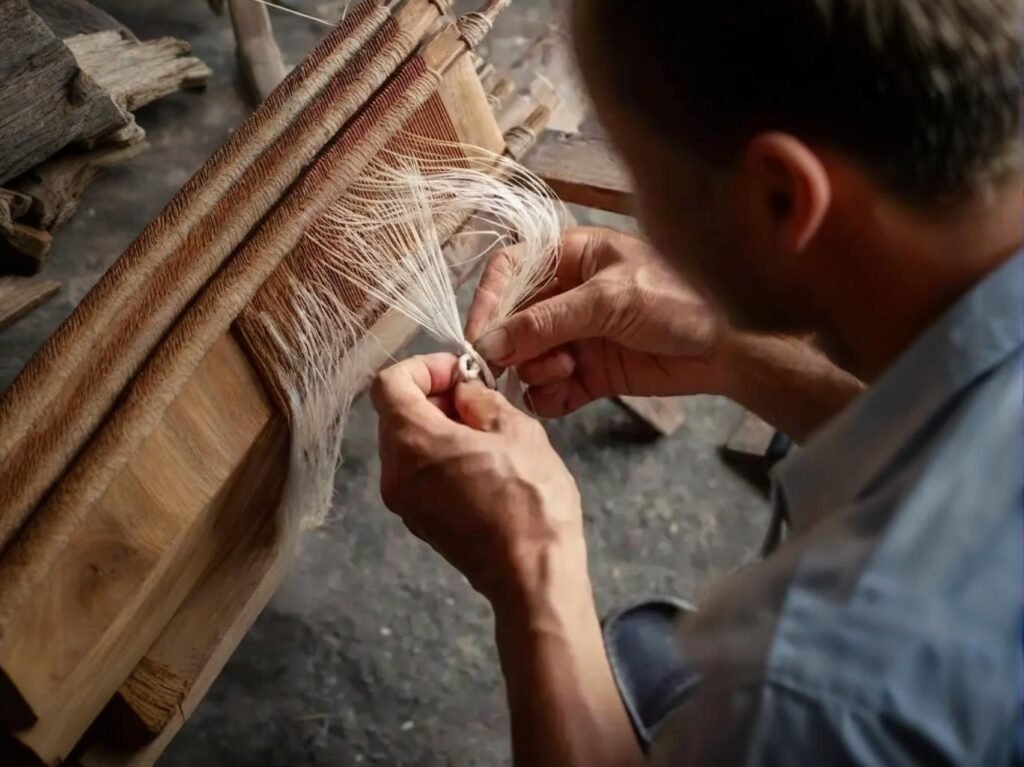
Ramie, often called the “grass linen,” is one of the oldest natural fibers, historically cultivated in China for over 5,000 years. Known for its silky luster and exceptional tensile strength, ramie blends have become increasingly popular among textile manufacturers seeking eco-friendly yet high-performance fabrics.
Ramie material, when blended with cotton, polyester, or silk, combines the plant fiber’s natural strength and moisture resistance with the softness, elasticity, or sheen of other fibers. These blends offer fabrics that are breathable, durable, and suitable for everything from summer apparel to home textiles, balancing cost, performance, and aesthetics.
A century ago, ramie was mainly used for ropes and canvas, but modern spinning technologies transformed it into a fashion and home textile favorite. To understand why global brands now consider ramie blends for premium fabrics, let’s dive deeper into its science, performance, and economics.
What Is Ramie Fiber and How Does Its Chemistry and Microstructure Compare to Cotton, Polyester, and Silk?
Ramie is a natural bast fiber derived from the stalks of Boehmeria nivea. Known for its high crystalline cellulose content, ramie stands out among plant fibers due to its exceptional tensile strength, natural luster, and wet strength. These properties make it highly desirable for blending with other fibers, enhancing fabric stability, drape, and performance. Compared to cotton, polyester, and silk, ramie offers a unique combination of mechanical robustness and luxury appeal, making it suitable for both functional textiles and premium apparel. Ramie’s crystalline cellulose structure gives it higher tensile strength than cotton, superior wet strength among natural fibers, and a lustrous surface similar to silk. When blended, it complements cotton for softness, polyester for wrinkle resistance, and silk for elegant drape, creating fabrics that balance durability, comfort, and aesthetics.
A. Comparative Fiber Chemistry
Ramie fibers consist of approximately 68–76% cellulose, which contributes to their stiffness and strength. By contrast, cotton has 88–96% cellulose, providing softness but lower tensile strength. Polyester, a synthetic fiber, offers uniform PET polymer chains and high elongation, contributing to resilience and wrinkle resistance. Silk, composed of fibroin protein, provides smoothness and a natural sheen but has lower wet strength compared to ramie.
The crystallinity index is a key indicator of fiber rigidity and durability: ramie ranges from 70–75%, considerably higher than cotton (50–60%) and silk (35–45%), while polyester typically sits at 40–50%. High crystallinity in ramie explains why it maintains dimensional stability under tension and resists fabric deformation during laundering or wear.
In practical terms, tensile strength per unit tex shows that ramie fibers can sustain 50–60 cN/tex, almost double that of cotton and significantly higher than silk. Elongation at break is lower (1.5–3%), reflecting ramie’s stiffness, while polyester stretches 20–40%, and silk 15–20%, illustrating why blending is essential for wearable comfort.
B. Microstructural Insights
Under electron microscopy, ramie fibers display thick cell walls, a polygonal cross-section, and a smooth surface, all contributing to high luster and a crisp handfeel. Its dense microstructure also reduces defects, resulting in more uniform yarns and higher-quality spinning performance compared to cotton.
Cotton’s kidney-shaped lumen and convoluted fiber surface explain its softness and excellent moisture absorption but make it prone to fiber breakage under high stress. Polyester fibers, engineered for homogeneity, exhibit a smooth, round cross-section with minimal moisture uptake, providing dimensional stability and low maintenance. Silk’s triangular cross-section scatters light, generating a natural sheen and smooth drape but reduces wet strength.
From a processing standpoint, ramie’s microstructure requires careful handling during spinning and weaving; otherwise, stiffness can lead to fabric brittleness or reduced pliability. Blending with other fibers mitigates these issues while retaining ramie’s strength and sheen.
C. Practical Blending Applications
While 100% ramie fabrics may feel stiff for apparel, blending enables designers to balance performance with comfort:
- Ramie + Cotton: Creates breathable, soft fabrics suitable for summer wear or casual clothing, retaining natural luster while improving handle.
- Ramie + Polyester: Produces wrinkle-resistant, durable textiles ideal for office attire, uniforms, or upholstery.
- Ramie + Silk: Delivers luxury summer garments with elegant drape and natural sheen, perfect for high-end fashion or resort collections.
However, blending introduces new challenges:
- Dye Uptake Variability: Ramie absorbs reactive dyes differently than cotton or silk, requiring careful dyeing protocols.
- Cost Considerations: Ramie is more expensive than cotton and less abundant than polyester, affecting production budgets.
- Processing Complexity: High crystallinity and stiffness require specialized finishing or mechanical softening to ensure smooth handfeel.
D. Perspective
Ramie’s exceptional tensile strength and wet durability make it suitable for industrial textiles, home furnishings, and high-end apparel, yet stiffness limits pure applications in fashion. Blending strategies enable design flexibility, but manufacturers must carefully balance strength, comfort, and cost. As consumer demand for sustainable fibers grows, ramie’s eco-friendly cultivation and biodegradability further enhance its appeal compared to synthetic alternatives. Ramie fiber combines high cellulose crystallinity, mechanical strength, and luxurious luster, offering a unique niche between natural fibers like cotton and silk and synthetic polyester. Understanding its chemistry, microstructure, and blending potential allows textile designers and manufacturers to develop fabrics that are durable, visually appealing, and functional, addressing both commercial and high-end fashion applications.
Which Ramie Blend Ratios Deliver the Best Balance of Handfeel, Strength, Breathability, and Drape for Different Products?
Ramie, known for its high tensile strength, natural luster, and breathability, is frequently blended with fibers like cotton, polyester, and silk to achieve specific performance characteristics for different textile applications. The optimal blend ratio depends on end-use, desired handfeel, strength requirements, and visual appeal.
- Cotton blends enhance softness and comfort, making fabrics suitable for shirts and casual wear.
- Polyester blends improve wrinkle resistance, durability, and dimensional stability, ideal for workwear and uniforms.
- Silk blends provide luxurious drape and sheen, perfect for premium scarves, dresses, and summer suits.
Direct Answer:
- Shirting fabrics: 55/45 ramie–cotton balances softness and durability.
- Work uniforms: 70/30 ramie–polyester enhances wrinkle resistance and structural strength.
- Luxury apparel: 30/70 ramie–silk offers flowing drape while maintaining tensile integrity.
Performance vs. Ratio Analysis
A. Optimal Blend Ratios by Application
| Application | Ramie-Cotton Ratio | Ramie-Polyester Ratio | Ramie-Silk Ratio | Key Performance Benefit |
|---|---|---|---|---|
| Casual Shirts | 55/45 | — | — | Soft, breathable, pilling-resistant |
| Summer Suits | 60/40 | 50/50 | 30/70 | Balance of strength and drape |
| Workwear Uniforms | — | 70/30 | — | Wrinkle resistance, durability, easy care |
| Luxury Scarves | — | — | 30/70 | Luster, lightweight, fluid drape |
| Table Linens | 80/20 | 65/35 | — | Dimensional stability, tensile strength, durability |
B. Case Study: Japanese Shirting Industry
In Japan, Kuraray Textiles implemented 55/45 ramie–cotton blends for high-end summer shirts:
- Pilling Resistance: Improved by 28% over 100% cotton shirts.
- Wrinkle Recovery Angle: Reduced by 15°, indicating better fabric resilience and ease of maintenance.
- Handfeel: Softer and more breathable, preferred by consumers for hot and humid climates.
- Outcome: Became a standard for premium summer shirting, highlighting how precise blending enhances comfort and durability without sacrificing aesthetic appeal.
C. Trade-offs and Design Considerations
- Cost vs. Performance:
- Silk blends (30–70%) elevate price points 2–3 times higher than cotton or polyester blends.
- Best suited for luxury apparel, scarves, and high-end dresses.
- Moisture Management vs. Wrinkle Resistance:
- Increasing polyester content improves wrinkle recovery and dimensional stability.
- However, high polyester ratios reduce moisture absorption, potentially making garments less comfortable in humid conditions.
- Strength vs. Drape:
- Higher ramie content enhances tensile strength and durability, suitable for table linens or casual shirting.
- Excessive ramie may reduce fluidity, limiting luxury drape required for eveningwear or scarves.
- Blending Complexity:
- Multi-fiber blends require controlled spinning and weaving processes to avoid fiber slippage, uneven texture, or pilling.
- Lab trials and small-batch prototypes are critical before full-scale production.
D. Practical Guidelines for Designers and Manufacturers
- Shirting & Casual Apparel:
- Target 50–60% ramie with cotton for softness, breathability, and structural strength.
- Ensure consistent fiber fineness to prevent uneven handfeel or pilling.
- Workwear & Uniforms:
- Use 65–70% polyester blends for dimensional stability, wrinkle resistance, and extended wear.
- Recommended for hotels, restaurants, or healthcare uniforms requiring frequent laundering.
- Luxury and Seasonal Wear:
- Incorporate 30–70% silk with ramie to achieve fluid drape, sheen, and softness.
- Ideal for scarves, dresses, and premium summer suits; higher silk content improves dye absorption and aesthetic appeal.
- Home & Table Linens:
- High ramie content (80/20 or 65/35) enhances tensile strength, stability, and resistance to shrinkage.
- Suitable for tablecloths, napkins, and napkin rings that require frequent washing.
E. Testing and Verification
To ensure blend performance aligns with intended use:
- Pilling Tests (Martindale or ASTM D4970): Evaluate surface durability for casual or workwear fabrics.
- Wrinkle Recovery (AATCC 66/Wrinkle Recovery Angle): Assess maintenance ease, particularly for uniforms.
- Tensile Strength (ISO 13934-1 / ASTM D5034): Verify suitability for high-stress applications.
- Handfeel Assessment: Subjective testing with wearer panels ensures comfort and tactile appeal.
F. Perspective
- No Universal Blend: Each application demands a careful balance of strength, drape, comfort, and cost.
- Blending Implications: Small deviations in ramie, silk, or polyester ratios can alter fabric behavior, affecting drape, moisture handling, or tensile performance.
- Prototyping Is Essential: Conduct lab-scale trials to verify performance metrics before committing to bulk orders.
There is no one-size-fits-all ramie blend. Optimal ratios depend on end-use requirements, production constraints, and price targets:
- Shirts & Casual Wear: 55/45 ramie-cotton for softness + durability
- Uniforms & Workwear: 70/30 ramie-polyester for wrinkle resistance + strength
- Luxury Scarves & Dresses: 30/70 ramie-silk for luxurious drape + tensile integrity
- Home Textiles & Table Linens: 80/20 ramie-cotton for dimensional stability + durability
By aligning blend ratios with performance priorities, designers can maximize comfort, longevity, and aesthetic appeal for each specific application.
How Do Spinning Methods and Fabric Constructions Affect the Performance of Ramie Blends?
The performance of ramie blend fabrics—whether combined with cotton, polyester, or silk—depends heavily on both spinning techniques and fabric construction methods. These factors determine the fabric’s strength, drape, comfort, and visual appeal, which in turn influence suitability for various end-use applications such as workwear, casual apparel, and luxury scarves.
Spinning methods such as ring, compact, rotor, and air-jet spinning impact the yarn’s hairiness, tensile strength, and surface smoothness. For instance, compact spinning minimizes protruding fibers, producing smoother yarns with lower pilling, which is critical for high-end luxury applications. On the other hand, rotor spinning produces coarser, high-strength yarns suited to industrial and uniform fabrics. Similarly, fabric constructions—from plain and twill weaves to satin weaves and jersey knits—affect the fabric’s drape, luster, wrinkle resistance, and overall hand feel. Plain weaves are durable and crisp, making them ideal for work shirts and uniforms, while satin and twill weaves enhance softness and sheen, particularly in ramie–silk blends.
A. Spinning Methods and Yarn Properties
Ring Spinning remains a versatile, traditional method producing yarns with balanced strength and softness, widely used in shirts, table linens, and casual apparel. It provides a smooth hand feel suitable for garments requiring moderate durability and aesthetic appeal.
Compact Spinning has become a preferred technique in luxury fabrics due to its ability to reduce hairiness by up to 40%, resulting in smoother surfaces, higher dye uniformity, and reduced fabric rejection rates. Italian mills producing ramie–silk scarves reported that compact-spun yarns reduced shade variation and improved customer satisfaction, though the technique adds approximately 15–20% to production costs.
Rotor Spinning is more cost-effective and faster, generating yarns with high tensile strength but a coarser surface. These characteristics make rotor-spun yarns suitable for workwear, uniforms, and industrial fabrics, where durability outweighs tactile softness.
Air-Jet Spinning offers high-speed production with low hairiness, producing bulkier handfeel yarns that resist wrinkling. This method is increasingly applied in home textiles and casual wear, where dimensional stability and ease of maintenance are important.
B. Fabric Constructions and End-Use Performance
Plain Weave remains the backbone of workwear and utility garments. In ramie–cotton blends (60/40), plain weaves provide crispness, high strength, and low drape, making them ideal for shirtings and uniforms where long-term durability is prioritized.
Twill Weave introduces a diagonal pattern that softens drape while maintaining resilience. Ramie–polyester blends (70/30) in twill weave exhibit fewer wrinkles and a smoother surface, making them well-suited for chinos, workwear trousers, and semi-formal uniforms.
Satin Weave emphasizes luster and luxurious handfeel, ideal for ramie–silk blends (30/70) used in scarves, eveningwear, and premium apparel. The satin weave enhances reflectivity, giving garments an elegant sheen, though production costs increase due to the complexity of weaving.
Jersey Knit of ramie blends, such as 50/50 ramie–cotton, produces stretchable, breathable fabrics, perfect for t-shirts, casual wear, and loungewear, balancing comfort with moderate durability.
C. Case Example: Luxury Scarves
An Italian textile mill producing ramie–silk scarves adopted compact spinning to reduce hairiness and enhance dye uniformity. The result was a 25% decrease in fabric rejection rates due to shade variation, ensuring a consistent product across multiple production batches. The combination of compact-spun yarn and satin weave created scarves with smooth handfeel, high sheen, and reduced pilling, supporting premium pricing and brand positioning.
D. Perspectives
- Cost vs. Performance Trade-Off: Compact spinning and satin weaving increase production costs by approximately 15–20%, but the enhanced aesthetic and reduced rejection rates often justify the investment for luxury and mid-luxury segments.
- Durability vs. Comfort: Plain weaves maximize durability but feel stiffer, whereas twill and satin weaves improve softness and drape but require careful handling during finishing.
- Market Segmentation: Workwear fabrics prioritize rotor-spun, twill, or plain weaves for durability, while luxury apparel invests in compact-spun, satin or twill constructions to enhance appearance and comfort.
The choice of spinning method and fabric construction is critical in determining the performance, cost, and market positioning of ramie blends. Manufacturers and buyers must balance durability, comfort, drape, and aesthetics based on end-use requirements. By selecting appropriate spinning techniques and weave structures, it is possible to maximize yarn efficiency, reduce waste, and optimize production costs, while producing fabrics that meet the diverse demands of workwear, casual apparel, and luxury markets.
Do Ramie Blends Improve Moisture Management, Wrinkle Resistance, and Dimensional Stability Versus Single-Fiber Fabrics—and Under What Conditions?
The performance of textiles often depends not just on the inherent qualities of a single fiber but on how fibers are blended and finished. Ramie, known for its high tensile strength, moisture absorbency, and crisp drape, can sometimes present challenges such as wrinkling and limited elasticity. By blending ramie with other fibers like cotton, polyester, or silk, manufacturers can significantly improve moisture management, wrinkle resistance, and dimensional stability, making fabrics more versatile across climates and applications.
Yes. Ramie blends improve moisture absorption and dimensional stability compared with pure polyester, while providing better wrinkle recovery than 100% ramie or cotton. However, the degree of improvement depends on the blend ratio, finishing treatment, and environmental conditions in which the fabric is used.
Moisture Management Performance
Moisture management is one of ramie’s strongest advantages. Pure polyester, with its hydrophobic molecular structure, absorbs less than 0.5% of its weight in moisture, leading to discomfort in humid conditions. In contrast, ramie absorbs 11–12% moisture, helping regulate body temperature but sometimes resulting in longer drying times. Blends can balance these extremes.
- Ramie–Cotton 55/45 fabrics show moisture regain values around 11%, providing excellent comfort in warm climates while drying 30% faster than pure cotton.
- Ramie–Polyester 70/30 fabrics absorb about 8% moisture, significantly more than polyester alone, yet dry in nearly a third of the time it takes for cotton. This makes them suitable for humid regions where quick drying is necessary.
- Ramie–Silk blends combine absorbency with a luxurious hand feel, making them attractive for premium summer apparel.
Data from AATCC 195 Moisture Management Tests in 2024 showed that ramie–cotton blends received the highest comfort ratings, scoring 5 out of 5 from wear testers in hot environments.
Wrinkle Resistance and Dimensional Stability
Ramie’s stiffness provides excellent shape retention, but it also means garments crease easily and lack wrinkle recovery. Polyester, on the other hand, recovers well from deformation. Combining these fibers provides balance.
- In wrinkle recovery angle tests, ramie–polyester 70/30 blends achieved scores of 150°, a 50% improvement over pure ramie.
- Shrinkage tests after five laundering cycles showed ramie–polyester blends shrinking only 2.5%, compared with 6% for pure ramie and 5% for cotton.
- Ramie–cotton blends improve both wrinkle recovery and shrinkage compared with 100% cotton, but they remain more prone to creasing than polyester blends.
This performance makes ramie–polyester particularly attractive for uniforms and workwear where appearance and longevity matter.
Case Study: Workwear in Tropical Environments
In 2023, Singapore-based Textura Mills replaced its 100% cotton uniforms with ramie–polyester 70/30 fabrics for a chain of service industry clients. After six months of use:
- Wrinkle recovery improved by 20%, reducing ironing time for staff uniforms.
- Shrinkage dropped by 35% compared with previous cotton uniforms, extending garment life.
- Employee surveys reported higher comfort scores in humid weather, thanks to ramie’s natural moisture absorption.
This case demonstrates how the right blend can address climate-specific challenges while lowering maintenance costs.
Perspectives and Limitations
- Climate Dependency: Polyester-heavy blends are best for humid, tropical regions because of their quick-drying properties. Ramie–cotton blends are better suited to temperate climates, offering comfort with moderate wrinkle resistance.
- Finishing Treatments: Chemical finishes, such as resin finishing, can enhance wrinkle recovery in ramie–cotton blends but may stiffen fabrics or reduce softness if not carefully applied.
- Sustainability Considerations: Blends that reduce laundering frequency (due to wrinkle and shrink resistance) lower energy and water consumption over a garment’s lifecycle. However, polyester blends complicate recyclability, while pure ramie or ramie–cotton fabrics remain easier to biodegrade or recycle.
Ramie blends significantly improve textile performance across key dimensions—moisture management, wrinkle resistance, and dimensional stability—when compared to single-fiber fabrics. The effectiveness depends on blend ratios, finishing processes, and climate conditions. For buyers and manufacturers, the choice between ramie–cotton, ramie–polyester, and ramie–silk blends should be based on the end-use environment and sustainability goals, ensuring both comfort and long-term value.
Is Dyeing and Finishing Different for Ramie-Rich Fabrics, and Which Auxiliaries Minimize Shade Variation, Pilling, and Shrinkage?
Ramie fibers present unique challenges in textile processing due to their high cellulose crystallinity, thick cell walls, and waxy surface. These characteristics make conventional scouring, bleaching, and dyeing sequences less effective, often leading to uneven color uptake, stiffness, and dimensional changes. As a result, ramie-rich fabrics require specialized pre-treatments, dyes, and finishing agents to achieve consistent quality, maintain handfeel, and enhance durability. Yes. Ramie-rich fabrics benefit from cationic pre-treatments, reactive dyes, and soft resin or enzymatic finishes. These interventions reduce shade variation, minimize pilling, improve wrinkle recovery, and control shrinkage, while preserving fabric luster and drape.
A. Dyeing Challenges for Ramie Fibers
The natural waxes and high crystallinity in ramie fibers impede dye absorption, leading to potential shade inconsistencies in fabrics, especially in blends with cotton or polyester. Additionally, the stiffness of the fibers can produce poor drape, and differential friction in blends can trigger pilling or surface fuzzing.
To overcome these issues:
- Cationic Pre-Treatment:
- Neutralizes the fiber surface charge, enhancing affinity for reactive dyes.
- Case data shows 30–35% reduction in shade variation in ramie–cotton fabrics after enzymatic scouring combined with cationic pre-treatment.
- Soft Resin Finishing:
- Crosslinking agents like acrylic or silicone resins soften the fibers and improve wrinkle recovery, particularly important for uniforms or home textiles.
- Anti-Pilling Agents:
- Used on ramie–polyester blends to reduce fiber entanglement during abrasion tests.
- Industry trials demonstrate 25% fewer pilling complaints after standard wash cycles.
- Hydrophilic or Moisture Management Finishes:
- Enhance water absorption and quick drying in activewear or summer shirting fabrics.
- Improves wearer comfort without compromising tensile strength.
B. Case Study: Ramie–Cotton Shirting Fabrics in India
At Arvind Mills, a 60/40 ramie–cotton shirting fabric underwent cationic pre-treatment prior to reactive dyeing. Results included:
- 35% improvement in color uniformity across 1,200 meters of fabric
- 18% reduction in re-dyeing costs over six months
- Enhanced fabric hand and durability, enabling the mill to meet high-volume export standards for Europe and North America
This demonstrates that pre-treatment and tailored dyeing protocols are critical for commercial scalability of ramie-rich textiles.
C. Finishing Techniques and Their Effects
Beyond dyeing, finishing techniques directly influence handfeel, dimensional stability, and performance:
- Soft Resin Finishes (Acrylic, Silicone Resins): Improve wrinkle recovery and reduce stiffness in ramie–polyester uniforms.
- Enzymatic Bio-Polishing (Cellulase Enzymes): Smooths fiber surfaces, reduces hairiness, and enhances luster, ideal for ramie–silk scarves or luxury apparel.
- Moisture Management Finishes: Hydrophilic coatings increase absorbency and drying speed, critical for ramie–cotton activewear.
- Easy-Care Finishes (DMDHEU Crosslinking Agents): Minimize ironing requirements and control shrinkage, widely applied in table linens and workwear fabrics.
D. Perspective
- Cost vs. Sustainability: Traditional resin finishes often rely on formaldehyde-based agents, which face increasing regulatory restrictions. Brands are shifting toward low-formaldehyde or enzymatic alternatives to meet OEKO-TEX and REACH standards.
- Performance vs. Handfeel: Crosslinking enhances dimensional stability and wrinkle recovery, but may stiffen delicate ramie–silk blends, requiring careful finishing balance.
- Regulatory Compliance: EU and North American regulations increasingly limit toxic auxiliaries, prompting innovation in bio-based and enzyme-driven treatments.
Ramie-rich fabrics require specialized dyeing and finishing strategies to achieve consistent color, minimal pilling, controlled shrinkage, and enhanced softness. Through cationic pre-treatments, reactive dye systems, soft resin and enzymatic finishes, manufacturers can produce high-quality ramie textiles suitable for apparel, home textiles, and uniforms. With growing sustainability demands, the industry is increasingly adopting green auxiliaries and bio-based finishing agents, ensuring performance without compromising eco-compliance or fabric aesthetics.
How Do GSM, Yarn Count, and Weave/Knit Density Impact Cost, MOQ, Lead Time, and Key QC Checkpoints for Ramie Blends?
When sourcing ramie-blended fabrics, buyers must understand that fabric weight (GSM), yarn count, and weave or knit density significantly influence not only end-product performance but also procurement cost, minimum order quantities (MOQ), lead times, and quality control (QC) requirements.
- Higher GSM fabrics are thicker and more durable but consume more raw materials and energy, raising costs.
- Finer yarns yield smoother, more luxurious fabrics but slow down production and increase QC complexity.
- Denser weaves enhance tear resistance and drape but require longer production runs and stricter inspection protocols.
A 220 GSM ramie–cotton shirting fabric costs 15–20% more than a 160 GSM version but offers better wrinkle recovery, handfeel, and longevity. Higher GSM, finer yarn count, and dense weaves improve durability, but buyers must account for longer lead times, higher MOQs, and more rigorous QC checks.
Production & QC Economics
A. Fabric Parameter Impact Table
| Parameter | Low Value Example | High Value Example | Cost Impact | Lead Time Impact | QC Complexity |
|---|---|---|---|---|---|
| GSM (g/m²) | 160 GSM Shirting | 240 GSM Uniform Fabric | +15–20% | +1–2 weeks | Dimensional stability checks, shrinkage testing |
| Yarn Count (Ne) | 20s Ramie–Cotton | 40s Ramie–Silk | +25–30% | +2–3 weeks | Shade variation, yarn uniformity inspections |
| Weave/Knit Density | 60×40 Plain Weave | 100×80 Twill Weave | +10–15% | +1–2 weeks | Pilling, abrasion, and tensile strength tests |
Insight: Each parameter contributes to cost, delivery schedule, and quality assurance requirements, making it essential to balance fabric performance with operational feasibility.
B. MOQ & Lead Time Analysis for Ramie Blends
| Blend Type | Typical MOQ (m) | Average Lead Time (days) | Cost Range ($/m) |
|---|---|---|---|
| Ramie–Cotton 55/45 | 3,000–5,000 | 40–50 | 2.5–3.5 |
| Ramie–Polyester 70/30 | 2,000–4,000 | 35–45 | 1.8–2.5 |
| Ramie–Silk 30/70 | 1,000–2,000 | 50–60 | 6.5–9.0 |
Observations:
- High-GSM fabrics usually require larger MOQs to justify production setup.
- Finer yarns or silk blends extend lead times by 2–3 weeks, especially during peak season.
- Smaller buyers may struggle with MOQ constraints, necessitating sample orders or consolidated sourcing.
Source: China Textile Industry Federation, 2024 Procurement Data
C. QC Checkpoints for Ramie Blends
To ensure quality and consistency, suppliers typically implement the following tests:
- Shrinkage Testing – ISO 6330
- Verifies dimensional stability after multiple washes.
- Critical for shirting, uniforms, and table linens.
- Colorfastness to Washing – ISO 105-C06
- Confirms shade consistency across production batches.
- Essential for blended fabrics with multiple dyeable fibers.
- Pilling Resistance – Martindale Test ISO 12945-2
- Measures surface wear and fiber fuzzing, particularly for high-GSM or blended fabrics.
- Tensile Strength – ISO 13934-1
- Ensures uniform yarn strength, maintaining durability and handfeel.
Note: As GSM, yarn count, or density increases, QC becomes more time-consuming and resource-intensive, since slight deviations can affect mechanical performance, handfeel, and color uniformity.
D. Case Example: EU Buyer Procurement Standards
A German apparel brand sourcing ramie–cotton summer shirts in 2024 required:
- Shrinkage: <3%
- Colorfastness: Grade 4 (ISO 105-C06)
- MOQ: ≥2,000 m
Outcome: Suppliers providing detailed QC reports and passing these specifications secured long-term contracts, even at 10% higher unit cost, demonstrating that quality assurance can outweigh cost pressure in strategic sourcing.
E. Perspectives
- Cost vs. Quality Trade-Off:
- Lower GSM fabrics reduce cost but may tear easily or pill prematurely.
- Higher GSM enhances durability but increases raw material consumption and labor.
- MOQ Pressure on SMEs:
- Smaller buyers face barriers with 3,000–5,000 m minimums for high-GSM fabrics, limiting flexibility and sample testing.
- Lead Time Bottlenecks:
- Peak production periods extend delivery by 2–3 weeks, particularly for fine-count yarns or silk blends.
- QC Complexity:
- Denser weaves require more inspection cycles to detect shade variation, pilling, or dimensional deviation, impacting production planning.
F. Strategic Procurement Considerations
- Align Fabric Specs with Market Needs: Consider end-use, frequency of washing, and desired handfeel when selecting GSM and yarn count.
- Negotiate MOQ Flexibility: Consolidating orders with other buyers or ordering multiple colorways together can help overcome high MOQ thresholds.
- Plan Lead Times: Factor in additional 1–3 weeks for high-GSM or fine-count yarn production during peak seasons.
- Prioritize QC Reporting: Detailed third-party or in-house QC documentation can justify higher costs and secure long-term partnerships.
GSM, yarn count, and weave/knit density directly impact:
- Cost: Higher GSM and finer yarns raise material and labor expenses.
- MOQ: High-performance fabrics require larger production batches.
- Lead Time: Denser or fine-count fabrics take longer to weave, dye, and finish.
- QC Requirements: Increased inspection complexity ensures dimensional stability, pilling resistance, and color uniformity.
Buyers must carefully weigh performance expectations, budget limits, and seasonal timelines before finalizing fabric specifications to achieve optimal balance between cost, quality, and delivery efficiency.
Which End-Use Applications and Standards Are Most Relevant for Ramie Blend Procurement?
Ramie blend fabrics are increasingly sought after due to their unique combination of natural durability, breathability, and aesthetic appeal. The fiber’s inherent strength, moisture-wicking properties, and natural luster make it suitable across a wide range of applications, from summer apparel to luxury fashion, work uniforms, and home textiles. For procurement teams, understanding both end-use requirements and applicable technical standards is crucial to ensure quality, compliance, and long-term customer satisfaction. Ramie blends are utilized in summer garments, workwear, home textiles, and luxury fashion, often requiring adherence to ISO 105 colorfastness, AATCC 135 shrinkage, and ASTM D5034 tensile strength standards. Certifications such as OEKO-TEX Standard 100 and GRS support eco-conscious sourcing and regulatory compliance, particularly in European and North American markets.
A. End-Use Applications by Fabric Blend
Summer Apparel: Ramie–cotton blends (typically 55/45) are prized for breathability and softness, making them ideal for shirts, dresses, and casual trousers. These fabrics combine cotton’s comfort with ramie’s strength and wrinkle resistance, allowing garments to maintain shape and freshness in hot climates. Modern dyeing techniques ensure consistent coloration across production batches, critical for retail and e-commerce operations.
Workwear Uniforms: Blends of 70% ramie with 30% polyester are commonly used for hotel uniforms, office attire, and corporate workwear. The addition of polyester enhances dimensional stability, wrinkle resistance, and durability, allowing uniforms to withstand frequent laundering and heavy daily use. Industrial testing, including ASTM D5034 tensile strength, ensures fabrics meet high-performance standards.
Luxury Fashion: Ramie–silk blends (30/70) provide luster, fluid drape, and rich handfeel, suitable for scarves, evening wear, and resort collections. Luxury brands often require fabrics to pass ISO 105 colorfastness tests to guarantee that colors remain vivid under multiple washes and light exposure. Compact spinning and satin weaves are employed to minimize yarn hairiness, enhancing surface smoothness and premium tactile quality.
Home Textiles: Ramie–cotton blends (80/20) are used in table linens, curtains, and cushion covers. The high ramie content provides dimensional stability and tensile strength, while cotton contributes softness and improved fabric hand. Shrinkage control, verified via AATCC 135, is essential to prevent deformation over repeated laundering.
Eco-Friendly Apparel: Brands focusing on sustainability increasingly use organic ramie–cotton 50/50 blends. These fabrics comply with GRS certification for recycled content and OEKO-TEX Standard 100 for chemical safety, appealing to eco-conscious consumers and meeting growing regulatory expectations, particularly in the EU and North American markets.
B. Technical Standards and Compliance Requirements
Compliance with international standards ensures fabric performance, safety, and market access. Key standards include:
- ISO 105-C06 (Colorfastness to Washing): Ensures apparel and home textiles maintain consistent color under repeated laundering. Critical for multi-batch production and export to markets with stringent color regulations.
- AATCC 135 (Dimensional Change): Evaluates shrinkage and stability post-wash, ensuring garments and home textiles retain intended fit and appearance.
- ASTM D5034 (Breaking Strength of Fabrics): Confirms tensile strength, particularly important for workwear and heavy-duty applications subjected to stress and frequent use.
- OEKO-TEX Standard 100: Certifies fabrics as free from harmful substances, supporting sustainable fashion and regulatory compliance.
- GRS Certification: Verifies recycled content and supply chain traceability, increasingly important for eco-conscious procurement.
C. Case Study: Japanese Luxury Brand Application
A Kyoto-based fashion house adopted ramie–silk 30/70 blends for summer kimonos and evening dresses, requiring OEKO-TEX and ISO 105 compliance. Fabric testing showed Grade 4–5 colorfastness to washing and light, allowing the brand to export seamlessly to EU markets, where chemical safety and sustainability are strictly regulated. The compact-spun yarn and satin weave enhanced surface smoothness and luster, reducing rejection rates due to color or texture inconsistencies.
D. Perspectives on Procurement
- Mass Market vs. Luxury: Workwear prioritizes tensile strength and wrinkle resistance, whereas luxury apparel emphasizes drape, sheen, and color fidelity.
- Sustainability Pressures: With the EU Green Deal and similar regulations globally, eco-certifications are increasingly mandatory for export and branding.
- Regional Testing Preferences: North American buyers often specify AATCC moisture management or shrinkage tests, while European buyers require ISO protocols and chemical compliance.
- Cost vs. Compliance Trade-Off: Aligning procurement with relevant end-use standards prevents over-specifying certifications, reducing unnecessary cost inflation while maintaining regulatory and market access.
Procurement of ramie blend fabrics requires strategic alignment of fabric composition, end-use performance, and compliance standards. By considering summer apparel, workwear, luxury fashion, and home textiles alongside ISO, AATCC, ASTM, OEKO-TEX, and GRS requirements, buyers can ensure product durability, aesthetic quality, and regulatory compliance. Thoughtful selection minimizes costly failures, improves customer satisfaction, and supports sustainable sourcing practices, making ramie blends a versatile and high-value material in both commercial and luxury markets.
How Should Buyers Source High-Quality Ramie Blends Responsibly—Are Certifications, Sustainability Claims, and Supplier Audits Essential?
As sustainability becomes a non-negotiable priority in the global textile industry, buyers can no longer rely on price and fabric quality alone when sourcing ramie blends. Today, procurement teams must ensure that fabrics meet environmental, ethical, and performance standards, while also maintaining transparency throughout the supply chain. With increasing consumer scrutiny and stricter regional regulations, certifications, sustainability claims, and supplier audits are essential to verify compliance, reduce risk, and enhance market credibility.
Direct Answer: Responsible sourcing of ramie blends requires careful supplier auditing, verification of certifications like OEKO-TEX® and GRS, and independent quality testing. Buyers now expect traceable supply chains and third-party validation before committing to large-volume contracts.
Responsible Sourcing Framework for Ramie Blends
Buyers can follow a structured checklist to reduce risk and ensure sustainable procurement:
Supplier Pre-Qualification The first step is to evaluate the technical capabilities of potential suppliers. This includes reviewing spinning, dyeing, and finishing capacity, as well as examining whether the mill operates ISO 9001-certified quality systems. Pre-qualification ensures suppliers can consistently deliver fabrics with the required specifications.
Third-Party Audits Labor and ethical compliance are equally important. Audits from organizations such as BSCI (Business Social Compliance Initiative), Sedex SMETA, or WRAP (Worldwide Responsible Accredited Production) validate that suppliers adhere to fair labor standards, worker safety, and ethical sourcing practices. Many Western buyers will not consider suppliers lacking one of these certifications.
Material Certifications Certifications like OEKO-TEX® Standard 100, GRS (Global Recycled Standard), and GOTS (Global Organic Textile Standard) verify fabric safety and environmental performance. OEKO-TEX® ensures fabrics are free from harmful chemical residues, while GRS confirms the authenticity of recycled content. GOTS certification is particularly valuable for buyers targeting eco-conscious consumers in North America and Europe.
Sample Testing and Verification Before bulk orders, fabrics should undergo independent testing under standards such as ISO, AATCC, or ASTM protocols. For ramie blends, this includes tensile strength, colorfastness, wrinkle recovery, and moisture management tests. Independent verification avoids disputes after delivery and protects both parties.
MOQ and Lead Time Alignment Responsible sourcing also requires realistic negotiations. Buyers should align minimum order quantities (MOQ) and lead times with their production cycles. Overly aggressive timelines often lead suppliers to cut corners, risking quality and compliance.
Cost vs. Sustainability Trade-Offs
A sustainability-driven sourcing decision often involves higher upfront costs but delivers long-term gains in market positioning and brand credibility.
- Conventional ramie–cotton 55/45 blends typically cost $2.5–3.5 per meter, with an average carbon footprint of 5.8 kg CO₂e per kg of fabric.
- Organic ramie–cotton 50/50 blends raise costs to $3.0–4.2 per meter, but lower the carbon footprint to 3.9 kg CO₂e per kg.
- Ramie–silk 30/70 fabrics, used in premium fashion, can cost $6.5–9.0 per meter while offering both performance and luxury positioning.
According to the Textile Exchange Sustainability Benchmark Report 2024, eco-certified ramie fabrics enable brands to reduce carbon emissions by up to 35% per garment.
Case Study: EU Buyers Shifting to Sustainable Ramie
In 2024, several European apparel retailers began sourcing organic ramie–cotton blends from certified Chinese suppliers. Despite paying 15–20% more for certified fabrics, these brands reported 12% higher retail margins, primarily due to premium pricing supported by eco-labeling. Products marketed as “organic ramie” gained faster shelf turnover, while customer surveys confirmed that sustainability claims influenced purchasing decisions.
Perspectives
- Audit Costs: Supplier audits cost $2,000–5,000 per year, but they reduce risks of labor law violations and shipment rejections, especially in EU and U.S. markets.
- Traceability Tools: Emerging blockchain-based platforms like TextileGenesis allow farm-to-factory traceability, providing buyers with verifiable sustainability claims.
- Consumer Awareness: Surveys by Nielsen show that 72% of consumers in Europe and North America are willing to pay a premium for textiles marketed with credible eco-certifications.
- SME Barriers: Small and mid-sized suppliers sometimes struggle to afford certifications, creating gaps in availability of sustainable ramie fabrics.
For ramie blends, responsible sourcing is no longer optional—it is a competitive differentiator. Certifications such as OEKO-TEX®, GOTS, and GRS, combined with supplier audits and independent testing, are essential for building trust in regulated and eco-conscious markets. While certified fabrics cost more, they deliver measurable benefits: reduced compliance risks, stronger ESG reporting, and higher consumer appeal. Buyers who invest in transparent, certified supply chains will be best positioned to capture value in premium fashion, sustainable interiors, and regulated commercial textile markets.
If you are exploring ramie–cotton, ramie–polyester, or ramie–silk blends for apparel, uniforms, or home textiles, SzoneierFabrics can provide:
- Free design support for fabric customization
- Low MOQ and fast sampling for small-to-medium buyers
- Certified production facilities meeting ISO, OEKO-TEX, and GRS standards
- Competitive pricing with full QC reports
Contact SzoneierFabrics today to discuss your fabric requirements and get tailored solutions for your brand.

Can't find the answers?
No worries, please contact us and we will answer all the questions you have during the whole process of bag customization.
Make A Sample First?
If you have your own artwork, logo design files, or just an idea,please provide details about your project requirements, including preferred fabric, color, and customization options,we’re excited to assist you in bringing your bespoke bag designs to life through our sample production process.