 Skip to content
Waterproof Sling Bags for Everyday Carry

A sling bag looks simple until a sudden downpour exposes every weak point in its construction. Water rarely enters through the middle of a coated fabric panel first. It usually finds a needle hole, zipper corner, binding edge, logo patch, strap attachment, or folded seam where several layers meet. A bag can therefore be made from an impressive waterproof textile and still leave a phone, passport, power bank, or camera damp after twenty minutes in heavy rain.
The strongest waterproof sling bags are designed as complete protection systems rather than ordinary bags made from coated fabric. The shell material, coating or membrane, seam method, zipper construction, opening direction, panel geometry, lining, thread, reinforcement, and hardware placement must work together. For everyday carry, the best choice is not always the bag with the thickest fabric or highest laboratory figure. It is the bag that provides enough weather protection for the intended routine while remaining comfortable, accessible, light, and easy to organize.
A waterproof everyday sling should protect daily essentials from rain, splashes, wet surfaces, and short periods of severe weather without becoming stiff, bulky, or inconvenient. Commuters usually need coated nylon or polyester, protected zippers, controlled seam exposure, and a body-facing design that keeps the opening away from direct rain. Cyclists, photographers, outdoor users, and travelers may need laminated fabrics, seam sealing, welded construction, stronger closures, and more demanding finished-product testing.
The word “waterproof” deserves careful attention. A fabric result alone does not prove that a finished sling bag is waterproof. A credible product specification should explain how the textile was tested, how seams and openings are treated, what kind of exposure the completed bag is designed to withstand, and what limitations remain. That distinction protects the user, reduces unrealistic marketing claims, and gives product developers a clearer path from design sketch to reliable production.
Picture a commuter leaving a train station with one hand holding an umbrella and the other checking a route on a phone. Rain is hitting the top zipper, running down the shoulder strap, and collecting along the lower corner of the bag. The question is no longer whether the shell fabric repels droplets. The real question is whether every construction decision keeps that water from reaching the items inside.
What Is a Waterproof Sling Bag?
A waterproof sling bag is a compact, single-strap carrying product engineered to limit water entry through its fabric, seams, openings, and attachment points during defined wet-weather conditions. It is normally worn across the chest, back, or side and is designed for quick access to frequently used items. Genuine waterproof performance depends on the entire bag structure. Coated fabric alone is not enough.
A well-developed model balances four functions: protection, access, carrying comfort, and organization. Improving one can weaken another. A wide top opening makes a bag easier to use but creates more exposure to falling rain. Heavy lamination can increase water resistance but reduce flexibility. A thick padded back panel improves comfort but adds seams, foam, and moisture-holding layers. Good design is therefore less about chasing the strongest individual component and more about controlling how all components interact.
What Makes a Sling Bag Waterproof?
Waterproof performance begins with the shell textile but does not end there. The fabric must resist water penetration, while the construction must prevent water from bypassing the fabric through holes and openings.
Most woven sling fabrics begin as nylon or polyester. Untreated woven material contains microscopic spaces between yarns. Water can move through those spaces under pressure, especially when a bag is pressed against wet clothing, placed on a damp bench, squeezed beneath luggage, or exposed to wind-driven rain. A coating or film is added to reduce that pathway.
Common protection systems include PU coating, TPU film lamination, PVC coating, silicone treatment, and combinations of a water-repellent face finish with a backside barrier. Each system changes the feel, weight, folding behavior, appearance, aging pattern, and manufacturing method of the bag.
The following construction layers explain where waterproof performance is gained or lost.
| Construction Area | Main Function | Common Weakness | Better Development Approach |
|---|---|---|---|
| Face fabric | Provides abrasion resistance, appearance, and structure | Surface wets out or yarns absorb moisture | Select nylon or polyester with suitable density and face treatment |
| Back coating or film | Blocks water passing through the textile | Pinholes, uneven coating, cracking at folds | Inspect coating continuity and test after flexing |
| Seams | Join panels and create the bag shape | Needle holes form direct water paths | Reduce seam count, tape seams, seal holes, or use welding |
| Zippers | Provide access | Water enters through teeth, coil gaps, slider ends, and zipper garages | Use water-resistant zipper construction and shield exposed ends |
| Binding | Covers raw edges | Multiple stitch lines and absorbent tape draw water inward | Keep binding inside protected zones or use non-wicking material |
| Logo area | Displays branding | Embroidery and stitched patches puncture the shell | Use transfer, print, welded patch, or sealed embroidery backing |
| Strap anchors | Carry the load | Dense bartacks create many needle holes | Separate load reinforcement from the wettest external surface |
| Bottom corners | Hold the contents and receive impact | Water pools along curved seams | Raise seam lines or use one-piece bottom construction |
| Lining | Protects contents and improves finish | Can hide leakage instead of stopping it | Use light-colored lining for inspection and add drainage planning where needed |
A waterproof textile often performs well in a flat laboratory sample because the sample has not yet been cut, folded, stitched, printed, creased, or exposed to repeated use. Manufacturing changes the material. A needle may pierce the barrier hundreds of times along one seam. A tight corner can stretch a coating. A hot transfer process may affect the film. A rigid reinforcement can rub against the backside coating. A zipper curve can distort the zipper tape and create a gap near the slider.
Panel design therefore has a major influence on water protection. Every additional decorative panel creates more seam length. Every dart, pocket frame, and contrast insert adds penetration points. A sleek bag with fewer shell pieces can often deliver better rain protection than a visually complex model using the same material.
Consider two 4-liter slings made from identical laminated nylon. The first model has seven outer panels, an embroidered front logo, two exposed zipper tracks, and a stitched webbing chain across the front. The second uses a larger one-piece front panel, a heat-transfer logo, one covered main zipper, and strap anchors connected through protected side wings. The second bag has fewer opportunities for leakage even though the textile specification is identical.
Seam choice creates another major difference.
A conventional sewn seam is economical, flexible, and familiar to most bag factories. It is suitable for water-resistant everyday models when seam placement is thoughtful and the interior receives sealing where required. Seam tape can cover needle holes, but the tape, adhesive, fabric coating, seam allowance, temperature, pressure, and application speed must be compatible. Poor adhesion may look acceptable during inspection and peel after flexing or aging.
High-frequency welding or hot-air welding can join compatible thermoplastic materials without conventional needle holes. Welded construction can provide stronger water protection, but it limits material choices and requires controlled tooling, overlap width, temperature, pressure, and operator skill. A welded bag is not automatically leakproof. Incomplete welds, contamination, sharp internal reinforcements, poorly designed intersections, and incompatible logo applications can still create failure points.
Waterproof construction methods can be viewed as a practical performance ladder rather than a simple good-or-bad choice.
| Construction Level | Fabric System | Seam Method | Opening Method | Suitable Exposure |
|---|---|---|---|---|
| Everyday splash protection | Woven nylon or polyester with face finish and backside coating | Standard sewing with protected seam placement | Conventional zipper under a flap | Light rain, splashes, short commutes |
| Enhanced rain protection | Higher-grade coated or laminated fabric | Selected seam sealing or full seam tape | Water-resistant zipper with garage | Regular commuting, cycling, travel |
| High weather protection | TPU-laminated textile | Broad seam sealing or welded main body | Water-resistant zipper with engineered shielding or roll closure | Prolonged rain and exposed outdoor use |
| Specialized waterproof enclosure | Weld-compatible film or laminated fabric | Welded structure with tested intersections | Waterproof closure designed for the required condition | Severe exposure under a clearly defined test protocol |
These categories are development guides, not universal legal classifications. A product claim should follow test evidence rather than the name of a construction level.
Hydrostatic pressure testing helps evaluate how strongly a textile resists water penetration. The test applies water pressure to a fabric specimen until penetration is observed. The result is useful when comparing shell materials, but it does not describe zipper leakage, seam leakage, opening design, or complete-bag performance.
A fabric target may be written in millimeters of water column or another pressure unit, depending on the test method and laboratory report. Higher numbers generally indicate greater resistance to pressure-driven water penetration. However, a high initial result can create false confidence if the material loses performance after folding, abrasion, washing, heat exposure, or storage.
For a sling bag, material testing should be paired with construction testing. A useful test plan may include:
| Test Stage | What It Evaluates | Why It Matters |
|---|---|---|
| Raw fabric hydrostatic test | Resistance of the textile barrier | Confirms material baseline |
| Spray or simulated rain exposure | Surface behavior and rain entry paths | Reflects common outdoor exposure |
| Seam leakage check | Water movement through stitched or bonded joins | Identifies needle-hole and tape failures |
| Zipper exposure test | Leakage through zipper tape, teeth, slider, and end stops | Evaluates the most common access weakness |
| Flexing before retest | Coating or film durability after repeated movement | Better reflects daily use |
| Abrasion before retest | Barrier retention after surface wear | Important for back panels and lower corners |
| Finished-bag inspection | Overall system performance with contents or absorbent indicators | Confirms that components work together |
A sling intended for urban commuting does not necessarily need immersion-level construction. Overengineering can add cost, weight, stiffness, and production complexity without improving the daily experience. The specification should begin with a realistic exposure statement: light rain for ten minutes, repeated commuting in wet weather, cycling in wind-driven rain, outdoor photography, boat deck splashes, or another defined scenario.
That sentence is more valuable than a vague request for “100% waterproof.” It allows the development team to select the right fabric, closure, seam method, and validation plan.
Is Waterproof the Same as Water-Resistant?
Waterproof and water-resistant are not interchangeable. Water-resistant products slow water entry under limited exposure. Waterproof products are expected to prevent water penetration under a defined and more demanding condition. Neither word has much technical value unless the exposure and test method are stated.
Consumers often see three related terms: water-repellent, water-resistant, and waterproof. They describe different parts of product behavior.
Water-repellent usually refers to how water beads and rolls from the surface. A durable water-repellent finish can delay wetting of the face fabric. It improves comfort, appearance, and drying speed, but it is not the main barrier in many coated bag fabrics. Once surface repellency decreases, the backside coating or laminated film may still block water.
Water-resistant indicates limited protection. A water-resistant sling can perform well in drizzle, light rain, splashes, and normal commuting. Water may eventually enter through seams or openings during longer exposure.
Waterproof suggests a stronger system-level claim. A finished product should be validated under a specified test. Even then, limitations must be clear. A bag that survives simulated heavy rain may not survive submersion. A roll-top dry bag and a zippered urban sling are not expected to behave identically.
| Term | What It Usually Describes | What It Does Not Prove | Suitable Claim Example |
|---|---|---|---|
| Water-repellent | Droplets bead on the outer surface | No water can pass through the fabric or seams | “Water-repellent face finish helps shed light rain” |
| Water-resistant fabric | Textile resists water penetration to a tested level | Finished bag is waterproof | “Coated fabric tested for resistance to water penetration” |
| Water-resistant bag | Complete bag limits entry in moderate exposure | Safe for immersion | “Designed for commuting in light to moderate rain” |
| Waterproof bag | Finished construction passes a defined water test | Unlimited protection in every condition | “Tested under the stated rain or pressure protocol” |
| Submersible enclosure | Product resists entry during defined immersion | Permanent underwater use unless separately certified | “Tested at specified depth and duration” |
One common error is attaching an IP code to a soft bag without suitable finished-product testing. IP ratings were developed to classify protection provided by enclosures against solids and liquids. A phone, camera housing, electrical box, or hard enclosure may carry an IP rating after relevant evaluation. A flexible textile bag should not borrow an IP number simply because its fabric or internal pouch resembles a sealed enclosure.
Another error is assuming a water-resistant zipper makes a bag waterproof. Zipper tape can receive a laminated or coated surface that reduces water entry. The zipper construction may still leak at the slider, teeth or coil engagement, curved sections, stitching lines, and end stops. Many zipper suppliers carefully describe such products as water-resistant rather than completely waterproof.
The opening orientation matters as much as the zipper surface. A horizontal zipper on the top of a bag receives direct rainfall. A zipper angled downward toward the body receives less direct exposure. A protective garage covering the slider can reduce entry at the closed end. A molded rain lip can redirect runoff. A storm flap can protect a conventional zipper, although it may slow access.
The following comparison shows how opening design affects real use.
| Opening Design | Access Speed | Rain Protection Potential | Main Limitation |
|---|---|---|---|
| Exposed conventional coil zipper | Very fast | Low | Water can pass through coil and tape |
| Reversed zipper | Fast | Low to moderate | Reversal changes appearance more than sealing performance |
| Coated water-resistant zipper | Fast | Moderate | Slider and end stops remain vulnerable |
| Zipper under storm flap | Moderate | Moderate to high | Flap can interfere with one-hand access |
| Water-resistant zipper with garage | Fast | Moderate to high | Requires precise pattern and sewing |
| Roll-top closure | Moderate | High | Slower access and less structured organization |
| Welded waterproof zipper | Moderate | High when correctly integrated | Higher cost and stricter manufacturing controls |
Marketing language should match the weakest part of the bag, not the strongest. A laminated shell with an exposed conventional zipper is better described as a water-resistant sling made with waterproof fabric. Calling the entire product waterproof may create an expectation the zipper cannot meet.
A more credible product description answers four questions:
What exposure was the bag designed for?
Which material and seam systems are used?
Which finished-product test was performed?
What conditions are excluded?
For example: “The sling uses TPU-laminated nylon, taped internal seams, and coated zippers. It is designed to protect everyday essentials during prolonged rain exposure. It is not intended for submersion.”
That statement gives a user more useful information than a large “WATERPROOF” label without context.
Ageing also changes the distinction. A new bag may resist water well, while repeated folding, ultraviolet exposure, heat, oil, abrasion, and cleaning gradually reduce performance. Coatings can hydrolyze, become sticky, crack, or separate. Seam tape can lift. Surface repellency can wear away. A durable product program should therefore consider not only an initial test but also how materials behave after simulated use.
Waterproof performance can be evaluated at several points in a development cycle:
At material selection, compare coating type, thickness consistency, adhesion, hydrostatic resistance, abrasion, flexing, and low-temperature behavior.
At sample stage, inspect seam intersections, zipper ends, logo application, binding, strap roots, and curved corners.
At pre-production stage, approve a sealed reference sample and define test methods.
During production, monitor coating damage, seam tape width, welding consistency, zipper installation, and needle selection.
Before shipment, test selected finished units according to the agreed inspection plan.
Water protection is therefore a measurable design property, not a decorative adjective.
How Does a Sling Bag Fit Everyday Carry?
A sling bag fits everyday carry by keeping essential items close to the body, accessible with one hand, and organized in a compact shape that can rotate from back to chest. It fills the space between overloaded pockets and a full backpack.
Everyday carry varies by user. One person carries a phone, wallet, earbuds, keys, and transit card. Another adds a power bank, charging cable, sunglasses, small bottle, notebook, medication, and compact umbrella. A photographer may carry a mirrorless camera and spare battery. A traveler may prioritize a passport, boarding documents, currency, and secure phone storage.
The sling format works because it concentrates these items in a controlled zone. Unlike a tote, it leaves both hands free. Unlike a backpack, it can move to the front without being removed. Unlike trouser pockets, it protects devices from sweat, pressure, and scratches.
Waterproofing improves the format when it supports those behaviors rather than interfering with them. A stiff roll-top may protect well but frustrate a commuter who taps a transit card six times a day. A highly segmented interior may organize cables but add outer stitching. Thick foam may protect a camera but hold moisture along the back panel. Product planning should begin with use frequency.
A simple access map can organize the bag:
| Access Zone | Recommended Contents | Design Priority |
|---|---|---|
| Immediate-access exterior or shoulder zone | Transit card, access badge, earbud case | One-hand reach and controlled opening |
| Protected main zone | Phone, wallet, power bank, small camera | Water protection and impact control |
| Body-side secure zone | Passport, cash, sensitive documents | Theft resistance and low rain exposure |
| Elastic utility zone | Cable, pen, sanitizer, small tool | Organization without excessive bulk |
| Isolated wet zone | Compact umbrella or damp cloth | Separation from electronics |
Not every sling should include all five zones. A 2-liter minimalist model may need only a main pocket and body-side pocket. A 6-liter travel model can support more separation. Excessive organization makes a compact bag feel smaller because dividers, foam, zipper tape, and seam allowances consume space.
Volume alone can also mislead. Two bags labeled 4 liters may hold very different items. A long, narrow model fits a small bottle and compact umbrella but may not fit a tablet. A deep triangular model fits a camera but causes smaller items to collect at the bottom. A flat urban model sits comfortably under a jacket but has limited depth for bulky chargers.
Everyday carry development should therefore use physical loading tests. A sample can be packed with representative objects and checked for:
Ease of zipper movement when full
Pressure against a phone screen or camera body
Bulging at seam lines
Strap balance
Access while worn
Movement during walking or cycling
Water pathways created by overpacking
A packed bag behaves differently from an empty one. When filled tightly, internal objects can press the fabric outward and strain zipper seams. Sharp charger corners can abrade coatings from inside. A bottle may force the zipper track into a curve. A rigid tablet can stop the bag from conforming to the body.
For daily comfort, the strap angle should match the bag’s center of gravity. A poorly positioned anchor makes the bag rotate, sag, or press against the neck. Wider straps spread load but can feel hot. Narrow straps suit light loads but become uncomfortable when users add a power bank, bottle, and camera.
A practical lightweight EDC load often falls into several bands:
| Carry Load | Common Contents | Strap Consideration |
|---|---|---|
| Under 0.5 kg | Phone, wallet, keys, earbuds | Narrow lightweight strap can work |
| 0.5–1.0 kg | Essentials plus charger, sunglasses, small notebook | Moderate width and stable anchor angle |
| 1.0–1.8 kg | Bottle, power bank, compact camera, travel items | Wider strap, better padding, stronger buckle |
| Above 1.8 kg | Tablet, camera kit, large battery, multiple accessories | Larger sling geometry or backpack-style support may be better |
These ranges are design references rather than fixed rules. Comfort varies with body size, strap material, climate, walking time, and how the weight is distributed.
Waterproofing can influence comfort in less obvious ways. Laminated fabrics often breathe less than uncoated textiles. A broad back panel may trap heat. Closed-cell foam does not absorb much water but can reduce airflow. Mesh improves ventilation but may hold moisture and adds seam lines. Designers may create raised channels, segmented padding, or a narrower contact area, yet each choice affects structure and manufacturing.
For humid climates, a slightly smaller body-contact area may feel better than a full padded panel. For camera use, protection may matter more than ventilation. For cycling, stability and a low-profile shape may take priority. For office commuting, smooth fabric that does not damage clothing can be more valuable than aggressive grip material.
The best waterproof EDC sling is therefore not the one with the longest feature list. It is the one that lets the intended user carry the intended objects in the intended weather with minimal friction.
Who Needs Waterproof Protection?
Waterproof protection is most valuable for people carrying moisture-sensitive items in environments where rain, splashes, wet surfaces, or rapid weather changes are common. The stronger the consequence of water entry, the stronger the construction and testing should be.
A phone in a short city commute may only need dependable rain resistance. A passport during international travel deserves stronger protection because replacement is difficult. A camera, medical device, field instrument, or work terminal may justify a more controlled enclosure. Product requirements should reflect the value and sensitivity of the contents.
Commuters are one of the clearest user groups. They move between indoor and outdoor spaces, open the bag frequently, stand on crowded platforms, and often carry electronics. Their ideal sling should resist rain while remaining quick to operate. A coated zipper with a well-designed garage may serve them better than a roll-top.
Cyclists face wind-driven rain, road spray, perspiration, and longer exposure. Water can approach from the front, side, back, and below. Strap stability, seam protection, reflective details, and low-profile construction become more important. A body-facing zipper may receive less direct rain, but perspiration can enter from the back if the lining and seam structure are poorly planned.
Travelers encounter sudden weather, beverage spills, damp airport floors, boat transfers, and crowded public spaces. They often carry documents, phones, chargers, and currency. Body-side security pockets and protected openings matter as much as shell material.
Photographers need protection from weather and impact. A fully waterproof shell without padding is not enough. Internal dividers, foam thickness, zipper access, lens orientation, and condensation management require equal attention. A cold camera moved into a warm humid environment can develop condensation even when rain never enters the bag.
Medical and field workers may carry gloves, scanners, instruments, records, or sample containers. Their priorities can include wipe-clean surfaces, chemical compatibility, separated clean and used zones, high-visibility interiors, and dependable closure systems. Waterproofing becomes part of a broader hygiene and workflow requirement.
The following matrix helps match protection level to user risk.
| User Scenario | Main Water Exposure | Contents at Risk | Recommended Protection Direction |
|---|---|---|---|
| Short urban commute | Light rain and occasional splash | Phone, wallet, earbuds | Coated fabric, protected zipper, controlled seams |
| Daily cycle commute | Wind-driven rain and road spray | Phone, charger, tools | Laminated fabric, seam sealing, stable strap, guarded openings |
| International travel | Rain, spills, wet surfaces | Passport, documents, electronics | Enhanced rain protection plus secure body-side compartment |
| Outdoor photography | Prolonged rain and damp ground | Camera, lens, batteries | Strong barrier, sealed seams, padded insert, rain-shielded access |
| Coastal or boating use | Spray and repeated wet contact | Phone, radio, documents | Welded or heavily sealed construction with defined test |
| Medical field work | Rain, cleaning, contamination | Instruments and records | Wipe-clean material, separated zones, controlled seam design |
| Casual festival use | Rain, beverage spills, mud | Phone and small valuables | Easy-clean coated fabric and simple protected closure |
People who rarely encounter rain may still value water resistance because everyday damage often comes from less dramatic events. A bottle cap loosens inside the bag. Coffee spills across a table. A sling is placed on wet grass. An umbrella is returned to a pocket before drying. Snow melts along a zipper. Waterproof design reduces the effect of these ordinary mistakes.
However, waterproofing should not be oversold to users who do not need extreme construction. A highly sealed bag may cost more, feel less flexible, and be harder to repair. Some laminated materials develop visible creasing. Welded forms can have a technical appearance that does not suit every fashion direction. Heavy coatings may introduce odor or stiffness. The correct product sits at the intersection of protection, appearance, cost, and use.
A useful development brief can describe the intended user in one paragraph:
“The sling is designed for office commuters and frequent travelers who carry a phone, passport, power bank, earbuds, wallet, and small charger. It should handle thirty minutes of moderate rain, occasional beverage splashes, and placement on damp surfaces. Fast one-hand access is more important than submersion protection. Target capacity is 3–4 liters, and the packed weight should remain comfortable below 1.2 kilograms.”
Such a brief guides every later decision. It clarifies why a coated zipper may be selected instead of a roll-top, why the bag needs a body-side passport pocket, why the shell should remain flexible, and how rain testing should be arranged.
Which Materials Work Best?
The best materials for waterproof everyday sling bags are tightly woven nylon or polyester combined with a stable PU coating or TPU laminate. Nylon often provides a soft hand, strong abrasion performance, and a premium technical appearance. Polyester offers good dimensional stability, color consistency, and cost control. TPU-laminated materials are suitable for stronger weather protection and welded construction, while PU-coated fabrics work well for lighter urban products when coating quality and seam design are properly controlled.
Material choice should never be based on fiber name alone. “Nylon,” “polyester,” and “Oxford” describe only part of the textile. Yarn size, weave, fabric density, face finish, backing chemistry, coating thickness, lamination quality, tear strength, abrasion resistance, colorfastness, and aging behavior all affect the finished bag.
A 420D nylon from one mill may behave very differently from another 420D nylon. One may use high-tenacity yarn, dense weaving, a TPU film, and excellent coating adhesion. Another may have loose construction, inconsistent PU coating, and poor resistance at folds. The label looks similar; the performance is not.
Is TPU-Laminated Nylon Waterproof?
TPU-laminated nylon can provide an excellent waterproof barrier when the film is continuous, well bonded, and protected from damage. The nylon face supplies strength and abrasion resistance, while the thermoplastic polyurethane film blocks water and can support seam taping or welding. The finished bag is only waterproof when seams, zippers, openings, logos, and attachment points provide comparable protection.
TPU is valued because it can combine flexibility, toughness, and heat-process compatibility. Compared with some heavier coating systems, it can create a cleaner technical surface and support sophisticated construction methods. It is widely considered for outdoor bags, cycling products, camera carriers, dry-style pouches, medical items, and premium urban gear.
TPU-laminated fabric can be configured in several ways.
A two-layer structure may combine a woven face with TPU film on the reverse. It is relatively light and allows direct seam taping or welding on the film side. The exposed film must be protected from internal abrasion.
A three-layer structure may add a backing textile or scrim. It can improve handling, appearance, and internal durability but also increases weight and may complicate welding.
A face-laminated structure creates a smooth film-like exterior. It is easy to wipe and offers a modern appearance, but scratches and creases may be more visible.
A matte laminated structure can reduce shine and create a softer visual effect, though matte surfaces may show oil, dust, or rub marks differently.
The TPU film must remain continuous. Tiny defects can reduce performance:
Pinholes formed during lamination
Air bubbles or contamination between layers
Uneven adhesive coverage
Film thinning at embossed areas
Cracking after repeated sharp folding
Delamination caused by poor bonding
Heat damage during logo application
Abrasion from internal reinforcements
Edge lifting near cut panels
A factory can inspect the surface visually, but not every defect is visible. Hydrostatic testing and peel-strength evaluation provide more dependable information. Flexing and aging tests are also important because the material will repeatedly bend around the wearer.
TPU-laminated nylon should be selected according to the planned process. A fabric intended for seam taping needs a surface compatible with the tape adhesive. A fabric intended for high-frequency welding must respond to the selected energy and tooling. A material that welds well at a flat overlap may behave differently at a three-layer intersection.
Welding intersections deserve special attention. When two panels overlap, the joint is relatively simple. At a corner where three or four layers meet, differences in thickness can prevent uniform pressure. Small channels may remain between layers. Reinforcement patches, webbing, and zipper tape may interrupt the seal. Product engineers should simplify these intersections rather than expecting process settings to solve every geometry problem.
TPU also requires thoughtful storage and handling. Rolled fabric can develop pressure marks. Excessive heat may change the surface. Some films block against themselves during storage. Dust or release agents can interfere with welding. Cutting tables, clamps, and transport bins should avoid scratching the film side.
The following table shows where TPU-laminated nylon performs well and where caution is needed.
| Property | Strength | Development Caution |
|---|---|---|
| Water barrier | Continuous film can resist strong water pressure | Finished seams and openings remain critical |
| Abrasion | Nylon face can provide strong surface durability | Film side may abrade from internal contents |
| Flexibility | Suitable grades bend well for body-worn products | Sharp repeated folds can create whitening or cracking |
| Welding | Compatible constructions can be heat or RF welded | Film chemistry and layer count must match equipment |
| Seam taping | Film side often supports adhesive tape | Temperature and pressure windows require validation |
| Appearance | Clean technical finish, matte or glossy options | Creases, scratches, and oil marks may be visible |
| Weight | Can provide high protection at moderate weight | Three-layer versions become heavier |
| Cost | Supports premium positioning and long service life | Material and processing cost exceed basic coated fabric |
TPU-laminated nylon is a strong choice for a sling carrying electronics during frequent wet-weather use. It may be unnecessary for a promotional bag used mainly indoors. Product positioning should determine whether its benefits justify the added processing control.
How Does PU-Coated Polyester Perform?
PU-coated polyester performs well in everyday sling bags that need practical rain resistance, stable color, a broad range of textures, and controlled cost. The polyester face provides shape retention and low moisture absorption, while the polyurethane coating reduces water penetration. Performance depends heavily on coating formulation, application consistency, adhesion, and long-term resistance to hydrolysis.
Polyester is widely used in Oxford fabrics, plain weaves, twills, ripstops, and textured fashion surfaces. It can be made lightweight and smooth or heavy and structured. It accepts printing well and is available in many colors. These qualities make it suitable for commuter bags, travel slings, promotional collections, uniforms, medical carriers, and fashion-led crossbody products.
PU coating can be applied at different weights and in multiple layers. A light coating may improve splash resistance while preserving softness. A heavier coating provides a stronger barrier but may make the fabric stiff. White PU backing is common in cost-sensitive products. Clear PU preserves the original fabric appearance. Colored PU can improve visual consistency inside an unlined bag.
Coating quality is more important than a simple “PU-coated” label. A poorly controlled coating may contain thin spots. It may peel from the face textile, become sticky in heat and humidity, or crack at repeated folds. Hydrolysis is a known concern for some polyurethane systems. Moisture, heat, and time can break down the polymer, leading to flaking, odor, tackiness, or reduced barrier performance.
A development team should ask the fabric supplier for more than the fiber and denier. Useful information includes:
Coating chemistry and application side
Coating weight or thickness
Initial hydrostatic resistance
Hydrostatic resistance after flexing
Adhesion or peel strength
Abrasion results
Resistance to heat and humidity aging
Colorfastness to rubbing, light, and water
Restricted-substance compliance
Expected storage conditions
PU-coated polyester often suits sewn construction. Seam tape can be applied when the coating and adhesive are compatible, but some low-cost PU surfaces do not bond reliably. Testing tape adhesion on the actual production fabric is essential. The same tape can perform differently on two fabrics that look nearly identical.
Polyester also has advantages in wet conditions. It absorbs less moisture than many nylon constructions, which can help the face textile dry more quickly. It generally offers good dimensional stability and resists stretching when wet. Nylon may still provide better abrasion performance in comparable technical constructions, particularly when high-tenacity yarn is used. The decision should follow the actual test report rather than a broad assumption about fiber superiority.
A balanced comparison is useful.
| Factor | PU-Coated Polyester | TPU-Laminated Nylon |
|---|---|---|
| Rain protection | Good when coating is consistent | Very good barrier potential |
| Surface abrasion | Good in dense constructions | Often very good with suitable nylon face |
| Flexibility | Broad range from soft to stiff | Flexible in suitable film grades |
| Color and printing | Excellent range and print suitability | Good, but film structure may limit some effects |
| Seam taping | Possible with compatible PU | Often well suited, subject to film and tape |
| Welding | Limited to compatible constructions | Strong potential for welded methods |
| Cost | Usually more economical | Usually higher |
| Fashion versatility | Wide texture and color choice | More technical appearance in many versions |
| Aging risk | Hydrolysis and coating peel require control | Delamination and film cracking require control |
| Best use | Urban commuting, travel, promotional and fashion slings | Premium technical, cycling, outdoor and severe-weather slings |
Neither material wins every project. A well-made PU-coated polyester sling can outperform a poorly constructed TPU nylon bag. Material quality, pattern design, processing, and inspection remain inseparable.
Which Fabric Denier Is Best?
There is no single best denier for a waterproof sling bag. Lightweight 210D and 300D fabrics suit compact slings and internal panels. Midweight 420D and 500D fabrics provide a strong balance of durability, structure, and comfort for daily carry. Heavier 600D to 1000D materials work for rugged bags but may feel bulky on a small body-worn product.
Denier measures yarn linear density. One denier represents one gram per 9,000 meters of yarn. A higher number usually indicates a thicker yarn, but it does not directly reveal fabric weight, strength, weave density, coating quality, or abrasion resistance.
A dense 420D high-tenacity nylon may be stronger than a loose 600D polyester. A 300D fabric with a strong TPU laminate may resist water better than an 800D textile with an inconsistent PU coating. Denier should therefore be treated as one variable inside a complete specification.
| Denier Range | Common Sling Application | Main Advantage | Main Concern |
|---|---|---|---|
| 70D–150D | Linings, internal pockets, ultralight shells | Low weight and easy folding | Lower puncture and abrasion resistance |
| 210D–300D | Minimalist slings, packable models, interior dividers | Light and comfortable | May require reinforcement at load points |
| 400D–500D | Daily commuter and travel slings | Strong balance of durability and weight | Quality varies widely by yarn and weave |
| 600D–900D | Structured utility and work slings | Rugged appearance and good body | Can feel stiff and heavy in compact designs |
| 1000D and above | Tactical, industrial, high-abrasion zones | High durability potential | Excessive bulk for many everyday products |
For a 2–4 liter commuter sling, 300D to 500D is often a useful starting range. It can provide enough structure to protect contents without making the bag feel like a piece of luggage. Lower-denier laminated nylon can also work when weight reduction is important. Higher-denier fabric may be selected only for the bottom, side wings, or strap anchors.
Hybrid material mapping often produces a better product than using one heavy textile everywhere.
A possible configuration could use:
420D TPU-laminated nylon on the main shell
600D reinforced material on the lower back and bottom
210D coated polyester lining
Spacer mesh only on protected body-contact zones
Non-wicking webbing at exposed strap areas
Thin high-density reinforcement inside the anchor points
This approach places strength where loads and abrasion are highest while controlling total weight.
Fabric weight should also be considered in grams per square meter. Denier describes yarn, while GSM describes the mass of the completed textile. Coating and lamination can substantially increase GSM. Two 420D fabrics can differ greatly because one has a light coating and another carries a thick film.
For small sling bags, unnecessary fabric weight has an outsized effect. The shell may use less than one square meter, but heavy fabric also requires heavier binding, stronger zippers, larger buckles, and thicker reinforcement to maintain visual balance. Weight accumulates across the whole bill of materials.
The best denier decision comes from physical sampling. A swatch may feel perfect in hand but behave differently after lamination and sewing. A full sample reveals whether the bag collapses, creases, bulges, rebounds, or holds its shape.
Are Recycled Fabrics Water-Resistant?
Recycled nylon and recycled polyester can be made water-resistant or waterproof when they receive suitable coating or lamination. Recycled fiber content does not automatically determine water performance. The barrier layer, weave quality, yarn strength, dyeing, finishing, and construction method remain decisive.
Recycled polyester is commonly produced from post-consumer or post-industrial feedstock. Recycled nylon may come from industrial waste, fishing nets, fabric scraps, or other recovered sources, depending on the supply chain. Both can support lower reliance on virgin raw materials, but environmental claims should be documented rather than assumed.
A recycled shell material should be evaluated using the same performance criteria as a virgin material:
Hydrostatic resistance
Tear and tensile strength
Abrasion resistance
Coating adhesion
Colorfastness
Dimensional stability
Flex resistance
Heat and humidity aging
Chemical compliance
Lot-to-lot consistency
Traceability adds another layer. Certification and transaction documentation may be requested to verify recycled content. The brand should define whether the claim applies to the face fabric only, the complete laminated textile, the lining, webbing, zipper tape, or the entire bag.
For example, a fabric may be described as 100% recycled polyester at the woven face level, while the PU coating, adhesive, thread, zipper, foam, labels, and buckles are not recycled. Marketing should communicate the scope accurately.
Recycled textiles can introduce development challenges. Color consistency may require closer control. Available base fabrics may vary by supplier. Some recycled yarns have different tensile or dyeing behavior. Minimum production quantities may be higher for custom colors. Certification paperwork must follow each batch.
None of these issues makes recycled material unsuitable. They simply require a clear specification and qualified supply chain.
| Recycled Material Option | Water Protection Potential | Key Verification | Suitable Sling Direction |
|---|---|---|---|
| Recycled polyester with PU coating | Good everyday rain resistance | Recycled content documents and coating performance | Urban, promotional, travel |
| Recycled polyester with TPU laminate | Strong barrier potential | Lamination bond and full material composition | Technical commuter and outdoor |
| Recycled nylon with PU coating | Good with dense weave and stable coating | Abrasion, coating adhesion, yarn quality | Lightweight premium slings |
| Recycled nylon with TPU laminate | High performance potential | Welding or tape compatibility, traceability | Cycling, camera, severe-weather models |
| Recycled lining only | Does not determine shell waterproofing | Colorfastness and abrasion | Broad range of sling products |
Sustainability also depends on durability. A recycled fabric that fails quickly may create more waste than a durable virgin material used for many years. Product life, repairability, replaceable hardware, material efficiency, packaging, and manufacturing yield all matter.
A thoughtful waterproof sling can reduce environmental impact through several practical choices:
Use the lightest material that meets the required performance.
Avoid decorative panels that increase waste and seam length.
Design pattern pieces for efficient marker utilization.
Select durable zippers and replaceable buckles.
Reduce unnecessary foam and mixed-material layers.
Use recycled shell or lining fabrics with verifiable documentation.
Plan packaging around transport efficiency.
Test aging so the bag remains useful beyond the first season.
The strongest material specification connects weather performance, daily comfort, visual identity, manufacturing process, target cost, and product life. Selecting “500D waterproof fabric” is not enough. A complete request might state:
“420D recycled nylon face with matte TPU backing, target hydrostatic resistance agreed after laboratory testing, dark gray custom color, abrasion-resistant outer face, compatible with seam tape, suitable for repeated folding, and supported by recycled-content documentation. Material must remain flexible for a 3.5-liter body-worn sling.”
That level of detail gives Szoneier’s material, design, sampling, and production teams a clear foundation for development. It also makes comparison between fabric options far more meaningful than choosing from fiber names or swatch appearance alone.
How Is Waterproofing Built?
Waterproofing is built by controlling every route water can take into a sling bag. The outer fabric creates the first barrier, but seams, zippers, needle holes, panel intersections, logo applications, strap anchors, and closure geometry decide whether the finished bag can protect its contents in real weather. A reliable design reduces exposed openings, moves vulnerable seams away from runoff zones, and matches the joining method to the selected fabric.
Rain does not strike a sling bag evenly. Water usually lands on the upper panel, follows the curve of the bag, gathers around zipper ends, and moves toward lower seams. Wind can push droplets sideways through small gaps. A wet strap can transfer moisture toward anchor points. Water can also enter from below when the bag rests on a damp bench, bicycle rack, pavement, boat deck, or wet grass.
The construction process should therefore begin with a water-path map. Designers can mark where rain hits first, where it flows, where it pools, and which areas bend while the bag is worn. The pattern can then be adjusted before tooling or bulk cutting begins.
A common mistake is choosing a waterproof textile first and treating the remaining components as ordinary bag parts. The result may look technical but perform like a standard fashion sling. A stronger development method sets a finished-product protection target first, then builds the material and construction package around it.
| Development Question | Why It Matters | Construction Response |
|---|---|---|
| How long will the bag face rain? | Longer exposure increases pressure on seams and openings | Upgrade seam sealing, zipper protection, and panel coverage |
| Will rain be wind-driven? | Side pressure pushes water through small gaps | Reduce exposed zipper length and shield slider ends |
| Will the bag contact wet surfaces? | Lower panels face direct moisture and pressure | Use one-piece bottom panels or raised seams |
| Are electronics carried inside? | Small leaks can cause high-value damage | Add protected internal zones and stronger validation |
| How often must the bag be opened? | Frequent access conflicts with highly sealed closures | Balance zipper speed with rain protection |
| Will the bag be overpacked? | Pressure distorts zippers and stretches seams | Add dimensional tolerance and load testing |
| Is the bag intended for cycling? | Rain, movement, and road spray arrive from several angles | Stabilize the fit and protect body-facing seams |
Construction decisions should also reflect production scale. A complicated seam-taping pattern may work on a development sample but become inconsistent when hundreds or thousands of pieces move through a line. A weld may be strong on flat panels yet difficult to repeat at a tight three-dimensional corner. The best method is one that can be measured, inspected, and repeated under actual production conditions.
How Do Welded Seams Stop Leaks?
Welded seams stop leaks by bonding compatible thermoplastic layers together without creating conventional sewing holes. Heat, pressure, radio-frequency energy, ultrasonic energy, or hot air softens the material surfaces and forms a continuous joint. When the overlap is wide, clean, and uniformly bonded, the seam can resist water more effectively than a standard stitched join.
The principle sounds simple, but a successful welded seam depends on several variables working together:
Material chemistry
Film thickness
Surface cleanliness
Overlap width
Energy level
Temperature
Pressure
Dwell time
Cooling time
Tooling shape
Panel geometry
Operator handling
A fabric that looks suitable may not weld well. Some textiles have a TPU film that responds predictably to heat or radio-frequency energy. Others use coating systems that soften unevenly, burn, shrink, or fail to bond. Surface treatments, release agents, printed inks, dust, and oils can weaken the joint.
The first stage of welded development should use flat test strips. Engineers can vary overlap width and process settings, then perform peel and leakage checks. The next stage should test realistic intersections, curves, reinforcements, and zipper attachments. A flat strip result alone does not prove that a complete bag can be welded successfully.
Weld quality should be judged through both appearance and performance.
| Weld Condition | Visual Sign | Likely Performance Effect |
|---|---|---|
| Insufficient energy | Pale or narrow bond line | Weak peel strength and leakage risk |
| Excessive energy | Burn marks, thinning, distortion | Material damage and reduced durability |
| Uneven pressure | Bond stronger on one side | Channels can remain inside the seam |
| Contaminated surface | Bubbles, gaps, irregular line | Local leakage and early separation |
| Incorrect overlap | Very narrow seam or inconsistent edge | Reduced strength under load |
| Poor cooling | Warping or movement after bonding | Distorted shape and unstable joint |
| Thick intersection | Raised step or incomplete compression | Small capillary path at layer transition |
A welded seam must resist both water pressure and mechanical load. These requirements can conflict. A narrow weld may look clean and flexible but lack strength. A broad weld can improve security but make the bag stiff. Reinforcing a strap anchor inside a welded panel may create a hard edge that cuts or rubs the film.
Load-bearing zones often need a combined solution. The waterproof outer body can be welded, while an internal reinforcement structure carries the strap load without puncturing the wettest surface. Another option is a protected anchor tab integrated into a side gusset, where any stitching remains away from direct runoff.
Welded construction is particularly effective for simple geometric forms. Pouches, roll-top bodies, flat-front slings, and modular inserts can often be built with relatively clean overlap lines. Highly sculpted bags with many curved panels, pleats, darts, decorative piping, and external webbing are more difficult to weld consistently.
Brands sometimes request the appearance of a traditional sewn bag together with the protection of a dry bag. Achieving both requires careful compromise. Decorative seams may be replaced with printed lines, molded channels, embossed panels, or welded overlays. External webbing can be bonded or attached through protected anchor zones. Logos can be printed, transferred, embossed, or welded rather than embroidered.
Welded seams also change repairability. A broken stitched seam can often be reopened and resewn. A damaged welded seam may require a patch or panel replacement that is harder to perform cleanly. Product positioning should consider whether field repair, long-term maintenance, or modular replacement matters.
The main welded methods used in soft goods have different strengths.
| Welding Method | Best Suited Materials | Main Advantage | Main Limitation |
|---|---|---|---|
| High-frequency welding | Polar thermoplastics such as suitable TPU or PVC systems | Strong, clean, repeatable joints with shaped tooling | Material compatibility and tooling cost |
| Hot-air welding | Thermoplastic-coated or laminated fabrics | Good for long seams and three-dimensional forms | Operator skill and speed control are critical |
| Hot-wedge welding | Compatible coated fabrics | Consistent straight seam production | Less suitable for tight curves and small complex parts |
| Ultrasonic welding | Thin compatible synthetic layers | Fast and clean for selected components | Limited depth and material combinations |
| Heat pressing | Films, patches, and selected flat joins | Useful for reinforcement and branding applications | Not always suitable for main load-bearing seams |
For an everyday sling, full welding may not always be necessary. A hybrid model can weld the main shell and sew the lining, pocket organization, and protected strap components. The critical question is whether sewing operations puncture the external barrier after welding.
Production sequencing matters. If a welded front panel receives a stitched logo later, the waterproof advantage may be lost. If lining attachment requires sewing through the shell, the needle line must be placed in a protected area or sealed afterward. Process planning should therefore happen before the sample is assembled.
A practical welded-bag inspection plan can include:
Visual inspection of every weld line
Measurement of minimum overlap width
Peel testing from scheduled production samples
Water exposure testing of selected finished units
Inspection of all multi-layer intersections
Flexing of high-movement zones
Load testing of strap and buckle attachments
Aging checks for film separation
The goal is not simply to produce a seam without stitches. The goal is to create a joint that remains sealed while the bag bends, stretches, carries weight, and experiences temperature changes.
Which Zippers Resist Water Best?
Water-resistant reverse-coil zippers with laminated tape are the most common choice for everyday waterproof sling bags because they balance quick access, clean appearance, flexibility, and moderate rain protection. More specialized waterproof zippers can provide stronger sealing, but they usually cost more, require greater opening force, and need precise installation.
A zipper is a complicated opening. It includes tape, teeth or coil, slider, puller, top stops, bottom stops, stitching lines, end folds, and curved sections. Each component can create a water route.
Coating the zipper tape reduces absorption and closes some spaces in the textile. Reversing the coil moves the visible structure inward and creates a smoother outer surface. Neither feature seals the slider junction or the ends automatically.
Water commonly enters through five zipper areas:
The meeting point behind the slider
The closed zipper end
The stitched edges of the zipper tape
Curved sections where the track is under tension
The opening created when the bag is overfilled
A protected zipper design should manage all five.
The slider garage is one of the most useful details. When the zipper closes, the slider enters a shaped cover that reduces direct rain exposure. The garage must fit closely without making operation difficult. A loose cover provides little protection. A tight cover may prevent the slider from closing fully.
Zipper end construction also matters. Folding the tape into a bulky corner can create an open channel. Sewing through many layers can distort the track. A cleaner solution may use a molded end cover, welded patch, recessed zipper placement, or shaped panel that guides runoff away from the end.
Zipper orientation can reduce exposure without changing the component. A slightly downward-facing zipper receives less direct rainfall than a top-facing horizontal zipper. A body-side opening is often protected by the wearer, although perspiration and wet clothing create another moisture source.
The following table compares common zipper choices.
| Zipper Type | Rain Resistance | Opening Effort | Flexibility | Common Use |
|---|---|---|---|---|
| Standard exposed coil zipper | Low | Very easy | High | Fashion and indoor-use slings |
| Reversed coil zipper | Low to moderate | Easy | High | Clean urban designs |
| PU-laminated reverse-coil zipper | Moderate | Easy to moderate | Good | Commuter and travel slings |
| TPU-coated water-resistant zipper | Moderate to high | Moderate | Good | Technical EDC and cycling bags |
| Molded water-resistant zipper | Moderate to high | Moderate | Medium | Structured utility products |
| Airtight or specialized waterproof zipper | High under defined conditions | High | Lower | Marine, rescue, and specialized enclosures |
| Zipper under storm flap | Moderate to high | Moderate | Depends on base zipper | Outdoor and work bags |
Zipper size also affects performance and user experience. Small zippers create a refined appearance but may feel weak when the bag is packed tightly. Large zippers tolerate load and are easier to operate with gloves, yet they add bulk and may be harder to curve around compact forms.
For most 2–6 liter slings, medium-sized reverse-coil zippers provide a useful balance. The exact size should match the opening radius, fabric stiffness, expected load, and puller design.
The zipper puller deserves attention. A narrow metal pull may look premium but become slippery in rain. A cord pull is easy to grip, though it can absorb water unless the cord is selected carefully. Molded rubber or TPU pullers offer good wet grip and can carry branding.
Dual sliders improve access but create another meeting point. When two sliders meet at the center, a small gap can remain. For stronger rain protection, a single slider closing into a garage is often easier to manage. If dual access is essential, the meeting area should receive a protective hood or overlap.
Installation quality can turn a good zipper into a poor closure. Common defects include:
Uneven tape tension
Wavy zipper tracks
Needle damage near the laminated edge
Skipped stitches
Misaligned zipper ends
Too-small seam allowance
Coating scratches
Slider obstruction
Poorly sealed stitching
The zipper should also be tested while the bag is packed. An empty sample may close smoothly, while a loaded bag pulls the track apart. A rigid phone, power bank, or small bottle can push outward against the opening and create a visible gap behind the slider.
Water-resistant zippers often require more force than standard zippers because the laminated surface creates friction. The pattern should allow the user to stabilize the bag with one hand and operate the zipper with the other. A small grab tab near the zipper start can make a major difference.
A credible zipper specification might include:
Zipper type and size
Tape coating material
Color and surface finish
Single or dual slider
Opening direction
Slider garage dimensions
Puller material
Stitching method
Seam-sealing requirement
Finished-bag rain test
Simply writing “waterproof zipper” on a technical drawing is not enough. Different suppliers may interpret the term differently, and no zipper can compensate for careless installation.
Are Roll-Top Closures Better?
Roll-top closures are better when weather protection and adjustable capacity matter more than instant access. Folding the opening several times creates a long, indirect path that rain must travel before reaching the main compartment. The closure can also expand when the user carries a jacket, groceries, or travel items.
For severe rain, a roll-top often provides more dependable protection than a conventional zipper because it eliminates the long toothed opening across the top. However, it introduces different trade-offs.
The user must unclip, unroll, open, load, reroll, and reconnect the closure. That process is acceptable for a cycling bag opened twice a day. It may be frustrating for a commuter who needs a phone, badge, or wallet every few minutes.
A roll-top also changes the bag shape. The upper section requires extra fabric for multiple folds. The body may become taller, and capacity can vary depending on how tightly the closure is rolled. The opening may be narrower than the lower compartment, making larger objects harder to insert.
For a small sling, the roll direction needs careful planning. Rolling toward the body can shield the opening, but the folded section may press against the wearer. Rolling outward creates a clean interior wall but exposes the fold to rain. Side buckles can compress the shape, while a top buckle creates a loop that may serve as a handle.
The minimum number of folds should be defined. One loose fold is not a dependable seal. Many designs require at least three controlled folds, but the correct number depends on fabric stiffness, opening width, buckle position, and the intended test.
| Roll-Top Detail | Performance Effect | Development Note |
|---|---|---|
| Opening stiffness | Helps maintain even folds | Excess stiffness makes rolling difficult |
| Fold depth | Increases water path length | Deep folds use more material |
| Buckle position | Controls compression and shape | Misalignment creates uneven pressure |
| Side gussets | Improve opening and capacity | Complex folds can trap water |
| Minimum roll count | Supports repeatable protection | Instructions should be clear to users |
| Internal hook-and-loop or magnets | Helps align the opening | Added parts can complicate sealing |
| Top handle | Improves carrying and hanging | Attachment must not puncture wet zones |
A roll-top sling can include a small quick-access pocket for items needed frequently. That pocket may use a coated zipper and lower protection level than the main compartment. The product description should distinguish the two zones.
Roll-top closures work particularly well for:
Cycling commutes
Outdoor festivals
Boat and coastal use
Field work
Travel in heavy rain
Carrying damp clothing
Variable daily loads
They are less ideal for:
Frequent phone access
Structured camera organization
Formal fashion styling
Very small 1–2 liter slings
Users with limited hand strength
Situations requiring silent opening
Some products use both a roll-top and a zipper. A full-length zipper under the rolled opening allows broad access, but it adds complexity and another potential leak route. Another approach places a side-access zipper on the main body. This improves convenience but weakens the advantage of the sealed top unless the side zipper receives equal protection.
The better closure is therefore determined by behavior. A person who opens the bag twenty times a day may receive more real protection from a carefully engineered zipper that is always closed correctly than from a roll-top left loosely folded because it is inconvenient.
How Do Linings Protect Electronics?
Linings protect electronics by separating devices from the shell, covering rough seam allowances, reducing abrasion, organizing cables, and creating a second delay against small amounts of moisture. A lining should not be treated as the main waterproof barrier unless it is designed as a sealed internal enclosure.
Most sling linings are sewn. They contain needle holes and openings around pockets, labels, and attachment points. If water reaches the lining, it can spread through capillary action. A thick woven lining may absorb moisture and hold it against a phone or power bank.
For electronics, the lining should support three forms of protection:
Moisture separation
Impact control
Surface protection
A smooth polyester or nylon lining prevents rough coatings and reinforcement edges from scratching devices. Light colors improve visibility, making small accessories easier to find. A tightly woven lining is easier to wipe and produces less lint around camera equipment.
Padding is often added behind the lining. Closed-cell foam is generally preferred in moisture-sensitive zones because it absorbs less water than open-cell foam. The foam thickness should match the device risk and bag size. Excessive foam consumes internal capacity and creates rigid pressure points.
A suspended device pocket can protect a phone, tablet, or small camera from impact at the bottom. The pocket ends above the bag base, so the device does not strike the ground when the bag is set down. The pocket should also stay away from outer seams where leakage is more likely.
| Internal Protection Feature | Benefit | Possible Drawback |
|---|---|---|
| Smooth coated lining | Easy cleaning and reduced absorption | Can feel stiff or noisy |
| Light woven lining | Better visibility and low weight | Limited moisture barrier |
| Closed-cell foam | Impact protection with low water absorption | Adds thickness and reduces capacity |
| Suspended device sleeve | Protects against bottom impact | Requires precise sizing |
| Removable padded insert | Flexible organization and easier drying | Adds cost and can shift |
| Sealed inner pouch | Stronger protection for documents or phone | Slower access |
| Raised pocket floor | Keeps devices away from pooled water | Uses vertical space |
Condensation deserves attention. A completely sealed compartment can trap humid air. A wet umbrella, warm power bank, or damp cloth can increase internal moisture. Electronics may then face condensation even if rain never crosses the shell.
Wet and dry items should be separated. A small exterior umbrella sleeve, drainable pocket, or removable waterproof pouch can prevent a damp object from sharing air and contact with electronics. The wet zone should not drain toward the main compartment.
Battery safety is another consideration. Power banks and spare batteries should not move freely against keys or metal objects. Internal elastic loops or separate pockets reduce impact and accidental contact. The bag should not encourage users to charge devices inside a fully sealed, heat-trapping compartment unless ventilation and thermal behavior have been considered.
For camera slings, removable dividers can create a protected structure. The divider foam should resist compression and recover its shape. Hook-and-loop surfaces must be positioned so they do not scratch equipment. Lens caps, memory cards, and batteries need small controlled pockets rather than deep open spaces.
For tablets, sleeve dimensions should follow the actual device plus case thickness. Marketing sizes such as “fits an 8-inch tablet” can be misleading because aspect ratios and protective cases differ. Physical fit tests with several representative devices are more reliable.
An internal dry pouch can provide valuable secondary protection for a passport or phone. It may use welded TPU film, a coated zipper, or a fold-over closure. This creates a protection-within-protection approach. The outer sling handles rain and abrasion; the inner pouch protects the most sensitive item if a small leak occurs.
That approach can be more practical than trying to make every pocket fully waterproof.
Where Does Water Usually Enter?
Water usually enters at zipper ends, stitched seams, multi-layer corners, strap anchors, logo penetrations, and lower panel joins. These areas combine openings, pressure, and material transitions. They should receive more design attention than the center of the fabric panel.
Leakage is rarely random. It follows predictable construction patterns.
Top horizontal seams face direct rainfall.
Curved zipper corners stretch the tape.
Dense bartacks create clusters of needle holes.
Bottom seams sit in pooled water.
Piping draws moisture along the seam.
Woven labels can wick water inward.
Embroidery creates hundreds or thousands of penetrations.
Foam-backed panels may hold water near stitching.
Binding can transport moisture by capillary action.
A water-path inspection can be performed on the first sample using absorbent paper, light-colored tissue, moisture indicators, or carefully placed internal cloth. After controlled rain exposure, the bag is opened and each wet mark is traced back to its source.
The first visible wet spot may not be the entry point. Water can enter near a top zipper, travel along a seam allowance, and appear at the bottom lining. Investigators should examine the complete route.
| Common Leak Point | Why It Fails | Better Control |
|---|---|---|
| Zipper slider end | Small gap remains behind slider | Add fitted garage or hood |
| Zipper seam | Needle holes penetrate coated tape and shell | Apply compatible seam tape |
| Curved zipper corner | Tension opens coil and distorts tape | Increase radius and control sewing tension |
| Strap bartack | Dense needle pattern creates many holes | Move reinforcement inside protected panel |
| Embroidered logo | Repeated punctures break the barrier | Use transfer, print, or sealed backing |
| Bottom seam | Water pools and pressure increases | Use one-piece base or raise seam |
| Piping seam | Multiple layers create capillary channel | Avoid exposed piping in high-risk zones |
| Woven label edge | Textile label absorbs and carries water | Place label inside or use non-wicking method |
| Foam back panel seam | Foam holds moisture near stitch line | Isolate foam from shell seam |
| Drain hole | Allows water entry from wet surfaces | Use only in deliberately designed wet zones |
Testing should reflect the expected exposure rather than a theatrical demonstration. Spraying a bag briefly with a garden hose may look convincing but provide little useful control. A better test defines water flow, distance, duration, bag orientation, loading condition, and acceptance criteria.
A useful finished-bag rain test can specify:
The bag is packed with representative contents or absorbent indicators.
All closures are operated according to normal instructions.
Water is applied from defined directions.
The exposure lasts for the agreed duration.
The bag is moved or rotated if the use case includes movement.
Internal surfaces are inspected immediately.
Moisture location and amount are recorded.
A leak is corrected through pattern, component, or process changes.
After correction, the complete test is repeated.
The bag should also be tested after flexing and loading. A new sample with no internal pressure may pass, while the same bag leaks after the zipper has been opened 500 times or the body has been compressed.
One production case involved a compact commuter sling that used a laminated outer fabric and coated zipper. The first sample passed a short spray test. During a longer loaded test, moisture appeared near the lower front corner. The shell textile remained dry inside. Water had entered through the top zipper seam, followed the internal binding, and collected at the lowest point. Changing the lining did not solve the problem. The effective solution was to tape the zipper seam, replace absorbent binding near the opening, and reshape the zipper end.
The lesson is straightforward: water often travels. The wet location does not always identify the original defect.
What Size Is Best for EDC?
The best sling size for everyday carry is usually between 2 and 6 liters. A 1–2 liter model suits pocket essentials, while a 3–5 liter sling fits a phone, wallet, power bank, sunglasses, small notebook, and compact umbrella. A 6–10 liter sling is more suitable for tablets, cameras, bottles, travel documents, or a light layer. The correct size should be chosen by testing real objects rather than relying on volume alone.
Capacity affects waterproof performance. A bag that is too small will be overpacked. The zipper becomes strained, the shell bulges, seams stretch, and closure geometry changes. A bag that is too large encourages unnecessary weight and may move around while walking or cycling.
The ideal size leaves enough room for ordinary contents without forcing the user to compress them. A small reserve capacity of around 10–20 percent can help the zipper close naturally and accommodate temporary items. Too much empty space, however, lets objects bounce and collect at the bottom.
Bag volume is commonly estimated in liters, but the number can be inconsistent. Some suppliers calculate theoretical rectangular volume from external dimensions. Others measure internal capacity using filling material. Curved panels, foam, dividers, zipper placement, and tapered shapes reduce usable space.
For example, a sling measuring 30 × 18 × 8 cm has a theoretical rectangular volume of 4.32 liters. The actual usable capacity may be much lower because the body curves, the corners are rounded, the back panel is padded, and internal pockets consume depth.
A better capacity evaluation combines four measurements:
External dimensions
Internal usable dimensions
Measured fill volume
Representative item loading
Only the fourth method tells a user whether the bag fits the intended routine.
Is a 1–2L Sling Large Enough?
A 1–2 liter sling is large enough for minimalist everyday carry: phone, wallet, keys, earbuds, transit card, small charger, and perhaps sunglasses. It is not a dependable choice for users who regularly carry a bottle, umbrella, tablet, camera, or bulky power bank.
Small slings are attractive because they are light, discreet, and easy to wear under a jacket. They suit travel security, concerts, short errands, and people moving away from overloaded pockets.
Their compact size creates strict design limits. Every divider, zipper, label, seam allowance, and foam layer reduces usable space. A heavily padded 1.5-liter sling may hold less than an unpadded 1-liter pouch with a simple shape.
A minimalist layout usually works best:
One main compartment
One body-side secure pocket
One small internal sleeve
One key clip or elastic organizer
Adding five zippered pockets can make the bag thicker without adding meaningful capacity.
The opening should be large enough for the biggest item. A phone may fit inside the compartment but remain difficult to remove if the zipper is too short. A wallet can block access to keys. Sunglasses can be crushed when rigid items press against them.
| Item | Approximate Space Requirement | Small-Sling Design Note |
|---|---|---|
| Large smartphone | Flat but tall | Check opening length and screen protection |
| Slim wallet | Low volume | Body-side pocket improves security |
| Earbud case | Small but bulky | Elastic pocket prevents movement |
| Keys | Irregular and abrasive | Use key clip away from phone |
| Compact charger | Dense and hard | Add soft divider |
| Sunglasses | Light but crush-sensitive | Requires shaped or protected area |
| Passport | Flat and sensitive to moisture | Use raised protected sleeve |
A 1–2 liter model should normally remain close to the body. Deep gussets can make a tiny bag look bulky and unstable. A flatter form spreads objects across the torso and works well under outerwear.
Waterproof construction becomes challenging at this size because seam tape, zipper garages, and welded overlaps consume proportionally more space. A 15 mm internal seam allowance is minor in a 10-liter bag but significant in a 1-liter bag.
The design can recover space through:
Fewer shell panels
Minimal binding
Thin but strong laminated fabric
Low-profile buckles
Flat elastic organizers
Heat-transferred branding
Body-side pocket integrated into the back panel
Small slings should not be advertised as universal EDC solutions. They are excellent when the user intentionally carries less. They become frustrating when chosen only for appearance and then filled beyond their structure.
Which Items Fit in a 3–5L Sling?
A 3–5 liter sling usually fits the broadest range of everyday essentials without becoming heavy or oversized. It can carry a phone, wallet, keys, power bank, cable, earbuds, sunglasses, compact notebook, sanitizer, passport, and a small umbrella. Depending on shape, it may also hold a small bottle or compact camera.
This range is often the most versatile for commuting and travel. It offers enough room for organization while remaining comfortable across the chest or back.
A useful 4-liter layout might include:
Main compartment for larger items
Padded phone or device sleeve
Flat body-side passport pocket
Small elastic pockets for charger and earbuds
Key clip away from electronics
Front quick-access pocket
Optional umbrella loop or isolated side section
The bag shape determines whether all items fit together. A long horizontal sling distributes weight and provides quick access. A vertical sling may hold a bottle better. A triangular sling follows the torso but can create unusable corners. A boxy rectangular sling offers volume efficiency but may feel bulky.
| Shape | Capacity Efficiency | Carrying Feel | Best Contents |
|---|---|---|---|
| Flat horizontal | Moderate | Stable and discreet | Phone, documents, charger |
| Deep horizontal | High | Can project from body | Camera, bottle, bulky accessories |
| Vertical | Moderate | Narrow body contact | Bottle, umbrella, notebook |
| Triangular | Low to moderate | Conforms well to torso | Mixed small items |
| Boxy rectangular | High | Structured and technical | Camera, device, organized kit |
| Curved crescent | Moderate | Comfortable and fashion-led | Soft goods and daily essentials |
A 3–5 liter bag should be tested with multiple load sets rather than one ideal arrangement.
Commuter load:
Phone
Wallet
Keys
Power bank
Charging cable
Earbuds
Transit card
Compact umbrella
Travel load:
Passport
Phone
Currency wallet
Power bank
Charging adapter
Sunglasses
Small notebook
Hand sanitizer
Camera load:
Compact mirrorless camera
Small lens
Battery
Memory cards
Phone
Cleaning cloth
The same bag may fit all three sets but need different internal organization. Removable dividers or flexible elastic pockets can support broader use.
A bottle is one of the most difficult objects in a compact sling. It is heavy, cylindrical, and likely to leak. Carrying a bottle inside the main compartment creates pressure against electronics and affects balance. An external bottle pocket increases width and may disturb the clean form.
For a 3–5 liter urban sling, a slim 250–400 ml bottle may be realistic. Larger bottles usually push the product toward 6 liters or more. The development team should specify bottle diameter, not simply “fits a water bottle.”
Umbrellas create a similar issue. A wet umbrella should not share a sealed compartment with electronics. A lower exterior sleeve, drainable pocket, or removable waterproof bag is safer. The sleeve must still be positioned so water does not run toward the wearer or zipper.
Capacity claims should be written honestly. “Fits daily essentials” is vague. A useful product description can list representative objects and maximum device dimensions.
Do Tablets Need a 6–10L Sling?
Most tablets require a 6–10 liter sling because the device needs sufficient panel height, opening width, padding, and structural support. Small tablets may fit selected 4–5 liter models, but the external volume alone does not guarantee safe storage.
A tablet sleeve should account for:
Device width and height
Device thickness
Protective case
Zipper opening clearance
Corner radius
Padding thickness
Suspended bottom space
Other contents sharing the compartment
A rigid tablet changes the way a sling sits on the body. The bag cannot curve as freely, so strap geometry becomes more important. A wide flat back panel supports the device better than a sharply tapered shape.
The tablet should not sit directly against the outer shell in severe rain. A padded sleeve creates distance from potential leakage and reduces impact. The sleeve can be raised 15–30 mm above the bottom, depending on bag size.
Common tablet classes require different bag dimensions.
| Device Category | Approximate Design Direction | Suitable Sling Range |
|---|---|---|
| Small e-reader | Flat sleeve with light padding | 3–5L |
| 8-inch tablet | Compact padded compartment | 4–6L |
| 10–11-inch tablet | Structured back panel and wide opening | 6–9L |
| 12–13-inch tablet | Large sling or compact messenger form | 8–12L |
| Tablet with keyboard case | Added depth and weight support | Upper end of size range |
A bag described as a sling can become a small messenger once it reaches 10 liters. The strap may need more padding, the anchor points become heavier, and the bag can swing during movement. Some users will prefer a compact backpack at this load.
Cameras create similar capacity demands but in three dimensions. A camera body and lens need depth, not only panel height. Foam dividers consume space, and quick access requires a broad opening.
A 6–10 liter sling can support:
Tablet
Compact camera kit
500 ml bottle
Light jacket
Travel documents
Large power bank
Over-ear headphones
Medical or field equipment
The bag should not attempt to carry all of these at once unless load and comfort testing support it.
A larger waterproof sling also requires stronger attention to seam load. The user may fill empty space, increasing weight beyond the original design assumption. Strap anchors, buckle strength, webbing, foam compression, and back-panel structure should be tested at a safety factor above the expected normal load.
For a design intended to carry 3 kg in regular use, the static and dynamic load test should exceed that figure according to the agreed product standard and risk assessment. A repeated drop or jerk test can reveal failures that a slow static pull does not.
How Much Weight Is Comfortable?
Most everyday sling bags feel comfortable when the loaded weight remains below approximately 1.0–1.5 kg. Larger well-padded models may carry 2–3 kg for shorter periods, but comfort declines as weight, duration, heat, movement, and poor balance increase.
Weight tolerance differs between users. Body size, shoulder condition, clothing, walking distance, strap width, and bag position all matter. A figure that feels acceptable for ten minutes may cause neck or shoulder fatigue after an hour.
The bag’s own weight should be controlled. A 4-liter sling weighing 900 grams before loading leaves little comfort margin. Heavy laminated fabric, thick foam, metal hardware, multiple zippers, and dense internal organization can make a small bag surprisingly heavy.
| Empty Bag Weight | Likely Product Character | User Effect |
|---|---|---|
| Under 250 g | Minimal and lightly structured | Easy daily wear but limited protection |
| 250–450 g | Balanced commuter sling | Good range for 2–5L models |
| 450–700 g | Structured technical sling | Better padding but noticeable weight |
| 700–1000 g | Heavy-duty or camera-oriented | Suitable only when protection justifies mass |
| Above 1000 g | Large technical carrier | May compete with backpack comfort |
Strap width should increase with load, but width alone does not guarantee comfort. A stiff strap edge can dig into the neck. Thick padding can trap heat. Soft foam can collapse and twist. Curved straps may suit one body type but not another.
For a light 1–2 liter sling, a 20–25 mm webbing strap may be enough.
For a 3–5 liter commuter model, a 30–40 mm strap or padded section often improves comfort.
For a 6–10 liter device or camera sling, a 45–60 mm padded section may be appropriate.
These are development ranges rather than universal rules.
The strap should follow the shoulder line and allow the bag to sit flat. Anchor angle controls whether the top edge lifts, the bottom swings, or the bag rotates toward the side. Sample fitting should involve different body sizes and both front and back carry positions.
A stabilizer strap can help cyclists. It connects the main bag or shoulder strap to prevent movement during riding. It should detach when not needed and avoid uncomfortable pressure across the chest.
Buckle placement also affects comfort. A large buckle near the collarbone can press against the body. A buckle on the back may be difficult to reach. Side placement supports quick removal but must remain secure against accidental release.
Load distribution inside the bag is equally important. Dense items should sit close to the body. A heavy power bank in the front pocket pulls the bag outward. A bottle at one end causes rotation. Internal pocket positions can guide users toward better balance.
A useful load test includes:
Walking for at least thirty minutes
Climbing stairs
Sitting on public transport
Rotating the bag from back to chest
Opening the zipper one-handed
Bending forward
Cycling or simulated movement where relevant
Wearing the bag over a T-shirt and jacket
Checking pressure on neck, shoulder, and ribs
Comfort is not merely a soft-goods detail. It affects waterproof reliability. An uncomfortable user constantly adjusts the bag, leaves closures partly open, or wears it in an unintended position. A stable, intuitive sling is more likely to remain properly closed during rain.
The ideal capacity is therefore the smallest volume that carries the intended objects comfortably without strain or distortion. It should leave enough reserve space for natural closure, place heavy items close to the body, and keep moisture-sensitive contents away from vulnerable seams.
Szoneier can develop waterproof sling bags around a real carry list rather than a generic liter figure. By providing device dimensions, expected contents, weather exposure, target load, preferred wearing position, and visual direction, a custom sample can be built and tested under conditions that reflect how the bag will actually be used.
The strongest daily sling designs do not treat commuting, travel, crowds, and cycling as interchangeable labels. Each activity creates different stresses. A successful product starts with one primary routine, then adds only the features needed to support secondary uses.
A bag can pass a static water test and still fail cycling because wind drives rain through the zipper or the bag rotates into a more exposed position.
Evaluating sweat accumulation
Checking reflective visibility
Inspection for internal moisture
Inspection for strap movement
Opening the pocket with gloves
Braking
Sharp turns
Repeated standing and seated riding
Wet-weather exposure
Thirty to sixty minutes of riding
A cycling test can include:
The product should be tested on an actual bicycle or through realistic motion. Walking does not reproduce vibration, body angle, or airflow.
Cyclists may stop frequently to retrieve a phone or lock key. A front-access pocket should be reachable without removing the bag, but it must remain secure during movement.
The main opening should not face upward into rain when the rider leans forward. A side or downward-facing zipper can reduce direct exposure. A roll-top provides stronger weather protection but slows access.
Zipper pullers should be easy to operate with gloves. Coated or molded tabs offer better grip than small metal pieces.
| Cycling Requirement | Construction Response | Common Failure |
|---|---|---|
| Stability | High anchor position and stabilizer strap | Bag swings during turns |
| Rain protection | Laminated shell and guarded openings | Water enters zipper ends |
| Road spray | Protected lower panel and raised seams | Bottom seam becomes saturated |
| Sweat control | Moisture-resistant back panel | Lining holds odor |
| Night visibility | Reflective rear and side details | Decoration is hidden when worn |
| Tool storage | Reinforced isolated pocket | Sharp tools damage coating |
| Glove operation | Large textured pullers | Small sliders are hard to grip |
| Vibration resistance | Secure pockets and hardware | Contents bounce and zipper creeps open |
Reflective details should be positioned for visibility from the rear and side. Reflective logos, piping, transfer films, or small tabs can be integrated without making the bag look like safety equipment during the day.
The back panel should handle sweat without becoming saturated. Closed-cell foam and moisture-resistant fabrics are useful. Spacer mesh provides airflow but may hold water and dirt. A removable or washable contact panel can improve hygiene.
The tool and keys should be isolated from the phone. A hard tool can wear through lining and damage the waterproof coating from inside.
Light rain shell
Snack
Sunglasses
Gloves
Power bank
Small pump or inflator
Compact tool
Keys
Wallet
Phone
A cycling sling commonly carries:
Cycling loads should remain moderate. A heavy 8-liter sling can pull unevenly across the shoulder and affect comfort on longer rides. For substantial loads, a backpack or bike-mounted bag may be better.
The main strap should resist slipping under vibration. Webbing and adjuster compatibility become important. An elastic keeper should control loose ends.
A stabilizer strap is one of the most valuable cycling features. It connects the main strap to the opposite side of the bag or body, preventing rotation. It should be adjustable and removable.
The bag should sit high enough to avoid interference with the saddle and low enough to remain clear of the neck. A sharply curved back panel can follow the torso. A flat bag may shift more easily.
Cycling creates harsher exposure than walking. Forward motion increases the force of rain. Water reaches the bag from the front and below. Tires create spray. Sweat accumulates behind the back panel. Vibration causes contents and hardware to move.
A waterproof sling can perform well while cycling when it remains stable, resists wind-driven rain and road spray, and allows the rider to move without the bag swinging across the body. A compact low-profile shape, secure strap, stabilizer, protected zippers, and moisture-resistant back panel are essential.
How Does It Perform While Cycling?
A crowded bag should avoid loose cords, long straps, and protruding accessories that can snag. External carabiners may look useful but can catch on seats, railings, or other people.
Safety also includes visibility and movement. A cyclist needs reflective elements. A traveler walking at night may benefit from low-key reflective printing that appears under headlights without changing the daytime look.
| Security Feature | Deterrence Level | Convenience Impact | Best Use |
|---|---|---|---|
| Body-side pocket | High | Low | Passport and wallet |
| Recessed zipper | Moderate | Low | Main compartment |
| Puller capture loop | Moderate | Moderate | Crowded transport |
| Lockable sliders | Moderate to high | Moderate | Travel and events |
| Reinforced strap | Moderate | Low to moderate | High-density cities |
| Cut-resistant insert | High against casual cutting | Adds weight | Specialized travel |
| Hidden buckle | Moderate | Can slow removal | Anti-theft-focused designs |
| Tracking-device sleeve | Recovery support | Low | Travel and valuable contents |
The bag should remain stable when moved to the chest. A loose sling that hangs low is easier to reach. A properly adjusted strap keeps the opening within the wearer’s natural hand position.
Bright internal lining can also improve security by making it obvious when a compartment is open. A user notices the contrast quickly.
Zipper pulls can be connected by a small clip. The user can release them with one hand, while an unfamiliar person needs additional time. A concealed zipper under a fabric overlap provides another layer.
A very rigid anti-theft strap may feel uncomfortable and can create sharp load points. Security and wearability still need balance.
Cut-resistant materials are sometimes added to straps or panels. Thin steel cable, high-strength fiber, or reinforced webbing can slow cutting. These systems add weight and stiffness and should be used where the risk justifies them.
The strap should be difficult to detach accidentally. Quick-release buckles are convenient but should not sit where another person can operate them easily. Magnetic buckles require mechanical locking. Metal hooks should include secure gates.
Minimal exposed external pockets
A simple zipper-capture or lock point
A stable fit that keeps the bag close
A strap resistant to casual cutting
Openings that can face inward
Zipper pulls that do not hang freely
Body-side storage for the highest-value items
A crowded-environment design should include:
No soft bag is theft-proof. The goal is to reduce opportunity and increase awareness.
A sling bag can be safer than a backpack in crowds because it can be moved to the chest, kept within view, and opened without removing it. Safety depends on how the openings are positioned, how easily the zipper pulls can be reached, and whether valuables sit close to the body.
Is a Sling Bag Safe in Crowds?
The bag should also fit regional travel habits. In some markets, users carry larger phones, power banks, or travel wallets. In others, a compact passport-only sling is preferred. Product development should use representative objects from the target market.
| Travel Situation | Main Risk | Helpful Feature |
|---|---|---|
| Airport security | Items become disorganized | Broad controlled opening |
| Crowded station | Pickpocketing | Body-side secure pocket |
| Outdoor transfer | Sudden rain | Protected zipper and sealed seams |
| Under-seat storage | Spills and dirt | Wipe-clean lower panel |
| Boat or ferry | Spray | Enhanced barrier and guarded openings |
| Long sightseeing day | Shoulder fatigue | Low weight and stable strap |
| Hotel or café | Accidental drink spill | Raised device pockets |
| Climate transition | Condensation | Dry internal organization |
A travel sling does not usually need full immersion capability. It needs dependable rain and spill resistance, secure organization, and an easy-clean surface.
Waterproofing is particularly valuable during transfers. A short walk between a terminal and vehicle can expose documents to heavy rain. A bag may be placed under an airplane seat where liquid spills occur. On a boat or ferry, spray can reach from unexpected directions.
RFID-blocking pockets are sometimes requested. Their real benefit depends on the type of card and threat model. The feature should be supported by a tested shielding material rather than a decorative label. It should not replace basic physical security.
Travel security features should be subtle. Lockable pullers, body-side pockets, and short zipper pulls provide practical protection. Excessive tactical details can attract attention or make the bag look valuable.
A removable strap can improve packing but introduces additional hardware and possible failure points. Swivel hooks must resist accidental opening and repeated rotation. Fixed straps usually provide better structural security.
A luggage pass-through is useful on larger slings, allowing the bag to slide over a suitcase handle. However, the pass-through can add a seam or opening to the body-side panel. It should be designed without weakening the protected document pocket.
Travelers often wear the bag for many hours. Empty weight becomes important. A heavily padded 5-liter sling may feel excessive by the end of a day. Materials and hardware should be durable without becoming overbuilt.
The bag should open efficiently at airport security without allowing everything to spill. A partial clamshell can provide visibility, while a full clamshell may be too exposed when worn.
The passport and phone deserve the most protected zones. A raised, body-side, or internal zip pocket reduces both moisture and theft risk.
Medication
Small sanitizer
Pen
Sunglasses
Earbuds
Currency
Wallet
Charging adapter
Power bank
Phone
Boarding documents
Passport
A travel sling commonly carries:
Travel exposes a bag to more varied conditions than commuting. It may encounter rain, spills, security trays, luggage compartments, boat spray, sand, dust, and sudden changes in temperature.
Waterproof sling bags work well for travel when they keep documents and electronics organized, remain comfortable for long periods, and provide secure access in airports, stations, cities, and outdoor transfers. A 3–6 liter model usually offers the best balance for travel essentials.
Do They Work Well for Travel?
A bag that passes this routine provides more meaningful evidence than one tested only as an empty shell.
Inspection for water entry and user discomfort
Loading with representative objects
Placement on a damp bench
Sitting with the bag on the chest and side
Ten zipper opening and closing cycles while worn
Repeated card retrieval
Twenty minutes of walking in simulated rain
A realistic commuter test can include:
A commuter sling should be easy to clean. Station surfaces, bicycle racks, and urban environments expose the bag to dust and grime. Smooth coated textiles wipe clean more easily than open mesh or deep-textured fabrics.
Noise also matters. Loud hook-and-loop, rattling metal hardware, and stiff coated fabric can become annoying in quiet offices or public transport. Material selection should consider sound as part of the user experience.
Commuter bags should remain compact while seated. A thick sling pressed between the wearer and a train seat becomes uncomfortable. A low-profile back panel and controlled depth improve comfort.
The umbrella is often the most overlooked item. Placing a wet umbrella in the main compartment can defeat the waterproof shell by introducing water from inside. A small external loop, lower sleeve, or separate coated pouch is useful.
External or isolated umbrella solution
Key clip
Body-side wallet or passport pocket
Padded phone sleeve
Main compartment for charger, sunglasses, and notebook
Front protected pocket for transit card and earbuds
One practical commuter layout is:
A body-side document pocket adds security during crowded travel. A quick-access card zone can reduce the need to open the main compartment.
A coated zipper under a small overlap is often a strong commuter solution. It offers faster access than a roll-top while protecting against common rain.
Rain protection should focus on the top and front. Commuters often walk with an umbrella, but angled rain still reaches the bag. Water can also drip from the umbrella onto the zipper after entering a station.
The strap and zipper direction should support that motion. When the bag reaches the chest, the main opening should face upward. Internal pockets should not release contents toward the floor.
The main commuter advantage is rotation. The bag can move from back to chest without being removed. This makes it easier to enter a station, pay at a gate, retrieve a phone, or sit on public transport.
These objects typically fit within 3–5 liters. A larger model may be needed for a tablet, bottle, or camera.
Medication or personal care items
Compact umbrella
Small notebook
Work badge
Charging cable
Power bank
Earbuds
Transit card
Keys
Wallet
Phone
Commuters usually carry a predictable set of items:
Waterproof sling bags are highly suitable for commuting because they keep essential items close, allow quick access in crowded spaces, and provide better weather protection than ordinary fabric crossbody bags. The strongest commuter models balance rain resistance with fast operation, moderate capacity, and low carrying weight.
Are Waterproof Slings Good for Commuting?
A sling should also age gracefully. Small surface marks are inevitable. Matte laminated fabric may show creases. Coated zippers may develop fine scratches. Hardware may rub against the shell. These changes should not rapidly reduce function.
| Daily Factor | Product Effect | Relevant Design Response |
|---|---|---|
| Repeated opening | Wears zipper coating and exposes interior | Durable track and intuitive closing direction |
| Overpacking | Distorts seams and zipper | Reserve volume and stable panel structure |
| Body heat and sweat | Raises humidity near back panel | Moisture-resistant lining and ventilation |
| Wet surfaces | Presses water against lower panels | Protected bottom and raised seams |
| Crowded movement | Increases theft and snag risk | Body-side pockets and controlled pullers |
| Cycling vibration | Causes movement and hardware loosening | Stable strap and secured internal items |
| Temperature change | Can create condensation | Separate wet items and avoid trapped humidity |
| Daily abrasion | Wears face fabric and coating | Reinforce contact zones and test after wear |
Daily-use testing should therefore include environmental and behavioral factors.
A cyclist encounters wind pressure, road spray, sweat, movement, and repeated vibration.
A travel user passes through security screening, stores the bag under a seat, carries documents, handles currency, and may move between dry air conditioning and humid outdoor conditions.
The bag should be tested through complete routines. A commuter does not simply stand under controlled rainfall. The person walks, boards a train, sits, rotates the bag forward, opens a pocket, removes a phone, closes it quickly, and may place the bag beside a wet umbrella. Each action changes exposure.
A technically impressive bag can fail daily use if the zipper is difficult to operate, the strap slips, the back panel becomes hot, or the interior is confusing. Daily performance combines protective engineering with human behavior.
Waterproof sling bags perform well in daily life when they remain comfortable, accessible, stable, and weather-resistant across ordinary situations rather than only during laboratory tests. Their real performance is revealed during commuting, travel, crowded transport, cycling, sudden rain, repeated opening, and contact with wet or dirty surfaces.
6. How Do Sling Bags Perform Daily?
A strap that looks simple may require more development than the bag body. It is the direct interface between the product and the wearer, and small errors are felt immediately.
Comfort testing should involve several users rather than one developer. A useful fitting group includes different heights, shoulder widths, chest sizes, and preferred carrying sides. Each person should wear the loaded bag for at least thirty minutes and report pressure, heat, movement, and access.
A stabilizer strap is valuable for cycling, running, and active commuting. It connects the main strap or bag body to reduce bounce. The stabilizer should be removable for normal city use.
Loose strap ends should be controlled with an elastic keeper, clip, or folded retention system. A long hanging tail looks unfinished and can catch on objects.
The adjustment range should accommodate different body sizes and clothing. A sling worn over a summer shirt requires less length than one worn over a winter coat. A practical product may need at least 400–600 mm of adjustment range, depending on bag geometry and target market.
Adjustment hardware should hold the strap length under repeated movement. Slippery webbing can creep through the adjuster. Rough webbing holds well but may damage clothing. The selected webbing and adjuster should be tested together.
Side-release buckles are dependable and economical. They should be sized for the load and usable with wet hands. A very small buckle may save weight but become frustrating.
Magnetic buckles offer fast operation and a premium feel. They should include mechanical locking rather than relying on magnetic force alone. Accidental release testing is essential.
Buckle location should allow easy removal but avoid pressure points. Common positions include the side of the chest, lower back, and near the bag body. Side-chest placement is easy to reach but can press against the ribs. A buckle near the bag reduces chest pressure but may be harder to access.
For waterproof construction, the anchor should not puncture an exposed wet zone without reinforcement and sealing. An internal load path can carry force through a structural panel while the outer shell remains protected.
Anchor placement determines the bag’s resting angle. The upper anchor should guide the strap over the shoulder without pulling the bag upward. The lower anchor should resist rotation. Triangular anchor wings distribute load better than a narrow webbing tab sewn directly into a side seam.
Breathability is important in warm climates. Spacer mesh improves airflow but can absorb water, collect dirt, and damage delicate clothing if too rough. Embossed foam channels or perforated padding may provide ventilation with a smoother surface.
The strap edge should be soft. Binding tape, folded fabric, or welded edges can create pressure if stiff. A rounded cross-section often feels better than a sharp flat edge.
Padding thickness should be controlled. Thick soft foam initially feels comfortable but can compress unevenly and trap heat. Thin high-density foam may distribute pressure more consistently.
| Strap Type | Suitable Load | Comfort Level | Best Application |
|---|---|---|---|
| 20–25 mm webbing | Light | Basic | 1–2L minimalist slings |
| 30–40 mm webbing | Light to moderate | Good for short use | 2–4L commuter models |
| Sliding padded section | Moderate | Good | Reversible everyday slings |
| Fixed curved pad | Moderate to high | Very good | Dedicated left- or right-shoulder carry |
| Wide technical strap | High | Strong when fitted correctly | Camera, cycling, 6–10L slings |
| Dual-mode strap system | Variable | Depends on setup | Convertible sling and backpack products |
A shaped technical strap follows the chest and shoulder. It may include mesh, foam, pockets, stabilizer points, and multiple adjustment zones. It provides strong comfort but adds complexity and weight.
A padded shoulder section improves load distribution. The padding can be fixed or sliding. Fixed padding stays in position but may not suit left- and right-shoulder use equally. Sliding padding is adjustable but can shift during movement.
A simple webbing strap works for small and light slings. It is inexpensive, adjustable, and easy to replace. It may become uncomfortable above approximately 1 kg, especially when narrow.
There are three common strap structures.
The strap system should be developed with the bag fully loaded. An empty sample often feels comfortable because there is no meaningful tension.
A comfortable strap cannot compensate for poor bag balance. If heavy contents sit far from the body, the bag pulls outward. If the anchor points are too close together, the sling rotates. If the lower anchor is too low, the bag may swing during walking.
The most comfortable sling strap distributes weight across the shoulder, follows the natural carrying angle, avoids pressure on the neck, and keeps the bag stable against the body. Strap width, padding, curvature, anchor position, buckle location, and adjustment range all matter.
Which Strap Design Is Most Comfortable?
One or two well-planned secure zones are usually enough. The main compartment should remain easy to understand.
Too many hidden pockets reduce clarity. Users may forget where items are stored. Production errors become harder to inspect. Additional zippers and lining pieces increase cost and sewing time.
| Hidden Pocket Location | Best Contents | Main Benefit | Main Risk |
|---|---|---|---|
| Body-side back panel | Passport, cash, slim wallet | Strong theft resistance | Pressure against wearer |
| Under main organizer panel | Spare card, emergency cash | Concealed from casual inspection | Slow access |
| Inside strap pad | Transit card, key, small cash | Fast owner access | Limited size and sweat exposure |
| False-bottom sleeve | Documents or tracker | Very discreet | Consumes space and complicates cleaning |
| Internal seam pocket | Tracker or emergency card | Minimal visible impact | Difficult manufacturing consistency |
| Under external overlap | Phone or wallet | Balanced access and concealment | Still reachable in crowds |
Emergency cash pockets can be integrated into a seam or internal label area. They should not be advertised so prominently that the concealment becomes meaningless.
A tracker pocket is another useful hidden feature. It can hold a compact tracking device inside a discreet sleeve. The sleeve should not be so inaccessible that battery replacement becomes difficult. It should also avoid being placed behind thick metal hardware that could affect signal performance.
The pocket lining may need additional moisture control because perspiration can be more relevant than rain. A coated inner layer or moisture-resistant separator can protect documents.
A body-side pocket should therefore be shallow and intended for flat items. The zipper can be placed slightly away from the edge so the slider does not contact the body. A soft zipper garage or fabric cover improves comfort.
Thick passports or wallets can distort the fit.
Back-panel foam can make access narrow.
Sweat may reach the pocket from the body side.
Zipper sliders can rub against clothing.
Hard contents can press into the ribs.
However, they also create challenges:
They do not interrupt the front design.
The opening can be recessed into the back-panel seam.
Flat contents sit securely.
The wearer’s body shields them from direct rain.
They are difficult for another person to reach unnoticed.
Body-side pockets provide several advantages:
The pocket should be easy for the owner to reach when the bag is moved to the chest. It should not require removing all contents. It should also avoid creating a visible bulge that reveals the location.
A hidden pocket should be concealed through placement rather than gimmicks. A complicated secret opening may impress during a product demonstration but frustrate the user later.
Hidden pockets are worth adding when they protect high-value, sensitive, or rarely used items without making the bag uncomfortable. The most useful hidden pocket is usually a flat body-side compartment for a passport, cash, spare card, or tracking device.
Are Hidden Pockets Worth Adding?
A key clip is a small feature, yet it demonstrates whether the bag has been designed around real behavior. When the user can find the keys instantly without scratching a phone, the value is felt every day.
The clip color should remain stable under rubbing. Black-painted metal can chip and expose a bright substrate. Polymer clips avoid coating damage but may feel less premium. The correct choice depends on positioning, load, and visual direction.
Corrosion resistance matters in waterproof products. The bag may be used in rain, coastal areas, or humid climates. Metal clips, split rings, springs, and rivets should receive suitable surface treatment and salt-spray evaluation where necessary. A rusting key hook can stain the lining and undermine the quality impression of the whole bag.
Noise is another factor. Metal keys attached to a metal hook create rattling. A soft webbing tether or coated hook can reduce noise. Users carrying camera equipment often appreciate silent organization.
A key clip is unnecessary in some minimalist designs. A dedicated closed key pocket may provide better protection. For runners or cyclists, a small elastic pocket keeps keys from bouncing. For luxury urban slings, a leather tab and metal hook may better match the design language.
| Retention Method | Advantage | Limitation |
|---|---|---|
| Plastic snap hook | Lightweight and corrosion-resistant | Lower premium feel |
| Metal snap hook | Durable and familiar | Adds weight and can scratch contents |
| Mini carabiner | Easy to operate | May rotate or catch other items |
| Swivel hook | Reduces twisting | More parts and greater thickness |
| Magnetic key dock | Very fast access | Needs retention testing and careful magnet placement |
| Retractable reel | Convenient for access cards or keys | Mechanism can fail and adds bulk |
| Elastic loop | Quiet and simple | Slower removal |
Common key-retention options include:
The attachment point should connect to the lining structure or internal reinforcement rather than puncturing the waterproof shell. A lightweight clip can be sewn into a pocket seam. A heavier key set may require a reinforced internal tab.
The clip should not hang from a very long tether. A long tether allows keys to swing and strike other contents. A short elastic or webbing loop of approximately 50–100 mm is often more useful, depending on the bag layout.
A key clip gives them a fixed location. The user can retrieve them without searching, and the keys remain controlled during walking or cycling.
Keys are small but difficult objects. They are irregular, sharp, noisy, and heavier than they look. They can puncture a lining, damage a coated inner surface, scratch a screen, and wear through a pocket over time.
A key clip is useful when the sling carries keys alongside electronics, sunglasses, coated accessories, or other items that can be scratched. It also prevents keys from falling into the deepest corner of the bag. The clip should be easy to reach, strong enough for the expected key set, and positioned so metal keys do not strike a phone or camera.
Do You Need a Key Clip?
The best security feature is often a layout that encourages correct behavior.
Design teams can observe how test users behave rather than relying only on technical drawings. Give several users the loaded sample and ask them to retrieve a card, phone, and wallet while standing, walking, and sitting. Note whether they fully close the pocket, whether the bag rotates, and whether other items shift.
Rain security also matters. Users often leave a quick-access pocket partly open after retrieving something. A zipper direction that naturally closes toward the front may make closure more intuitive. A large puller helps wet or gloved hands. A smooth track reduces the temptation to leave it open.
Hook-and-loop closures are noisy and can collect lint. Snaps require alignment. Elastic openings are convenient but provide little theft control. A zipper remains the most practical closure for valuable items, provided its placement is well considered.
Magnetic closures offer fast access but should not be the only protection for valuables. They can open under pressure or when the bag is overfilled. Magnets may also affect certain cards, compasses, or sensitive equipment, depending on strength and placement.
A small zipper-capture loop often provides enough deterrence. The puller can clip into the loop when the user enters a crowded area. It is not a high-security lock, but it requires an extra action that may prevent casual opening.
Anti-theft features should remain usable. Locking zipper clips, hidden hooks, and carabiner systems can discourage opportunistic opening, but they also slow the user. A complicated mechanism may be left unsecured after a few days.
| Pocket Type | Access Speed | Theft Resistance | Weather Protection | Suitable Contents |
|---|---|---|---|---|
| Open mesh pocket | Very fast | Low | Low | Tissue, low-value items |
| Exposed front zipper pocket | Fast | Low to moderate | Low to moderate | Earbuds, transit card |
| Recessed zipper pocket | Fast | Moderate | Moderate | Phone, wallet |
| Pocket under overlap | Moderate | Moderate to high | Moderate to high | Phone, travel documents |
| Body-side zipper pocket | Moderate | High | High | Passport, cash, cards |
| Internal zip compartment | Slow | High | High | Spare cash, sensitive items |
| Concealed internal sleeve | Slow | High | High | Tracker, emergency card |
The security level of a pocket can be viewed as a spectrum.
A body-side pocket provides stronger theft resistance because the opening rests against the wearer. It also receives less direct rain. However, thick objects inside can create discomfort. A phone, passport, or slim wallet works well. Keys, chargers, and bulky power banks do not.
One common design places a small horizontal zipper across the front panel. It is visually clean and easy to use, but it is also easy to see and may face direct rain. A diagonal zipper under a panel overlap can offer better protection and a less obvious entry point.
The opening should not be directly exposed to rainfall.
The pocket should remain accessible when the bag rotates to the chest.
The slider should be easy for the wearer to find by touch.
The zipper should close toward a protected end.
The pocket should be deep enough that contents do not fall out when opened.
The zipper pull should not hang loosely where it can catch.
The opening should face the wearer or sit beneath an overlap.
A secure quick-access pocket should include several controls:
A transit card or earbud case may be appropriate for a fast front pocket. A passport or full wallet usually deserves a body-side compartment. A phone can sit in either location depending on the environment and user behavior.
Quick access and security naturally pull in opposite directions. The easier a pocket is for the wearer to open, the easier it may be for another person to reach. The design must decide what the pocket is intended to hold.
A quick-access pocket can be secure when its opening is controlled, positioned away from obvious reach, and matched to the value of the item inside. It should not be treated as a secure location merely because it has a zipper. Position, zipper direction, pocket depth, and how the bag is worn all affect protection.
Is a Quick-Access Pocket Secure?
A good pocket system should pass a simple test: the user should be able to pack and retrieve the main items without rearranging everything else.
An efficient 4-liter EDC arrangement may include one body-side document pocket, one main device sleeve, two elastic organizer pockets, and one key clip. That is often enough. Adding three more zippered sections may increase weight and reduce usable volume without improving the experience.
| Main Opening Style | Access Quality | Content Security When Open | Rain Exposure | Best Use |
|---|---|---|---|---|
| Straight top zipper | Moderate | Good | High if directly exposed | Minimal commuter slings |
| Curved top zipper | Good | Good | Moderate to high | General EDC |
| Partial clamshell | Very good | Moderate | Moderate | Organized travel and device carry |
| Full clamshell | Excellent | Low when worn | High seam and zipper length | Camera and technical organization |
| Side-access opening | Fast | Good if correctly oriented | Lower under body protection | Cycling and quick-access models |
| Roll-top main opening | Moderate | High | Strong protection potential | Heavy-rain use |
The shape of the main opening is equally important. A wide clamshell opening gives excellent visibility but increases the risk of contents falling out when the bag is rotated. A partial horseshoe zipper provides broad access while maintaining a lower containment wall. A straight top zipper is simple and weather-efficient but may restrict access to internal corners.
External pockets should be evaluated according to exposure. A top-facing pocket is convenient but receives direct rainfall. A downward-facing or body-side pocket is better protected. A pocket under an overlapping panel can use a conventional zipper while maintaining reasonable rain resistance.
Internal organizers should ideally attach to the lining or a separate internal panel rather than directly through the waterproof shell. This keeps the outer barrier intact.
Pocket construction also affects water resistance. An external zip pocket creates a second opening in the shell. A pleated pocket adds seam length. A mesh pocket can absorb moisture. A stitched organizer panel may puncture the outer barrier if the construction sequence is poorly planned.
A truly reversible design requires symmetrical anchor points, carefully planned zipper direction, and pocket openings that remain secure from either side. A single fixed strap orientation can provide better ergonomics when reversibility is not essential.
Some sling bags are advertised as ambidextrous but only work comfortably in one direction. The zipper may open downward when the strap is reversed. The front pocket may become difficult to reach. A phone sleeve may release its contents toward the ground.
Over the right shoulder
Over the left shoulder
Under the arm
Across the chest
Across the back
Designers should test the bag in every intended carrying position:
The pocket opening should remain accessible while the bag is worn. A vertically oriented pocket may work well when the sling is on the back but become sideways when rotated to the chest. Items can fall out if the pocket lacks elastic, a flap, or a zipper.
Contrast lining can also support inspection. Moisture marks, coating debris, loose threads, and stains are easier to identify during quality control.
Internal visibility matters more than many designers expect. Dark lining inside a compact black sling makes cables, memory cards, and small tools difficult to find. Gray, tan, orange, pale blue, or another lighter lining improves visibility without showing dirt as easily as white.
Pocket depth should match the item. A deep narrow pocket for a short earbud case forces the user to dig inside. A shallow passport pocket may leave the document exposed to the zipper. A power bank pocket should hold the object firmly enough to prevent movement but not so tightly that removal becomes difficult.
The main compartment should not be divided into too many narrow sections. Small pockets can become unusable when the bag is packed. Elastic openings may hold an earbud case securely when empty but become hard to reach when a bottle presses against them.
| Access Level | Example Items | Recommended Location | Main Design Concern |
|---|---|---|---|
| Immediate | Transit card, badge, earbuds | Strap pocket or protected front zone | Fast reach without accidental opening |
| Regular | Wallet, charger, sunglasses | Main compartment organizer | Visibility and separation |
| Secure | Passport, cash, spare card | Body-side hidden pocket | Theft resistance and low rain exposure |
| Dense | Power bank, camera battery | Close to back panel | Weight balance and impact control |
| Sharp or abrasive | Keys, tools, pen | Isolated pocket or clip | Prevent scratches and coating damage |
| Moisture-sensitive | Phone, documents, camera | Raised protected sleeve | Separation from seams and wet items |
| Wet or dirty | Umbrella, cloth, gloves | Isolated exterior zone | Drainage and hygiene |
Secure or low-frequency items are used rarely or require extra protection. These may include a passport, emergency cash, spare card, medication, or tracking device. They belong in a body-side or concealed compartment.
Regular-access items are used occasionally. These may include a power bank, cable, notebook, sunglasses, sanitizer, or wallet. They belong in the main compartment or a protected front pocket.
Immediate-access items are used many times a day. These may include a transit card, office badge, earbuds, or phone. They should be reachable in seconds.
Pocket arrangement usually works best when divided into three access levels.
A well-organized sling should feel understandable without requiring the user to look inside every time. When the bag rotates from back to chest, the main zipper should open in a direction that prevents contents from falling. Internal pockets should remain visible and reachable in the worn position.
EDC pockets should be arranged by access frequency, item value, object shape, and moisture sensitivity. Frequently used items belong near the opening. Valuable documents belong close to the body. Dense objects should sit near the wearer’s center of gravity. Keys and tools should be separated from screens, lenses, and coated surfaces.
How Should EDC Pockets Be Arranged?
The answers determine where each pocket, divider, clip, and strap component should be placed.
What creates the most carrying discomfort?
What must be separated from other contents?
What must stay protected from theft?
What must stay protected from rain?
What must be reached immediately?
A practical feature plan can be built around five questions:
The best feature package depends on what the user carries, how often each item is accessed, and where the bag is worn. A commuter using a train card several times a day needs a different layout from a traveler protecting a passport. A cyclist needs stability and wet-weather control. A photographer needs padding and structured access. A minimalist user may prefer one open compartment over a wall of small pockets.
Feature-heavy products often look impressive in a specification sheet but become awkward in real life. Every pocket adds fabric, stitching, seam allowance, zipper tape, labor, and weight. Every external attachment creates another possible water path. A waterproof sling therefore benefits from disciplined design. The goal is to include enough organization to make the bag intuitive while avoiding unnecessary complexity.
A useful feature should solve a repeated problem. A transit-card pocket should be reachable without removing the bag. A key clip should prevent keys from scratching a phone. A body-side pocket should protect a passport without pressing hard objects against the wearer. A strap buckle should allow quick removal without sitting directly on the collarbone. A zipper garage should reduce water entry without making the opening difficult to operate.
The most important features in a waterproof everyday sling bag are not the ones that make the longest product list. They are the details that reduce friction during daily use: logical pocket placement, protected access, stable carrying, safe storage for electronics, reliable hardware, and an interior that remains easy to understand when the bag is full.
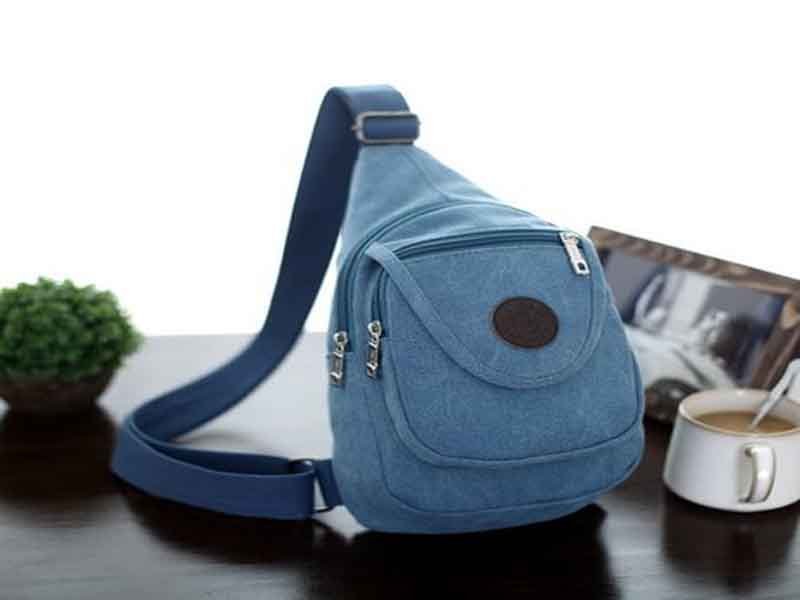
Can't find the answers?
No worries, please contact us and we will answer all the questions you have during the whole process of bag customization.
Make A Sample First?
If you have your own artwork, logo design files, or just an idea,please provide details about your project requirements, including preferred fabric, color, and customization options,we’re excited to assist you in bringing your bespoke bag designs to life through our sample production process.