Skip to content

In the ever-evolving world of apparel fabrics, few materials have struck the ideal balance between natural comfort and technical performance like cotton spandex blends. Whether you’re designing high-stretch yoga leggings or breathable everyday T-shirts, getting the blend ratio right is not just a matter of feel—it’s the difference between functional wearability and costly returns.
Cotton spandex fabric combines the softness of cotton with the stretch of spandex. Choosing the correct blend ratio (usually 95/5 or 92/8) is essential for ensuring optimal comfort, durability, and elasticity in apparel.
Behind every successful garment is a carefully engineered fabric. And behind every high-performance cotton stretch knit lies a formula—blend percentage, GSM, yarn type, and knitting structure—crafted for a purpose. In this article, we explore the exact technical specifications that matter to textile buyers, sourcing managers, and product developers alike.
Let’s begin with what makes cotton spandex such a game-changer—and why getting the blend ratio wrong can cost you.
1. What Is Cotton Spandex Fabric and Why Is It Popular in Apparel Manufacturing?
Cotton spandex fabric is a knit or woven textile made primarily of cotton fibers blended with a small percentage of spandex (also known as elastane or Lycra). The spandex adds stretch and recovery to the otherwise static, breathable nature of cotton, making it ideal for activewear, casualwear, intimates, and children’s clothing.
Cotton spandex is a stretch fabric made by blending natural cotton with synthetic spandex fibers. It’s widely used for its comfort, breathability, and elasticity.
Understanding Cotton Spandex Appeal
a. Functional Performance
- Stretch & Recovery: Spandex provides multi-directional stretch and shape retention.
- Breathability: Cotton ensures air permeability and natural cooling.
- Moisture Handling: Cotton absorbs sweat; spandex helps in rapid fabric drying.
b. Common Use Cases
| Apparel Type | Blend Ratio | Reason for Use |
|---|---|---|
| T-shirts | 95/5 | Comfortable fit with mild stretch |
| Leggings/Yoga Pants | 90/10 or 88/12 | High stretch and shape retention |
| Baby Rompers | 95/5 | Soft, non-irritating, with mobility support |
| Undergarments | 92/8 | Close-to-skin fit with elasticity |
c. Why Brands Choose Cotton Spandex
- Cost-effective vs. all-synthetic performance fabrics
- Appealing to both eco-conscious and comfort-focused consumers
- Strong global demand in fast fashion and premium segments
A European loungewear brand saw a 23% drop in return rates after switching from 100% cotton to a 92/8 cotton-spandex blend in their core T-shirt line. Consumers cited improved fit retention after washing.
2. Which Cotton-Spandex Blend Ratios Offer the Best Balance of Comfort and Stretch?

The most commonly used blend ratios in the industry are 95/5, 92/8, and 90/10. Each serves a different application based on stretch requirement, fabric thickness, and end-use. Choosing the right ratio depends on intended garment function.
95/5 offers light stretch and high cotton content for comfort. 90/10 provides more elasticity for activewear. 92/8 is a versatile middle ground used widely.
Comparing Cotton-Spandex Ratios
a. Blend Ratio Breakdown
| Blend Ratio (Cotton/Spandex) | Stretch % (Approx.) | Use Case | Comfort Level | Elastic Recovery |
|---|---|---|---|---|
| 95/5 | 10–15% | Everyday T-shirts, babywear | ⭐⭐⭐⭐ | ⭐⭐ |
| 92/8 | 20–30% | Undergarments, slim-fit tees | ⭐⭐⭐⭐ | ⭐⭐⭐⭐ |
| 90/10 | 30–40% | Leggings, athleisure | ⭐⭐⭐ | ⭐⭐⭐⭐ |
| 88/12 | 40–50% | Compression wear, shapewear | ⭐⭐ | ⭐⭐⭐⭐⭐ |
b. Things to Consider When Choosing
- More stretch ≠ more comfort: Overstretch can cause sagging or poor drape.
- Higher spandex content increases cost and reduces breathability.
- Washing durability: 92/8 and 90/10 blends tend to retain elasticity longer after multiple washes compared to 95/5.
c. Buyer Tip: Optimize for Use, Not Just Feel
Some buyers prioritize softness in hand-feel swatches—but in garments that go through high tension (like leggings), stretch retention under strain is more critical than first touch.
3. How Does Fabric Weight (GSM) Impact the Performance of Cotton Spandex?
Fabric weight, measured in grams per square meter (GSM), directly affects how a cotton spandex blend performs in terms of comfort, opacity, stretch behavior, and application type. Light GSMs tend to be more breathable and flexible, while heavier GSMs offer durability and coverage.
Cotton spandex fabric GSM determines stretch behavior, durability, and usage. Lower GSM suits T-shirts; higher GSM is preferred for leggings and structured garments.
Understanding GSM Impact on Performance
a. Common GSM Ranges for Cotton Spandex
| GSM Range | Typical Use | Comments |
|---|---|---|
| 120–160 GSM | T-shirts, babywear | Soft, lightweight, but may lack opacity |
| 160–200 GSM | Slim-fit tops, yoga tops | Balanced stretch and coverage |
| 200–260 GSM | Leggings, shorts, dresses | High compression, better shape retention |
| 260–320 GSM | Compression wear, shapewear | Dense structure, firm hold, less breathability |
b. GSM vs. Stretch Characteristics
| GSM | 4-Way Stretch Response | Recovery Post-Wash | Transparency Risk |
|---|---|---|---|
| 140 GSM | High | Medium | High |
| 180 GSM | Balanced | Good | Low–Medium |
| 220 GSM | Moderate–Tight | Excellent | None |
| 280 GSM | Very Tight | Excellent | None |
A Canadian sportswear brand had complaints about transparency in their leggings. The fabric used was a 180 GSM 90/10 cotton-spandex knit. Switching to a 220 GSM blend with a double-knit structure eliminated sheerness and improved consumer retention by 17%.
c. Buyer Tip: Use GSM as a Benchmark, Not a Guarantee
Always request fabric swatches + stretch test data, as GSM alone doesn’t account for yarn density, knit tension, or spandex recovery rate. A tightly knit 180 GSM fabric can perform better than a loose 200 GSM alternative.
4. What Are the Key Physical and Mechanical Properties of Cotton Spandex Blends?
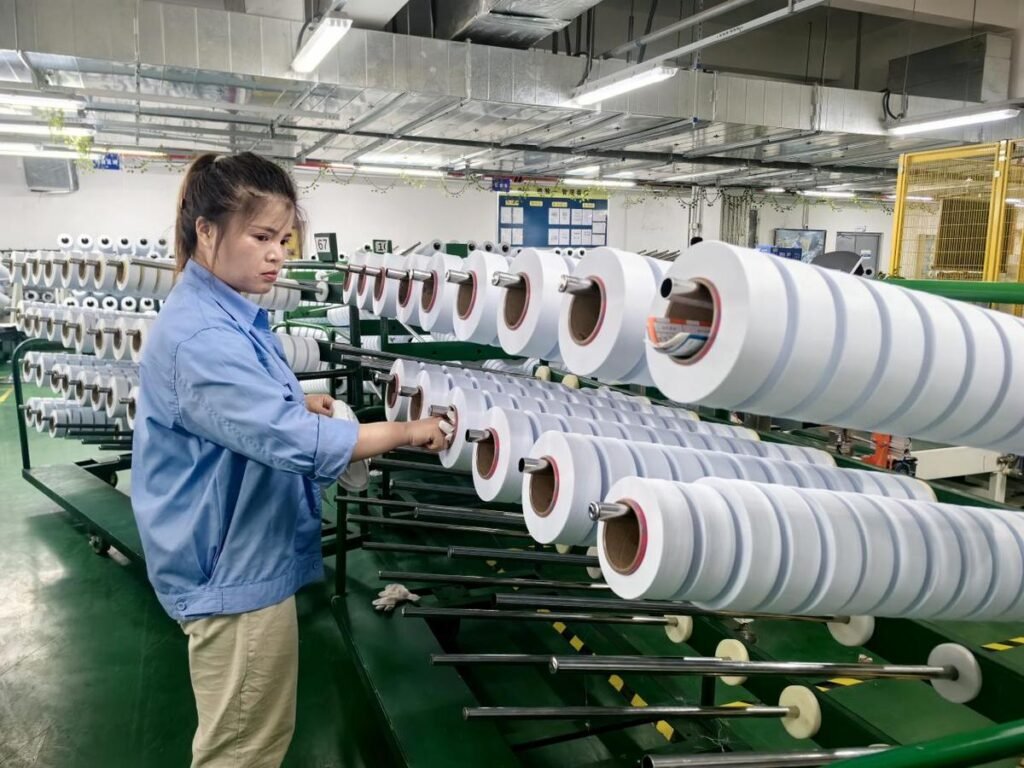
When evaluating cotton spandex fabrics for production, textile engineers focus on several critical technical specifications, including elongation, tensile strength, bursting pressure, recovery percentage, and dimensional stability. These properties determine how well the fabric performs under stress and after laundering.
Key mechanical properties of cotton spandex include elongation %, tensile strength, recovery %, and shrinkage control. These define the fabric’s fitness for apparel use.
Technical Specs That Matter
a. Core Property Metrics (Industry Standards)
| Property | Test Method | Typical Value (92/8) | Comments |
|---|---|---|---|
| 4-way stretch elongation | ASTM D4964 | 30–45% | Measured on both warp & weft |
| Stretch recovery (5 cycles) | ASTM D2594 | ≥ 90% | Critical for tight garments |
| Dimensional stability (shrinkage) | AATCC 135 (5 washes) | ≤ 5% | Shrinkage after laundering |
| Tensile strength | ASTM D5034 | 180–220 N (warp) | Should resist tearing under stress |
| Bursting strength (knits) | ASTM D3786 | 250–300 kPa | Especially important for leggings |
b. Yarn and Knit Construction’s Role
- Combed cotton: Fewer short fibers = stronger stretch base
- Ring-spun yarns: Softer, smoother finish
- Spandex filament count: Higher = better stretch distribution
- Double-knit vs single-knit: Double-knit offers more structure and compression
c. Testing Pitfall to Avoid
Don’t rely solely on lab certificates. Always perform real-world fitting tests on finished garments. For example, leggings may pass a tensile test in flat form but fail at the seams when stretched on a body.
5. How Do Different Knit Structures (Jersey, Interlock, Rib) Affect Cotton Spandex Functionality?
The knit structure of cotton spandex fabric significantly influences its stretch direction, texture, drape, opacity, and garment compatibility. While the fiber content determines potential stretch, the structure dictates how that stretch is distributed and how the garment behaves over time.
Jersey offers lightweight stretch and drape; interlock enhances opacity and structure; rib knits provide superior elasticity. Each knit structure suits different apparel needs.
Structural Differences Explained
a. Common Knit Structures in Cotton Spandex
| Knit Type | Stretch Direction | Drape & Feel | Recommended Use |
|---|---|---|---|
| Jersey Knit | 2-way (mainly width) | Soft, breathable | T-shirts, undergarments |
| Interlock Knit | 2-way moderate stretch | Dense, smooth, stable | Leggings, shapewear, dresses |
| Rib Knit | 4-way stretch | Elastic, textured | Cuffs, neckbands, body-hugging tops |
| French Terry | 2-way stretch | Soft loopback, warm | Sweatshirts, joggers |
b. Jersey vs. Interlock: Functionality Showdown
| Feature | Jersey (95/5) | Interlock (92/8) |
|---|---|---|
| Opacity | Low (in light GSM) | High even at 180 GSM |
| Compression | Low–Medium | Medium–High |
| Drape | High (fluid) | Structured |
| Wrinkle Resistance | Moderate | Excellent |
| Garment Types | Loose wear | Fitted performance wear |
A U.S.-based maternity brand switched from jersey to interlock for their stretch tunics and saw a 35% improvement in post-wash fit retention and reduced product returns due to transparency issues.
c. Buyer Insights: Knit Construction as a Competitive Advantage
- Brands focused on compression and body shaping should lean toward interlock or rib knits with higher spandex ratios.
- For lightweight summerwear, jersey knits with 95/5 blends are sufficient and cost-effective.
- Ensure your supplier provides a fabric swatch with the actual knit structure, not just fiber content.
6. What Are the Standard Testing Methods for Cotton Spandex Fabric Quality?

To ensure cotton spandex fabric performs as promised, textile engineers and sourcing teams rely on a set of international fabric testing standards. These tests help verify stretch performance, shrinkage, pilling resistance, colorfastness, and seam integrity.
Cotton spandex fabrics are tested via ASTM and AATCC methods for stretch, shrinkage, pilling, and colorfastness to ensure reliability and end-user satisfaction.
Lab Tests & What They Reveal
a. Core Testing Standards
| Test Parameter | Standard Method | Why It Matters |
|---|---|---|
| Stretch & Recovery | ASTM D4964/D2594 | Ensures elasticity & shape retention |
| Shrinkage After Wash | AATCC 135 / ISO 6330 | Verifies dimensional stability |
| Pilling Resistance | ASTM D3512 / Martindale | Evaluates surface durability |
| Colorfastness to Washing | AATCC 61 / ISO 105-C06 | Ensures color retention in laundering |
| Seam Slippage | ASTM D434 / D4034 | Measures seam integrity during wear |
b. Seam Performance in Stretch Garments
- Seam strength must match fabric elasticity. Use 4-thread overlock stitches.
- Stress points (knees, elbows) should undergo bursting pressure tests.
- Failure to match thread elasticity to fabric can cause seam popping, even in otherwise strong fabrics.
c. On-Site Testing Tools for Small Buyers
For small or growing brands, consider investing in:
- Stretch elongation test bands (manual measurement)
- Shrinkage rulers for wash tests
- Mini Martindale tester for pilling
These low-cost tools help validate factory claims before bulk production.
7. Are There Industry Benchmarks for Cotton-Spandex Performance in Activewear and Casualwear?
Yes, several industry benchmarks and brand-specific standards help define acceptable performance thresholds for cotton-spandex fabrics across activewear and casualwear categories. These benchmarks revolve around metrics like stretch recovery, shrinkage rate, pilling resistance, and elongation percentage.
Industry benchmarks for cotton-spandex focus on ≥90% recovery, ≤5% shrinkage, and 30–45% stretch to meet activewear and casualwear performance standards.
Activewear vs. Casualwear Specs
a. Activewear Performance Targets
| Performance Metric | Benchmark Value |
|---|---|
| 4-Way Stretch Elongation | 35–45% |
| Recovery After 5 Stretch Cycles | ≥ 90% |
| Shrinkage After 5 Washes | ≤ 3% |
| Pilling Resistance (Martindale) | ≥ 4 Grade (1–5 scale) |
| GSM Range | 220–280 GSM |
b. Casualwear Acceptable Ranges
| Performance Metric | Benchmark Value |
|---|---|
| 2-Way Stretch Elongation | 25–35% |
| Recovery | ≥ 85% |
| Shrinkage After 5 Washes | ≤ 5% |
| Pilling Resistance | 3.5–4 Grade |
| GSM Range | 160–220 GSM |
A German fashion label found that using 90/10 cotton-spandex interlock at 240 GSM for athleisure joggers resulted in excellent recovery and shape retention even after 50+ washes—exceeding industry benchmarks and extending product lifecycle by \~20%.
8. How Should Brands Choose the Right Cotton-Spandex Blend for Specific Applications?
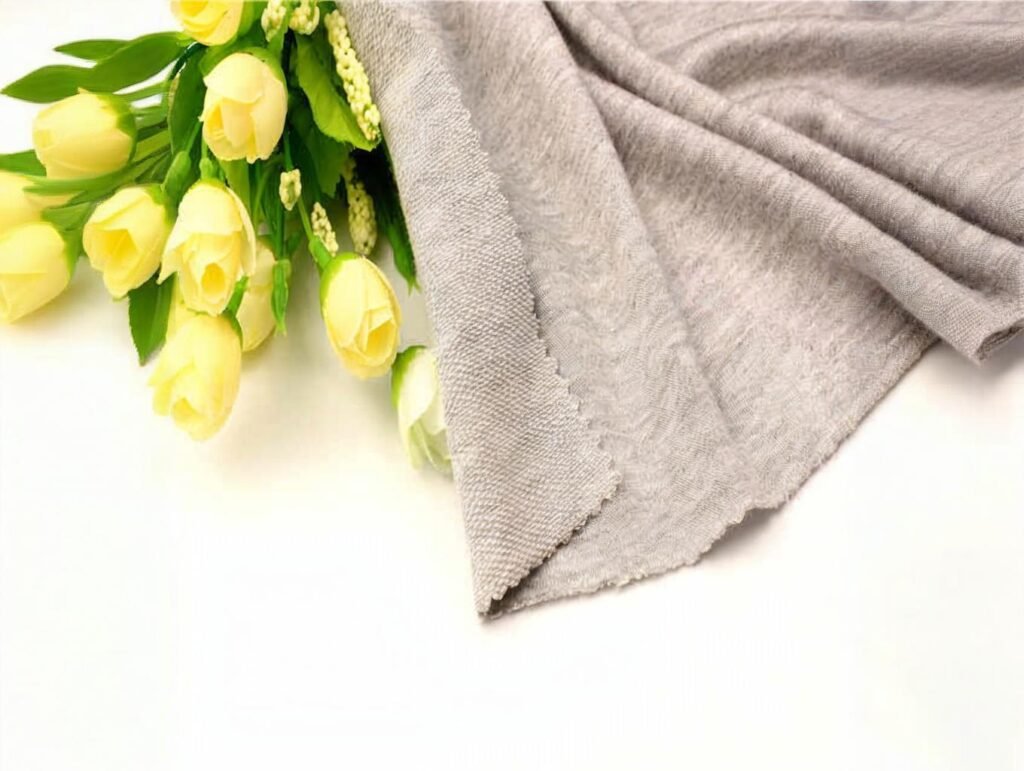
Choosing the right cotton-spandex blend goes beyond just picking a ratio like 95/5 or 92/8. Brands must consider end-use function, garment design, user comfort expectations, local climate, and durability demands to select a blend that aligns with consumer needs and manufacturing goals.
To choose the right cotton-spandex blend, brands should match blend ratios and knit structure with garment function, climate conditions, and target market preferences.
Blend Selection Framework
a. Common Blends and Their Ideal Use
| Blend Ratio | Best For | Comments |
|---|---|---|
| 95% Cotton / 5% Spandex | T-shirts, sleepwear | Softest hand feel, low compression |
| 92% Cotton / 8% Spandex | Leggings, fitted dresses | Moderate stretch, good recovery |
| 90% Cotton / 10% Spandex | Compression wear, shapewear | High support, less breathability |
b. Climate Considerations
- Hot/humid climates: Opt for lighter GSM, lower spandex %, open-knit jersey
- Cold climates: Use denser interlock or French terry with higher spandex content
c. Brand Strategy Angle
- Premium brands may prioritize 95/5 for softness, while performance brands may choose 90/10 for tighter fit.
- Eco-conscious brands can use organic cotton + recycled spandex blends to appeal to sustainability-minded consumers.
d. Supplier Tip
When working with suppliers like SzoneierFabrics, clearly communicate:
- Garment category
- Target market (climate, region)
- Stretch expectations (e.g., yoga vs lounge)
- Minimum tolerances for shrinkage and GSM
This helps ensure a custom-developed cotton-spandex fabric that meets brand-specific benchmarks.
Final Thoughts and Action Step
Cotton-spandex fabric is a versatile powerhouse in the textile world. From technical specifications like GSM and elongation to strategic blend selection and industry testing standards, getting these details right is what separates high-retention garments from poor performers.
If you’re a sourcing manager, designer, or product developer looking for custom cotton-spandex blends tailored to your market, SzoneierFabrics offers:
- Custom blend ratio development
- Fast prototyping and fabric sampling
- Free lab testing reports on stretch, shrinkage, and GSM
- Low MOQ bulk production for growing brands
Reach out to SzoneierFabrics today for a quote or custom development solution that aligns with your garment design and performance requirements.