 Skip to content
Jute Tote Bags for Grocery Shopping

A grocery bag rarely gets much attention until a handle tears in the parking lot, a glass bottle tips over, or moisture from fresh vegetables leaves a stain across the bottom. That is when an ordinary tote becomes an engineering problem. Grocery shopping places concentrated weight, irregular shapes, condensation, food packaging, sharp carton corners, and repeated lifting stress into one seemingly simple product. A good jute tote must therefore do more than look natural or carry an environmental message.
Jute tote bags can be an excellent choice for grocery shopping when they are made with a stable woven structure, reinforced handles, a practical gusset, and a construction suited to the expected load. They are particularly useful for packaged foods, fruit, vegetables, jars, cans, and household supplies. However, untreated jute absorbs moisture and is not naturally easy to wash, so raw meat, leaking frozen products, and wet groceries require a separate washable liner, leak-resistant insert, or dedicated secondary bag.
The difference between a dependable grocery tote and a decorative giveaway is usually hidden in the details: fabric weight, yarn quality, seam allowance, stitch density, handle attachment, bottom reinforcement, lamination, and testing. Two bags may appear identical on a product page but behave very differently after twenty shopping trips. This guide looks beneath the printed logo and natural texture to explain what makes a jute grocery bag genuinely useful, how much it can safely carry, and which specifications matter when developing a custom version.
What Are Jute Grocery Bags?
Jute grocery bags are reusable shopping totes made primarily from woven jute fiber. Unlike thin promotional bags, grocery-oriented models normally include side and bottom gussets, reinforced carrying handles, stronger seams, and sometimes a laminated or lined interior. Their broad base allows cartons, produce, jars, and packaged foods to sit more securely instead of stacking vertically in a narrow tote.
What Is Jute Fabric?
Jute is a plant-based bast fiber obtained mainly from the stems of plants in the Corchorus genus. After harvesting, the stems are retted so the usable fibers can be separated, cleaned, dried, spun into yarn, and woven into fabric. The resulting textile has a visible natural texture, relatively low stretch, and the stiffness needed to help a grocery bag maintain its shape.
Jute has long been used for sacks, ropes, agricultural packaging, and other products that require an economical natural fiber with useful mechanical strength. The Food and Agriculture Organization describes jute as a common packaging fiber with reasonable strength, while broader FAO research identifies natural fibers such as jute as renewable and biodegradable materials.
For grocery totes, jute is generally woven more neatly than traditional agricultural sacking. Yarn thickness, weave density, finishing, color consistency, and surface cleanliness can all be adjusted according to the intended product positioning. A coarse open weave may suit rustic promotional packaging, while a tighter and more uniform weave creates a cleaner surface for retail graphics and improves resistance to deformation.
The following terms are useful when reviewing a jute bag specification:
| Specification | What It Describes | Why It Matters for Grocery Use |
|---|---|---|
| Fabric weight | The mass of the fabric per square meter | Heavier fabric usually improves body and durability, although construction remains equally important |
| Weave density | How closely the warp and weft yarns are arranged | A tighter weave reduces gaps, improves print definition, and helps resist snagging |
| Yarn thickness | The diameter and consistency of the spun jute yarn | Uneven yarn can create weak areas, loose fibers, and an inconsistent surface |
| Lamination | A film bonded to the reverse side of the jute | Adds structure and resistance to minor spills but changes recyclability and cleaning requirements |
| Lining | A separate internal textile layer | Protects groceries from rough fibers and can improve appearance or cleanability |
| Gusset | The expandable side or bottom panel | Creates usable volume and a flatter base for cartons, cans, and bottles |
| Handle reinforcement | Extra stitching or material at handle joints | Reduces the risk of handles pulling away under repeated lifting |
Because jute is a natural agricultural fiber, minor variations in shade, yarn thickness, slubs, and surface hairiness are normal. These variations are not automatically defects. The important issue is whether the variation remains within an agreed approval standard and whether it affects sewing strength, printing accuracy, dimensions, or practical use.
How Are Jute Bags Made?
A jute grocery tote begins with a product specification rather than with sewing. The intended grocery load, bag dimensions, handle length, printing method, lining, closure, and expected retail price should be determined before the fabric is cut. When these decisions are made only after sampling, the result is often an oversized bag with weak handles or a strong bag that feels unnecessarily heavy and expensive.
The manufacturing process normally follows these stages:
| Production Stage | Main Work | Common Quality Risk |
|---|---|---|
| Material selection | Confirm jute grade, weave, color, weight, and finish | Shade variation, loose weave, excessive odor, or inconsistent yarn |
| Surface treatment | Apply dyeing, softening, lamination, coating, or printing preparation | Uneven coating, curling, poor adhesion, or altered natural appearance |
| Cutting | Cut panels, gussets, facings, and reinforcement pieces | Grain distortion, inaccurate dimensions, or excessive fraying |
| Printing | Apply screen printing, heat transfer, embroidery, or other decoration | Poor adhesion, ink bleeding, misalignment, or reduced flexibility |
| Sewing | Join body panels, gussets, top edges, handles, and linings | Weak seams, skipped stitches, uneven tension, or insufficient reinforcement |
| Finishing | Trim threads, clean surfaces, shape the bag, and inspect dimensions | Loose fibers, stains, distorted panels, or unfinished seam edges |
| Testing | Check appearance, dimensions, loading, handle strength, and packing | Passing visual inspection but failing during repeated real-world use |
The body panels are generally cut according to the direction of the woven yarns. Poor cutting alignment can cause the bag to twist or lean after sewing. Because jute edges fray more easily than tightly woven synthetic fabric, the seam construction must contain the raw edges effectively. Binding, overlocking, folded seams, or lining can be used depending on the desired appearance and price level.
Handle attachment is one of the most important manufacturing details. A tote may use cotton webbing, jute webbing, padded fabric handles, rope, or blended straps. Simply sewing a handle across a narrow line at the top edge concentrates stress in a small area. Stronger constructions extend the handle farther down the body and use box stitching, cross stitching, bar tacks, or an internal reinforcement patch to spread the load.
A grocery bag should also be evaluated after the print or embroidery is applied. Large, heavily cured print areas can stiffen the fabric, while dense embroidery may distort a loose weave. Logo placement therefore needs to account for the gusset folds, seam allowance, and the way the bag expands when filled.
Are Jute and Burlap the Same?
Jute and burlap are related terms, but they do not describe exactly the same thing. Jute is the fiber, while burlap usually refers to a coarse, open-weave fabric commonly made from jute. In some countries, similar fabric may be called hessian. A jute bag can therefore be made from burlap-style fabric, but not every jute bag has the loose and rustic appearance people associate with burlap.
This distinction matters when ordering custom grocery totes. A request for a “burlap bag” may be interpreted as a coarse promotional product with visible gaps between yarns. A request for a “tightly woven jute shopping tote” indicates a cleaner structure with better print coverage and fewer loose fibers.
| Term | Usual Meaning | Typical Appearance | Grocery Suitability |
|---|---|---|---|
| Jute fiber | The raw plant-derived textile fiber | Golden, brown, off-white, or dyed | Suitability depends on how it is spun and woven |
| Burlap | Coarse, relatively open jute fabric | Rustic, textured, visibly woven | Better for light or packaged products unless reinforced |
| Hessian | A regional term often used for woven jute fabric | Can range from coarse to moderately refined | Suitable when weave and construction match the required load |
| Laminated jute | Woven jute backed with a polymer film | Firmer, smoother inside, more structured | Well suited to boxed and packaged groceries |
| Jute-cotton blend | Fabric combining jute character with softer fibers | Smoother and less coarse | Useful when comfort and print quality are priorities |
The name alone is not enough to judge quality. Buyers should review an actual material swatch, fabric weight, weave density, color tolerance, surface finish, and sample bag. A high-quality natural jute tote may have a controlled rustic texture, while an inexpensive burlap bag may shed fibers or distort under moderate loading.
What Makes Jute Bags Different?
Jute sits between soft textile totes and rigid reusable shopping carriers. It offers more body than lightweight cotton, a more natural visual character than polypropylene, and less flexibility than polyester. That combination makes it particularly useful for grocery totes designed to stand open during loading.
Its stiffness is helpful when placing boxes, cans, and produce into the bag, but the same stiffness makes the tote less compact than a foldable nylon bag. Jute is also more absorbent than most synthetic materials. Moisture can enter the fibers, create stains, affect dimensional stability, and increase drying time. Scientific reviews of jute applications consistently identify moisture affinity as one of the material’s main limitations.
The practical differences can be summarized as follows:
| Characteristic | Jute Grocery Tote | Practical Effect |
|---|---|---|
| Natural texture | Visible yarn and plant-fiber character | Creates a recognizable sustainable and premium appearance |
| Structural body | Firmer than many lightweight textile bags | Helps the bag stay open and supports organized packing |
| Low elasticity | Stretches less than knitted or lightweight cotton fabric | Reduces sagging but transfers more stress to seams and handles |
| Moisture absorption | Absorbs humidity and liquid more readily than synthetic fabric | Requires careful drying and protection from leaking groceries |
| Print surface | Textured rather than completely smooth | Works well with bold graphics but requires testing for fine details |
| Biodegradable base fiber | Uncoated jute can break down naturally under suitable conditions | Environmental claims must account for lamination, ink, lining, and accessories |
| Natural variation | Color and yarn appearance vary between batches | Sample approval and tolerance standards are important |
A good jute tote does not need to hide the natural character of the material. It needs to control it. Selecting stable yarn, specifying an appropriate weave, removing excessive loose fibers, and agreeing on an acceptable shade range creates a product that still looks natural without appearing unfinished.
Are Jute Bags Good for Groceries?
Jute bags are well suited to most routine grocery loads, especially cans, jars, boxed products, fruit, vegetables, bakery packages, and household supplies. Their wide gussets and firm walls make packing easier than with a narrow flat tote. Their main limitations are moisture absorption, limited washability, and concentrated stress around the handles, all of which can be addressed through better material and structural choices.
How Much Weight Can They Hold?
There is no honest universal weight limit for a jute bag. Capacity depends on the complete construction, not simply on the presence of jute fabric. A thick body with poorly attached handles may fail before a lighter body with properly distributed reinforcement. Bag width also matters because a wide bag places greater leverage on the upper seams when the contents swing during walking.
For product development, it is more useful to establish a target working load and then validate the completed bag. The following ranges are practical planning references rather than automatic guarantees:
| Intended Use | Suggested Working-Load Target | Typical Construction Direction |
|---|---|---|
| Light produce and bakery shopping | 5–7 kg | Medium woven jute, standard gusset, reinforced cotton handles |
| Everyday mixed groceries | 8–12 kg | Tighter weave, bottom gusset, extended handle attachment, reinforced top edge |
| Bottles, cans, and dense products | 12–15 kg | Heavy construction, stronger webbing, reinforced base, load-tested seams |
| Oversized family shopping | Above 15 kg | Requires dedicated engineering, larger reinforcement areas, and physical testing |
The working-load target should not be confused with the maximum weight at which the bag finally breaks. A grocery tote must tolerate lifting, walking, placing the bag in a car, and repeated use. Dynamic movement can place greater momentary stress on the handles than a static weight resting on the floor.
A useful testing program may include:
| Test | Purpose | Example Evaluation |
|---|---|---|
| Static load test | Checks whether the bag can hold the specified weight without immediate failure | Fill to the agreed test weight and suspend for a defined period |
| Repeated lift test | Simulates regular lifting from a checkout counter or car | Lift and lower the loaded bag for multiple cycles |
| Handle pull test | Measures the security of each handle attachment | Apply controlled force to individual handle joints |
| Seam inspection | Checks for yarn separation and stitch damage | Examine stress points before and after loading |
| Dimensional check | Identifies permanent stretching or distortion | Compare width, height, and gusset before and after testing |
| Drop test | Simulates accidental placement or short drops | Drop a loaded sample from an agreed low height and inspect damage |
Test conditions should be written into the purchase specification. Statements such as “heavy duty” or “strong enough for groceries” are too vague to enforce. A clearer requirement would identify the working load, test duration, number of cycles, acceptable dimensional change, and whether any stitch opening or handle displacement is permitted.
Are They Strong Enough for Bottles?
Jute grocery bags can carry bottles, but bottles create a more difficult load than cereal boxes or vegetables. A one-liter bottle concentrates roughly one kilogram of mass into a narrow footprint. Several bottles placed together can press against the bottom seam, collide while walking, or tip if the base is too narrow.
A bottle-friendly tote should have a bottom gusset wide enough to let the containers stand upright. The base should remain reasonably flat after loading, and the handle reinforcement should extend below the upper edge of the bag. For repeated bottle transport, an internal divider or removable bottle insert can prevent glass-to-glass contact.
| Bottle-Related Risk | Why It Happens | Useful Design Response |
|---|---|---|
| Bottles fall sideways | Base is too narrow or soft | Increase the bottom gusset or add a removable base board |
| Glass bottles collide | Large undivided interior allows movement | Add stitched or removable bottle dividers |
| Bottom seam opens | Concentrated pressure acts directly on the seam | Use stronger seam construction and bottom reinforcement |
| Handles become uncomfortable | High weight is carried through narrow straps | Use wider cotton webbing or padded handles |
| Bag tilts while walking | Handles are uneven or attached too close together | Control handle length, spacing, and sewing position |
| Condensation stains the bag | Chilled bottles transfer moisture to natural fiber | Add a wipe-clean liner or use a separate insulated insert |
A rigid bottom board can improve stability, but it also creates design tradeoffs. Cardboard is inexpensive but performs poorly when wet. Plastic board resists moisture but introduces another material into the product. A removable insert makes cleaning and end-of-life separation easier, while a permanently sewn insert creates a neater appearance but complicates repair and recycling.
For wine, cooking oil, milk, and glass beverage bottles, it is better to define the expected bottle diameter and height during development. This allows the manufacturer to set the gusset dimensions and divider spacing around actual packaging rather than relying on a generic “large grocery bag” measurement.
Do Jute Bags Keep Their Shape?
Jute naturally has more body than thin cotton or nylon, so a well-made tote can remain open while groceries are loaded. Shape retention still depends on weave density, lamination, gusset geometry, top-edge reinforcement, storage method, and exposure to moisture.
A flat jute bag without gussets may look tidy when empty but becomes rounded and unstable when filled. Side and bottom gussets create a three-dimensional interior and help distribute the contents over a larger base. Gussets also allow the bag to carry bulky produce and cartons without pulling the front and back panels excessively.
The main shape-control options include:
| Construction Feature | Shape Benefit | Possible Tradeoff |
|---|---|---|
| Tighter jute weave | Improves panel stability and reduces yarn movement | May increase fabric weight and cost |
| Interior lamination | Adds stiffness and minor spill resistance | Can cause creasing and reduce material simplicity |
| Cotton or polyester lining | Improves internal finish and supports the body | Adds sewing steps and may not create full rigidity |
| Reinforced top edge | Prevents the opening from collapsing or stretching | Adds thickness around the rim |
| Bottom board | Keeps the base flat under bottles and cans | Must be removed or protected during cleaning |
| Piping around seams | Defines the bag shape and protects panel edges | Creates a more structured, less foldable product |
| Full side gussets | Increases capacity and allows the bag to stand open | Makes the folded bag wider and bulkier |
Lamination is often selected because it produces a firm retail-ready shape and makes the inner surface easier to wipe. However, lamination should not be described as making the bag completely waterproof unless the seams, needle holes, edges, and closures have also been engineered for water resistance. A laminated panel can resist a small spill while liquid still escapes through the stitched bottom seam.
Storage also affects shape. Folding a heavily laminated bag along an unintended line can leave a permanent crease. A softer unlaminated tote is easier to fold but may need reshaping before use. The final construction should therefore match how customers will store the bag—in a car, kitchen cupboard, shopping trolley, handbag, or retail display.
Are They Good for Fresh Produce?
Jute totes work well for packaged or dry fresh produce, but fruit and vegetables should not be placed carelessly into an unclean bag. Soil, moisture, damaged fruit, and condensation can transfer to the interior. The natural texture may also rub delicate items such as peaches, tomatoes, herbs, or leafy vegetables.
For produce shopping, a jute tote is best used as the outer carrier, while lightweight washable produce bags or food-contact packaging hold the individual items. This approach keeps small produce organized and reduces direct contact with the coarse jute surface.
| Grocery Type | Recommended Packing Method | Useful Bag Feature |
|---|---|---|
| Apples, oranges, and potatoes | Place in washable produce bags or paper packaging | Wide gusset and reinforced bottom |
| Leafy vegetables | Use a separate moisture-resistant produce bag | Wipe-clean lining and good ventilation after use |
| Tomatoes, peaches, and soft fruit | Keep above heavy items in a small inner bag | Broad opening and moderate bag height |
| Chilled vegetables | Prevent condensation from reaching untreated jute | Laminated interior or removable washable insert |
| Bread and bakery products | Keep away from damp produce and cleaning products | Internal pocket or separate upper layer |
| Raw meat, poultry, or seafood | Use sealed leak-resistant packaging and a dedicated separate bag | Non-absorbent, easily sanitized secondary carrier |
Food-safety authorities recommend separating raw meat, poultry, and seafood from produce and ready-to-eat foods during shopping. Raw-product juices can leak from packaging and spread contamination to other groceries. USDA guidance also recommends cleaning reusable grocery bags regularly, while food-safety specialists advise keeping bags dry and separating raw foods from items eaten without cooking.
Untreated jute should not be presented as a washable food-contact container. Aggressive washing can distort the weave, affect dye, weaken finishes, and change dimensions. A practical grocery system may therefore include one jute tote for dry and packaged groceries, washable mesh bags for loose produce, and a separate non-absorbent bag for raw proteins or leaking frozen food.
For custom grocery programs, colored handle labels or printed category icons can make separation easier. A green-handled bag might be reserved for produce, a neutral bag for pantry goods, and a wipe-clean lined bag for chilled products. This simple visual system improves everyday usability without turning the tote into an overly complicated product.
Which Jute Tote Bag Is Best?
The best jute tote bag for grocery shopping is not simply the largest or thickest option. It is a bag sized around the groceries people actually carry, with a stable bottom gusset, comfortable handles, reinforced stress points, and an interior finish suited to dry, chilled, or packaged goods. A well-balanced grocery tote should remain easy to lift when full, fit comfortably beside the body, and avoid becoming so deep that delicate foods disappear beneath heavy items.
A practical everyday jute grocery bag often measures approximately 38–45 cm wide, 32–38 cm high, and 15–20 cm deep. These dimensions provide room for cereal boxes, vegetables, cans, jars, and household items without creating an excessively wide load. Larger family-size bags can work well for lightweight products, but filling an oversized tote with bottles or canned food may make it uncomfortable and place unnecessary stress on the handles.
The ideal specification depends on shopping habits. Someone walking home from a neighborhood market may prefer two medium bags that distribute weight evenly. A customer loading groceries directly into a car may value a wider, box-shaped tote with short handles and a rigid base. A supermarket promotion may require a lightweight bag that folds flat, while a premium retail program may favor a lined tote with internal dividers and a carefully finished top edge.
What Size Should You Choose?
Bag size should be selected according to usable volume, expected weight, packaging dimensions, and carrying comfort. Exterior dimensions alone can be misleading because thick seams, rounded corners, lining, and gusset construction reduce the actual internal space.
A very tall bag may hold a large volume, but it is often inconvenient for groceries. Heavy products fall to the bottom, soft produce gets crushed, and short users may struggle to see inside. A very wide bag can hold more cartons side by side, but the load may swing against the body or become difficult to pass through narrow checkout areas.
The following size ranges provide a practical starting point:
| Bag Format | Approximate Dimensions | Suitable Grocery Use | Main Limitation |
|---|---|---|---|
| Compact tote | 30–35 cm wide, 28–32 cm high, 10–14 cm deep | Bakery items, snacks, fruit, pharmacy products | Limited space for large cartons |
| Everyday tote | 38–42 cm wide, 32–36 cm high, 15–18 cm deep | Mixed weekly groceries, jars, produce, packaged foods | May become heavy if packed with cans |
| Wide market tote | 42–48 cm wide, 30–36 cm high, 18–22 cm deep | Vegetables, boxes, bulk goods, car-based shopping | Wider load requires strong handle placement |
| Tall bottle tote | 30–36 cm wide, 36–42 cm high, 14–18 cm deep | Oil, milk, wine, sauces, and upright bottles | Less suitable for broad cartons |
| Family-size tote | 45–55 cm wide, 38–45 cm high, 20–25 cm deep | Large but relatively light grocery loads | Easy to overload beyond comfortable carrying weight |
Capacity should be considered alongside product density. A tote filled with bread, cereal, and leafy vegetables may be bulky but light. The same tote filled with canned drinks can become unreasonably heavy. For that reason, manufacturers should not promote capacity only in liters. A more useful product specification combines bag volume with a tested working-load recommendation.
When designing a custom size, it helps to place actual grocery packages inside a paper or fabric mock-up. This simple test reveals whether common cartons fit flat, whether bottles remain upright, whether the opening is wide enough, and whether the handles are long enough once the bag is full.
The base dimensions deserve particular attention. A bag measuring 42 cm wide with an 18 cm bottom gusset creates a much more useful rectangular loading area than a flat 42 cm-wide tote. However, the finished internal width may be several centimeters smaller because of seam allowance and the way the gusset folds inward.
Which Gusset Works Best?
A full bottom and side gusset is generally the most practical structure for grocery shopping. It allows the bag to expand into a box-like shape, creates a flatter base, and helps distribute irregular groceries more evenly. Flat totes are better suited to documents, light retail purchases, or promotional use than to mixed supermarket loads.
There are several common gusset structures:
| Gusset Type | Structure | Advantages | Best Use |
|---|---|---|---|
| Bottom gusset | Expansion panel at the lower edge | Improves base width while keeping sides relatively simple | Boxes, jars, and general groceries |
| Side gussets | Folded panels on both sides | Expands volume and allows the opening to widen | Produce, bakery products, and bulky packages |
| Full side and bottom gusset | Three-dimensional structure around sides and base | Creates the most stable grocery shape | Everyday mixed shopping |
| Separate base panel | Dedicated rectangular bottom joined to body panels | Produces a defined, structured base | Premium or heavy-duty grocery totes |
| Rounded base gusset | Curved transition around the bottom | Softer appearance and fewer sharp corners | Fashion-oriented market bags |
A separate rectangular base panel can provide excellent stability, but it introduces additional seams at the bottom corners. Those seams must be sewn accurately because they carry considerable stress when bottles or jars press downward.
A folded bottom gusset uses fewer separate panels and can be efficient for production, although the bag may not stand as neatly when empty. The best choice depends on the intended appearance, price target, packing method, and required load performance.
Gusset width should also be matched to bag height. An extremely deep gusset on a short bag can create a bulky shape that feels awkward against the body. A shallow gusset on a tall bag creates a narrow interior that encourages groceries to stack vertically. Balanced proportions make the tote easier to pack and reduce pressure on fragile foods.
For general grocery use, a gusset depth of approximately 15–20 cm often provides enough base area for cartons, produce, and bottles. Larger depths can be appropriate for warehouse shopping or bulk retail, but they require stronger materials and broader handle spacing.
Are Long Handles Better?
Long handles are not always better. They are useful when the bag is intended to be carried over the shoulder, but they allow a heavy grocery load to hang lower and swing more during walking. Shorter handles provide better control when lifting the bag from a checkout counter, placing it inside a car, or carrying dense items by hand.
Handle length should be measured as the finished loop from one attachment point to the other. The drop, which is the vertical distance from the top edge of the bag to the center of the handle when lifted, is often a more useful measurement for comfort.
| Handle Style | Typical Drop | Main Benefit | Main Concern |
|---|---|---|---|
| Short hand-carry handle | 10–14 cm | Better control for bottles and heavy groceries | Cannot fit comfortably over most shoulders |
| Medium handle | 16–22 cm | Works for hand carrying and some forearm use | Fit varies by clothing and body size |
| Shoulder handle | 24–30 cm | Convenient for walking and hands-free carrying | Heavy loads may press into the shoulder |
| Dual-handle system | Short and long handles together | Offers several carrying positions | Adds material, sewing, and visual complexity |
Handle width matters as much as length. A narrow strap can cut into the hand or shoulder even when the total bag weight is moderate. Wider cotton webbing spreads pressure more comfortably and generally provides a smoother feel than raw jute webbing.
For everyday grocery use, handles approximately 2.5–4 cm wide usually provide better comfort than thin cord or narrow tape. Very wide straps can feel bulky and may not bend naturally around the hand, so width should remain proportional to the bag.
The attachment method determines whether the handle can use the strength of the body fabric. Handles sewn only into the top hem may pull the edge downward. Extended handles that continue several centimeters down the front and back panels distribute stress over a larger area.
Common reinforcement patterns include:
| Reinforcement Method | How It Works | Suitable Load Level |
|---|---|---|
| Straight parallel stitching | Several vertical rows hold the strap to the body | Light to moderate loads |
| Box stitching | A stitched rectangle spreads force around the attachment area | Moderate grocery use |
| Box-and-cross stitching | Diagonal stitches reinforce the center of the box | Moderate to heavy use |
| Bar tacking | Dense stitches secure concentrated stress points | Useful as additional reinforcement |
| Internal patch reinforcement | Extra fabric or webbing sits behind the attachment | Heavy or repeated grocery loads |
| Full-length webbing | Handles continue around or beneath the bag | High-load designs requiring maximum support |
A shoulder-length handle should be tested while the bag contains realistic groceries. A handle that feels comfortable on an empty sample may become too short once the bag expands, or too long once the weight pulls the sides inward.
Do You Need a Lining?
A lining is not essential for every jute grocery bag, but it can significantly improve hygiene, appearance, structure, and usability. Unlined jute is suitable for dry, packaged groceries when the natural interior texture is acceptable. A lined bag is more appropriate when the tote may carry chilled goods, loose produce containers, bakery packages, or products that could leave small stains.
The term “lining” can refer to several very different constructions:
| Interior Option | Main Function | Cleaning Performance | Environmental Consideration |
|---|---|---|---|
| Unlined jute | Keeps material simple and natural-looking | Difficult to wipe thoroughly | Easier material separation |
| Polyethylene lamination | Adds body and minor spill resistance | Wipeable but not fully washable | Mixed-material construction |
| Polypropylene lamination | Creates a firm, smooth internal surface | Easy to wipe | Requires careful disposal claims |
| Cotton lining | Improves appearance and reduces rough contact | May be washable depending on construction | Natural fiber, but adds another layer |
| Polyester lining | Improves cleanability and print options | More stain resistant than cotton | Synthetic but durable |
| Removable insert | Separates groceries from the jute body | Can be cleaned independently | Extends product life and aids repair |
| Insulated lining | Helps slow temperature change | Wipeable if properly sealed | Adds foam and reflective materials |
Lamination is often chosen for supermarket totes because it is economical and helps the bag maintain a crisp rectangular shape. It protects against minor moisture, but needle holes and open seams mean the finished bag should not automatically be called leakproof.
A sewn cotton lining creates a softer and more premium interior, although it can absorb spills. A polyester lining is easier to wipe and dries faster, making it suitable for more frequent grocery use. Removable liners offer a practical compromise because they can be cleaned or replaced without washing the jute shell.
The decision should also consider printing and branding. A printed interior lining can carry care instructions, packing categories, a brand story, or a repeat pattern without changing the natural appearance of the exterior.
For grocery programs focused on long product life, a removable base and liner can be more useful than permanent lamination. Consumers can clean the liner, replace a damaged insert, and continue using the outer jute bag.
Should the Bag Have Pockets?
Pockets are useful when they solve a real grocery-shopping problem. They should not be added merely to make the product appear more complex. A simple flat pocket can hold a shopping list, coupons, loyalty cards, keys, or a folded produce bag. An internal bottle sleeve can stabilize jars or beverages. A phone pocket can be helpful, but it should be positioned away from damp or heavy groceries.
Useful pocket options include:
| Pocket Type | Practical Use | Design Consideration |
|---|---|---|
| Exterior flat pocket | Shopping list, coupons, receipts | Must not interfere with the printed logo |
| Interior hanging pocket | Keys, cards, small personal items | Requires a secure upper attachment |
| Bottle sleeve | Holds a bottle upright | Should match common bottle diameters |
| Produce-bag pocket | Stores reusable mesh bags | Needs enough room without becoming bulky |
| Zipper pocket | Protects phone, wallet, or cash | Adds hardware and production cost |
| Divider pocket | Separates fragile or narrow products | Can reduce flexibility for larger groceries |
Pockets should be positioned where they do not weaken the main panel. Large pockets stitched through the center of a loose jute weave may create distortion. Reinforcement or lining may be needed around zipper openings and frequently handled areas.
An internal pocket near the top edge is often the most practical addition. It keeps small items visible and away from the bottom of the bag. For a retail grocery tote, a pocket measuring approximately 15–20 cm wide may be sufficient for keys, receipts, and folded produce bags without consuming too much interior space.
How Do Jute Bags Compare?
Jute is often compared with cotton, canvas, nonwoven polypropylene, plastic, and polyester, but no single material is best in every category. Jute performs particularly well when shoppers want a structured reusable tote with a natural appearance and good capacity for dry or packaged groceries. Cotton is softer and easier to wash, polyester is lighter and more water resistant, and nonwoven polypropylene is often cheaper for large promotional programs.
The fairest comparison looks beyond the fiber name. Fabric weight, weave, stitching, handles, coating, expected reuse, cleaning behavior, and end-of-life treatment all influence performance. A well-engineered polyester tote can outlast a poorly sewn jute bag, while a reinforced jute tote may remain useful long after a lightweight cotton bag has stretched out of shape.
Jute vs Cotton: Which Is Better?
Jute is generally better for shoppers who want structure, a broad standing base, and a visibly natural texture. Cotton is generally better for those who value softness, foldability, and easier washing. Both materials can work well for groceries, but their behavior changes significantly with fabric weight and construction.
| Factor | Jute | Cotton |
|---|---|---|
| Surface feel | Coarse and textured | Softer and smoother |
| Shape retention | Naturally firm | Usually softer unless heavy or lined |
| Foldability | Moderate to limited | Good |
| Moisture absorption | High | High |
| Washability | Limited, especially when laminated | Generally easier to wash |
| Print detail | Better for bold graphics | Better for fine prints and detailed artwork |
| Natural appearance | Strong rustic character | Cleaner textile appearance |
| Grocery stability | Good with gussets | Depends heavily on fabric weight |
| Comfort | Requires soft handles | Comfortable when fabric handles are used |
| Typical use | Structured shopping totes | Foldable everyday carriers |
Lightweight cotton totes are convenient for bread, produce, and small purchases, but they can stretch around heavy jars and cans. Heavy cotton canvas performs more like a structured grocery bag, although it may weigh more and take longer to dry.
Jute does not usually stretch as much as soft cotton fabric. This helps the bag retain its dimensions, but it also means that forces are transferred more directly to the seams. Reinforcement quality therefore becomes especially important.
For detailed branding, cotton provides a smoother surface. Fine lettering, gradients, and complex illustrations are generally easier to reproduce on cotton than on coarse natural jute. Jute works best with larger text, strong shapes, high contrast, and artwork designed to accommodate visible yarn texture.
A combined construction may offer the best balance. Jute can be used for the main body, while cotton handles, trim, pockets, or lining improve comfort and finish. This mixed-material approach is common in premium grocery totes because it keeps the natural jute identity without forcing every component to use the same fiber.
Jute vs Canvas: Which Lasts Longer?
Canvas is a fabric construction rather than a single fiber. It is commonly woven from cotton, polyester, or a blend. Heavy cotton canvas usually offers excellent abrasion resistance, strong seams, and better washability than jute. Jute, however, often provides a firmer shape at a lower material weight and creates a more distinctive natural texture.
The lifespan of either bag depends on how it is used. Repeated contact with wet groceries may damage untreated jute more quickly. Repeated washing may fade printed cotton canvas or cause shrinkage. Sharp box corners can abrade both materials, while overloaded handles can fail regardless of the body fabric.
| Performance Area | Jute Tote | Cotton Canvas Tote |
|---|---|---|
| Initial stiffness | High | Medium to high depending on weight |
| Abrasion resistance | Moderate | Generally strong in heavy canvas |
| Repeated washing | Not usually recommended | Often suitable with correct finishing |
| Moisture recovery | Slow | Moderate |
| Surface texture | Rustic and visible | Tighter and smoother |
| Print flexibility | Best for bold designs | Suitable for detailed printing |
| Empty weight | Moderate | Can become heavy at high fabric weights |
| Folding | More rigid | Easier to fold |
| Premium appearance | Natural and craft-oriented | Clean, durable, and classic |
| Product lifespan | Strong when kept dry | Strong under frequent handling and cleaning |
For dry grocery use, a reinforced jute tote can remain functional for years. For environments where bags need routine washing, such as households carrying loose produce or frequently leaking chilled products, washable canvas may provide a longer practical lifespan.
Canvas may also be better for bags that are regularly dragged across car floors, concrete, or rough storage areas. Its tighter weave is less likely to snag than coarse jute. Jute can be protected with a reinforced bottom panel, edge binding, or laminated interior, but these additions should be considered during product development rather than after failure occurs.
The right question is not simply which material lasts longer. It is which material remains useful for the intended maintenance routine. A bag that technically survives many years but cannot be cleaned after a major spill may have a shorter real-world life than a washable bag with slightly lower initial strength.
Jute vs Nonwoven: Which Is Stronger?
A well-constructed woven jute tote is usually stronger, more structured, and more premium-looking than a lightweight nonwoven polypropylene bag. However, nonwoven bags are lighter, more consistent in color, easier to mass-produce, and often less expensive.
Nonwoven polypropylene fabric is made by bonding fibers rather than weaving yarns. Its performance depends heavily on fabric weight, bonding quality, seam construction, and whether the bag is sewn or heat sealed. Very lightweight nonwoven bags may tear around the handles, while heavier laminated versions can perform well for repeated shopping.
| Factor | Jute | Nonwoven Polypropylene |
|---|---|---|
| Structure | Woven natural yarn | Bonded synthetic fibers |
| Appearance | Textured and natural | Smooth and uniform |
| Load performance | Strong when properly reinforced | Varies widely with fabric weight |
| Water resistance | Low without treatment | Better moisture resistance |
| Washability | Limited | Usually wipe-clean rather than machine washable |
| Shape retention | Naturally firm | Improved by lamination or board inserts |
| Printing | Textured surface | Broad range of printing options |
| Cost | Usually higher | Often lower for high-volume programs |
| Perceived value | Premium and reusable | Practical and promotional |
| End-of-life simplicity | Better when uncoated | Synthetic material requiring appropriate recycling |
Strength comparisons should use completed-bag testing, not only fabric tensile data. Handle attachment often fails before the body fabric. A nonwoven tote with full-length webbing may outperform a jute bag with weak top-edge handles.
Jute is often chosen for premium grocery programs, gift packaging, natural-food retailers, farmers’ markets, and lifestyle brands. Nonwoven polypropylene is commonly used for supermarket promotions, trade events, low-cost reusable carriers, and campaigns requiring consistent colors and very large quantities.
When appearance and long-term brand visibility matter, jute usually feels more substantial. When unit cost, moisture resistance, and compact storage are the main priorities, nonwoven polypropylene may be more practical.
Jute vs Plastic: Which Is Greener?
Jute is often described as greener than conventional plastic because the base fiber is renewable and biodegradable under suitable conditions. However, the environmental result depends on how the bag is manufactured, how many times it is reused, whether it contains synthetic lamination, and how it is disposed of.
A reusable jute tote requires more material and manufacturing effort than a thin single-use plastic bag. Its environmental value comes from repeated use and from replacing many disposable bags over its lifetime. A heavy reusable tote used only a few times does not deliver the same benefit as one used weekly for several years.
The comparison should consider the full use cycle:
| Environmental Factor | Jute Tote | Thin Plastic Bag |
|---|---|---|
| Primary raw material | Renewable plant fiber | Fossil-based polymer in most cases |
| Intended use | Repeated reuse | Often single or limited use |
| Biodegradability | Base jute fiber can biodegrade | Conventional plastic persists for long periods |
| Product weight | Relatively high | Very low |
| Water resistance | Limited unless coated | High |
| Cleaning | Difficult for untreated jute | Limited reuse and cleaning value |
| Litter impact | Natural fiber breaks down more readily | High risk of persistent environmental pollution |
| Recycling | Complicated by mixed materials | Possible in some systems but often limited |
| Best environmental outcome | Long-term repeated use | Reuse as much as possible before disposal |
Environmental marketing should avoid absolute claims such as “zero impact,” “completely plastic-free,” or “100% biodegradable” when the bag includes synthetic film, polyester thread, printed coatings, zippers, foam, or plastic base boards.
A more credible claim explains the actual construction. For example, a product may be described as using a natural jute body with cotton handles and a removable polypropylene base insert. This gives customers enough information to understand the material choices and separate components where facilities allow.
The number of uses matters more than the visual appearance of the material. A natural-looking tote kept in a cupboard has little practical value. A durable bag that becomes part of a weekly shopping routine delivers a more meaningful reduction in disposable bag use.
Jute vs Polyester: Which Is Easier to Clean?
Polyester is much easier to clean than jute. It absorbs less moisture, dries faster, resists many stains, and can often be hand washed or machine washed depending on the coating and construction. Jute is more sensitive to soaking, agitation, and high-temperature drying.
For households that frequently carry frozen foods, raw ingredients, wet vegetables, or leaking containers, polyester offers clear maintenance advantages. For dry packaged groceries and shoppers who value natural texture, jute may still be preferable.
| Cleaning Factor | Jute | Polyester |
|---|---|---|
| Water absorption | High | Low |
| Drying time | Slow | Fast |
| Machine washing | Usually unsuitable | Often possible |
| Stain resistance | Limited | Generally better |
| Odor retention | Can retain odor if damp | Lower when dried promptly |
| Shape after washing | Risk of shrinkage or distortion | Usually stable |
| Wipe-clean options | Better with lamination | Good with or without coating |
| Mold risk | Higher if stored damp | Lower but not impossible |
Polyester is also more compact. A lightweight polyester grocery tote can fold into a small pouch and remain inside a handbag or car. Jute requires more storage space and may develop permanent creases if folded tightly, especially when laminated.
Jute provides more natural rigidity, while polyester bags often need a base insert or heavier fabric to stand upright. Polyester also tends to feel more technical or sporty, which may not match a natural-food, farm-shop, or premium gift-store identity.
A hybrid design can address both concerns. A jute exterior provides structure and a natural appearance, while a removable polyester liner improves cleanability. The liner can be washed separately, and the outer shell can be spot-cleaned and air-dried.
For custom development, the best material should be chosen according to the intended grocery category, cleaning expectations, visual positioning, and target price rather than following a general assumption that one fiber is always superior.
How Do You Pack Groceries Safely?
Safe grocery packing is less about filling every available space and more about controlling weight, movement, temperature, moisture, and cross-contamination. In a jute tote, dense products should sit flat at the bottom, fragile foods should remain above them, and raw meat or seafood should never share an unprotected compartment with produce or ready-to-eat foods. A well-designed gusseted bag makes this easier because it creates a stable loading area instead of forcing groceries into a narrow vertical stack.
The most practical approach is to treat each grocery tote as a small transport system. The base carries concentrated weight, the side panels prevent items from shifting, the handles transfer the full load, and the interior surface protects both the food packaging and the bag itself. When any one of these elements is poorly matched, even a strong-looking tote can become awkward or unsafe.
Packing habits also affect how long the bag lasts. Sharp carton corners, leaking containers, heavy cans dropped into the bottom, and chilled products left inside after shopping can damage jute fibers, weaken seams, and create odors. Better packing protects the groceries while also extending the usable life of the tote.
Where Should Heavy Items Go?
Heavy items should be placed flat and evenly across the bottom of the bag. Cans, jars, bottles, flour, rice, detergent, and boxed beverages create concentrated pressure, so they should sit directly above the strongest base area rather than leaning against one side panel.
A common packing mistake is placing all heavy products at one end of the tote. This causes the bag to tilt, increases stress on one handle attachment, and allows bottles or jars to collide while walking. The load should instead be balanced from left to right and from front to back.
| Grocery Type | Best Position | Reason |
|---|---|---|
| Cans and glass jars | Flat across the bottom | Creates a stable base and reduces movement |
| Milk, oil, and beverage bottles | Upright near the center or side divider | Reduces tipping and leakage risk |
| Flour, rice, and sugar | Bottom layer beside other dense products | Soft packages help fill gaps between rigid items |
| Detergent and household cleaners | Separate upright section | Prevents contact with food if packaging leaks |
| Bread, eggs, and pastries | Uppermost layer | Protects fragile products from crushing |
| Soft fruit and leafy vegetables | Top or separate produce section | Prevents bruising and moisture transfer |
A removable base board can improve load distribution, particularly when several bottles or jars are carried together. Without a flat base, individual containers may press directly into the bottom seam and create localized stress.
The base insert must still match the grocery environment. Untreated cardboard can soften after contact with condensation or spills. A wipe-clean plastic board is more moisture resistant, while a removable textile-covered board may offer a better visual finish. The insert should fit securely without creating sharp edges that rub against the lining.
Dense products should also be packed close to the carrier’s body. When the heaviest items sit on the outer side of a shoulder bag, the tote pulls outward and becomes more tiring to carry. Placing heavy items near the inner panel improves balance and reduces swinging.
The following loading example shows how weight can build quickly:
| Product | Approximate Quantity | Estimated Combined Weight |
|---|---|---|
| One-liter milk bottles | 2 | 2.1 kg |
| Canned vegetables | 6 | 2.4–3.0 kg |
| Pasta and rice | 3 packs | 2.0–3.0 kg |
| Cooking oil | 1 bottle | 1.0–1.5 kg |
| Fruit and vegetables | Mixed | 2.0–4.0 kg |
| Total mixed load | One grocery trip | Approximately 9.5–13.5 kg |
This example explains why a bag that appears only half full may already be carrying a demanding load. Manufacturers should therefore evaluate grocery bags by realistic weight distribution rather than filling them only with lightweight display products during photography or sampling.
How Do You Protect Fresh Produce?
Fresh produce should be separated by hardness, moisture level, and sensitivity to pressure. Potatoes, onions, citrus fruit, and apples can tolerate more weight than tomatoes, peaches, berries, herbs, and leafy greens. Placing them together without a packing plan often results in bruising or crushed packaging before the shopper reaches home.
Jute has a relatively rough surface, so delicate produce should not rub directly against an unlined interior for long periods. Washable mesh produce bags, paper packaging, or a smooth removable liner can reduce abrasion while keeping small items organized.
A useful order of packing is:
| Produce Group | Packing Position | Protection Method |
|---|---|---|
| Potatoes, onions, and root vegetables | Lower layer | Use a separate produce bag to contain soil |
| Apples, oranges, and firm pears | Middle or lower layer | Keep away from fragile containers |
| Tomatoes, peaches, and plums | Upper layer | Use a shallow inner bag or container |
| Berries | Very top | Keep in rigid retail packaging |
| Leafy greens and herbs | Upper side area | Prevent compression and excess moisture |
| Chilled vegetables | Separate lined section | Control condensation before it reaches jute |
Moisture is as important as weight. Freshly misted vegetables, chilled produce, and frozen food can release condensation into the bag. Untreated jute absorbs this moisture and may remain damp long after the groceries are removed.
A laminated or removable washable liner helps manage minor condensation, but it does not replace proper food packaging. Wet produce should still be placed inside a clean secondary bag, and the tote should be emptied and aired after every shopping trip.
Ventilation also matters. Sealing damp produce inside a closed jute tote for an extended period can encourage odor and microbial growth. An open-top grocery bag allows some airflow, but shoppers should still move refrigerated and perishable products into suitable storage promptly after arriving home.
For custom jute grocery bags, a broad opening can be more useful than an extremely tall body. A wide opening lets shoppers see fragile produce and position it carefully rather than pushing it into a deep bag. This small structural choice improves the actual user experience without adding complex materials or hardware.
Should Raw Meat Use a Separate Bag?
Raw meat, poultry, and seafood should be carried in a separate, leak-resistant, washable bag or sealed compartment. A standard untreated jute tote is not suitable as the only protective layer because natural fibers can absorb leaking juices and are difficult to sanitize thoroughly.
Even when retail packaging appears secure, small leaks can occur around film seals, absorbent trays, corners, or damaged plastic wrapping. These liquids may contaminate produce, bread, reusable packaging, and the interior of the tote.
The safest packing arrangement is:
| Product Category | Recommended Carrier | Cleaning Requirement |
|---|---|---|
| Raw meat and poultry | Dedicated leak-resistant bag | Clean after each use |
| Raw seafood | Sealed secondary bag inside a washable carrier | Clean immediately if leakage occurs |
| Ready-to-eat foods | Separate clean grocery tote | Keep away from raw products |
| Fresh produce | Washable produce bags inside a clean tote | Launder or clean regularly |
| Frozen raw products | Insulated leak-resistant bag | Wipe and dry after use |
| Household chemicals | Separate non-food carrier | Do not combine with unpackaged food |
A removable waterproof pouch can be developed as an accessory for a jute tote, but the pouch should have sealed seams and a surface that can be cleaned properly. Simply adding a thin fabric lining does not provide reliable leak control.
Color coding can make household separation easier. One bag may be reserved for pantry foods, another for produce, and a washable insulated bag for raw or chilled products. Printed care icons inside the tote can remind users which grocery categories belong in each bag.
For retail or private-label development, food-safety communication should remain accurate. A jute bag should not be called food-safe merely because the fiber is natural. The claim depends on the specific dyes, inks, coatings, adhesives, linings, and intended contact conditions.
If the bag is designed only as an outer transport container for packaged groceries, that intended use should be stated clearly. This protects customers from misleading assumptions and helps the manufacturer choose materials and testing requirements more precisely.
How Do You Prevent Bottle Damage?
Bottle damage is prevented by keeping containers upright, reducing empty space, separating glass surfaces, and stabilizing the bottom of the tote. A large open bag without dividers allows bottles to move, strike each other, and place uneven pressure on the seams.
The simplest solution is careful placement. Bottles can be positioned along the sides of the bag with softer packages between them. Bags of rice, pasta, flour, or folded produce bags can fill empty spaces and reduce movement.
For repeated bottle transport, dedicated structural features provide better protection:
| Bottle Feature | Function | Suitable Application |
|---|---|---|
| Removable divider | Separates individual bottles | Wine, sauces, oil, and beverages |
| Elastic bottle loop | Holds a bottle against the side panel | Water bottles and narrow containers |
| Padded sleeve | Reduces impact between glass containers | Premium grocery or gift bags |
| Reinforced base | Prevents sagging beneath concentrated loads | Multiple bottles or jars |
| Wide bottom gusset | Keeps containers upright | General grocery use |
| Top closure | Limits movement if the bag tips | Car travel or public transport |
Bottle dividers should not be made so narrow that they fit only one container size. Grocery packaging varies considerably, so adjustable or partially flexible dividers usually offer better everyday value than rigid compartments.
Glass containers also affect handle design. A bag carrying six bottles can weigh more than many shoppers expect. Wider handles, extended attachment areas, and a shorter carrying drop improve control and comfort.
A shoulder strap may look convenient, but it can allow bottles to swing against the user’s body. For high-density loads, short or medium handles often provide more stable carrying.
The bag should never be tested only while standing still. A realistic evaluation includes lifting from floor level, walking, turning, placing the bag into a car, and lowering it onto a hard surface. These movements reveal whether the bottles tip, whether the base folds, and whether the handles twist under load.
How Many Grocery Bags Do You Need?
Most households benefit from several medium-size bags rather than one oversized tote. Two or three bags allow weight to be distributed more comfortably and make it easier to separate dry food, produce, chilled items, and household products.
The ideal number depends on shopping frequency, household size, transport method, and the kinds of products normally purchased.
| Shopping Pattern | Practical Bag Set |
|---|---|
| Small daily purchases | One compact or everyday tote |
| Weekly shopping for one or two people | Two medium gusseted totes |
| Weekly family shopping | Three to five medium or large totes |
| Car-based bulk shopping | Several structured totes with flat bases |
| Walking or public transport | Two balanced medium totes rather than one large bag |
| Mixed chilled and dry groceries | Jute totes plus one washable insulated bag |
Medium bags are often more useful than oversized bags because users are less likely to overload them. A large tote can easily exceed 15 kg when filled with beverages, cans, and bulk foods, even though the volume is not completely full.
For walking, carrying one bag in each hand helps balance the body. A single heavy bag creates uneven shoulder and arm strain. For car use, wider structured bags may be preferable because they remain upright in the trunk and reduce product movement.
A coordinated bag set can also improve brand value. Different sizes, handle colors, or printed category labels allow users to organize groceries while keeping a consistent visual identity. One bag might be designed for pantry goods, one for produce, and one lined version for chilled foods.
Custom grocery collections should be developed around repeat use rather than novelty. A bag set that stores neatly, carries comfortably, and makes sorting easier is more likely to remain part of the shopper’s routine.
How Do You Clean Jute Bags?
Jute grocery bags should normally be spot-cleaned rather than soaked or machine washed. Loose dirt can be brushed or vacuumed away, small stains can be treated with a lightly damp cloth and mild soap, and the bag should be dried fully in moving air before storage. Laminated interiors may be wiped clean, but seams, handles, prints, and natural-fiber panels still require careful treatment.
Cleaning instructions must match the actual product construction. An unlined jute tote, a laminated supermarket bag, and a cotton-lined premium carrier cannot share the same care label. Dyes, printing inks, adhesives, base inserts, trims, and handle materials may each respond differently to water and heat.
The most important rule is to clean spills promptly. Jute absorbs liquid relatively quickly, and leaving food residue inside the bag increases the chance of staining, odor, fiber stiffness, and mold growth.
Can You Wash Jute Bags?
Most jute tote bags should not be placed in a washing machine. Prolonged soaking and mechanical agitation can cause shrinkage, distortion, fiber shedding, color movement, lamination separation, and damage to printed graphics.
Hand washing is also risky unless the bag has been specifically developed and tested for it. Natural jute fibers become heavier and softer when wet, and the bag may lose its original geometry during drying.
| Cleaning Method | General Suitability | Main Risk |
|---|---|---|
| Dry brushing | Suitable for loose dirt | May not remove oily stains |
| Vacuuming with low suction | Suitable for crumbs and dust | Strong suction may pull loose fibers |
| Damp-cloth cleaning | Suitable for small surface marks | Excess water can spread the stain |
| Mild spot treatment | Suitable when tested first | Soap may change color or texture |
| Full hand washing | Usually not recommended | Shrinkage and shape distortion |
| Machine washing | Generally unsuitable | Severe agitation and construction damage |
| Professional cleaning | Possible for premium products | Cleaner must understand mixed materials |
Before cleaning, removable inserts, base boards, and internal pouches should be taken out. Pockets should be emptied, loose crumbs shaken away, and the care label checked.
A white or colorfast cloth is preferable for spot cleaning because dyed cleaning cloths may transfer color to light natural jute. The area should be dabbed rather than aggressively rubbed, since friction can roughen the yarn surface.
For custom bags intended for frequent grocery use, washable components should be separated from the jute shell. A removable polyester liner, bottle pouch, or base insert can be cleaned independently while the exterior is maintained through gentle spot treatment.
Care testing should be completed before bulk production. A sample can be exposed to small amounts of water, mild soap, rubbing, and air drying to determine whether the jute changes shade, the print transfers, or the laminated layer bubbles.
How Do You Remove Food Stains?
Food stains should be treated as soon as possible using the least aggressive method that can work. First remove any solid residue without pushing it deeper into the weave. Then blot moisture with an absorbent cloth before applying a small amount of diluted mild detergent.
Different stains behave differently:
| Stain Type | Initial Action | Cleaning Approach |
|---|---|---|
| Dry crumbs or flour | Shake and brush away | Vacuum lightly if needed |
| Fruit juice | Blot immediately | Dab with a lightly damp cloth and mild soap |
| Cooking oil | Absorb excess oil | Apply an absorbent powder before gentle spot cleaning |
| Tomato sauce | Lift residue without rubbing | Use minimal diluted detergent and blot repeatedly |
| Milk or dairy | Blot and clean promptly | Prevent residue from drying inside the fibers |
| Soil from vegetables | Allow loose mud to dry | Brush away before using a damp cloth |
| Detergent leakage | Isolate and blot | Rinse only the affected lining if construction permits |
Oil stains are particularly difficult because jute fibers can absorb grease. Cornstarch, baking soda, or another suitable absorbent powder may help draw out fresh oil before spot cleaning, but the method should first be tested on an inconspicuous area.
Bleach and harsh stain removers should be avoided unless the manufacturer has specifically approved them. They may weaken natural fibers, alter dye, damage print, or create a visibly lighter patch.
Stains should not be flooded with water. Excess liquid spreads contamination across a larger area and increases drying time. Repeated light blotting is generally safer than one heavy application.
For laminated interiors, the spill may be easier to wipe from the surface, but liquid can still enter around needle holes and bound edges. The bag should therefore be opened fully and checked along the seams after cleaning.
A removable liner provides the best maintenance option for shoppers who regularly carry produce, takeaway foods, or chilled products. It can be washed separately according to its textile composition while the jute body remains dry.
How Do You Prevent Odors?
Odor prevention begins with immediate emptying, cleaning, and drying. Grocery bags should not remain closed in a car or cupboard with moisture, vegetable leaves, receipts, crumbs, or leaked food inside.
Natural jute can absorb surrounding odors, particularly when exposed to damp conditions. Strong-smelling groceries such as onions, seafood, spices, cleaning products, and takeaway food should therefore be sealed or carried in dedicated bags.
A practical odor-prevention routine includes:
| Action | Benefit |
|---|---|
| Empty the bag after every trip | Prevents forgotten food residue |
| Shake out crumbs and soil | Removes material that can attract moisture |
| Wipe spills immediately | Reduces odor absorption |
| Leave the bag open after use | Improves air circulation |
| Store in a dry area | Reduces mold and musty smells |
| Separate food and household chemicals | Prevents chemical odor transfer |
| Use removable washable liners | Keeps the jute body cleaner |
| Rotate several bags | Allows each bag to dry fully between uses |
Deodorizing sprays and perfumes can temporarily mask smells but may introduce new residues into a grocery carrier. A better solution is to remove the source of the odor and allow the bag to air naturally.
Baking soda may help absorb some odors, but it should not be rubbed deeply into a coarse weave where powder becomes difficult to remove. A small open container placed near the bag during storage may be safer than applying powder directly to the fabric.
Sunlight can assist with drying, but prolonged intense exposure may fade dyed jute and printed artwork. Short periods in a bright, well-ventilated area are usually preferable to leaving the bag outdoors for hours.
Persistent sour, moldy, or protein-related odors indicate that contamination may have entered the fibers or seams. When a bag cannot be cleaned and dried effectively, continued grocery use may not be appropriate.
How Should Jute Bags Be Dried?
Jute bags should be reshaped and air-dried in a well-ventilated location away from concentrated heat. The bag should remain open so air can reach the base, side gussets, seams, and interior corners.
High heat can shrink natural fibers, distort laminated layers, soften adhesives, and damage printed surfaces. Tumble dryers, radiators, hair dryers, and direct contact with heating equipment should therefore be avoided.
A proper drying process is simple:
| Drying Step | Purpose |
|---|---|
| Blot excess moisture | Reduces drying time |
| Remove base boards and liners | Allows hidden surfaces to dry |
| Open the gussets fully | Prevents moisture from remaining in folds |
| Reshape the panels | Reduces permanent distortion |
| Hang or support without stretching | Maintains handle and body dimensions |
| Provide moving air | Speeds evaporation |
| Check seams before storage | Confirms no damp areas remain |
Hanging a heavily wet jute bag by its handles may stretch the attachment areas. It is better to support the body of the bag or place it over a drying rack so the weight is distributed.
The bottom corners often dry more slowly because several fabric layers and seams meet in the same area. These points should be checked by touch before the bag is folded or stored.
A laminated bag may appear dry on the smooth interior while moisture remains trapped in the external jute or seam allowances. Both sides must be inspected.
The bag should never be folded while damp. Trapped moisture can create musty odor, discoloration, mold growth, and permanent creases.
For humid markets, product developers may consider more breathable storage packaging and clear care instructions. Shipping a bag in tightly sealed plastic immediately after production or inspection can also trap residual moisture, so finished goods should be fully conditioned before packing.
How Often Should They Be Cleaned?
A jute grocery tote should be checked after every use and cleaned whenever it carries loose produce, develops visible dirt, receives a spill, or comes into contact with leaking packaging. There is no single cleaning schedule that fits every household because the correct frequency depends on what the bag carries.
| Bag Use | Suggested Care Frequency |
|---|---|
| Dry packaged pantry foods | Inspect after every use and spot-clean as needed |
| Fresh produce | Remove soil and debris after each trip |
| Chilled products | Wipe moisture and dry after each use |
| Bakery and ready-to-eat food | Check for crumbs and grease after each trip |
| Household cleaners | Clean immediately after leakage |
| Raw meat or seafood | Use a different washable carrier |
| Long-term storage | Inspect and air before reuse |
A bag used only for sealed cereal boxes and canned food may need little more than regular brushing and occasional spot cleaning. A bag used for soil-covered vegetables may require attention after every shopping trip.
Visual cleanliness is not the only concern. A bag can look clean while holding moisture or food residue inside the bottom seam. Users should check odor, dampness, and hidden corners rather than judging only the front panel.
Care labels should use precise instructions such as “spot clean with a damp cloth,” “do not soak,” and “air dry completely.” Generic statements such as “easy to clean” can create unrealistic expectations, especially for untreated natural fiber.
For custom grocery bag programs, care instructions can be printed on an internal label or removable card. Useful information includes cleaning method, drying method, whether the liner can be removed, whether the base insert must be taken out, and which grocery categories should be carried separately.
Thoughtful care guidance improves customer satisfaction because it helps the bag remain clean, structured, and usable for longer. It also demonstrates that the product was developed for real shopping habits rather than designed only around appearance.
Are Jute Tote Bags Eco-Friendly?
Jute tote bags can be an environmentally responsible grocery-shopping option when the bag is durable, reused frequently, and designed with materials that can be repaired, separated, or responsibly disposed of. The jute fiber itself comes from a renewable plant source and can biodegrade under suitable conditions, but the complete bag may also contain plastic lamination, synthetic thread, printing ink, adhesives, metal hardware, foam, or polyester lining. A credible environmental assessment must therefore examine the whole product rather than relying only on the natural appearance of the outer fabric.
The greatest environmental value of a reusable grocery bag usually comes from continued use. A well-made jute tote used every week for several years can replace many disposable shopping bags. A poorly constructed tote that tears after a few trips, remains unused because it is uncomfortable, or cannot be cleaned after a spill offers far less practical benefit.
Material choice matters, but product lifespan, maintenance, transport efficiency, and end-of-life treatment matter too. A simple unlaminated jute bag may be easier to separate and dispose of, while a laminated version may last longer in wet grocery environments. Neither choice is automatically superior. The better option is the one that matches the actual use conditions and remains functional for the longest reasonable period.
Is Jute Biodegradable?
Untreated jute fiber is biodegradable because it is primarily composed of natural plant materials such as cellulose, hemicellulose, and lignin. Under suitable conditions involving moisture, oxygen, microorganisms, and moderate temperatures, the fiber can gradually break down.
However, a finished jute tote should not automatically be described as completely biodegradable. Many commercial bags include components that behave very differently from the natural body fabric.
| Bag Component | Typical Material | Biodegradability Consideration |
|---|---|---|
| Main jute body | Natural plant fiber | Biodegradable when untreated |
| Cotton handles | Natural cellulose fiber | Generally biodegradable, depending on dyes and finishes |
| Polyester thread | Synthetic polymer | Not readily biodegradable |
| Interior lamination | Polyethylene or polypropylene | Not biodegradable under normal conditions |
| Printed ink | Water-based, plastisol, solvent-based, or UV ink | Depends on chemical formulation |
| Base board | Cardboard, plastic sheet, or composite material | Varies by material and coating |
| Zipper | Polyester tape with metal or plastic teeth | Mixed-material component |
| Foam padding | Polyethylene, EVA, or polyurethane | Usually not biodegradable |
| Adhesive | Synthetic or water-based formulation | Depends on composition |
Environmental claims should describe the product accurately. “Natural jute body,” “made with renewable jute fiber,” or “designed for repeated use” are generally more defensible than broad statements suggesting the entire product disappears harmlessly in any disposal environment.
Biodegradation also depends on disposal conditions. A natural-fiber bag buried in a dry landfill may break down much more slowly than the same material in an active industrial composting environment. Printed coatings, water-repellent finishes, and lamination may further slow the process.
For brands that want a simpler material structure, an unlaminated jute body with cotton handles, minimal printing, removable accessories, and clearly identified material components can make end-of-life handling easier. The bag may still require synthetic sewing thread for dependable construction, but the overall design becomes less complicated.
A manufacturer should never assume that a natural-looking product is automatically environmentally harmless. The most responsible approach is to document each component, explain what treatments are used, and avoid claims that cannot be supported by material records or testing.
How Many Times Should You Reuse One?
There is no universal number of uses that makes every jute tote environmentally preferable. The result depends on the bag’s weight, manufacturing process, transport distance, materials, and the disposable bag it replaces. In practical terms, the goal should be to reuse the tote as often and as long as possible.
A grocery bag used once a week reaches approximately 52 uses in one year. Used twice a week, it reaches more than 100 uses. A durable bag that remains functional for three years can therefore complete hundreds of shopping trips.
| Shopping Frequency | Approximate Annual Uses | Uses Over Three Years |
|---|---|---|
| Twice per month | 24 | 72 |
| Once per week | 52 | 156 |
| Twice per week | 104 | 312 |
| Three times per week | 156 | 468 |
| Five times per week | 260 | 780 |
These figures show why everyday convenience matters. A bag that is uncomfortable, too large, difficult to store, or unsuitable for common groceries is less likely to reach a high number of uses.
The following features encourage regular reuse:
| Design Feature | How It Supports Reuse |
|---|---|
| Comfortable handles | Reduces hand and shoulder discomfort |
| Medium practical size | Prevents excessive overloading |
| Stable base | Makes packing and car transport easier |
| Removable liner | Improves cleaning and extends service life |
| Reinforced seams | Reduces early failure |
| Clear care instructions | Helps users maintain the bag correctly |
| Foldable construction | Makes storage more convenient |
| Repairable components | Allows handles or inserts to be replaced |
Durability claims should reflect realistic testing. A bag may survive one heavy static-load test but fail after repeated lifting. Reuse performance depends on cyclic strain, abrasion, moisture, folding, storage, and cleaning.
Brands can encourage continued use by developing a bag that fits daily routines rather than creating an oversized promotional item. Medium totes are easier to carry, clean, and store. Coordinated sets can help shoppers separate groceries without needing disposable bags.
Printing can also influence product lifespan. A timeless design or subtle logo may remain appealing longer than artwork tied to a short campaign. When the bag continues to look appropriate after the promotion ends, customers are more likely to keep using it.
Do Laminations Affect Recycling?
Yes, lamination can complicate recycling and biodegradation because it bonds a synthetic film to the natural jute fabric. Separating the film from the woven fiber may be difficult or economically impractical, particularly when the lamination is thin and permanently attached.
Lamination still has practical benefits. It improves shape retention, reduces fiber shedding, supports printing, and protects the interior from minor moisture. In some grocery applications, these advantages can extend the useful life of the bag.
| Construction | Main Benefit | End-of-Life Challenge |
|---|---|---|
| Unlaminated jute | Simple natural-fiber structure | Absorbs moisture and may be harder to clean |
| PE-laminated jute | Wipeable surface and increased body | Plastic film is difficult to separate |
| PP-laminated jute | Firm structure and moisture resistance | Creates mixed-material waste |
| Removable plastic liner | Can be cleaned and replaced separately | Requires user participation in separation |
| Sewn cotton lining | Softer natural-textile interior | Still requires separation from synthetic thread or trims |
| Sewn polyester lining | Durable and easier to clean | Combines natural and synthetic textiles |
| Replaceable base board | Improves shape while allowing removal | Disposal depends on the board material |
The choice should consider the full product lifespan. An unlaminated bag that becomes permanently stained and is discarded after a few uses may perform worse in practice than a laminated bag used for years. Conversely, adding lamination to a bag intended only for dry packaged foods may be unnecessary.
A removable liner can provide a useful middle ground. The exterior remains primarily jute, while the washable internal component can be removed for cleaning or replacement. This design also makes it easier to identify separate material streams at the end of the product’s life.
Manufacturers should document the lamination material and thickness rather than using general terms such as “eco coating.” Customers need to know whether the backing is polyethylene, polypropylene, biodegradable film, or another material.
Claims about recyclable or compostable lamination should be supported by evidence that applies to the finished product and its intended disposal conditions. A film described as biodegradable under industrial testing conditions may not break down in a home compost system.
Which Jute Certifications Matter?
Relevant certifications depend on the origin of the raw fiber, chemical treatments, printing inks, target market, and intended use of the bag. No single certificate proves that every aspect of a jute grocery tote is sustainable, safe, and responsibly manufactured.
Certification should be treated as one part of supplier verification. Material traceability, testing reports, production records, quality inspections, and clear product specifications remain equally important.
| Certification or Standard Area | What It May Address | Why It Matters |
|---|---|---|
| OEKO-TEX Standard 100 | Restricted substances in textile components | Helps assess chemical safety of tested materials |
| REACH compliance | Restricted chemicals for the European market | Relevant to dyes, coatings, inks, and accessories |
| California Proposition 65 review | Listed chemical exposure considerations | Important for products sold in California |
| AZO dye testing | Restricted aromatic amines from certain dyes | Relevant to dyed fabric and printed components |
| Colorfastness testing | Resistance to rubbing, water, and perspiration | Helps prevent dye transfer during use |
| Formaldehyde testing | Residual formaldehyde in textiles | Relevant to treated or finished fabrics |
| Heavy-metal testing | Lead, cadmium, and other regulated substances | Important for inks, coatings, and metal parts |
| Factory social audits | Working conditions and management practices | Supports responsible sourcing programs |
| Quality management certification | Documented production and control systems | Helps evaluate process consistency |
| Chain-of-custody documentation | Material origin and handling records | Supports traceability claims |
A certificate should be checked for its scope, validity period, issuing body, tested product, and covered factory. A report for untreated jute fabric does not automatically cover a finished bag containing printed ink, dyed handles, lamination, and metal accessories.
For grocery totes, buyers should clarify whether the bag will come into direct contact with unpackaged food. Most jute shopping bags are designed as outer carriers for packaged groceries rather than as direct food-contact containers. If direct contact is intended, additional testing and material selection may be necessary.
Certification language should remain precise. A bag should not be described as “OEKO-TEX certified” when only one component has been tested. A clearer statement would identify that the cotton webbing or selected fabric meets a particular standard.
Szoneier can help customers create a testing plan based on the target market, retail channel, construction, printing process, and intended grocery use. This approach avoids unnecessary testing while ensuring that the most relevant material and chemical risks are addressed.
How Do You Dispose of Old Bags?
Before disposing of a jute grocery tote, consider whether it can be cleaned, repaired, repurposed, or separated into reusable components. A worn handle, damaged base insert, or stained liner does not always mean the entire product has reached the end of its useful life.
A simple repair can extend the life of a durable jute body. Handles can be restitched, a removable liner can be replaced, and a damaged bottom board can be exchanged. Bags that are no longer suitable for groceries may still be useful for garden tools, storage, recycling collection, craft supplies, or household organization.
| Bag Condition | Possible Next Step |
|---|---|
| Loose handle stitching | Repair or reinforce the attachment area |
| Damaged removable liner | Replace the liner |
| Worn base board | Insert a new removable board |
| Permanent food stain | Repurpose for non-food storage |
| Faded print | Continue using if structure remains safe |
| Torn body panel | Repair for light storage or recycle where accepted |
| Mold or persistent contamination | Dispose of responsibly rather than reuse for food |
| Unused promotional bag | Donate while still clean and functional |
If disposal is necessary, removable components should be separated where possible. Cardboard inserts, metal hardware, cotton handles, polyester linings, and plastic boards may require different waste streams.
Local recycling and composting rules vary. Many municipal textile programs do not accept mixed jute bags, particularly when they contain lamination or contaminated food residue. Users should follow local disposal guidance rather than assuming that all natural-fiber products belong in household compost.
Uncoated, clean jute material may be suitable for composting in some systems, but printed, dyed, treated, or laminated products require more careful evaluation. Cutting off plastic accessories does not necessarily make the remaining fabric suitable for every composting facility.
Designing for easier disposal begins during product development. Removable inserts, fewer permanently bonded materials, clearly labeled components, and repairable handles create more options at the end of the bag’s life.
How Are Custom Jute Bags Made?
Custom jute grocery bags are developed by translating the intended use into measurable specifications. The process includes selecting the jute weave and weight, defining the finished dimensions, engineering the gussets and handles, choosing a lining or lamination, testing the decoration method, producing a sample, and verifying the completed bag under realistic loads. Successful customization depends less on adding decorative features and more on matching every detail to the groceries, retail setting, carrying method, and expected service life.
At Szoneier, jute tote development can include fabric sourcing, structural design, printing, embroidery, lining, reinforcement, packaging, testing coordination, and production. Customers can begin with a sketch, reference sample, technical drawing, existing bag, or basic description of how the tote should be used.
The development team reviews practical questions early: Will the bag carry bottles or lightweight produce? Will shoppers walk home or load it into a car? Does the interior need to resist condensation? Will the bag be sold individually or used as retail packaging? These decisions determine the construction more accurately than appearance alone.
Which Jute Weight Should You Choose?
Jute fabric weight should be chosen according to the required structure, load, print method, lining, and price level. A heavier material can add body and strength, but fabric weight alone does not guarantee a durable bag. Yarn quality, weave density, seam design, and handle reinforcement remain essential.
Jute is not always specified in exactly the same way across suppliers. Fabric may be described by grams per square meter, ounces, yarn count, construction density, or an internal material code. Buyers should therefore approve an actual swatch rather than relying only on a numerical description.
| Jute Construction | Typical Character | Suitable Application |
|---|---|---|
| Lightweight open weave | Flexible, rustic, visibly porous | Light promotional bags and decorative packaging |
| Medium-weight woven jute | Balanced structure and foldability | Everyday grocery totes |
| Heavy tightly woven jute | Firm, dense, and substantial | Premium or high-load shopping bags |
| Laminated medium jute | Structured with a smoother interior | Supermarket and retail grocery bags |
| Jute-cotton blend | Softer and more refined | Lifestyle totes and detailed branding |
| Dyed jute | Customized exterior color | Coordinated retail collections |
| Softened jute | Reduced stiffness and roughness | Fashion-oriented market bags |
The material should be reviewed for more than thickness. Important inspection points include:
| Material Detail | What to Check |
|---|---|
| Weave consistency | Gaps, loose yarns, and uneven density |
| Yarn strength | Breakage during cutting or sewing |
| Surface hairiness | Excessive loose fibers or shedding |
| Shade variation | Differences within and between production lots |
| Odor | Excessive chemical, oil, or storage smell |
| Moisture condition | Dampness or signs of mildew |
| Print compatibility | Ink coverage and edge definition |
| Lamination adhesion | Bubbling, peeling, or inconsistent bonding |
| Dimensional stability | Changes after moisture or handling |
| Fraying behavior | Edge damage during cutting and production |
A medium-weight fabric with a tight weave may outperform a heavier but loosely woven fabric. Loose weave allows yarns to shift around stitch holes and can reduce print clarity.
The final selection should be confirmed through a sample bag because flat fabric behaves differently after sewing, loading, and folding. Handles, gussets, lining, and reinforcement all influence the finished structure.
What Handle Options Work Best?
Cotton webbing is one of the most practical handle materials for jute grocery bags because it is comfortable, strong, widely available, and easy to dye or print. Jute webbing creates a more uniform natural appearance but can feel rough under heavy loads. Polyester and polypropylene webbing provide high strength and better moisture resistance, although they change the visual and environmental profile of the product.
| Handle Material | Comfort | Strength | Visual Character | Suitable Use |
|---|---|---|---|---|
| Cotton webbing | High | Good | Soft and natural | Everyday and premium grocery totes |
| Jute webbing | Moderate | Good when reinforced | Rustic and coordinated | Natural retail collections |
| Polyester webbing | High | High | Clean and technical | Heavy-duty or washable designs |
| Polypropylene webbing | Moderate | High | Functional | Promotional and supermarket bags |
| Padded fabric handle | Very high | Depends on internal webbing | Premium | Heavy groceries and bottle bags |
| Rope handle | Moderate | Good | Decorative and nautical | Light market or gift bags |
| Full-body continuous strap | High | Very high | Functional and visible | High-load grocery totes |
Handle dimensions should be tested with the complete bag. A comfortable specification normally balances width, thickness, flexibility, and drop length.
A wide handle spreads pressure, but an excessively thick strap can become difficult to grip. A long handle fits over the shoulder, but it may allow a heavy load to swing. A short handle gives better control, but it limits carrying options.
Handle placement is equally important. Straps positioned too close together can make the bag unstable. Straps positioned too far apart may pull the upper edge outward. Attachment points should align with the expected center of gravity.
For heavier grocery bags, Szoneier can extend the webbing down the body, add internal reinforcement panels, or run continuous straps around the base. These approaches distribute force beyond the top seam.
Before approval, the handles should be evaluated for:
| Test Area | Evaluation Question |
|---|---|
| Grip comfort | Does the strap cut into the hand under load? |
| Shoulder fit | Does the handle fit over seasonal clothing? |
| Stitch security | Do the attachment points move after repeated lifting? |
| Strap twist | Does the webbing remain flat while carrying? |
| Colorfastness | Does dyed webbing transfer color when damp? |
| Dimensional stability | Does the strap stretch permanently? |
| Surface abrasion | Does the handle fray after repeated use? |
| Load balance | Does the bag tilt when fully packed? |
The best handle is not always the most expensive option. It is the one that remains comfortable and secure under the intended working load.
Which Printing Method Is Best?
Screen printing is commonly used for jute tote bags because it works well with bold logos, simple illustrations, and solid colors. The ink deposit can be adjusted to cover the uneven textile surface, although very fine lines and tiny text may lose definition.
Other decoration methods can be selected according to artwork, quantity, surface texture, and required appearance.
| Decoration Method | Best For | Main Advantage | Main Limitation |
|---|---|---|---|
| Screen printing | Bold logos and spot colors | Cost-effective and durable | Fine detail may be reduced by the weave |
| Heat transfer | Multicolor artwork and photographic effects | Detailed graphics | Requires suitable transfer film and temperature control |
| Digital printing | Short runs and complex designs | Flexible artwork reproduction | Performance depends on fabric preparation |
| Embroidery | Premium logos and small motifs | Textured and durable appearance | Dense stitching can distort loose jute |
| Woven label | Small brand marks and care information | Consistent detail | Adds a separate sewn component |
| Leather or PU patch | Premium branding | Strong visual identity | Requires material and compliance review |
| Cotton panel printing | Highly detailed artwork | Smooth printing surface | Changes the natural all-jute appearance |
| All-over printed lining | Interior storytelling or patterns | Protects exterior simplicity | Adds material and sewing complexity |
Artwork should be adapted to the texture of jute. Fine serif fonts, thin outlines, small reversed text, and low-contrast colors may not reproduce clearly. Larger lettering, stronger shapes, and sufficient spacing produce more dependable results.
Print placement must account for the finished bag structure. A logo positioned too close to the bottom may fold beneath the gusset. Artwork placed near the side seam can become distorted when the bag expands. Handles may cover part of the design when the bag is carried.
Color approval is also important. Natural jute is not a white background, so ink colors may appear warmer or darker than they do on a digital screen. A white underbase may improve brightness, but it changes print feel and production cost.
Szoneier can create a strike-off or printed panel before producing the full bag sample. This allows the customer to review color, coverage, detail, adhesion, and placement without repeating the entire sewing process.
Do You Need Food-Safe Materials?
Food-safe requirements depend on whether groceries are packaged and whether the bag will have direct contact with food. Most jute grocery totes function as secondary transport packaging, meaning the food remains inside retail packaging, produce bags, cartons, jars, or sealed containers.
When the bag is used only for packaged groceries, the main concerns generally include restricted chemicals, odor, dye transfer, print durability, cleanliness, and the suitability of the interior finish.
Direct contact with unpackaged food requires a more demanding review. Natural jute may contain dust, loose fibers, processing residues, dyes, oils, or finishing agents that have not been assessed for food contact.
| Intended Use | Material Consideration |
|---|---|
| Packaged dry groceries | Standard textile chemical and quality controls |
| Wrapped bakery products | Clean interior and low odor |
| Loose fruit and vegetables | Use washable produce bags or an approved liner |
| Direct bread contact | Requires suitable food-contact material assessment |
| Raw meat or seafood | Use sealed packaging and a separate washable carrier |
| Chilled products | Use moisture-resistant internal protection |
| Takeaway containers | Consider grease, heat, and leakage |
| Promotional food packaging | Confirm the exact contact conditions |
Materials that may need review include fabric dyes, lamination films, printing inks, adhesives, coatings, metal parts, synthetic leather patches, base boards, and internal labels.
A statement such as “food-grade jute” should not be used without a clear technical definition and supporting evidence. The safer approach is to describe the intended use and the tested components precisely.
For example, the bag may be specified as a reusable outer carrier for packaged groceries with an independently tested removable liner. This statement is clearer than implying that raw food can safely contact every part of the bag.
Szoneier can help identify the appropriate material declarations and testing requirements based on the destination market and product structure. Testing should be agreed before production because changing inks, lamination, or lining after sampling can affect both appearance and cost.
How Do MOQ and Sampling Work?
Custom jute bag MOQ depends on the fabric, dimensions, printing process, handle type, lining, accessories, packaging, and level of customization. A simple bag made from available natural jute and standard cotton webbing can usually begin at a lower quantity than a fully dyed, custom-laminated bag with molded accessories and complex packaging.
Sampling allows the structure, materials, logo, dimensions, and carrying performance to be checked before mass production. A visual mock-up alone is not enough for a grocery bag because the completed sample must be loaded, lifted, handled, and inspected under realistic conditions.
A typical custom development process includes:
| Stage | Main Decision |
|---|---|
| Inquiry review | Intended use, target market, quantity, size, and budget |
| Material proposal | Jute weave, color, lamination, lining, and handles |
| Structural design | Dimensions, gusset, pockets, closure, and reinforcement |
| Artwork preparation | Logo size, print colors, positioning, and file review |
| Initial quotation | Estimated cost based on confirmed construction |
| Sample production | Creation of the full physical bag |
| Sample evaluation | Appearance, dimensions, packing, carrying, and load tests |
| Revision | Adjustment of materials, shape, artwork, or construction |
| Pre-production approval | Final confirmation of the approved sample |
| Bulk production | Cutting, printing, sewing, finishing, and inspection |
| Packaging and shipment | Carton design, packing quantity, labels, and logistics |
The customer can speed up development by providing clear information at the beginning:
| Information Needed | Example |
|---|---|
| Finished bag size | Width × height × gusset |
| Intended grocery load | Produce, packaged goods, bottles, or mixed items |
| Target working weight | For example, everyday or heavy-duty use |
| Handle preference | Hand carry, shoulder carry, or dual handles |
| Interior requirement | Unlined, laminated, cotton lined, or removable liner |
| Logo files | Vector AI, EPS, PDF, or high-resolution artwork |
| Print requirement | Number of colors and print positions |
| Target market | Country, retailer, or promotional program |
| Order quantity | Initial and expected repeat volume |
| Delivery date | Required shipment or launch schedule |
| Packaging | Flat packed, individual bag, barcode, carton label, or retail box |
| Testing requirement | Chemical, colorfastness, load, or retailer-specific tests |
Sampling should verify both appearance and performance. The bag should be packed with representative groceries, not only lightweight filling material. Handle comfort, bottle stability, seam deformation, lining behavior, and folding should all be reviewed.
Changes after sample approval can affect price, lead time, and performance. Replacing cotton handles with polyester webbing, adding lamination, changing bag dimensions, or increasing print coverage may require a new sample.
Szoneier provides fabric sourcing, free design support, rapid sampling, material options, printing, sewing, inspection, and export coordination for custom jute grocery totes. Whether the project requires a simple natural shopping bag, a reinforced bottle carrier, a removable washable liner, or a coordinated retail collection, the development process can be adjusted around the required quantity and market position.
Custom Jute Grocery Bags from Szoneier
A successful grocery tote should feel easy to use long after the first impression has passed. It should stand open at the checkout, carry weight without twisting, protect fragile groceries, remain comfortable in the hand, and be simple enough to clean and store. These practical details are what turn a natural-fiber bag into a product customers continue to carry.
With more than 18 years of experience in fabric development and finished-product manufacturing, Szoneier supports customized jute tote bags from material selection through mass production. Available options include natural and dyed jute, different weave densities, cotton or synthetic handles, full gussets, reinforced bases, removable inserts, laminated or lined interiors, screen printing, embroidery, woven labels, private-label packaging, and OEM or ODM development.
Share your preferred dimensions, logo, expected grocery load, target quantity, interior construction, and destination market with the Szoneier team. We can recommend a practical material and structure, prepare a custom sample, evaluate the carrying performance, and provide a detailed quotation for your jute grocery bag project.
Contact Szoneier today to request samples, discuss customization, and receive pricing for jute tote bags designed around real grocery-shopping use.
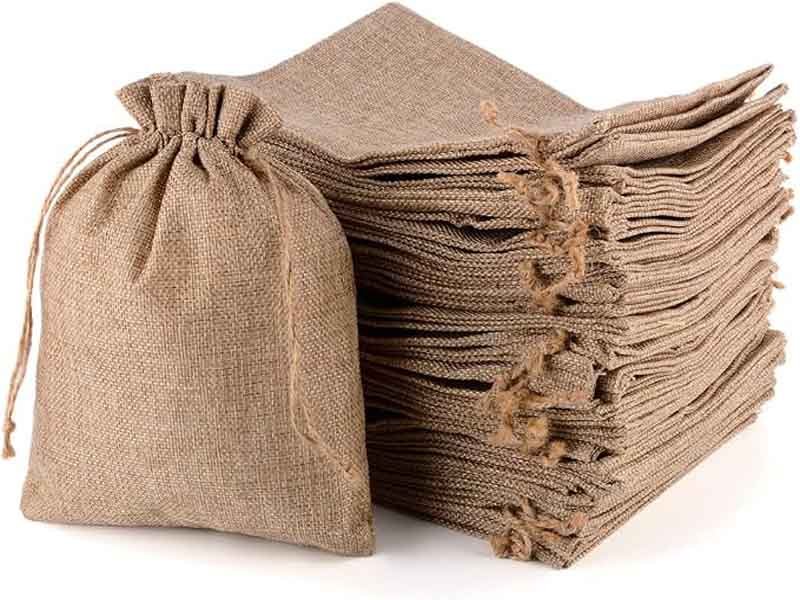
Can't find the answers?
No worries, please contact us and we will answer all the questions you have during the whole process of bag customization.
Make A Sample First?
If you have your own artwork, logo design files, or just an idea,please provide details about your project requirements, including preferred fabric, color, and customization options,we’re excited to assist you in bringing your bespoke bag designs to life through our sample production process.