Skip to content

Neoprene is a versatile material used in everything from sleeves and promotional items to industrial applications. For companies importing neoprene into the EU, compliance with REACH (Registration, Evaluation, Authorization, and Restriction of Chemicals) is not optional—it’s mandatory. Non-compliance can lead to fines, shipment delays, or product recalls. Understanding how to evaluate and document REACH compliance ensures both regulatory alignment and supply chain efficiency. REACH compliance for neoprene requires identifying regulated substances, performing chemical testing, maintaining documentation, and ensuring supply chain adherence. Following a structured checklist helps EU importers avoid regulatory risks, reduce delays, and secure market access.
Imagine an importer sourcing neoprene for custom promotional products. A single batch failed REACH testing due to unregistered phthalates. The result? Delayed shipments and extra testing costs. By implementing a structured REACH compliance checklist, future batches were verified before shipping, reducing delays and protecting the importer’s reputation.
What Is REACH and Why Does It Matter for Neoprene Material Imported into the EU?
REACH is the European Union’s comprehensive regulatory framework governing the registration, evaluation, authorization, and restriction of chemicals used in manufactured goods. For neoprene materials entering the EU market, REACH compliance is not optional—it is a legal prerequisite for import, sale, and distribution.
Neoprene is a synthetic, chemically engineered material. Unlike natural textiles, its performance relies on polymer chemistry and a range of additives introduced during polymerization, foaming, stabilization, coloring, and finishing. These additives—while essential for flexibility, durability, and aging resistance—are precisely the substances that REACH seeks to control when they pose potential risks to human health or the environment.
For importers and brands, REACH compliance determines whether neoprene products clear customs smoothly or face shipment holds, recalls, or market bans. For manufacturers, it defines how materials must be formulated, tested, documented, and traceable.
Why REACH Matters Specifically for Neoprene
REACH focuses on chemical content and exposure risk, not on how a material looks or performs mechanically. Neoprene may appear stable, odor-free, and well-laminated, yet still fail REACH if restricted substances exceed allowable thresholds.
REACH matters for neoprene because:
- Legal Requirement: Non-compliant goods can be stopped at EU borders, fined, or recalled after sale.
- Consumer Safety: Many neoprene products contact skin for long periods, increasing exposure risk.
- Market Access: EU distributors increasingly require documented REACH compliance before purchase orders are issued.
In practice, REACH shifts the burden of proof onto the supply chain. Compliance must be demonstrated with documentation, not assumed.
Why Neoprene Requires REACH Evaluation More Than Many Fabrics
Neoprene is not a single polymer sheet. It is a composite chemical system. During production, multiple substances are introduced to achieve desired properties such as elasticity, aging resistance, flame behavior, and color stability.
Key reasons neoprene requires detailed REACH evaluation include:
- Residual monomers from polymerization
- Plasticizers used to control flexibility
- Stabilizers that prevent degradation
- Flame retardants used in certain applications
- Dyes and pigments in fabric laminations
Each of these can fall under REACH restrictions depending on concentration and end use.

Chemical Components of Neoprene Relevant to REACH
During manufacturing, neoprene may involve the following chemical categories that attract regulatory attention:
- Chloroprene monomers (trace residuals): By-products of polymer synthesis
- Plasticizers and stabilizers: Used to adjust flexibility and aging resistance
- Heavy metals: Sometimes present as stabilizers or pigment residues
- Flame retardants and antioxidants: Used for performance and longevity
REACH does not ban neoprene as a material. It regulates specific substances within it and sets strict concentration limits.
Table 1: Neoprene Components and REACH Relevance
| Component | Potential REACH Concern | Notes on Compliance |
|---|---|---|
| Chloroprene monomer | SVHC (Substance of Very High Concern) | Residual content must remain below defined thresholds |
| Phthalates (plasticizers) | REACH Annex XIV / XVII | Several phthalates are restricted or require authorization |
| Heavy metal stabilizers | REACH Annex XVII | Cadmium, lead, mercury, chromium have strict limits |
| Flame retardants | REACH Annex XVII | Restricted in consumer and skin-contact products |
This table highlights a critical point: compliance is substance-specific, not material-wide. A single additive out of compliance is enough to block an entire shipment.
What REACH Actually Requires from Importers and Suppliers
REACH compliance is not achieved by a verbal assurance or a generic statement. It requires verifiable evidence tied to the specific material and formulation.
In practice, this means:
- Identifying all substances of concern in the neoprene formulation
- Verifying that none exceed REACH thresholds
- Maintaining up-to-date test reports from accredited laboratories
- Ensuring traceability between test reports and production batches
For articles (finished products), REACH also requires SVHC disclosure obligations if substances exceed 0.1% w/w, even when authorization is not required.
Why Visual Inspection and General Declarations Are Insufficient
A common misconception among buyers is that if neoprene looks clean, smells neutral, and performs well, it is compliant. REACH compliance cannot be assessed visually or through basic mechanical testing.
A neoprene sheet may:
- Pass tensile and tear tests
- Feel skin-safe in short contact
- Perform well during sewing and lamination
And still fail REACH due to chemical composition. This is why REACH focuses on laboratory analysis, not appearance or feel.
Common REACH Failure Points in Neoprene Imports
Importers frequently encounter problems when:
- Suppliers change additive sources without re-testing
- Certifications are based on outdated formulations
- Test reports do not match the exact material supplied
- Lamination adhesives are not included in chemical screening
Even minor formulation changes can invalidate previous compliance reports.
Real-World Insight from EU Imports
A European importer of neoprene sleeves experienced a shipment rejection after customs testing revealed that one plasticizer exceeded REACH limits. The neoprene foam itself met requirements, but an auxiliary additive did not.
The corrective action was not trivial. Inventory was held, documentation was reviewed, and the supplier was required to reformulate and re-test. Only after pre-import testing and documented compliance were subsequent batches cleared.
This case illustrates a key lesson: REACH compliance must be verified before shipping, not after arrival.
REACH and Skin-Contact Neoprene Products
REACH scrutiny increases significantly when neoprene is intended for:
- Wetsuits
- Medical supports
- Sports braces
- Protective wear
Long-duration skin contact increases exposure risk, making regulators less tolerant of borderline compliance. Importers of such products often face randomized testing and documentation audits.
How REACH Affects Supplier Selection
REACH compliance is not just a regulatory issue; it is a supplier capability indicator. Reliable neoprene suppliers:
- Control formulation tightly
- Document raw material sources
- Re-test when formulations change
- Provide batch-linked compliance reports
Suppliers who cannot explain how REACH compliance is maintained introduce risk, regardless of price or lead time.
Documentation Buyers Should Expect
For neoprene imported into the EU, buyers typically require:
- REACH compliance statements referencing current Annex lists
- Third-party laboratory test reports
- SVHC declarations when applicable
- Traceability linking reports to production batches
Incomplete or generic documents are a warning sign.
REACH Is About Risk Management, Not Paperwork
REACH is often perceived as an administrative burden. In reality, it is a risk management framework. It protects consumers, brands, and importers from exposure, recalls, and legal disputes.
The cost of REACH testing is small compared to:
- Blocked shipments
- Re-export or destruction costs
- Product recalls
- Brand damage in regulated markets
Why Early REACH Evaluation Matters
REACH should be addressed at the material selection stage, not after production. Testing early allows:
- Formulation adjustments before scaling
- Supplier alignment on compliance requirements
- Stable documentation for repeat orders
Late-stage testing limits options and increases cost.
Strategic Importance of REACH for Neoprene Programs
For brands selling into the EU, REACH compliance is foundational. It enables:
- Predictable customs clearance
- Stable distributor relationships
- Scalable product programs
Without it, even technically excellent neoprene products face market barriers.
REACH matters for neoprene because neoprene is a chemical system, not a passive material. Compliance determines whether products are legally marketable, not just whether they perform well.
Understanding REACH, identifying regulated substances, and verifying compliance before import are essential steps for anyone sourcing neoprene into the EU. When handled correctly, REACH is not an obstacle—it is the framework that allows neoprene products to move confidently and legally through one of the world’s most regulated markets.
Which Chemical Substances in Neoprene Are Regulated Under REACH?
Neoprene is a technically complex synthetic rubber produced through polymerization, foaming, curing, and often lamination. Throughout this process, a range of chemical substances are introduced—some intentionally to improve performance, others as unavoidable residues. Under the EU’s REACH (Registration, Evaluation, Authorisation and Restriction of Chemicals) regulation, many of these substances are either restricted, monitored, or subject to disclosure requirements.
Unlike product-specific standards, REACH does not evaluate whether neoprene “works well.” It evaluates chemical risk to human health and the environment, independent of performance. This distinction is critical. A neoprene fabric can be mechanically excellent and still be non-compliant under REACH if restricted substances exceed threshold limits or are not properly documented.
For manufacturers, importers, and brand owners supplying the EU market, understanding which neoprene-related chemicals are regulated—and how compliance is demonstrated—is essential to avoiding shipment holds, forced recalls, or long-term liability.
Why REACH Compliance in Neoprene Is Structurally Complex
REACH applies to substances, mixtures, and articles, and neoprene often falls into more than one category depending on its form and use. Raw neoprene compounds may be considered mixtures, while finished neoprene fabrics or laminated sheets are classified as articles. This classification affects obligations, but chemical restrictions still apply regardless of form.
The challenge with neoprene is that regulated substances may appear at different stages:
- During polymerization (residual monomers)
- During compounding (plasticizers, stabilizers, antioxidants)
- During coloring or finishing (pigments, heavy metals)
- During performance enhancement (flame retardants, fillers)
Some of these substances are tightly controlled today; others are not banned but require disclosure if they exceed specific limits. REACH compliance therefore requires active chemical management, not a one-time test.
Phthalates: Plasticizers Under Strict Control
Phthalates are among the most closely monitored substances under REACH, particularly in flexible materials. While neoprene foam does not rely on phthalates to the same extent as PVC, certain formulations, adhesives, or surface treatments may still introduce them.
Phthalates such as DEHP, DBP, BBP, and DIBP are classified as Substances of Very High Concern (SVHC) due to endocrine-disrupting properties. Under REACH Annex XIV and XVII, their presence above 0.1% by weight in articles triggers strict obligations.
For neoprene products:
- Exceeding 0.1% w/w requires SVHC disclosure to customers
- Certain uses may be prohibited altogether
- Importers must be able to demonstrate compliance through testing
The challenge is that phthalates are not always intentionally added. They can enter neoprene systems indirectly through inks, adhesives, recycled components, or upstream raw materials. This makes supplier declarations alone insufficient for high-risk applications.
Heavy Metals: Pigments, Stabilizers, and Residual Contamination
Heavy metals such as lead, cadmium, mercury, and hexavalent chromium are regulated under REACH Annex XVII. In neoprene, these metals may appear as trace contaminants in pigments, fillers, or stabilizing systems rather than as primary ingredients.
Lead and cadmium are of particular concern due to their toxicity and cumulative effects. REACH sets strict concentration limits, commonly 0.1% w/w for lead and 0.01% w/w for cadmium, depending on application.
Even when pigments are marketed as “heavy-metal free,” trace contamination can still occur. For neoprene fabrics used in consumer goods—especially items with skin contact or children’s products—regular verification is necessary. Testing methods such as ICP-MS (Inductively Coupled Plasma Mass Spectrometry) or XRF screening are commonly used to assess compliance.
Residual Chloroprene Monomer: A Hidden Compliance Risk
Neoprene is produced from chloroprene monomer, and while the polymerization process consumes most of it, trace residuals may remain in finished material. Chloroprene is classified as hazardous at certain exposure levels, making residual control an important compliance topic.
Unlike phthalates or heavy metals, chloroprene monomer is not explicitly listed in REACH Annex XIV or XVII. However, it is still subject to REACH’s general safety principles and workplace exposure considerations. For finished neoprene articles, industry practice typically aims to keep residual chloroprene below 1 ppm.
Testing for residual monomer is usually performed using HPLC or GC-based analytical methods. While this testing is not always legally mandated, it is often required by brand owners, importers, or downstream product regulations—particularly for items with prolonged skin contact.
Flame Retardants and Antioxidants: Performance Versus Compliance
Neoprene’s inherent resistance to heat and flame makes it attractive for protective and industrial applications. In some formulations, additional flame retardants or antioxidants are added to enhance performance or longevity.
Certain halogenated flame retardants, including PBDEs, are restricted under REACH Annex XVII. Their presence must either be confirmed as absent or justified under specific authorized uses. Even when flame retardants are permitted, they may still trigger customer concerns or additional disclosure requirements.
Antioxidants used to prevent aging and degradation are generally less regulated, but some older or specialty compounds may appear on monitoring lists or face future restriction. This creates a moving compliance target, reinforcing the need for ongoing review rather than static compliance statements.
Chemical Thresholds and Documentation Requirements
Table 2: REACH-Regulated Chemicals in Neoprene
| Chemical Substance | REACH Annex | Maximum Allowed Concentration | Notes on Testing |
|---|---|---|---|
| DEHP (phthalate) | XIV / XVII | 0.1% w/w | Requires SVHC declaration |
| Lead (Pb) | XVII | 0.1% w/w | ICP-MS or XRF testing recommended |
| Cadmium (Cd) | XVII | 0.01% w/w | Soluble fraction testing required |
| Chloroprene Monomer | Not Annexed | ≤1 ppm in finished material | HPLC testing for residual levels |
| PBDEs (flame retardant) | XVII | Restricted | Must confirm absence or authorized use |
This table highlights an important point: REACH compliance is not binary. Some substances are outright restricted, others require disclosure, and some are managed through best-practice thresholds even when not explicitly annexed.
Documentation is as important as testing. EU importers must be able to demonstrate:
- Knowledge of chemical composition
- Access to test reports or valid supplier data
- Ongoing monitoring of SVHC list updates
Case Study: DEHP Detection in Neoprene Yoga Mats
A manufacturer sourcing neoprene for yoga mats conducted routine pre-shipment REACH screening for EU-bound orders. While initial supplier declarations indicated compliance, laboratory testing revealed DEHP levels slightly above 0.1% w/w.
Because yoga mats involve prolonged skin contact and consumer exposure, the issue posed both regulatory and reputational risk. The manufacturer traced the source to a stabilizer used in a downstream lamination adhesive rather than the foam itself.
By switching to a compliant stabilizer system and revalidating the formulation, subsequent batches passed REACH requirements. Importantly, early detection prevented:
- Customs rejection
- Market withdrawal
- Potential fines or legal exposure
This case illustrates why testing finished materials, not just raw foam, is critical in neoprene compliance.
Operational Insight: Managing REACH Compliance in Practice
Effective REACH compliance for neoprene does not rely on occasional testing alone. It requires a structured chemical management approach.
Leading manufacturers and importers typically maintain:
- A chemical registry covering all raw materials, additives, and auxiliaries
- Batch-level traceability linking test results to production runs
- Periodic third-party testing based on risk assessment
- Active monitoring of REACH Annex and SVHC updates
This approach reduces surprises and allows proactive adjustment when regulatory thresholds or substance classifications change.
Why REACH Is a Continuous Obligation, Not a One-Time Check
REACH evolves. New substances are added to the SVHC list several times a year, and restrictions are amended as scientific understanding develops. A neoprene formulation that is compliant today may require reassessment tomorrow.
For this reason, compliance cannot be “locked in” permanently. Manufacturers who treat REACH as a one-off certification often find themselves exposed when regulations change or when customers request updated declarations.
Practical Takeaway for Buyers and Engineers
For neoprene fabrics entering the EU market, REACH compliance depends on chemical awareness, testing discipline, and documentation readiness. It is not enough to ask whether a material is “REACH compliant” in general terms.
The more relevant questions are:
- Which regulated substances are present or potentially present in this neoprene?
- At what concentration levels?
- How are these levels verified and tracked over time?
By approaching REACH as a chemical management system rather than a checkbox, manufacturers and buyers reduce regulatory risk and build more resilient supply chains.
How Do You Determine if Your Neoprene Material Meets REACH Compliance Requirements?
For neoprene materials entering the European Union, REACH compliance is not optional, and it is not something that can be confirmed by a single document or a one-time test. Determining whether neoprene meets REACH requirements is a process-driven exercise that combines chemical transparency, supplier accountability, laboratory verification, and continuous regulatory monitoring.
Unlike mechanical performance issues, chemical non-compliance has immediate and irreversible consequences. Shipments can be blocked at customs, products can be recalled from the market, and importers can face legal and financial penalties. Under REACH, the responsibility ultimately lies with the EU importer, even if the material is manufactured outside Europe. This makes it critical to evaluate neoprene compliance in a structured, repeatable way rather than relying on informal assurances.
What REACH compliance actually means for neoprene
REACH (Registration, Evaluation, Authorisation and Restriction of Chemicals) regulates the presence of hazardous substances in articles placed on the EU market. For neoprene fabrics, this does not mean that every chemical must be registered by the importer, but it does mean that:
- Restricted substances must be below legal thresholds
- Substances of Very High Concern (SVHCs) above 0.1% must be declared
- Documentation must be available to demonstrate compliance
- Compliance must reflect current, not historical, regulatory lists
Neoprene is a chemically complex material system. Compliance must cover not only the rubber foam itself, but also foaming agents, residual monomers, adhesives, dyes, pigments, and surface coatings. A compliant rubber compound can still fail REACH if the lamination adhesive or pigment system contains restricted substances.
Why neoprene requires a structured verification approach
Many importers make the mistake of treating REACH compliance as a paperwork exercise. In practice, neoprene requires closer scrutiny because:
- It is synthesized from chloroprene monomers
- It uses chemical foaming agents
- It relies heavily on adhesives during lamination
- It often contains pigments and stabilizers
Each of these elements introduces potential REACH-relevant substances such as PAHs, phthalates, heavy metals, or residual solvents. As a result, compliance cannot be inferred from a single declaration or a generic safety sheet.
Step 1: Review the Material Safety Data Sheet (MSDS)
The MSDS is the starting point, not the conclusion.
An MSDS provides information on:
- Chemical composition categories
- Identified hazardous substances
- Handling and exposure considerations
For neoprene, reviewing the MSDS helps identify which chemical families are present, but it does not confirm whether concentrations meet REACH thresholds in the finished fabric.
When reviewing an MSDS, experienced buyers focus on:
- Whether plasticizers are listed (potential phthalate risk)
- Whether fillers or oils are specified (possible PAH sources)
- Whether solvents are used in adhesives
An MSDS that is vague, outdated, or generic is a warning sign. It suggests limited formulation transparency and weak upstream control.
Step 2: Obtain a formal supplier REACH declaration
A supplier declaration is a legal statement, not a marketing claim. It should explicitly confirm that the supplied neoprene complies with REACH Annex XVII restrictions and addresses SVHC obligations.
A robust supplier declaration should include:
- A clear statement of REACH compliance
- Reference to the current SVHC candidate list
- Confirmation that restricted substances are below limits
- Batch or formulation reference information
Importantly, declarations should be updated regularly. REACH evolves continuously, and a declaration issued several years ago may no longer reflect current regulatory requirements.
Supplier declarations without dates, scope, or regulatory references provide little real protection for importers.
Step 3: Conduct laboratory testing on the actual material
Laboratory testing is the most critical verification step. It moves compliance assessment from assumption to evidence.
For neoprene fabrics, testing typically focuses on:
- Phthalates
- Heavy metals (lead, cadmium, mercury)
- Polycyclic aromatic hydrocarbons (PAHs)
- Residual chloroprene monomers
- Certain flame retardants, if applicable
Testing must be performed on the finished neoprene fabric, not raw rubber or adhesive alone. REACH evaluates the article as placed on the market.
Why accredited laboratories matter
Testing should be carried out by laboratories accredited to ISO/IEC 17025. Accreditation ensures that:
- Test methods are validated
- Equipment is calibrated
- Results are traceable and reproducible
Non-accredited reports may be rejected during audits or disputes, even if results appear acceptable.
Step 4: Compare results against REACH Annex XIV and XVII
Test data alone is not sufficient unless it is interpreted correctly.
REACH compliance requires comparing measured concentrations against:
- Annex XVII restriction limits for specific substances
- SVHC thresholds (0.1% w/w)
This comparison must be documented clearly. Importers should not rely on labs to declare “pass” or “fail” without reviewing the underlying values. Understanding how close results are to legal limits is important for risk assessment, especially if formulations may vary slightly between batches.
Compliance verification protocols
| Step | Action | Notes |
|---|---|---|
| MSDS Review | Check chemical composition and additives | Ensure all restricted substances listed |
| Supplier Declaration | Request written confirmation of REACH registration | Include batch-specific data |
| Laboratory Testing | Analyze phthalates, heavy metals, monomer residues | Use accredited labs (ISO 17025) |
| Threshold Verification | Compare results to Annex XIV/XVII limits | Document pass/fail for each chemical |
| Compliance Certificate | Compile test results, declarations, and analysis | Required for customs and import audits |
This protocol transforms REACH compliance from a vague requirement into a repeatable system.
Step 5: Compile a compliance dossier, not just a certificate
Many importers ask for a “REACH certificate.” In practice, there is no single official REACH certificate issued by authorities. What matters is a compliance dossier that can withstand scrutiny.
A strong dossier typically includes:
- Latest MSDS
- Current supplier REACH declaration
- Third-party laboratory test reports
- Internal compliance assessment summary
- Batch identification or traceability records
This documentation is what customs officials, auditors, or downstream clients will request if compliance is questioned.
Batch testing versus formulation testing
One common question is whether every batch must be tested. The answer depends on risk tolerance and formulation stability.
Best practice approaches include:
- Full testing for initial approval of a formulation
- Periodic testing for ongoing production
- Additional testing after any formulation or supplier change
High-risk applications or high-volume imports often justify batch-level testing, especially for heavy metals and PAHs.
Real-world example: early detection prevents disruption
A European importer sourcing neoprene coasters implemented routine batch testing using ICP-MS analysis for heavy metals. During one inspection, cadmium levels exceeded REACH limits in a single batch.
Because testing was conducted before shipment:
- The batch was rejected at source
- The supplier reformulated immediately
- No shipment delays or customs penalties occurred
Early detection prevented financial loss and protected the importer’s compliance record. This illustrates why proactive testing is far less costly than reactive problem-solving.
Ongoing monitoring is part of compliance
REACH compliance does not end once a material passes testing. The SVHC candidate list is updated regularly, and substances previously considered acceptable may become restricted.
Importers and buyers should:
- Monitor updates to the SVHC list
- Request updated declarations when regulations change
- Re-test materials if new substances become relevant
Suppliers who actively track regulatory changes and communicate updates demonstrate a higher level of compliance maturity.
Common mistakes that lead to compliance failures
Several patterns appear repeatedly in REACH-related issues:
- Relying on outdated test reports
- Accepting generic declarations without substance references
- Testing raw materials instead of finished fabrics
- Assuming compliance in one market guarantees compliance everywhere
Avoiding these mistakes requires discipline and a clear internal process.
Operational insight for buyers and importers
Experienced buyers treat REACH compliance as part of supplier qualification, not a last-minute check before shipping.
They:
- Evaluate suppliers’ formulation control
- Assess documentation quality early
- Build testing costs into sourcing decisions
- Maintain organized compliance records
This approach reduces friction, delays, and risk as volumes scale.
Determining whether neoprene meets REACH compliance requirements is not a single action, but a structured workflow. It combines documentation review, supplier accountability, laboratory testing, regulatory interpretation, and ongoing monitoring.
For EU-bound neoprene products, the question is not simply “Does this material pass REACH?” but rather:
“Can we continuously demonstrate REACH compliance, batch after batch, under current regulations?”
Importers who build their sourcing strategy around this mindset protect market access, reduce regulatory risk, and avoid costly surprises that only surface when it is too late to fix them.
What Documentation and Testing Are Required for Neoprene REACH Compliance?
REACH compliance for neoprene materials is not a formality and not something that can be addressed retroactively. It is a documentation- and testing-driven regulatory requirement that EU authorities may verify at any point during customs clearance, market surveillance, or downstream brand audits. For neoprene fabrics and finished neoprene products, compliance depends on clear chemical traceability, up-to-date declarations, and laboratory evidence—not supplier assurances or historical reports.
Because neoprene is a synthetic rubber material derived from chloroprene polymerization and often combined with additives, pigments, adhesives, and laminations, it sits squarely within REACH’s scope. Importers, brand owners, and distributors all carry responsibility. If documentation is incomplete or testing is misaligned with the actual material shipped, the risk includes customs detention, forced re-testing, shipment rejection, or downstream product withdrawal.
Understanding what documentation is required, which tests are relevant, and how they fit together operationally is essential for any company placing neoprene products on the EU market.
Why REACH Compliance for Neoprene Is Documentation-Driven
REACH is fundamentally a substance-control regulation, not a product standard. Authorities do not certify products in advance. Instead, they require economic operators to demonstrate compliance on demand. This means companies must be able to produce complete, accurate, and current documentation showing that restricted substances are either absent or below regulatory thresholds.
For neoprene, compliance challenges typically arise from:
- Plasticizers and processing aids
- Residual chloroprene monomer
- Pigments and heavy metal content
- Flame retardant additives
- Adhesives and laminating agents
Each of these must be addressed through a combination of supplier declarations and independent laboratory testing.
Core Documentation Required for Neoprene REACH Compliance
Documentation establishes chemical transparency and legal responsibility. Without it, even passing test results may not be sufficient.
Chemical Composition Certificates
Chemical composition certificates are supplier-issued documents listing all intentionally added substances, including stabilizers, accelerators, pigments, fillers, plasticizers, and flame retardants. These certificates form the foundation of REACH compliance because they define what must be evaluated further.
Key expectations for these certificates include:
- Identification of substance categories (not just trade names)
- Confirmation of compliance with REACH Annex XVII restrictions
- Reference to applicable REACH registration where relevant
Certificates that vaguely state “REACH compliant” without substance disclosure provide little regulatory protection.
SVHC Declarations
Under REACH Article 33, suppliers must declare whether Substances of Very High Concern (SVHCs) are present above 0.1% by weight in the article.
SVHC declarations must:
- Reference the current SVHC candidate list
- Clearly state presence or absence above threshold
- Be updated whenever the SVHC list changes
Because the SVHC list is revised regularly, declarations must be version-controlled and date-stamped. An otherwise accurate declaration can become invalid if it references an outdated list.
Test Reports From Accredited Laboratories
Test reports provide objective verification that restricted substances are below regulatory limits. REACH compliance for neoprene typically relies on reports issued by ISO/IEC 17025-accredited laboratories using recognized analytical methods.
Test reports should clearly specify:
- Sample description (thickness, color, formulation, lamination state)
- Test method used
- Detection limits and results
- Applicable REACH restriction references
Reports that lack sample specificity or test scope detail are often challenged during audits.
REACH Registration Numbers (Where Applicable)
If substances are manufactured or imported into the EU above tonnage thresholds, REACH registration obligations may apply at the substance level. While most finished-product importers rely on upstream registration, documentation should confirm that relevant substances are registered where required.
Testing Requirements Relevant to Neoprene Materials
Testing translates chemical declarations into verifiable evidence. The selection of tests should reflect both material composition and regulatory exposure.
Phthalates Testing
Phthalates are commonly regulated plasticizers under REACH Annex XVII. Neoprene formulations or laminations that incorporate plasticizers must be tested to confirm that restricted phthalates remain below 0.1% by weight.
Testing considerations include:
- GC-MS analysis for targeted phthalates
- Sampling of finished material, not raw components only
- Increased scrutiny for soft, flexible, or printed neoprene
Phthalate testing is often required per batch or through statistically justified sampling plans.
Heavy Metals Analysis
Heavy metals such as cadmium, lead, mercury, and chromium are restricted due to toxicity and environmental persistence. In neoprene, these may originate from pigments, fillers, or processing residues.
Common methods include:
- ICP-MS for precise quantification
- XRF as a screening tool (with limitations)
Heavy metals testing is particularly critical for colored neoprene and products intended for prolonged contact.
Residual Monomer Analysis
Chloroprene monomer residuals must be controlled due to health concerns. REACH compliance requires demonstrating that residual monomer levels are below defined thresholds.
Typical testing involves:
- HPLC analysis
- Batch-level verification for foam production
Residual monomer testing is especially important when suppliers adjust polymerization conditions or raw material sources.
Flame Retardant Verification
Some flame retardants are restricted or subject to authorization. Where flame retardancy is claimed or implied, verification is required to ensure that prohibited substances are not used.
Testing focuses on:
- Identification of brominated or chlorinated flame retardants
- Confirmation of authorization status where applicable
Documentation Workflow for Compliance
Compliance is not achieved through isolated documents. It requires a structured documentation workflow that links supplier declarations, test results, and internal records.
| Document/Test | Purpose | Frequency / Notes |
|---|---|---|
| Supplier Certificate | Confirms composition & REACH registration | Every new supplier & batch |
| SVHC Declaration | Identifies Substances of Very High Concern | Required for each shipment |
| Phthalates Lab Test | Ensures restricted plasticizers < 0.1% w/w | Test per batch or random sampling |
| Heavy Metals Lab Test | Confirms Cd, Pb, Hg, Cr below Annex XVII limits | Test per batch or sample-based |
| Residual Monomer Test | Confirms chloroprene monomer < threshold | Test per batch |
| Compliance Dossier | Compile all certificates and test reports | Maintain for 10 years (audit readiness) |
Maintaining this workflow ensures that compliance can be demonstrated quickly and coherently when requested.
The Role of the Compliance Dossier
REACH requires that compliance documentation be retained for at least 10 years after the last manufacture, import, or supply of the product. This means companies must maintain a centralized compliance dossier that includes:
- All supplier certificates
- Current SVHC declarations
- Applicable laboratory test reports
- Internal correspondence confirming material equivalence
- Change logs for formulation or supplier updates
A well-organized dossier significantly reduces response time during audits and minimizes the risk of non-compliance findings due to missing paperwork.
Case Study: Preventing Customs Delays Through Documentation Discipline
A company importing neoprene sleeves into the EU experienced repeated customs delays due to incomplete chemical documentation. After implementing a structured REACH compliance dossier—including updated SVHC declarations, batch-linked lab reports, and supplier composition certificates—subsequent shipments cleared customs without delay.
The key change was not additional testing alone, but documentation alignment: every test and declaration clearly matched the material shipped. This reduced questions from authorities and eliminated costly re-testing at the border.
Common Compliance Gaps to Avoid
Even experienced importers encounter issues due to avoidable gaps, such as:
- Using test reports issued for different thicknesses or colors
- Relying on supplier statements without lab verification
- Failing to update SVHC declarations after list revisions
- Testing raw foam but shipping laminated or printed material
Each of these gaps weakens the compliance position, regardless of actual chemical safety.
Compliance as Supply Chain Control
REACH compliance should be treated as supply chain governance, not an administrative burden. Organized documentation and targeted testing provide visibility into material composition, reduce dependence on assumptions, and strengthen relationships with competent suppliers.
Companies that manage REACH compliance proactively benefit from:
- Faster customs clearance
- Reduced audit stress
- Clearer supplier accountability
- Lower risk of recalls or enforcement actions
In neoprene sourcing, compliance is not proven by intention or reputation. It is proven by documents that align with materials, tests that match real production, and records that stand up over time.
How Do Importers Manage REACH Compliance Across the Supply Chain?
For neoprene products entering the EU, REACH compliance is not something an importer can delegate entirely to a supplier. It is a supply-chain responsibility that must be actively managed from raw material sourcing through finished-goods import. Because neoprene is a chemically engineered composite, even small upstream changes—an alternative plasticizer, a new adhesive, a different dye lot—can invalidate previous compliance.
Successful importers treat REACH as an operational system, not a one-time certificate. They build processes that verify materials, monitor batches, preserve documentation, and detect risk early—before goods reach EU customs.
Why REACH Compliance Must Be Managed, Not Assumed
REACH assigns legal responsibility to the EU importer, not to the overseas manufacturer. Even if a supplier provides a compliance statement, customs authorities and market surveillance agencies hold the importer accountable if restricted substances are found.
For neoprene, this risk is amplified because:
- Multiple chemical components are involved (polymer, foaming agents, stabilizers, adhesives, dyes)
- Supply chains often span several upstream vendors
- Formulations may change without visible differences in the final material
As a result, compliance must be continuously verified, not inferred from past performance.

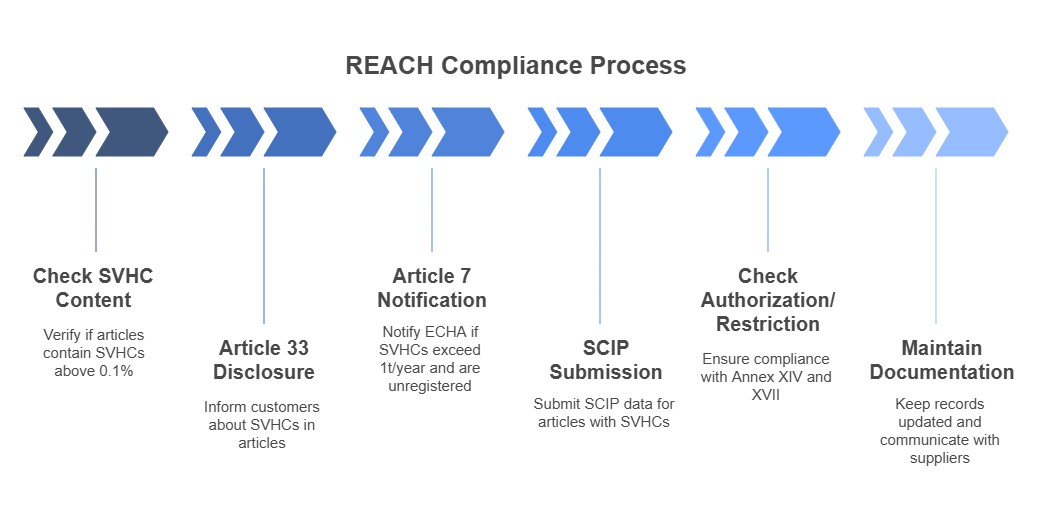
Supplier Qualification: The First Line of Defense
Effective REACH management begins before any purchase order is placed. Importers must qualify suppliers based on chemical transparency and control, not just price or capacity.
Supplier qualification typically includes:
- Written REACH compliance declarations referencing current Annex XVII and SVHC lists
- SVHC disclosure statements confirming whether any listed substances exceed 0.1% w/w
- Identification of all upstream material sources, including foam, fabrics, and adhesives
- Confirmation that formulation changes trigger re-testing
Suppliers who cannot explain how compliance is maintained introduce structural risk. A reliable supplier understands which substances are regulated, where they appear in the process, and how limits are controlled.
Why One Certificate Is Never Enough
A common mistake is accepting a single REACH certificate as blanket proof of compliance. In reality, certificates are formulation-specific and time-sensitive. If any component changes—new plasticizer supplier, different lamination adhesive, alternative pigment—the original certificate may no longer apply.
Experienced importers therefore:
- Tie certificates to specific material codes or SKUs
- Require updates when formulations or suppliers change
- Reject generic “REACH compliant” letters without test context
This discipline prevents silent drift out of compliance over time.
Batch Testing: Verifying What Actually Ships
Even with qualified suppliers, batch testing remains essential. REACH compliance is ultimately about what enters the EU, not what was intended to ship.
Batch testing strategies vary by risk profile, but common practices include:
- Random chemical screening of incoming neoprene rolls
- Targeted testing for high-risk substances such as phthalates, heavy metals, or residual monomers
- Increased testing frequency when suppliers are new or materials are modified
Testing before production or shipment allows corrective action while options still exist. Testing after goods arrive at customs is often too late.
Balancing Testing Cost and Risk
Not every batch requires full-spectrum testing. Experienced importers use risk-based testing plans:
- New suppliers or new materials: higher testing frequency
- Stable suppliers with unchanged formulations: periodic verification
- Skin-contact or children’s products: stricter and more frequent testing
This approach controls cost while maintaining compliance confidence.
Documentation Management: The Backbone of REACH Compliance
REACH is documentation-driven. Importers must be able to demonstrate compliance years after import, often at short notice.
REACH requires records to be retained for at least 10 years, including:
- Supplier declarations
- Third-party laboratory test reports
- SVHC notifications
- Traceability records linking tests to production batches
Poor documentation is one of the most common reasons importers fail audits, even when materials themselves are compliant.
Centralized Documentation Systems
Leading importers avoid scattered files and email archives. Instead, they implement centralized documentation systems that:
- Link material codes to certificates and test reports
- Track expiry dates and regulatory updates
- Provide instant access during customs checks or audits
Digital systems reduce human error and prevent outdated documents from being reused.
Audit and Verification: Keeping Compliance Alive
REACH compliance is not static. Regulations evolve, SVHC lists expand, and supplier practices change. Periodic audits help importers verify that compliance assumptions remain valid.
Audits may include:
- Supplier site visits focusing on formulation control
- Review of raw material sourcing and change management
- Verification that restricted substances are not reintroduced
- Cross-checks between production records and test reports
Audits are especially important for neoprene because many compliance risks arise between foam production and lamination, where additives and adhesives are introduced.
Table 5: Supply Chain Compliance Checklist
| Step | Action | Impact on Compliance |
|---|---|---|
| Supplier Qualification | Request REACH certificates, SVHC declarations | Prevents non-compliant materials |
| Batch Verification | Random testing for restricted substances | Ensures shipped batches meet standards |
| Documentation Management | Centralized storage of certificates and reports | Simplifies audits and customs inspections |
| Audit & Review | Supplier site visits, process evaluation | Continuous monitoring and risk mitigation |
This checklist illustrates that REACH compliance is cumulative. Skipping any step weakens the entire system.
Managing Changes Across the Supply Chain
One of the most difficult aspects of REACH management is change control. Suppliers may alter formulations to improve yield, reduce cost, or address availability issues. These changes are not always communicated proactively.
Effective importers require:
- Advance notification of any material or process change
- Re-testing before approving modified materials
- Written confirmation that compliance remains intact
Without change control, compliance becomes accidental rather than intentional.
Case Study: Digitalizing Supplier Compliance
A European importer of neoprene laptop sleeves faced repeated shipment delays due to missing or outdated REACH documentation. Although materials often passed testing, retrieving the correct reports during customs inspections was slow and inconsistent.
The importer implemented a digital supplier compliance portal where:
- Each supplier uploaded current REACH and SVHC documents
- Test reports were linked to specific batch numbers
- Expiry alerts flagged documents needing renewal
As a result, shipment rejections were eliminated, and internal quality-control delays dropped by approximately 40%. More importantly, compliance became predictable rather than reactive.
Communication as a Compliance Tool
REACH compliance improves dramatically when communication is structured. Importers who clearly define expectations—what documents are required, when updates are needed, how changes must be reported—experience fewer surprises.
Clear communication:
- Aligns suppliers with EU regulatory reality
- Reduces misunderstandings about responsibility
- Encourages early disclosure of potential issues
Silence, by contrast, usually hides risk.
The Cost of Reactive Compliance
Importers who manage REACH reactively often discover issues at the worst possible time—during customs clearance or after products reach the market. At that stage:
- Goods may be detained or destroyed
- Re-export costs escalate quickly
- Brand credibility suffers
Proactive management shifts compliance checks upstream, where problems are cheaper and easier to fix.
Integrating REACH Into Purchasing Decisions
Experienced importers do not treat REACH as a separate legal task. They integrate compliance into purchasing decisions by:
- Favoring suppliers with stable compliance histories
- Factoring testing and documentation into lead times
- Rejecting price advantages that come with compliance uncertainty
Over time, this approach reduces total cost of ownership, even if unit prices are slightly higher.
REACH Compliance as a Competitive Advantage
While often viewed as a burden, strong REACH management becomes a competitive advantage. Importers with proven compliance systems:
- Clear customs faster
- Face fewer audits and inspections
- Gain trust from EU distributors and retailers
- Scale product programs with less risk
In regulated markets, reliability often matters more than speed or marginal cost savings.
Operational Insight: What Actually Works
Across successful neoprene import programs, a common pattern emerges:
- Compliance responsibilities are clearly defined
- Documentation is centralized and current
- Testing is risk-based and planned
- Suppliers are treated as compliance partners, not just vendors
This approach transforms REACH from a regulatory threat into a managed operational process.
Managing REACH compliance across the neoprene supply chain requires coordination, discipline, and transparency. It cannot be outsourced entirely, automated blindly, or addressed only when problems arise.
Importers who succeed understand that REACH compliance is:
- Ongoing, not one-time
- Evidence-based, not assumption-based
- A shared responsibility, led by the importer
By qualifying suppliers carefully, verifying batches, maintaining documentation, and auditing proactively, importers protect themselves from fines, recalls, and shipment delays. More importantly, they create supply chains that are stable, scalable, and trusted in one of the world’s most regulated markets.
Are There Specific REACH Restrictions or Authorization Lists That Apply to Neoprene Components?
Yes. Neoprene components are directly affected by several REACH restriction and authorization mechanisms, even though neoprene itself is not named as a standalone material category in the regulation. Under REACH, what matters is which chemical substances are present, how they are used, and at what concentration levels they remain in the finished article placed on the EU market.
For neoprene, this creates a layered compliance reality. Substances used during polymerization, compounding, foaming, coloring, lamination, and finishing may fall under Annex XIV (Authorization) or Annex XVII (Restriction). In addition, some substances are not formally annexed but are still closely monitored due to toxicological concerns or downstream product safety expectations.
For EU importers, brand owners, and manufacturers, compliance is not achieved by asking whether neoprene is “REACH compliant” in general terms. It is achieved by understanding which annexes apply to which substances, and by managing formulation, testing, and documentation accordingly.
Why REACH Annex XIV and Annex XVII Matter for Neoprene
REACH regulates chemicals through two powerful tools:
- Annex XIV (Authorization List) – substances that may not be used or placed on the market unless specific authorization is granted
- Annex XVII (Restriction List) – substances whose use is limited or prohibited above defined thresholds
Neoprene formulations may involve additives, stabilizers, pigments, antioxidants, flame retardants, or processing aids that appear on one or both of these lists. Even when these substances are not intentionally added, they may enter the material as trace contaminants, recycled feedstock residues, or components of auxiliary materials such as adhesives or inks.
Because neoprene is commonly supplied as an article under REACH, importers must also consider disclosure obligations. If a Substance of Very High Concern (SVHC) exceeds 0.1% w/w, downstream communication obligations are triggered, regardless of whether the substance is restricted outright.
Phthalates: Authorization and Restriction Risks
Phthalates represent one of the most significant REACH compliance risks for neoprene-based products, especially consumer goods.
Substances such as DEHP, DBP, and BBP are listed under Annex XIV and restricted under Annex XVII due to reproductive toxicity and endocrine-disrupting effects. These substances are sometimes associated with flexible materials, adhesives, printing inks, or recycled polymer streams.
For neoprene:
- Phthalates are not typically required for foam performance
- They may still appear through secondary materials or legacy formulations
- Concentrations above 0.1% w/w trigger regulatory consequences
Exceeding this threshold can result in:
- Mandatory SVHC disclosure
- Market withdrawal
- Authorization requirements that are impractical for most consumer products
Even when phthalates are not deliberately used, verification is essential. Supplier declarations alone are insufficient for EU-bound goods, particularly those involving skin contact or household use.
Heavy Metals: Annex XVII Restrictions
Several heavy metals are restricted under Annex XVII due to toxicity, bioaccumulation, and long-term health risks. In neoprene, these metals may appear as pigment residues, stabilizer remnants, or trace contaminants.
The most relevant heavy metals include:
- Cadmium (Cd)
- Lead (Pb)
- Mercury (Hg)
- Chromium (Cr), particularly hexavalent chromium
Cadmium is subject to particularly strict limits, commonly 0.01% w/w, reflecting its high toxicity. Lead and mercury are typically restricted to 0.1% w/w, depending on the application and exposure context.
Neoprene fabrics used in:
- Consumer accessories
- Promotional items
- Children’s products
- Household goods
are especially sensitive to heavy metal compliance. Even minimal exceedances can lead to rejection by EU authorities or retailers.
Testing methods such as ICP-MS (Inductively Coupled Plasma Mass Spectrometry) or validated XRF screening are widely used to demonstrate compliance. For cadmium, soluble fraction testing may be required depending on the product category.
Flame Retardants: Restricted and Closely Scrutinized
Neoprene’s inherent flame resistance reduces the need for aggressive flame-retardant additives. However, certain applications—industrial, protective, or technical—may still incorporate additional flame-retardant systems.
Some halogenated flame retardants, including PBDEs, are restricted under Annex XVII. Their use in consumer products is either prohibited or heavily limited, and presence must often be confirmed as absent rather than simply declared compliant.
Even when flame retardants are not banned outright, they may:
- Trigger additional testing
- Raise retailer or brand-level compliance requirements
- Create long-term regulatory risk as REACH evolves
For this reason, many neoprene manufacturers actively reformulate to avoid halogenated systems entirely, favoring intrinsic material performance and safer stabilization strategies.
Residual Chloroprene Monomer: Not Annexed, Still Critical
Chloroprene monomer is the building block of neoprene rubber. While it is largely consumed during polymerization, trace residual levels may remain in finished material.
Chloroprene monomer is not currently listed in Annex XIV or Annex XVII, but it is recognized as hazardous at certain exposure levels and is subject to occupational and consumer safety scrutiny.
Industry best practice typically limits residual chloroprene to ≤1 ppm in finished neoprene. This is especially important for products with prolonged skin contact, such as:
- Yoga mats
- Braces and supports
- Wearable accessories
Testing is usually performed using HPLC or gas chromatography, and while not always legally mandated, it is often required by EU importers or brand compliance programs.
Failing to manage residual monomers can result in:
- Rejected shipments
- Additional regulatory investigation
- Loss of customer confidence
Regulatory Thresholds and Compliance Overview
Table 6: REACH Restrictions Relevant to Neoprene
| Substance | Annex / Restriction | Maximum Allowed Concentration | Notes |
|---|---|---|---|
| DEHP, DBP, BBP | Annex XIV / XVII | 0.1% w/w | Requires authorization if used |
| Cadmium (Cd) | Annex XVII | 0.01% w/w | Testing via ICP-MS recommended |
| Lead (Pb) | Annex XVII | 0.1% w/w | Standard testing required |
| Mercury (Hg) | Annex XVII | 0.1% w/w | Restricted in consumer-contact items |
| Chloroprene Monomer | Not Annexed but monitored | ≤1 ppm in finished neoprene | Residual testing recommended |
This table highlights a critical reality: REACH compliance is substance-specific, not material-specific. Neoprene itself is not banned, but certain components, additives, or residues are tightly regulated.
Case Study: DEHP Non-Compliance in Neoprene Coasters
An EU importer sourcing neoprene coasters for promotional use conducted routine REACH testing prior to shipment. Despite supplier assurances, one batch showed DEHP levels exceeding 0.1% w/w.
Because coasters involve repeated hand contact and consumer exposure, the batch was immediately rejected. The importer traced the issue to a plasticizer present in a downstream printing ink rather than the neoprene foam itself.
By:
- Reviewing REACH Annex XIV and XVII requirements
- Eliminating the non-compliant ink system
- Implementing batch-level testing
the importer restored compliance and avoided:
- Regulatory penalties
- Customs delays
- Brand damage
This case underscores the importance of testing finished articles, not just base materials.
Authorization Versus Restriction: A Practical Distinction
Many buyers misunderstand the difference between authorization and restriction under REACH.
- Restricted substances are limited or prohibited above defined thresholds
- Authorized substances may still be used, but only with explicit approval for specific uses
For consumer neoprene products, authorization is rarely a viable path. The cost, complexity, and uncertainty involved make reformulation the preferred solution when an Annex XIV substance is identified.
As a result, most responsible neoprene suppliers aim to eliminate Annex XIV substances entirely, rather than attempting to justify their continued use.
Documentation and Importer Responsibility
Under REACH, EU importers carry legal responsibility for compliance. This means they must be able to demonstrate:
- Awareness of restricted and authorized substances
- Access to relevant test reports or declarations
- Ongoing monitoring of regulatory updates
Simply holding a generic “REACH compliant” statement is not sufficient. Customs authorities and market surveillance bodies may request:
- Test reports
- SVHC declarations
- Traceability documentation
Importers who cannot provide this information face shipment holds or enforcement actions.
Operational Insight for Manufacturers and Buyers
Effective compliance requires active cross-checking of all chemical additives against REACH Annex XIV, Annex XVII, and the current SVHC list. This includes not only foam formulations, but also:
- Laminating adhesives
- Surface coatings
- Inks and pigments
- Auxiliary processing chemicals
Leading manufacturers maintain internal chemical registries and update them whenever formulations change or REACH annexes are revised.
A Practical Compliance Mindset
The most important takeaway is that REACH compliance for neoprene is not static. Annex lists evolve, thresholds are refined, and enforcement expectations increase over time.
The right question is not: “Is this neoprene REACH compliant?”
But: “Which REACH restrictions or authorization requirements apply to every chemical component in this neoprene article, today and over its expected market life?”
That mindset transforms REACH from a reactive risk into a managed process—and is what ultimately protects EU market access for neoprene-based products.
How Should EU Importers Prepare a REACH Compliance Checklist for Neoprene Products?
For EU importers, REACH compliance is not a one-time approval but a repeatable operational discipline. A well-structured REACH compliance checklist acts as a control system that ensures every batch of neoprene entering the EU market meets chemical safety requirements before it reaches customs, production lines, or end users.
Without a checklist, compliance depends on individual judgment, email trails, or outdated documents. That approach breaks down quickly under audits, regulatory updates, or supplier changes. A checklist transforms REACH from a regulatory burden into a manageable, auditable workflow that protects market access and reduces legal exposure.
A strong REACH compliance checklist is not just about confirming test results. It connects supplier documentation, laboratory verification, internal approval processes, and long-term record management into one coherent system.
Why a checklist is essential for neoprene products
Neoprene products face higher chemical scrutiny than many textile materials because they involve:
- Synthetic rubber polymerization
- Foaming agents and residual monomers
- Adhesives used in lamination
- Pigments, coatings, and stabilizers
Each of these introduces potential REACH-restricted substances such as phthalates, PAHs, heavy metals, or SVHCs. A checklist ensures that no single element is reviewed in isolation and that compliance is evaluated at the finished-article level, as required under EU law.
For EU importers, the checklist also serves as evidence of due diligence. If an issue arises, regulators assess not only the test result but whether the importer followed a systematic compliance process.
Defining the scope of your REACH checklist
Before drafting the checklist, importers should clearly define its scope.
A practical REACH checklist for neoprene should cover:
- Raw neoprene sheets or rolls
- Laminated neoprene fabrics
- Finished neoprene products (bags, supports, accessories, coasters, etc.)
- All suppliers involved in rubber, adhesive, and fabric components
The checklist should apply per batch, not per supplier. Even compliant suppliers can experience formulation drift or upstream changes that affect chemical composition.
Supplier documentation verification
The first section of the checklist should focus on supplier-provided documentation. This step filters out risk before testing begins.
Key documents to verify include:
- SVHC declaration referencing the current candidate list
- REACH compliance declaration covering Annex XVII restrictions
- Material Safety Data Sheet (MSDS) for rubber compounds and adhesives
- Chemical composition statements for pigments or coatings
Importers should confirm that:
- Documents are dated and version-controlled
- Regulatory references are current
- Declarations apply to the specific material or batch
Generic statements such as “REACH compliant” without substance scope or dates should be flagged for follow-up.
Defining batch testing requirements
A checklist must specify what is tested, how often, and by which method. Leaving this undefined creates inconsistency and weakens compliance defense.
For neoprene, common REACH-related tests include:
- Phthalates (plasticizers)
- Heavy metals (lead, cadmium, mercury)
- PAHs
- Residual chloroprene monomers
- Certain flame retardants, if used
The checklist should state:
- Required test parameters
- Acceptable thresholds aligned with REACH Annex XVII
- Whether testing is batch-based, periodic, or formulation-based
High-volume or consumer-facing products often justify more frequent testing, while stable formulations may allow reduced frequency with documented justification.
Laboratory qualification and test review
Testing must be performed by accredited laboratories, typically operating under ISO/IEC 17025. The checklist should require verification that:
- The lab accreditation is valid
- The test method matches the substance being evaluated
- Results are reported with detection limits and units
Importers should avoid relying solely on “pass/fail” summaries. The checklist should prompt reviewers to:
- Check actual measured values
- Confirm margins relative to REACH limits
- Identify results close to thresholds that may require monitoring
This step prevents compliance surprises when formulations vary slightly between batches.
Threshold verification and internal assessment
REACH compliance is not determined by the lab alone. Importers must compare results against regulatory limits and document their conclusions.
The checklist should include a step for:
- Comparing each tested substance to Annex XVII limits
- Confirming whether any SVHC exceeds 0.1% w/w
- Recording pass/fail status with justification
This internal assessment demonstrates active compliance management rather than passive reliance on external reports.
Documentation filing and traceability
REACH enforcement often occurs months or years after import. A checklist is only effective if records can be retrieved quickly.
A robust checklist requires confirmation that:
- Test reports are stored digitally with backups
- Physical copies are archived if required
- Documents are linked to batch numbers or shipment IDs
- Retention periods meet EU expectations (often 10 years)
Traceability is essential. If one batch fails, importers must be able to identify where it was used and whether other batches are affected.
Approval workflow before import or production release
A checklist should clearly define who approves what, and when.
Typical approval points include:
- QA or compliance review of test results
- Management sign-off for high-risk products
- Release authorization before customs clearance or production
Including sign-off fields ensures accountability and prevents materials from being released based on informal approval.
Periodic review and re-testing schedule
REACH compliance is dynamic. Substance lists evolve, and formulations change.
A well-designed checklist includes:
- Scheduled re-testing intervals (quarterly, semi-annual, or annual)
- Triggers for re-testing after supplier or formulation changes
- Regular review of SVHC list updates
This prevents reliance on outdated compliance assumptions and demonstrates proactive risk management.
Example REACH compliance checklist for neoprene
| Step | Action | Status / Notes |
|---|---|---|
| Supplier Declaration | Verify SVHC, REACH registration numbers | Completed / Pending |
| Chemical Composition Review | Confirm phthalates, heavy metals, monomers | Report attached |
| Laboratory Test Results | ICP-MS, HPLC, or other accredited testing | Reviewed / Pending |
| Threshold Verification | Compare all substances against REACH limits | Pass / Fail |
| Documentation Filing | Store certificates, lab reports, MSDS | Digital & physical copies |
| Approval Workflow | Sign-off before production/import | Manager / QA |
| Periodic Re-Testing | Schedule follow-up batch tests | Quarterly / Semi-Annual |
This table should be adapted to product category, risk level, and volume, but its structure provides a practical foundation.
Case study: checklist-driven compliance in practice
A European importer of neoprene coasters implemented a mandatory REACH checklist for every batch. No shipment could proceed without completed documentation, test review, and internal sign-off.
Within one year:
- Shipment rejections dropped by over 90%
- Audit preparation time was reduced significantly
- Supplier communication became more structured and efficient
The checklist did not eliminate testing costs, but it dramatically reduced disruption and uncertainty.
Common mistakes when building REACH checklists
Several errors repeatedly undermine compliance efforts:
- Treating the checklist as a one-time setup
- Using outdated SVHC references
- Filing documents without batch linkage
- Skipping internal review of lab data
An effective checklist is reviewed and refined over time, not frozen at initial implementation.
Operational insight for EU importers
Experienced importers treat the REACH checklist as part of their supplier qualification and batch release system, not as a regulatory add-on. They integrate it into purchasing, quality control, and logistics workflows.
This integration ensures that compliance is checked before risk is introduced, not after products are already in transit or on the market.
A REACH compliance checklist for neoprene products is more than a form—it is a control framework. When properly designed, it ensures that every batch is evaluated consistently, documentation is complete, and regulatory obligations are met before import or production.
For EU importers, the goal is not just to pass inspections, but to demonstrate ongoing due diligence. A structured checklist makes REACH compliance predictable, auditable, and scalable—protecting both market access and long-term business stability.
What Are the Consequences of Non-Compliance and Best Practices for Ongoing REACH Monitoring?
REACH compliance is not a one-time approval and not a document that can be filed away after the first shipment. For neoprene materials and neoprene-based products, compliance is a continuous obligation that follows the product throughout its commercial life. EU authorities are increasingly proactive, and inspections are no longer limited to large chemical companies. Importers, brand owners, distributors, and even private-label sellers can all be held accountable.
Non-compliance rarely appears as a single dramatic failure. More often, it begins with small gaps: an outdated SVHC declaration, a test report that no longer reflects the actual formulation, or a supplier change that was never revalidated. When these gaps surface during customs checks or market surveillance, the consequences can escalate quickly and unpredictably.
Understanding the real consequences of non-compliance—and establishing disciplined monitoring practices—is essential for protecting supply continuity, margins, and brand credibility.
The Real Consequences of REACH Non-Compliance
REACH enforcement is designed to remove unsafe or undocumented products from the EU market. Authorities do not need to prove intent or negligence. The burden of proof rests entirely on the economic operator placing the product on the market.
Regulatory Fines and Financial Penalties
EU member states impose fines for REACH violations under national enforcement laws. Penalties vary by country, but they can be substantial, particularly when non-compliance involves restricted substances such as phthalates, heavy metals, or unregistered SVHCs.
Beyond direct fines, companies often incur:
- Mandatory re-testing costs
- Legal and consulting fees
- Administrative penalties for repeated violations
These costs are rarely budgeted and often exceed the original material cost savings that led to weak compliance controls in the first place.
Shipment Delays and Customs Rejection
Customs authorities have the right to detain shipments if documentation is incomplete or if laboratory screening indicates potential non-compliance. For neoprene products, chemical screening frequently targets plasticizers, residual monomers, and pigments.
Detained shipments may face:
- Extended holding periods
- Mandatory third-party testing at the importer’s expense
- Forced re-export or destruction if compliance cannot be demonstrated
Even when products eventually pass testing, the delay can disrupt seasonal sales cycles, contractual delivery commitments, and downstream customer relationships.
Product Recalls and Market Withdrawal
If non-compliance is discovered after products enter the EU market, authorities can require product recalls or market withdrawal. This risk is especially high for consumer products, promotional items, and goods with skin contact.
Recalls trigger:
- Reverse logistics costs
- Customer notification obligations
- Refunds or replacements
- Increased scrutiny of future shipments
For neoprene products sold under a brand name, recalls are not only expensive but also highly visible, amplifying reputational damage.
Destruction of Non-Compliant Goods
In some cases, authorities may order the destruction of non-compliant products, particularly when chemical risks cannot be mitigated or documentation gaps cannot be resolved. This outcome results in a total loss of inventory value, plus disposal costs.
Destruction is most likely when:
- Restricted substances exceed legal limits
- Test reports cannot be produced or are invalid
- Products pose a direct health or environmental risk
Reputational Damage and Loss of Trust
Perhaps the most lasting consequence of non-compliance is reputational harm. Retailers, platforms, and B2B customers increasingly audit suppliers and require compliance transparency. A history of REACH violations can lead to:
- Loss of preferred supplier status
- Removal from online marketplaces
- Termination of private-label agreements
Trust, once lost, is difficult to regain—especially in regulated markets.
Why One-Time Compliance Is Not Enough
Many companies assume that once a product passes testing, compliance is secured indefinitely. This assumption is particularly risky for neoprene materials.
Compliance can change due to:
- Updates to the SVHC candidate list
- Amendments to Annex XIV or Annex XVII
- Raw material substitutions by suppliers
- Changes in pigments, plasticizers, or adhesives
- Process changes such as new lamination methods
Without ongoing monitoring, products that were once compliant can quietly become non-compliant.
Best Practices for Ongoing REACH Monitoring
Effective REACH monitoring is proactive, structured, and integrated into sourcing and quality systems. It focuses on early detection and prevention, not reactive firefighting.
Regular Supplier Audits
Supplier audits are a cornerstone of ongoing compliance. These audits should go beyond quality performance and explicitly address chemical control and documentation discipline.
Key audit focus areas include:
- Raw material change management procedures
- Chemical inventory and approval systems
- Awareness of REACH updates
- Internal testing and verification practices
Audits help identify whether suppliers proactively manage compliance or merely respond when issues arise.
Batch-Level or Periodic Chemical Testing
Testing every batch is not always practical, but periodic batch testing is essential to verify that formulations remain stable over time. Sampling plans should reflect risk level.
Higher testing frequency is recommended for:
- Soft or highly flexible neoprene
- Dark-colored or printed materials
- Products with skin contact
- High-volume or long-term programs
Periodic testing provides early warning of formulation drift before it escalates into a regulatory issue.
Continuous Documentation Updates
Compliance documentation must be treated as living records, not static files. This includes:
- Updating SVHC declarations when the candidate list changes
- Replacing expired or outdated test reports
- Archiving superseded documents with clear version control
A common failure point is relying on certificates that are technically accurate but no longer current under the latest regulatory framework.
Internal Staff Training
REACH compliance cannot be managed by quality teams alone. Procurement, sourcing, and product development teams all influence material selection and supplier behavior.
Effective training ensures that staff:
- Understand the implications of Annex XIV and Annex XVII
- Recognize when material changes trigger re-testing
- Know how to request and evaluate compliance documentation
Training reduces the risk of unintentional non-compliance caused by routine sourcing decisions.
Structured Supplier Communication
Suppliers must be informed promptly when regulatory changes affect material composition. Best practice is to establish a formal communication mechanism, such as:
- Regulatory update notifications
- Contractual obligations to disclose formulation changes
- Agreed timelines for re-testing when regulations change
Clear communication shifts compliance from a reactive obligation to a shared responsibility.
Mitigation and Monitoring Strategies
| Risk / Consequence | Mitigation / Monitoring Action | Impact on Business |
|---|---|---|
| Shipment Rejection | Pre-shipment chemical verification | Avoids customs delays |
| Fines & Penalties | Maintain lab reports and SVHC compliance | Prevents financial losses |
| Product Recall | Traceable batch records | Minimizes product liability |
| Supplier Non-Compliance | Regular audits and contract clauses | Ensures continuous supply |
| Regulatory Changes | Staff training and alerts | Keeps compliance up to date |
This structured approach ensures that each major risk has a corresponding preventive action, reducing uncertainty across the supply chain.
Case Study: Preventing Repeat Compliance Failures
A company importing neoprene promotional products into the EU faced a potential fine after a random customs inspection identified elevated phthalate levels. Although the supplier had provided certificates, they were outdated and did not reflect recent formulation changes.
After the incident, the importer implemented a proactive monitoring system, including:
- Periodic batch testing
- Updated SVHC declarations for every shipment
- Supplier audits focused on chemical control
- Internal checklists aligned with REACH updates
Subsequent shipments passed inspections without delay, and the company avoided both fines and product withdrawal. The key improvement was not additional paperwork, but systematic monitoring tied to real production risk.
Compliance as a Business Safeguard, Not a Burden
Ongoing REACH monitoring is often perceived as costly or bureaucratic. In practice, it is a business safeguard. Companies with structured monitoring experience:
- Fewer shipment interruptions
- Lower exposure to regulatory penalties
- Stronger relationships with retailers and platforms
- Greater confidence when scaling volumes or entering new EU markets
The cost of monitoring is predictable and controllable. The cost of non-compliance is not.
Operational Insight: From Reactive Fixes to Controlled Compliance
REACH enforcement is becoming stricter, more data-driven, and more frequent. Companies that rely on reactive fixes—testing only after problems arise—remain exposed to disruption.
By contrast, companies that embed monitoring into supplier management, testing strategy, and documentation control transform compliance into a competitive advantage. They move faster at customs, respond confidently to audits, and protect their brand reputation.
For neoprene products, where formulations, additives, and processes can change subtly over time, ongoing REACH monitoring is not optional. It is the mechanism that ensures yesterday’s compliance remains valid tomorrow—protecting operations, customers, and long-term market access in the EU.
Maintaining REACH compliance for neoprene requires systematic testing, documentation, and supply chain management. EU importers must verify chemical substances, follow REACH thresholds, implement checklists, and conduct ongoing monitoring to avoid fines, shipment delays, or recalls.
If you want to source high-quality REACH-compliant neoprene with verified testing and documentation, Szoneier Fabrics offers:
- Custom neoprene material solutions tailored to regulatory requirements
- Free consultation and rapid sample provision
- Low MOQ production with short lead times
- Comprehensive compliance support, including testing, documentation, and supply chain verification
Contact Szoneier today to request REACH-compliant neoprene samples or discuss custom orders:
neoprene REACH compliance, neoprene EU import, REACH checklist for neoprene, neoprene chemical testing, SVHC neoprene, phthalates in neoprene, heavy metals in neoprene, chloroprene monomer testing, REACH Annex XIV, REACH Annex XVII, neoprene documentation requirements, EU regulatory compliance neoprene, neoprene import verification, neoprene material safety, neoprene lab testing, neoprene supplier compliance, neoprene risk management, REACH compliance for promotional products, neoprene restricted substances, neoprene authorization lists, neoprene quality control, neoprene import checklist, neoprene batch testing, neoprene compliance dossier, neoprene additive limits, neoprene regulatory guidance, neoprene material certification, neoprene safety standards, neoprene testing protocols, Szoneier neoprene compliance