 Skip to content
Polyester Fiber for Upholstery and Home Textiles: A Sourcing Guide
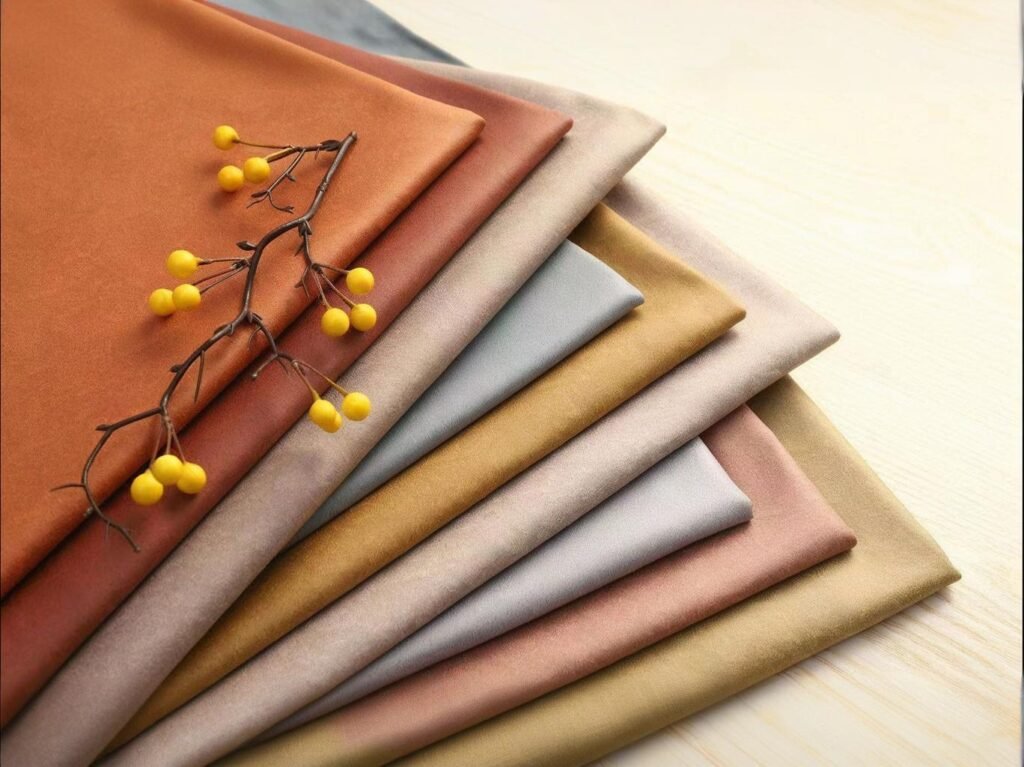
Walk into any modern home and you’ll likely find polyester at work—in plush sofas, blackout curtains, or elegant dining chair covers. What was once viewed as a basic synthetic has evolved into a high‑performance, design‑flexible material trusted by interior brands worldwide. But sourcing the right polyester for upholstery or home textile applications isn’t just about aesthetics; it’s about finding a fabric that balances durability, texture, flame resistance, and price.
Polyester fiber is ideal for upholstery and home textiles due to its durability, dimensional stability, and versatile finish options. It competes strongly with natural fibers in resilience and cost efficiency, while offering broader customization in weave structures, GSM, and post-treatment finishes.
A boutique furniture brand once struggling with velvet fade switched to solution-dyed polyester and reduced customer complaints by 70%—proof that fabric selection can reshape brand reputation. Whether you’re designing timeless armchairs or sleek curtains, this guide will help you understand, evaluate, and confidently source the right polyester fiber for the job.
1. What Makes Polyester Fiber Ideal for Upholstery and Home Textiles?
Polyester is favored in interior textile applications for its strength, wrinkle resistance, and ability to maintain shape and color even under stress. Unlike many natural fibers, polyester can be engineered to meet precise performance specs—making it suitable for furniture, curtains, and cushions that endure both aesthetic scrutiny and daily use.
Polyester is ideal for upholstery and home textiles due to its high tensile strength, fade resistance, mold resistance, and cost-effectiveness. Its low moisture absorbency also reduces the risk of mildew in humid environments.
In one case study, a coastal hotel replaced its cotton‑blend curtains with 100% polyester blackout fabric and cut mold-related textile replacements by over 50% annually—highlighting polyester’s resistance to moisture-related degradation.
1.1 Core Advantages of Polyester for Interiors
- Durability: Polyester fibers offer excellent abrasion resistance (\~45,000 Martindale cycles).
- Color Retention: Solution-dyed fibers resist fading from UV and cleaning agents.
- Shrink Resistance: Polyester holds shape even after multiple wash cycles or dry cleaning.
- Mildew and Insect Resistance: Its low absorbency discourages mold and moth infestation.
1.2 Comparison Table: Polyester vs. Common Alternatives
| Property | Polyester | Cotton | Linen | Rayon |
|---|---|---|---|---|
| Abrasion Resistance (Martindale) | 45,000+ | 15,000 | 12,000 | 10,000 |
| UV Resistance | Excellent | Poor | Fair | Poor |
| Shrinkage After Wash (%) | <2% | 5–8% | 6–10% | 6–12% |
| Mildew Resistance | Yes | No | No | No |
| Cost Efficiency | High | Moderate | Low | Moderate |
Critical Perspective: While cotton and linen may provide a more natural hand-feel, polyester offers superior durability, colorfastness, and resistance to atmospheric damage—particularly in high-traffic or sunlit environments.
1.3 Typical End Uses in Home Interiors
- Upholstery: Textured jacquards, velvets, canvas, and microfiber.
- Curtains and Drapes: Blackout weaves, sheer voiles, flame-retardant satin.
- Cushions and Bedding: Brushed microfiber, quilted poly blends.
- Wall Panels & Room Dividers: Acoustic-treated, stiffened polyester felts.
1.4 Sustainability Factors
Many suppliers now offer recycled polyester (rPET) derived from post-consumer PET bottles. This variant reduces energy use by 45% and greenhouse gas emissions by 30% compared to virgin polyester—making it a popular choice for eco-conscious interior designers.
2. How Does Polyester Compare to Natural Fibers in Durability and Maintenance?
Natural fibers like cotton and linen offer breathability and a luxurious feel but fall short in durability and upkeep. Polyester, as a synthetic, withstands abrasion, UV light, and chemical exposure more effectively, which translates to fewer replacements and lower maintenance costs.
Polyester outperforms natural fibers in abrasion resistance, stain repellency, and shrink control, making it a better choice for high-traffic upholstery or long-term home textile use.
A family-owned furniture shop reduced customer returns by 40% after moving from cotton-linen cushions to polyester velvets treated with soil-release finishes.
2.1 Durability Metrics by Fiber Type
| Test Metric | Polyester | Cotton | Linen |
|---|---|---|---|
| Abrasion Resistance (Martindale) | 45,000+ | 15,000 | 12,000 |
| Pilling Resistance (ASTM D3512) | Grade 4–5 | Grade 2–3 | Grade 2–3 |
| UV Degradation (ASTM G154) | Low loss | High loss | Moderate loss |
2.2 Maintenance Considerations
- Polyester: Machine-washable, low iron, can be finished with soil and stain repellents.
- Cotton: Prone to wrinkling, needs ironing, susceptible to staining.
- Linen: Requires dry cleaning or cold gentle wash; creases easily.
2.3 Life-Cycle Cost Analysis
| Fabric Type | Initial Cost per Yard | Expected Lifespan (Years) | Annualized Cost |
|---|---|---|---|
| Polyester | \$3.80 | 7 | \$0.54 |
| Cotton | \$4.50 | 3 | \$1.50 |
| Linen | \$7.00 | 3 | \$2.33 |
Critical Perspective: While cotton and linen may command aesthetic premiums, their shorter durability and higher maintenance costs can reduce long-term value, especially in hospitality or rental settings.
2.4 Application-Based Recommendations
- High-Touch Areas (sofa backs, dining chairs): Go with 100% polyester or heavy-duty poly blends.
- Decorative Pillows and Light Curtains: Consider poly-linen blends for a softer feel but expect more maintenance.
- Moisture-Prone Zones (bathrooms, coastal homes): Always prioritize mildew-resistant poly fabrics.
3. Which Types of Polyester Yarn and Fabric Weaves Are Commonly Used in Upholstery?
Not all polyester is created equal. Yarn types (filament vs. spun), weaving techniques (plain, twill, jacquard), and knitting structures dramatically affect feel, strength, and aesthetics. Selecting the right combination ensures the fabric not only meets design expectations but also holds up under daily use.
For upholstery, high-tenacity filament yarns in twill or jacquard weaves are widely preferred due to their strength, dimensional stability, and ability to showcase rich textures and patterns.
An interior design studio used textured jacquard polyester on a 40-room hotel renovation. The result? Stylish, stain-resistant seating that still looked new after 18 months of daily guest use.
3.1 Polyester Yarn Types
- Filament Yarn: Smooth, lustrous, stronger; ideal for sleek finishes or satins.
- Spun Yarn: Made from chopped fibers; softer, more cotton-like hand feel.
- Texturized Yarn: Adds bulk and elasticity—used for velvets, chenille, and faux suede.
- High-Tenacity Yarn: Enhanced strength for contract-grade upholstery.
| Yarn Type | Hand Feel | Application Example |
|---|---|---|
| Filament | Smooth, sleek | Drapes, glossy furniture covers |
| Spun | Soft, matte | Upholstery with cotton look |
| Texturized | Plush, stretchy | Velvets, microfiber couches |
| High-Tenacity | Tough, crisp | Commercial seating, cushions |
3.2 Common Polyester Weaves for Upholstery
- Plain Weave: Balanced, firm, but limited elasticity; good for simple curtains or minimalist furniture.
- Twill Weave: Diagonal pattern, higher durability and soil-hiding properties—excellent for high-use furniture.
- Jacquard Weave: Intricate patterns, ideal for premium sofas and armchairs.
- Sateen Weave: Smooth, semi-gloss finish; used in cushions or accent panels.
- Pile Weave: Raised surface; used in velvet, chenille, or corduroy-style upholstery.
3.3 Fabric Structure Selection by Application
| Application | Recommended Yarn | Preferred Weave Type |
|---|---|---|
| Office Sofa | High-tenacity filament | Twill or jacquard |
| Decorative Cushions | Spun or texturized yarn | Sateen or plain |
| Lounge Chairs (Luxury) | Texturized filament | Jacquard or pile |
| Curtains & Drapes | Filament or spun | Plain or dobby |
Critical Insight: Combine the right yarn with the weave to balance comfort and function. For example, a texturized yarn in jacquard weave gives both plushness and pattern depth.
3.4 Real-World Tip
Always request hand-feel swatches. The visual appeal may check all boxes, but the sensory experience defines user satisfaction in upholstery.
4. What Are the Key Performance Standards for Upholstery-Grade Polyester?
To ensure polyester fabric meets real-world demands, manufacturers and buyers rely on standardized performance tests. These cover abrasion resistance, pilling, colorfastness, flammability, and dimensional stability—all crucial for upholstery and home textile applications.
Upholstery-grade polyester should exceed 30,000 Martindale cycles, rate Grade 4 or higher in colorfastness, and comply with national fire safety codes such as CAL TB 117 or BS 5852 depending on the region.
A contract furniture supplier avoided a \$20,000 recall by switching to polyester that passed NFPA 260 smolder resistance tests—meeting the flammability requirement for hospitality environments.
4.1 Key Performance Tests and Industry Standards
| Performance Area | Standard/Test | Minimum Requirement |
|---|---|---|
| Abrasion Resistance | Martindale ISO 12947 | ≥30,000 cycles (residential) |
| Pilling Resistance | ASTM D3512 / ISO 12945-2 | ≥Grade 3 (after 2,000 cycles) |
| Colorfastness to Light | AATCC TM16 / ISO 105-B02 | ≥Grade 4 (after 40h exposure) |
| Colorfastness to Rubbing | AATCC TM8 / ISO 105-X12 | Dry ≥Grade 4 / Wet ≥Grade 3 |
| Flammability (US) | CAL TB 117-2013 / NFPA 260 | Pass |
| Dimensional Stability | ISO 6330 | <3% shrinkage after laundering |
4.2 Optional but Valuable Enhancements
- Stain Resistance: Tested via AATCC 130 (stain release) and 22 (water repellency).
- Anti-microbial Finish: Especially relevant for bedding, curtains, or eldercare upholstery.
- VOC Emission Testing: Required for LEED-compliant interiors (check GREENGUARD standards).
4.3 Contract vs. Residential Performance Levels
| Application | Abrasion Min. (Martindale) | Colorfastness | Flame Resistance Requirement |
|---|---|---|---|
| Residential Sofa | 25,000–30,000 | Grade 4 | Optional unless specified |
| Hotel Lobby Seat | 40,000+ | Grade 5 | Required (CAL TB 117 / BS 5852) |
| Hospital Curtain | 30,000+ | Grade 4 | NFPA 701 / ISO 6941 |
Critical Perspective: Don’t rely on supplier claims alone. Ask for lab certificates and confirm third-party verification if working with sensitive or regulated applications.
4.4 Real-World Testing Strategy
Before large-scale production, request 2–3 meters of fabric and run in-house or third-party performance testing. Many failures arise from overlooked flame or colorfastness issues that emerge only under daily use or after 10+ cleaning cycles.
5. How Do Finishing Treatments Enhance Polyester for Home Applications?
Finishing treatments are applied to polyester fabrics after weaving or knitting to enhance their performance, look, and feel. From water repellency and soil resistance to flame retardancy and soft-touch effects, finishes play a vital role in transforming base polyester into premium, long-lasting home textile solutions.
Finishes like stain-release, anti-microbial, and flame-retardant treatments greatly extend polyester’s usability in home interiors—making it more resistant to wear, spills, and regulations. These treatments can improve both longevity and end-user comfort.
An apartment staging firm extended the life of its rental upholstery inventory by 40% simply by sourcing polyester fabrics treated with fluorine-free stain release and anti-crease finishes—dramatically reducing dry cleaning bills and surface damage.
5.1 Types of Common Polyester Finishes
| Finish Type | Function | Typical Applications |
|---|---|---|
| Soil and Stain Release | Resists oil/water-based stains (AATCC 130) | Sofas, dining chairs, cushions |
| Durable Water Repellent (DWR) | Sheds liquids to prevent absorption | Curtains, window treatments |
| Anti-Microbial | Prevents bacterial/fungal growth | Mattress covers, bedding, healthcare curtains |
| Flame Retardant (FR) | Reduces flammability (CAL TB 117, BS 5852) | Upholstery, drapes in hotels or public spaces |
| Softening Finishes | Improves hand-feel and drape | Sheers, blackout linings, decorative panels |
| Anti-Static | Reduces cling and dust attraction | Drapery, wall coverings |
5.2 Comparison of Finish Performance (After 20 Washes)
| Finish Type | Wash Durability | Added Cost (\$/yd) | Notes |
|---|---|---|---|
| Soil Release | Moderate (15–25 cycles) | \$0.35–\$0.60 | Fluorine-free options now available |
| FR Treatment | High (up to 50 cycles) | \$0.70–\$1.20 | Some regions require FR compliance |
| Anti-Microbial | Moderate (20–30 cycles) | \$0.40–\$0.80 | Test with ISO 20743 or AATCC 100 |
| Softener | Low–Moderate (10–15) | \$0.15–\$0.30 | Requires regular replenishment to feel |
| DWR | Low (10–15 washes) | \$0.25–\$0.50 | Needs heat reactivation for longevity |
Critical Insight: For long-term performance, prioritize inherently flame-retardant polyester or solution-dyed fabrics where color and function are baked in—not added after.
5.3 Environmental Considerations
- Fluorine-Free DWRs (C0 chemistry) are increasingly replacing legacy PFOA-based finishes.
- Bio-Based Anti-Microbial Finishes made from chitosan or silver-free alternatives reduce environmental toxicity.
- OEKO-TEX® and bluesign® Certification ensure that finishes meet human-ecological and safety standards.
5.4 Smart Buying Tip
Ask for test data showing finish performance over time (20–30 wash cycles) and under simulated home cleaning methods (e.g., water spray test, light vacuum abrasion). Don’t just trust marketing names like “NanoGuard” or “EcoShield” without lab backing.
6. What Are the Recommended GSM and Denier Ranges for Upholstery and Drapery?
Grams per square meter (GSM) and denier (D) are crucial specs in determining fabric weight, opacity, drape, and durability. In upholstery and home textiles, these parameters directly affect end-use performance—whether it’s a heavy-duty couch fabric or a flowing curtain panel.
For upholstery, the ideal GSM ranges from 250–400 gsm with 300–900D yarns, while drapery fabrics fall between 80–250 gsm and 75–300D. Heavier weights increase opacity and abrasion resistance, while lighter ones improve flow and air permeability.
A luxury curtain brand revised its sourcing to a 120 gsm, 150D polyester voile fabric—reducing sagging, increasing light diffusion, and decreasing fraying by 60% during hemming.
6.1 Understanding GSM (Grams per Square Meter)
- Low GSM (80–150): Ideal for sheer curtains, voiles, linings.
- Mid GSM (150–250): Best for blackout curtains, light-duty upholstery, cushion covers.
- High GSM (250–400+): Designed for heavy-duty upholstery, floor cushions, and contract furniture.
6.2 Understanding Denier (D)
- Low Denier (75–150D): Finer yarns, good drape, lower abrasion resistance.
- Mid Denier (150–300D): Balanced strength and flexibility.
- High Denier (300–900D): Thick, durable, often used in coated or heavy-duty furniture fabrics.
| Application | GSM Range | Denier Range | Key Benefits |
|---|---|---|---|
| Sheer Curtains | 80–130 | 75–150D | Light filtering, excellent drape |
| Blackout Drapes | 180–250 | 150–300D | UV protection, full coverage |
| Decorative Cushions | 200–300 | 200–400D | Shape retention, moderate abrasion |
| Upholstered Seating | 300–400 | 300–900D | High abrasion resistance |
| Bean Bags/Floor Pillows | 400–600+ | 600–900D | Strong structure, durable outer |
Critical Perspective: Higher GSM and denier improve strength but reduce breathability and softness. For layered designs (e.g., curtain + liner), consider mixing light and mid-weight fabrics for performance and style.
6.3 Testing Considerations
- Fabric Weight Tolerance: Acceptable industry tolerance is ±5% of stated GSM.
- Consistent Weave Density: Ensure stable GSM across rolls by checking ends per inch (EPI) and picks per inch (PPI) in technical specs.
6.4 Pro Tip: Balancing Weight and Feel
For upholstery that still needs a soft touch—like bedroom armchairs or plush ottomans—use a brushed polyester finish on 280–320 gsm fabric with 300–400D yarns. This strikes the balance between luxury and longevity.
7. How Can Buyers Evaluate Polyester Fabric Quality Before Bulk Purchasing?
Choosing polyester fabrics without in-depth evaluation can lead to costly returns, mismatched expectations, and performance failures. Smart buyers perform structured testing and visual inspections, and ask the right questions before issuing large orders.
Before bulk purchasing polyester for home textiles, request physical swatches, conduct lab testing for abrasion, colorfastness, and shrinkage, and verify certifications like OEKO‑TEX or GRS. A multi-step quality check ensures fabric matches both spec sheets and real-world needs.
A curtain brand once switched to a new supplier without sampling—only to find the fabric shrank 6% after ironing. They restructured their process to include 3-step QC: lab, in-house, and user panel testing—cutting product failures by 90%.
7.1 Key Pre-Purchase Evaluation Steps
- Request Cut Swatches: Minimum 1 yard for upholstery, 3–5 meters for drapery to test sewing and feel.
- Perform Lab Testing: Engage ISO/IEC 17025-certified labs for ASTM and ISO tests.
- Inspect Fabric on Roll: Look for skewing, inconsistent weave, or color banding.
- Conduct Shrinkage & Colorfastness Tests: Simulate customer laundering conditions.
- Verify Certifications: Ensure OEKO-TEX®, REACH compliance, or GRS (if recycled).
7.2 Recommended Quality Testing Table
| Quality Parameter | Test Method | Acceptance Criteria |
|---|---|---|
| Abrasion Resistance | Martindale ISO 12947 | ≥30,000 cycles for upholstery |
| Colorfastness to Light | AATCC TM16 | ≥Grade 4 |
| Dimensional Stability | ISO 6330 | Shrinkage <3% after 3 washes |
| Seam Slippage (Upholstery) | ASTM D4034 | ≥40 lbs force resistance |
| Hand Feel Rating | In-house panel (1–5) | ≥4 for comfort-critical applications |
7.3 Supplier Interview Questions
- Can you provide third-party lab reports for the last 3 months?
- What’s your batch-to-batch color deviation threshold (ΔE)?
- Do you allow pre-shipment inspection by buyer-appointed QC teams?
- What’s your GSM and width tolerance range?
7.4 Critical Perspective
Even if a supplier looks reputable online, always test independently. Establishing your own benchmark process avoids blind trust and aligns real performance with marketing claims.
8. What Are the Best Sourcing Strategies and MOQ Considerations for Polyester Home Textiles?
Sourcing success isn’t just about price—it’s about alignment between minimum order quantities (MOQs), lead times, and the flexibility of customization. Polyester offers versatility, but sourcing strategies differ based on product complexity, finish requirements, and order size.
For home textiles, MOQs for standard polyester fabrics range from 500 to 1,000 meters per color, while custom-finished or jacquard weaves may require 1,500+ meters. Negotiating with flexible suppliers and planning sample rounds in advance are key to smooth procurement.
A small-batch furniture designer sourced 600 meters of custom velvet from a supplier with a 1,200 MOQ—by agreeing to a stock-supported order with slight spec adjustments, they avoided storage waste and kept unit costs competitive.
8.1 Typical MOQ Ranges by Fabric Type
| Fabric Type | MOQ (meters/color) | Lead Time (days) | Notes |
|---|---|---|---|
| Plain-Dyed Polyester | 500–1,000 | 15–25 | Low MOQ, widely stocked |
| Jacquard Upholstery | 1,200–2,000 | 25–35 | Custom yarns increase MOQ |
| Blackout Drapery Fabric | 800–1,500 | 20–30 | May require lamination step |
| Recycled Polyester (rPET) | 1,000+ | 30–40 | GRS certification adds sampling time |
8.2 Sourcing Strategies
- Stock-Supported Customization: Use existing greige fabric but request dye/finish tweaks to reduce MOQ.
- MOQ Pooling: Partner with like-minded buyers to meet higher MOQ together.
- Pre-Booking Yarn: Lock-in dye lots for future repeat orders to ensure consistency and faster turnaround.
- Tiered Sampling: Request base swatch > small run sample > pre-production for bulk sign-off.
8.3 Logistics and Packaging Considerations
- Roll Width and Length: Ensure packaging specs match your cutting/conversion machines.
- Labeling: Ask for clear labeling by GSM, color code, and PO reference.
- Freight Mode: Polyester is light but voluminous—evaluate FCL vs. LCL to minimize per-yard shipping costs.
8.4 Negotiation Tips
- Ask about test-yard production policies—some mills offer 50–100 meters to trial new lines.
- Inquire about finish minimums: FR or DWR finishes may have separate MOQ thresholds.
- Ensure color continuity: get lab dips and strike-offs signed off and retained on both sides.
Pro Tip: Build a sourcing calendar around your seasonal drops or launch windows—aligning fabric sampling, production, and freight timelines avoids cost surges from express shipping or emergency reordering.
Looking to develop custom polyester fabrics for your home textile line?
Polyester fiber has become a cornerstone of modern upholstery and home textile design—delivering a powerful mix of durability, aesthetic versatility, performance customization, and affordability. Whether you’re sourcing for high-traffic commercial seating or lightweight decorative sheers, understanding the yarn types, finishing options, performance benchmarks, GSM ranges, and sourcing logistics equips you to make confident, long-term choices.
SzoneierFabrics offers expert R\&D support, low MOQs, fast prototyping, and tailored production to meet your project needs.
Let’s turn your fabric vision into a high-performance, market-ready reality—designed to last, styled to impress.
polyester fabric for interior design, sofa fabric polyester, commercial upholstery fabric, polyester curtain material wholesale, polyester textile manufacturing, polyester fabric roll wholesale, fabric sourcing guide for home textiles, heavy-duty polyester fabric, polyester woven fabric for upholstery, polyester furnishing fabric, eco-friendly polyester fabric, anti-microbial upholstery fabric, water repellent polyester fabric, polyester textile for cushions, polyester weave types, solution dyed polyester fabric, contract-grade upholstery fabric, OEKO-TEX certified polyester, high-performance home textiles, polyester home decor fabric, polyester velvet upholstery fabric, polyester curtain fabric GSM, drapery fabric sourcing, polyester fabric lead time, polyester textile MOQ negotiation, sustainable polyester fabric supplier, polyester fabric for decorative pillows, polyester blackout curtain fabric, soft finish polyester fabric, upholstery textile quality testing
Can't find the answers?
No worries, please contact us and we will answer all the questions you have during the whole process of bag customization.
Make A Sample First?
If you have your own artwork, logo design files, or just an idea,please provide details about your project requirements, including preferred fabric, color, and customization options,we’re excited to assist you in bringing your bespoke bag designs to life through our sample production process.