 Skip to content
What Does a Sling Bags Manufacturer Produce?

A sling bag may look like a simple combination of fabric, one zipper, and an adjustable strap. That impression disappears the moment a product moves from a sketch into development. A compact travel sling must keep passports and electronics secure without becoming bulky. A camera sling must protect hard equipment while still rotating smoothly from the back to the chest. A cycling sling must resist movement, sweat, and road spray. A promotional sling must communicate a brand clearly while remaining practical enough that people continue using it after an event.
A professional sling bag manufacturer produces far more than one standard bag shape. The factory may develop everyday sling bags, travel slings, chest bags, outdoor bags, cycling bags, camera slings, device bags, tactical products, promotional bags, medical-use carriers, and private-label retail collections. Production can include fabric sourcing, pattern development, structural engineering, pocket planning, strap construction, logo application, coating, sampling, sewing, reinforcement, inspection, and custom packaging.
The most important point is that a sling bag manufacturer does not simply sew a logo onto an existing pouch. A capable manufacturer converts a carrying requirement into a workable product. The team must understand what the bag will hold, where it will sit on the body, how the user will open it, how much weight the strap must support, which areas will experience abrasion, and which materials can deliver the desired appearance.
Imagine a brand requesting a “small waterproof sling bag.” The description sounds clear until the sample team begins asking practical questions. Does “small” mean one liter or five liters? Must it hold a 500 ml bottle? Is the bag worn on the chest or upper back? Does waterproof mean light-rain resistance or seam-sealed protection? Should the buckle release at the front? Is the strap reversible? Does the phone pocket need one-handed access? Will the bag be used in Tokyo rain, California sun, or Scandinavian winter?
Each answer changes the pattern, fabric, zipper, coating, reinforcement, cost, and sample structure. What appears to be a small accessory is actually a compact carrying system, and that is what a sling bag manufacturer produces.
What Types of Sling Bags Are Produced?
A sling bag manufacturer can produce products for everyday carry, travel, outdoor activity, photography, devices, sports, work, promotions, medical use, and retail collections. The main differences are not only external style. Each category requires a different capacity, strap angle, pocket arrangement, material system, reinforcement plan, and level of protection.
Everyday sling bags prioritize convenience and appearance. Travel slings focus on secure access and organization. Outdoor slings need stronger materials and movement control. Camera slings require protective structure. Promotional sling bags emphasize visible branding, repeatable production, and practical cost.
A manufacturer may also produce hybrid products. A travel sling can include a tablet sleeve and camera divider. A cycling sling can use a clean urban shape suitable for commuting. A promotional sling can be upgraded with retail-quality lining, branded hardware, and custom packaging. The category name establishes the direction, but the final specification determines what the factory actually builds.
The table below shows common sling bag categories and their main production priorities.
| Sling Bag Type | Common Capacity | Typical Contents | Main Construction Priority | Common Material Direction |
|---|---|---|---|---|
| Micro sling | 0.5–1.5 L | Phone, cards, keys, earbuds | Slim profile and precise pockets | Lightweight nylon or polyester |
| Everyday sling | 2–5 L | Wallet, power bank, glasses, small bottle | Comfort and quick access | Nylon, polyester, canvas |
| Travel sling | 3–7 L | Passport, phone, charger, wallet, bottle | Security and organized access | Coated nylon or polyester |
| Outdoor sling | 4–10 L | Bottle, tools, snacks, light clothing | Abrasion and movement control | Ripstop nylon or Oxford |
| Cycling sling | 2–7 L | Phone, tools, pump, compact jacket | Stability and weather resistance | High-tenacity nylon or coated polyester |
| Camera sling | 5–12 L | Camera, lens, batteries, accessories | Padding and internal protection | Structured nylon or polyester |
| Device sling | 4–10 L | Tablet, console, charger, headphones | Padded sleeves and pressure control | Nylon, neoprene, polyester |
| Promotional sling | 1–6 L | Event items and daily essentials | Branding and production efficiency | Polyester or canvas |
| Tactical sling | 5–15 L | Tools, equipment, medical items | Reinforcement and modular storage | Heavy nylon or polyester Oxford |
| Medical sling | Varies | First-aid or specialized equipment | Access, hygiene, and identification | Coated polyester or nylon |
What Are Everyday Sling Bags?
Everyday sling bags are compact products designed to carry a predictable group of personal items without the size of a backpack or the loose movement of a conventional shoulder bag. Common contents include a phone, wallet, keys, earbuds, glasses, tissues, power bank, cable, small bottle, and compact umbrella.
The product may be worn across the chest, ribs, waist, or upper back. Its success depends on how naturally it fits the wearer’s routine. An everyday sling should not require careful repacking every time an item is removed. The phone should remain easy to reach. Keys should not scratch electronics. The zipper should open smoothly while the bag is worn. The strap should stay adjusted instead of slowly slipping longer during the day.
Manufacturers produce several everyday forms.
A crescent sling follows the curve of the torso and often has a casual or fashion-led appearance. Its narrow ends create a close fit but reduce usable rectangular space.
A vertical sling uses a narrow upright body. It works well for phones, glasses, documents, and compact bottles, although items may stack at the bottom.
A rectangular sling provides more efficient space for a tablet, notebook, charger, or organizer panel. It may project farther from the body than a soft crescent shape.
A belt-bag sling begins with a waist-pack structure but uses an extended strap for crossbody wear. It is popular because it can move between waist, chest, and shoulder positions.
A teardrop or triangular sling creates a technical appearance and follows the upper back. Its irregular interior requires careful pocket placement.
The manufacturing process begins with the intended item list. A vague instruction such as “make it medium-sized” is not enough. The factory needs the dimensions of the largest rigid object, the weight of the heaviest object, and the access frequency of each item.
For example, a daily sling intended to hold a 6.7-inch phone, wallet, sunglasses case, 10,000 mAh power bank, cable, and 500 ml bottle requires more than a general five-liter target. The bottle needs vertical control. The power bank should sit near the body rather than in the front pocket. The sunglasses case should stay near the top to avoid crushing. The phone should remain accessible without exposing every other item.
A manufacturer may create a paper mock-up, foam volume model, or quick fabric prototype before producing the finished sample. This step helps confirm the true internal space before custom zippers, lining, hardware, and logos are added.
Everyday sling bags often use moderate material weights. The shell must survive repeated rubbing, but it should not make the bag feel like industrial equipment. A 210D to 420D nylon or 300D to 600D polyester direction may be suitable, depending on the weave and backing. Soft canvas, crinkle nylon, polyester twill, and lightweight neoprene can also support lifestyle collections.
The strap is a major design element. A narrow strap can look clean but become uncomfortable under a heavier load. A wide strap distributes pressure but may dominate a compact bag. Everyday slings commonly use webbing in a width that balances comfort, appearance, and buckle size.
The manufacturer must also consider the strap tail. A long loose tail looks unfinished and can catch on surrounding objects. Elastic keepers, webbing loops, folded ends, and double-layer adjustment systems can keep it controlled.
An everyday sling should be tested partially loaded as well as full. Many products look excellent when packed for photography but collapse or twist when carrying only a phone and wallet. The internal reinforcement should help the bag maintain an intentional shape at different fill levels.
| Everyday Sling Feature | Basic Direction | Upgraded Direction | Development Risk |
|---|---|---|---|
| Main opening | Standard coil zipper | Reverse coil or coated zipper | Tight curves increase operating force |
| Interior | One open compartment | Dividers, mesh pocket, key leash | Too many pockets reduce usable space |
| Strap | Standard webbing | Jacquard or padded strap | Hardware may sit on the collarbone |
| Back panel | Unpadded fabric | Foam or breathable spacer mesh | Extra padding adds heat |
| Logo | Screen print | Embroidery, silicone, metal badge | Dense decoration may distort the panel |
| Lining | Plain polyester | Custom color or printed lining | Thin lining tears around pockets |
| Shape | Soft | Lightly structured | Excess structure reduces body fit |
A good everyday sling feels simple because the factory has solved many invisible problems. The zipper path, seam direction, lining depth, strap anchor, and pocket position all work together. Poor design feels complicated even when the bag has very few features.
What Are Travel Sling Bags?
Travel sling bags are designed to keep important items close, organized, and accessible during airports, public transport, sightseeing, events, and unfamiliar city environments. They usually prioritize secure openings, body-side pockets, passport storage, quick phone access, and comfortable front carry.
Travel creates repeated actions. The user removes a passport, scans a phone, stores a wallet, connects a charger, retrieves earbuds, and reaches for documents. A travel sling should support these actions without requiring the entire bag to be opened each time.
Manufacturers often divide the interior by access frequency.
A front or upper pocket holds the phone, transit card, or earbuds.
The main compartment holds a power bank, cable, glasses, tissues, and compact personal items.
A flat body-side pocket holds a passport, cash, or important documents.
A small mesh compartment controls cables and adapters.
An elastic zone holds a compact bottle or umbrella.
A key leash prevents keys from disappearing into the lowest corner.
The bag must also remain secure while moving. A travel sling commonly sits high across the chest or back. The strap should shorten enough for close wear over a T-shirt but extend far enough for a winter coat.
The zipper orientation is critical. A bag may appear secure when lying flat but become awkward after it rotates from the back to the chest. The main opening should remain upward or toward the wearer. Loose contents should not fall against the zipper when the product changes position.
Travel sling bags may include several security features:
Body-side zipper pockets
Recessed main zippers
Covered zipper tracks
Lock-compatible dual sliders
Clip-secured zipper pulls
Hidden document sleeves
RFID-blocking card pockets
Cut-resistant reinforcement
Strap buckles positioned away from easy external access
These features should be selected according to actual use rather than added as a checklist. A passport pocket that is too difficult to reach may cause the user to leave the main compartment open while searching. A complicated lock may remain unused when the bag is opened repeatedly during airport processing.
A manufacturer should map a typical journey before planning the pockets.
| Travel Moment | Item Needed | Ideal Access Level | Suitable Storage |
|---|---|---|---|
| Airport entrance | Phone and booking details | Immediate | Front quick-access pocket |
| Check-in | Passport and documents | Frequent but secure | Flat upper or body-side pocket |
| Security | Electronics and liquids | Controlled access | Organized main compartment |
| Boarding | Phone and passport | Immediate | Separated upper pockets |
| In transit | Earbuds and charger | Frequent | Mesh organizer |
| Sightseeing | Phone, wallet, sunglasses | Frequent | Front and main compartments |
| Crowded transport | Valuables | Maximum control | Body-side security pocket |
| Café or shop | Wallet or card | Quick one-hand access | Raised internal pocket |
Travel slings often use nylon or polyester with a water-resistant backing. The shell should survive rain, seat contact, and repeated rubbing. A light color may look fresh but show dirt quickly. A dark color hides wear but makes dark zipper pulls and pockets harder to identify.
The lining can improve usability. A lighter interior color helps the traveler see small black cables, cards, and earbuds. Custom printed lining adds branding, but the pattern should not become visually confusing.
The manufacturer should also test the bag while seated. A thick front-worn sling may interfere with a seat belt or tray table. A wide bag can restrict the arms. A large buckle can press against the chest.
Travel sling production may also include luggage-compatible features such as a rear sleeve, detachable strap, or compact packing shape. These additions should not compromise the close-body fit that makes a sling useful.
What Are Outdoor Sling Bags?
Outdoor sling bags are developed for hiking, cycling, camping, fishing, field work, sightseeing, and other activities involving greater movement, abrasion, weather exposure, and contact with rough environments.
The category often uses ripstop nylon, high-tenacity nylon, coated polyester, Oxford fabric, technical mesh, reinforced webbing, and weather-resistant zippers. Material selection depends on the expected load and exposure rather than the outdoor label alone.
A light hiking sling carrying a phone, map, snack, and small first-aid pouch may use a 210D ripstop. A cycling sling carrying tools, bottle, and compact jacket may require 420D or 500D material with a reinforced lower panel. A rugged utility sling may use heavier fabric, stronger webbing, and modular attachment points.
The bag must control movement. A conventional crossbody product can swing while walking quickly or cycling. Outdoor slings often use:
Shorter strap geometry
A close-fitting back panel
Non-slip contact fabric
An optional stabilization strap
Compression points
Elastic bottle control
Balanced pocket placement
A removable stabilizer can connect the main strap or bag body to the opposite side of the torso. It helps prevent the product from rotating during cycling or climbing. The stabilizer should be easy to remove when the user returns to ordinary walking.
Ventilation is another important consideration. Nylon and polyester shells can both trap heat when pressed directly against the body. Outdoor sling manufacturers may use spacer mesh, perforated foam, airflow channels, or raised contact zones.
More padding does not always create more comfort. Thick foam increases heat, weight, and drying time. The back panel should use enough structure to protect against hard contents without becoming a warm cushion.
Outdoor pockets should be planned around movement. A loose bottle can shift and strike the user. Tools can puncture thin lining. Snacks and clothing need flexible space. A wet umbrella or damp gloves should remain separate from electronics.
| Outdoor Requirement | Manufacturing Response | Why It Matters |
|---|---|---|
| Abrasion resistance | Stronger shell or reinforced lower panels | Protects contact zones |
| Movement control | Close strap geometry and stabilizer | Reduces bounce |
| Sweat management | Spacer mesh or quick-drying back panel | Improves long-wear comfort |
| Light rain | Coated shell and protected zipper | Slows water entry |
| Bottle stability | Elastic or shaped compartment | Prevents shifting |
| Tool protection | Reinforced pouch or divider | Protects lining and body |
| Low-light visibility | Reflective piping, print, or webbing | Supports cycling and road use |
| Glove use | Larger zipper pulls | Improves access |
| Drainage | Mesh or drainage holes | Prevents water accumulation |
| Compact packing | Flexible panels and limited hardware | Simplifies travel and storage |
Outdoor sling bags may also include attachment systems. Webbing loops, daisy chains, modular panels, elastic cords, and carabiner points can carry external items. Each attachment creates a stress point and must be reinforced internally.
Visible modular webbing may suit tactical or field products but make a lifestyle bag look too aggressive. Manufacturers can create hidden or low-profile alternatives, such as narrow loops integrated into seams.
Water-resistant claims require care. A coated shell does not make the completed bag waterproof. Ordinary stitching creates needle holes, and standard zippers allow water through. Outdoor manufacturers may use coated zippers, storm flaps, seam tape, welded panels, or waterproof inner pouches depending on the required level.
The product should be tested from realistic directions. A cycling bag receives road spray from below, rain from above, and sweat from the body side. A simple top-down spray test does not reproduce all three.
What Are Camera Sling Bags?
Camera sling bags are protective carrying products designed for cameras, lenses, batteries, memory cards, filters, chargers, and compact accessories. They combine the quick rotation of a sling with the padding and organization of a camera case.
The manufacturer must begin with the equipment dimensions. “Fits one camera and two lenses” is not precise enough. Camera bodies vary in width, grip depth, viewfinder height, and mounted-lens length. Lenses vary in diameter. Protective cages, straps, and lens hoods add further size.
The equipment list determines the internal volume and divider system.
A compact mirrorless sling may use five to seven liters.
A larger camera sling may require eight to twelve liters.
A drone or action-camera sling may need different compartment geometry.
A camera-and-tablet sling requires both thick dividers and a flat device sleeve.
Protective structure usually includes:
Outer shell
Foam-laminated body panels
Padded internal dividers
Soft lining
Reinforced base
Padded device sleeve
Structured zipper opening
Wide strap
Strong anchor reinforcement
The foam must protect equipment without consuming excessive interior space. Thick foam looks protective but can reduce usable dimensions significantly. Closed-cell foam resists moisture and maintains shape well. Softer foam improves cushioning but may compress over time.
Movable dividers are common because users arrange equipment differently. Hook-and-loop dividers allow flexible configuration, but they must attach securely to the lining. Loose hook surfaces can scratch equipment or collect lint.
The main opening should provide clear visibility. A narrow zipper may make the bag compact but force users to pull equipment through a tight opening. A wide top or side opening improves access but requires greater reinforcement.
Camera slings should rotate to the front without tilting the equipment dangerously. The internal divider layout must remain stable in both carrying and access positions. A lens should not fall toward the zipper when the bag becomes horizontal.
| Camera Sling Area | Production Requirement | Failure Risk |
|---|---|---|
| Main shell | Abrasion-resistant and stable | Surface wear or collapse |
| Back panel | Flat, padded, and comfortable | Hard camera edge against body |
| Dividers | Adjustable and correctly sized | Equipment movement |
| Main zipper | Wide opening and strong chain | Difficult access or separation |
| Strap | Wide with stable adjustment | Shoulder fatigue |
| Strap anchors | Extended internal reinforcement | Structural failure |
| Base | Additional impact protection | Damage when placed down |
| Lining | Soft and low-lint | Scratching or fiber transfer |
| Device sleeve | Padded with edge clearance | Tablet pressure |
| Rain protection | Coated shell or separate cover | Moisture reaching electronics |
A camera sling should also be evaluated under actual movement. The user may walk quickly, kneel, climb stairs, and rotate the bag repeatedly. Static drop and load tests are useful, but repeated access simulation reveals whether the zipper, dividers, and strap remain stable.
The product’s appearance can range from technical to discreet. Some users prefer a bag that does not visibly resemble camera equipment. Manufacturers can create a clean urban exterior while retaining a protective internal system.
What Are Promotional Sling Bags?
Promotional sling bags are manufactured for events, corporate programs, sports activities, schools, tourism, membership programs, product launches, retail giveaways, and branded merchandise. They emphasize visible logo presentation, consistent color, efficient production, and practical usefulness.
A promotional product does not have to be disposable or poorly made. In fact, a sling bag delivers more brand exposure when people continue using it after the event. Weak straps, thin zippers, and uncomfortable shapes reduce that value.
Manufacturers can produce promotional slings at several quality levels.
A basic event sling may use one main compartment, standard polyester fabric, screen-printed logo, simple webbing, and individual polybag packing.
A mid-level corporate sling may include lining, several pockets, custom zipper pulls, embroidery, woven labels, and retail-style packaging.
A premium promotional sling may use recycled polyester, branded jacquard straps, custom hardware, printed lining, silicone logos, hang tags, and gift boxes.
The most common shell material is polyester because it offers broad color choices, stable production, good print compatibility, and controllable cost. Cotton canvas is used when the program requires a natural or lifestyle appearance. Nylon may be selected for premium travel or outdoor campaigns. Neoprene works for sports, device, and beverage-related promotions.
Logo method depends on the artwork, fabric, order quantity, and desired appearance.
| Logo Method | Best For | Main Advantage | Production Concern |
|---|---|---|---|
| Screen printing | Bold limited-color graphics | Efficient and visible | Ink adhesion and cracking |
| Heat transfer | Detailed multicolor artwork | Clean edges and flexibility | Temperature compatibility |
| Sublimation | Full-surface polyester graphics | Rich color and no heavy surface | Requires suitable polyester base |
| Embroidery | Premium logo treatment | Texture and durability | Puckering on light fabric |
| Woven label | Discreet brand identity | Fine detail and repeatability | Label placement |
| Silicone logo | Technical or sports appearance | Raised durable effect | Weight and attachment |
| Rubber patch | Outdoor or streetwear branding | Strong visual identity | Flexibility and color matching |
| Metal badge | Premium corporate gift | Refined appearance | Weight and backing reinforcement |
Promotional production requires artwork control. Vector files help maintain clean edges and accurate dimensions. Pantone or physical color references improve color communication, although fabric, print, plastic, and metal reflect color differently.
Packaging also influences presentation. A simple bag may use recycled polybags and carton packing. A retail merchandise program may require hang tags, barcodes, inserts, size labels, story cards, paper sleeves, or custom boxes.
The factory should understand whether the product is given away, sold in a shop, shipped directly to individuals, or packed with another item. That decision affects packaging size, carton quantity, labeling, and shipping cost.
Which Materials Are Used?
Sling bag manufacturers use nylon, polyester, canvas, cotton, neoprene, Oxford fabric, recycled polyester, recycled nylon, mesh, coated textiles, synthetic leather, and blended materials. The correct material depends on the bag’s capacity, load, use environment, desired shape, branding method, and price position.
Nylon is commonly selected for lightweight technical and outdoor sling bags. Polyester is widely used for daily, promotional, printed, and structured products. Canvas creates a natural lifestyle appearance. Neoprene provides softness and cushioning. Recycled fabrics support collections built around traceable material content.
The shell material is only one part of the construction. Manufacturers also select lining, foam, reinforcement, webbing, zipper tape, elastic, thread, labels, and coatings. A durable shell paired with weak lining or undersized webbing still produces an unreliable bag.
Material selection should therefore be treated as a complete system.
| Material | Main Strength | Main Limitation | Suitable Sling Bag Direction |
|---|---|---|---|
| Nylon | Strong, lightweight, abrasion resistant | Can cost more and needs UV consideration | Travel, outdoor, cycling, camera |
| Polyester | Stable, printable, quick drying, versatile | Some grades feel coarse or basic | Daily, promotional, commuter |
| Cotton canvas | Natural texture and substantial feel | Heavy and moisture absorbent | Lifestyle and fashion |
| Polyester canvas | Canvas look with greater stability | Less natural hand feel | Branded daily sling |
| Neoprene | Soft, flexible, protective | Heat retention and thick seams | Sports, device, lifestyle |
| Oxford fabric | Durable texture and structure | Quality varies widely | Utility and work sling |
| Recycled polyester | Broad availability and print options | Traceability must be verified | Travel, retail, promotional |
| Recycled nylon | Strong technical positioning | Higher cost and limited supply | Premium outdoor sling |
| Mesh | Ventilation and visibility | Limited protection | Side pockets and back panels |
| Synthetic leather | Structured premium appearance | Aging and peeling risk | Fashion crossbody sling |
Which Nylon Fabrics Are Available?
Nylon fabrics for sling bags range from very lightweight packable constructions to heavy technical materials used for equipment and military products. Common directions include plain-weave nylon, ripstop, twill, nylon Oxford, high-tenacity nylon, crinkle nylon, and ballistic-style fabric.
Lightweight 70D to 100D nylon is used for foldable or minimalist sling bags. It keeps the product light but may require reinforcement at strap anchors and zipper areas.
A 210D nylon provides a useful balance for travel, daily carry, and compact outdoor products. It can be coated for rain resistance and combined with stronger panels where needed.
A 330D or 420D nylon suits premium urban slings, cycling bags, and device products. These materials can provide greater abrasion resistance and structure without becoming excessively heavy.
A 500D high-tenacity nylon is common in rugged travel, camera, tactical, and outdoor applications. It offers strong performance, but the product must still be designed carefully to control finished weight.
A 700D to 1000D nylon may be appropriate for equipment pouches, military carriers, or tool bags. It is often unnecessary for a small everyday sling because the coarse weave and seam bulk can reduce comfort.
| Nylon Type | Approximate Character | Suitable Use | Production Consideration |
|---|---|---|---|
| 70D–100D plain nylon | Very light and soft | Packable sling | Requires reinforcement |
| 210D nylon | Light and versatile | Travel and daily carry | Backing controls structure |
| 210D ripstop | Light with grid reinforcement | Outdoor and hiking | Technical appearance |
| 330D nylon | Refined technical balance | Urban premium sling | Supply and shade consistency |
| 420D nylon | Strong and moderately structured | Cycling and device bag | Curved seam handling |
| 500D high-tenacity nylon | Rugged and durable | Tactical and camera sling | Higher material cost |
| 1000D nylon | Heavy and coarse | Equipment and field use | Weight and seam bulk |
| Crinkle nylon | Soft fashion texture | Lifestyle sling | Appearance variation |
| Ballistic-style nylon | Dense basket weave | Rugged premium utility | Difficult small-radius sewing |
The term “nylon” is not enough for material approval. The manufacturer should identify yarn type, weave, weight, backing, surface finish, and expected test performance.
A lightweight nylon can become highly water resistant with TPU lamination. A heavy nylon can remain only moderately rain resistant if it uses an open weave and weak backing. A high-tenacity yarn can outperform a heavier ordinary yarn.
Nylon also works well with several branding methods. Screen printing, heat transfer, embroidery, woven labels, rubber patches, and silicone logos can all be used. Heat-sensitive coatings require controlled application temperatures.
A nylon sling manufacturer should test the actual decoration on the approved material. Applying the logo to a substitute swatch may hide problems with adhesion, color, or surface distortion.
Which Polyester Fabrics Work Best?
Polyester fabrics work well for sling bags when they provide the right balance of density, backing, surface texture, color, and print compatibility. Common options include 210D polyester, 300D Oxford, 420D polyester, 600D Oxford, polyester twill, mélange polyester, polyester canvas, and recycled PET fabric.
A lightweight 150D to 210D polyester is suitable for simple promotional slings, packable bags, and low-load products. It may require backing or lining to prevent collapse.
A 300D polyester is often used for daily, travel, and commuter bags. It offers a cleaner and lighter appearance than coarse 600D Oxford while supporting coatings and printing.
A 420D polyester can provide more structure and abrasion resistance for utility or outdoor-inspired products.
A 600D polyester Oxford is one of the most widely used bag fabrics. It offers visible texture, broad color availability, and practical cost. Quality varies greatly, so the denier description should not be treated as proof of performance.
Polyester twill creates a smoother, more refined appearance. It suits office, fashion, and urban sling bags.
Mélange polyester uses mixed-color yarns to create a heathered surface. It can hide minor dirt and make a synthetic bag feel more lifestyle oriented.
Polyester canvas provides the visual texture of canvas with stronger dimensional and moisture stability than pure cotton.
| Polyester Direction | Appearance | Main Advantage | Suitable Product |
|---|---|---|---|
| 150D–210D polyester | Light and simple | Low weight and efficient cost | Basic promotional sling |
| 300D polyester | Clean and versatile | Balanced structure | Daily and travel sling |
| 420D polyester | Technical and stable | Improved durability | Utility and outdoor sling |
| 600D Oxford | Coarse and substantial | Broad availability | Work and promotional bag |
| Polyester twill | Smooth and refined | Premium urban appearance | Commuter and fashion sling |
| Mélange polyester | Heathered texture | Hides minor marks | Lifestyle collection |
| Polyester canvas | Natural-looking weave | Stability and easier care | Casual sling |
| Recycled PET | Varies by construction | Broad sustainable-material options | Retail and travel products |
| Sublimation polyester | Smooth printable base | Full-color artwork | Events and branded collections |
Polyester is especially strong for custom printing. Sublimation allows detailed patterns, gradients, photographs, character artwork, and repeated graphics on suitable light-colored polyester.
Screen printing and heat transfer also work well, but the backing and surface finish must tolerate the process. Dark polyester can cause dye migration into light heat-transfer logos if unsuitable materials or temperatures are used.
Polyester’s low moisture absorption supports quick drying and stable dimensions. This makes it useful for humid climates, fitness products, travel accessories, and bags that require repeated spot cleaning.
The factory should still test coatings and adhesives under heat and humidity. Polyester fiber may remain stable while poor PU backing becomes sticky or separates.
Are Canvas Sling Bags Durable?
Canvas sling bags can be highly durable when the fabric weight, weave, reinforcement, and sewing construction match the intended load. Canvas provides a natural texture, strong visual identity, and substantial hand feel, making it popular for lifestyle, artist, bookstore, heritage, outdoor-inspired, and fashion collections.
Canvas describes a woven construction rather than one fiber. It may be made from cotton, polyester, recycled cotton, cotton-polyester blends, linen blends, or other yarns.
Cotton canvas offers an authentic natural touch. It accepts screen printing and embroidery well, and it can soften attractively with use. It also absorbs moisture, dries more slowly, and can become heavy.
Polyester canvas imitates the visual character of cotton while maintaining greater dimensional stability and easier care. It may feel less natural, but it works well for consistent retail production.
Cotton-polyester blends balance hand feel and stability. Recycled cotton blends offer a distinctive texture, although shorter recycled fibers may require blending with stronger yarns.
Waxed canvas adds water resistance and a rugged appearance. It develops marks and creases over time. Some users consider that patina attractive; others may view it as inconsistency.
| Canvas Type | Main Character | Strength | Limitation |
|---|---|---|---|
| Natural cotton canvas | Authentic and tactile | Strong lifestyle appeal | Moisture absorption |
| Dyed cotton canvas | Rich color and texture | Good print and embroidery base | Color transfer risk |
| Washed canvas | Soft and vintage | Comfortable body feel | Batch variation |
| Waxed canvas | Rugged and weather resistant | Distinctive aging | Heat and marking sensitivity |
| Polyester canvas | Stable and clean | Easier care | Less natural touch |
| Cotton-poly blend | Balanced | Improved stability | Blend consistency |
| Recycled cotton blend | Textured and eco-oriented | Strong material story | Variable fiber strength |
| Linen-canvas blend | Dry premium texture | Fashion appearance | Wrinkling and abrasion |
Canvas sling bags need careful seam planning because thick folded layers can become bulky. Curved zipper openings and narrow strap tabs are harder to sew cleanly in heavy canvas.
A compact sling does not always benefit from the heaviest fabric. Medium-weight canvas with local reinforcement may perform better than a thick fabric used across every panel.
Dark dyed canvas should be tested for rubbing against light clothing. Shrinkage should be controlled before cutting. Embroidery density should be adjusted to prevent puckering.
Canvas works particularly well when the design uses simple panel shapes, visible topstitching, woven labels, leather-style patches, antique-finish hardware, or natural-color webbing.
Is Neoprene Good for Sling Bags?
Neoprene is a strong option for device, sports, travel, and lifestyle sling bags when softness, cushioning, flexibility, and modern appearance matter. It is not the best choice for every application because it can retain heat, create bulky seams, and reduce usable internal dimensions.
Neoprene fabric usually consists of a foam core laminated with polyester, nylon, jersey, or another textile. The thickness and foam density determine how much structure and protection it provides.
Thin neoprene can create a soft, streamlined sling for phones, tablets, sports accessories, or travel essentials. Thicker neoprene provides more cushioning but makes corners and zipper seams harder to construct.
Neoprene can stretch around irregular items, helping a compact bag hold more than its relaxed dimensions suggest. Excessive stretch can encourage overpacking and distort the shape.
The material resists light splashes at the foam level, but sewn seams and zippers still allow water entry. A neoprene sling should not be marketed as waterproof without finished-product testing.
| Neoprene Feature | Benefit | Risk |
|---|---|---|
| Soft foam | Cushions devices | Reduces interior capacity |
| Stretch | Fits irregular contents | Can distort under overpacking |
| Smooth body fit | Comfortable against the torso | Can trap heat |
| Laminated surface | Supports color and printing | Delamination risk |
| Raw-edge potential | Modern minimal appearance | Edge wear |
| Water-resistant core | Protects against light moisture | Seams remain vulnerable |
| Shape recovery | Supports soft structure | Depends on foam quality |
| Thick seam construction | Adds protection | Creates bulky corners |
Manufacturers can use neoprene as the entire shell or as one component in a hybrid design. A nylon sling may use a neoprene device sleeve. A polyester crossbody sling may use neoprene side panels for expansion. A canvas sling may use a neoprene bottle zone to control condensation.
Hybrid use often provides better results than forcing neoprene to perform every function.
Neoprene logo options include screen printing, heat transfer, embossing, silicone patches, woven labels, and stitched badges. Heat and pressure should be controlled to avoid damaging the foam or lamination.
Which Recycled Fabrics Are Used?
Recycled polyester and recycled nylon are the two most common recycled synthetic directions for sling bags. Manufacturers may also use recycled cotton blends, recycled webbing, recycled lining, and packaging made from recycled paper or plastic.
Recycled polyester, commonly called rPET, is widely available in Oxford, twill, ripstop, canvas-like, lining, and printable constructions. It can support solid colors, sublimation, screen printing, embroidery, and coated finishes.
Recycled nylon is often used in premium outdoor and technical products. It can deliver strong performance, but material availability, colors, and pricing may be more limited.
A recycled-material claim should be supported by traceability. The factory should confirm the supplier, recycled-content percentage, certification status where required, and approved production lot.
The term “recycled” does not automatically mean the finished bag has lower impact in every category. Durability, coating chemistry, manufacturing waste, shipping, and product lifetime also matter.
A recycled sling that fails quickly and is replaced may offer less practical value than a durable product designed for long use.
| Recycled Material | Common Source Direction | Suitable Use | Main Verification Need |
|---|---|---|---|
| Recycled polyester | Post-consumer or industrial PET | Daily, travel, promotional | Recycled-content traceability |
| Recycled nylon | Industrial waste, nets, carpets, textiles | Premium outdoor sling | Source and process verification |
| Recycled cotton blend | Textile cutting waste or recovered fibers | Casual canvas sling | Strength and fiber consistency |
| Recycled polyester lining | Recovered PET | Interior compartments | Color and tear performance |
| Recycled webbing | Recycled polyester or nylon yarn | Straps and loops | Tensile and colorfastness testing |
| Recycled packaging | Paper or plastic waste streams | Retail and shipping | Recyclability and print quality |
The recycled shell should pass the same functional review as a virgin material.
Abrasion resistance
Tear strength
Colorfastness
Coating adhesion
Sewing performance
Print compatibility
Odor
Dimensional stability
Heat and humidity aging
Recycled content should not become an excuse for weak performance.
Material efficiency also matters. A manufacturer can optimize pattern layouts to reduce cutting waste, use local reinforcement instead of heavy fabric throughout, avoid unnecessary decorations, and design packaging that fits the bag without excessive empty volume.
Szoneier’s material-development background allows sling bag projects to combine different shell fabrics, linings, coatings, foams, meshes, webbings, and decorative processes according to the intended use rather than forcing every product into one standard material formula.
How Are Sling Bags Designed?
A sling bag is designed by connecting the intended contents, body position, access method, carrying load, material behavior, and visual style. The manufacturer does not begin with an attractive outline and add pockets afterward. A workable design begins by defining what the bag must carry, where it should rest on the torso, how the user will reach the contents, and how the product should behave while walking, cycling, sitting, or traveling.
The external shape, strap angle, zipper direction, gusset depth, internal dividers, and reinforcement points must support the same use case. A compact chest sling needs close body contact and fast access. A camera sling needs greater structure and padding. A travel sling needs secure document storage. A cycling sling needs movement control. A fashion sling may prioritize silhouette and surface finish while carrying a lighter load.
Most design problems appear when these priorities conflict. A brand may request a slim silhouette but also want the bag to hold a bottle, tablet, camera, and umbrella. It may request a narrow premium strap for appearance but expect the product to carry two kilograms comfortably. It may want a large front logo on a sharply curved panel where the artwork becomes distorted during wear.
A capable manufacturer identifies these conflicts before the first finished sample is made. The design team may recommend changing one dimension, moving a pocket, widening the strap, reducing the foam thickness, changing the zipper path, or separating the product into two sizes.
A sling bag design brief should answer several core questions.
| Design Question | Why It Matters | Example Response |
|---|---|---|
| What will the bag carry? | Determines internal dimensions and pockets | Phone, wallet, bottle, power bank, passport |
| Where will it be worn? | Controls strap angle and back-panel shape | High chest and upper back |
| Which hand opens it? | Influences zipper direction | Right-hand access after rotating forward |
| How much will it weigh? | Determines strap width and reinforcement | Recommended load below 1.5 kg |
| How long will it be worn? | Affects padding and ventilation | Two to six hours |
| Which environment is expected? | Guides coating and hardware | Urban travel with light rain |
| What should it look like? | Controls shape and materials | Clean, technical, minimal |
| How should it be branded? | Affects panel layout and process | Silicone logo on front panel |
| Which market will use it? | Influences dimensions and compliance | North America and Europe |
| How will it be packaged? | Affects foldability and shape retention | Retail hang tag and protective polybag |
How Is the Bag Shape Developed?
The shape is developed from the largest rigid contents, desired body position, target capacity, and visual direction. A manufacturer usually begins with a two-dimensional pattern, but that pattern must create a three-dimensional volume that behaves correctly when loaded and worn.
Common sling bag shapes include crescent, teardrop, vertical rectangle, horizontal rectangle, triangle, trapezoid, and compact box forms. Each shape offers different strengths.
A crescent sling follows the chest or back naturally. Its curved silhouette looks compact and comfortable, but the narrow ends provide limited usable space.
A vertical rectangular sling offers efficient storage for phones, bottles, documents, and compact electronics. It keeps the arms free but can force contents to stack.
A horizontal sling offers broad visibility and fast access. It works well for organizers and belt-bag-inspired products, although excessive width may restrict arm movement.
A teardrop sling places more volume near the lower body. It fits naturally against the back but can allow heavy items to collect in one corner.
A triangular sling creates a technical profile and follows the shoulder blade area. Its angled interior is harder to organize efficiently.
A box-shaped sling provides strong protection and rectangular storage. It suits cameras and devices but can project too far from the torso.
| Shape | Main Advantage | Main Limitation | Common Application |
|---|---|---|---|
| Crescent | Close body fit | Narrow ends waste volume | Everyday and fashion sling |
| Vertical rectangle | Efficient upright storage | Items stack at bottom | Phone and travel sling |
| Horizontal rectangle | Wide opening and visibility | Can restrict arm movement | Organizer and commuter sling |
| Teardrop | Natural upper-back fit | Weight collects low | Outdoor sling |
| Triangle | Technical appearance | Difficult pocket geometry | Cycling and tactical sling |
| Compact box | Device protection | Greater depth and bulk | Camera and electronics sling |
| Trapezoid | Balanced volume | Requires precise panel alignment | Urban travel sling |
| Soft pouch | Lightweight and flexible | Limited protection | Promotional and casual sling |
The manufacturer first identifies the internal space required for the contents. External dimensions must then account for seam allowance, lining, foam, reinforcement, piping, and zipper construction. A bag measuring 30 cm across outside may offer much less usable width inside after curved seams and padding are added.
The opening must also be large enough for the contents. A tablet may fit within the body dimensions but remain impossible to insert through a short curved zipper. A bottle may fit vertically but require awkward tilting every time it is removed.
Manufacturers often create fast mock-ups before sewing the final sample. Paper, cardboard, foam, or inexpensive fabric can be used to test the volume. This is especially useful for camera, medical, military, and device products where rigid items determine the shape.
The bag should be evaluated in several states:
Empty
Lightly filled
Partly filled
Fully loaded
Worn on the chest
Worn on the back
Rotated into the access position
Placed on a table
Packed inside a carton
A shape that looks attractive when fully stuffed may collapse when lightly loaded. A structured shape that looks clean on a table may feel uncomfortable against the ribs. These issues should be corrected during pattern development rather than accepted as unavoidable.
Material behavior changes the final shape. Soft nylon follows the body and adapts to irregular contents. Polyester Oxford provides more stable structure. Cotton canvas produces a natural form but creates thick seams. Neoprene cushions and stretches. Laminated fabric holds a defined volume but may crease.
The pattern must be developed for the selected material. Replacing the approved fabric after the shape is confirmed can change the fit, capacity, and sewing result.
Which Capacity Is Suitable?
Suitable capacity is determined by the intended contents, not by the largest volume the exterior can physically contain. A sling bag should hold the regular item set without bulging, compressing fragile objects, or placing excessive weight on one shoulder.
Small slings below approximately two liters work for phones, cards, keys, earbuds, and compact wallets.
Two- to four-liter slings support daily essentials, travel documents, a power bank, glasses, and small personal items.
Four- to seven-liter slings can carry a bottle, compact umbrella, charger, notebook, or small device.
Seven- to twelve-liter slings support tablets, camera equipment, outdoor gear, or more substantial daily loads.
Larger designs begin to overlap with messenger bags and one-shoulder backpacks. Their structural strength may be adequate, but comfort can become the limiting factor.
| Capacity Band | Typical Contents | Suitable Product Type | Main Design Concern |
|---|---|---|---|
| 0.5–1.5 L | Phone, cards, keys | Micro sling | Precise pocket dimensions |
| 1.5–3 L | Wallet, earbuds, power bank | Essentials sling | Preventing hard-item pressure |
| 3–5 L | Passport, glasses, bottle | Travel or daily sling | Organization and strap comfort |
| 5–8 L | Tablet, umbrella, camera | Device or commuter sling | Padding and load balance |
| 8–12 L | Camera kit, outdoor gear | Camera or utility sling | Shoulder fatigue |
| 12–15 L | Larger equipment or clothing | Tactical or large utility sling | Category may require another carry system |
The listed liter capacity is only an estimate. Two five-liter bags may hold very different objects because one uses a rectangular body and the other uses a tapered crescent.
Usable capacity is reduced by:
Curved corners
Thick foam
Internal dividers
Padded sleeves
Heavy lining
Piping
Recessed zippers
Back-panel reinforcement
Exterior pocket layers
The manufacturer should define capacity through both liters and a physical contents list.
A useful instruction would state:
The sling must hold a 6.7-inch phone with case, passport, compact wallet, 10,000 mAh power bank, charging cable, sunglasses case, and 500 ml bottle while maintaining a slim profile.
That description is more useful than requesting a four-liter bag.
Weight should be evaluated along with volume. A bag may have enough room for a tablet, bottle, camera, and power bank, but the combined load may become uncomfortable. The recommended operating load should be lower than the maximum structural load.
A three-liter travel sling may have a recommended load below one kilogram.
A six-liter device sling may be designed around approximately one to one-and-a-half kilograms.
A padded camera sling may structurally support more, but the strap and body fit must be tested carefully.
These values vary by construction and should be confirmed through sample testing rather than treated as universal rules.
Capacity should also leave working space. A main compartment packed to its exact limit becomes difficult to open and close. The user needs room to move objects, reach pockets, and return items without forcing the zipper.
An efficient design does not always maximize every available cubic centimeter. It creates usable space.
How Are Straps Designed?
Sling bag straps are designed around the wearing position, expected load, adjustment range, body size, hardware, access movement, and visual style. The strap is not an accessory added after the bag body is complete. It determines how the product sits, rotates, distributes pressure, and remains stable.
A sling strap may use standard webbing, custom jacquard webbing, folded shell fabric, padded textile panels, leather, synthetic leather, neoprene, mesh, or a combination of materials.
The main strap variables include:
Width
Length
Adjustment range
Surface friction
Padding
Buckle position
Attachment angle
Reversibility
Hardware weight
Reinforcement
A narrow 15 to 20 mm strap may suit a micro fashion sling carrying a phone and cards. A 25 to 32 mm strap works for many small daily products. A 38 to 50 mm webbing or padded strap is more appropriate for travel, outdoor, camera, and device slings carrying heavier loads.
Wider is not always better. A very wide strap can rub against the neck, trap heat, and overpower a compact bag visually. A shaped padded strap may spread the load well but only when the padded section remains over the shoulder at every adjustment setting.
| Strap Direction | Suitable Application | Main Strength | Main Limitation |
|---|---|---|---|
| 15–20 mm narrow strap | Mini fashion sling | Light and visually clean | Concentrated pressure |
| 25 mm webbing | Small everyday sling | Balanced cost and appearance | Limited comfort under heavier load |
| 32–38 mm webbing | Daily travel sling | Good pressure distribution | More technical appearance |
| 40–50 mm webbing | Outdoor or device sling | Strong comfort and stability | Visual bulk |
| Shaped padded strap | Camera or equipment sling | Spreads concentrated weight | Higher complexity |
| Jacquard strap | Lifestyle and retail sling | Strong brand visibility | Pattern and color control |
| Neoprene strap | Sports or device sling | Soft cushioning | Heat and stretching |
| Leather strap | Premium fashion sling | Refined appearance | Weight and edge maintenance |
The strap attachment points create the wearing angle. A top-to-lower-side attachment pulls the bag diagonally against the body. Side-to-side attachments create a more conventional crossbody hang. Angled tabs help a crescent bag follow the torso, while vertical attachments may cause twisting.
A reversible sling can use dual lower loops, swivel hooks, or a movable attachment. The unused loop should not press against the body or look unfinished.
Hardware placement must be evaluated across the entire adjustment range. A buckle positioned comfortably at the back for a tall user may sit on the collarbone for a shorter user. A front quick-release buckle offers convenience but may create a hard pressure point across the chest.
The strap should also remain adjusted. Webbing thickness must match the adjuster. If the webbing is too thin or slippery, the strap gradually lengthens under load. If it is too thick, adjustment becomes difficult.
The manufacturer should test:
Shortest setting
Longest setting
T-shirt wear
Winter-coat wear
Front position
Back position
Left-shoulder wear
Right-shoulder wear
Loaded walking
Repeated rotation
The strap anchors receive concentrated stress. Internal webbing extensions, reinforcement patches, bartacks, box stitching, and strong seam construction distribute the load. A beautiful external tab can hide weak internal engineering, so reinforcement should be documented in the technical specification.
How Are Compartments Planned?
Compartments are planned by dividing the contents according to size, access frequency, weight, security, moisture, and protection needs. A successful sling does not simply contain more pockets. It gives important objects a logical position without reducing the usable main volume.
The first step is to create an item map.
Frequently accessed items should remain near the opening.
Heavy items should remain close to the body.
Fragile items need padding or separation.
Sharp items need reinforced pockets.
Wet items need isolated, wipeable storage.
Valuables need concealed or secured compartments.
Cables need tangle control.
Bottles need upright stabilization.
| Item | Access Frequency | Main Risk | Recommended Position |
|---|---|---|---|
| Phone | Very high | Scratches and accidental drops | Raised quick-access pocket |
| Wallet | High | Theft or loss | Interior zipper pocket |
| Passport | Moderate but critical | Bending or unauthorized access | Flat body-side pocket |
| Keys | High | Scratching electronics | Key leash or separate pocket |
| Power bank | Moderate | Weight and heat | Close to body panel |
| Cable | Moderate | Tangling | Mesh pocket or elastic loops |
| Sunglasses | High | Crushing | Structured upper pocket |
| Bottle | Moderate | Leakage and movement | Elastic vertical zone |
| Tablet | Moderate | Edge damage | Padded rear sleeve |
| Tools | Moderate | Puncturing lining | Reinforced utility pouch |
| Cosmetics | Moderate | Leakage | Wipeable inner pocket |
| Medical items | Situation-dependent | Slow access | Clearly identified compartment |
A compact sling usually supports one main compartment, one exterior pocket, and one body-side pocket. Larger products can include a device sleeve, divider panel, bottle zone, mesh organizer, key leash, and small zipper compartment.
More pockets create several trade-offs.
They add fabric and labor.
They consume interior space.
They create additional seam and quality-control points.
They increase weight.
They can confuse the user.
They can become compressed when the main compartment is full.
A shallow, visible pocket can be more useful than a deep hidden pocket. A single well-designed organizer can outperform five small sections that do not fit real objects.
Pocket openings must remain accessible after loading. A phone pocket placed behind a bottle may become unusable. A flat slip pocket can be squeezed closed by contents. A mesh pocket can stretch, but weak elastic may lose recovery.
The lining color affects usability. Black lining hides stains but makes dark objects difficult to see. Light gray, beige, orange, blue, or another brand color can improve visibility.
The internal design should also consider how the bag rotates. A pocket that remains upright on the back may become sideways on the chest. Loose objects can move toward the zipper. Raised pocket edges, partial gussets, elastic tops, and controlled zipper stops help prevent contents from falling.
Manufacturers should test the compartment layout with actual objects. The sample should be loaded, worn, rotated, opened, and repacked several times. A pocket diagram can look logical while the physical product remains frustrating.
Which Security Features Are Added?
Security features can include hidden pockets, body-side zippers, recessed openings, locking sliders, clip-secured zipper pulls, cut-resistant layers, RFID-blocking compartments, reinforced straps, and front-carry geometry. The correct features depend on the product’s travel, event, commuting, or equipment use.
Security begins with body position. A sling worn high on the chest keeps zippers visible. A bag worn loosely at the back remains more exposed, regardless of the number of anti-theft claims.
Manufacturers can add a body-side pocket for passports, cash, or cards. The pocket should remain flat so it does not create pressure against the wearer.
A recessed main zipper hides the opening between raised panels. A fabric welt can cover the zipper track. Dual sliders may include holes for a small lock or clip.
A zipper pull can attach to a fixed loop, creating an extra step before opening. This discourages quick casual access without making the bag difficult for the owner.
Cut-resistant construction may use high-strength fibers, wire mesh, or reinforced webbing. These layers add cost, weight, and stiffness. They should be used where the target market genuinely values them.
RFID-blocking pockets can isolate contactless cards or passports. The conductive material should enclose the item area sufficiently; adding a small metallic patch to one side does not create reliable shielding.
| Security Feature | Main Benefit | Main Trade-Off |
|---|---|---|
| Body-side pocket | Conceals valuables | Bulky items can press against body |
| Recessed zipper | Reduces visibility | Can restrict access |
| Covered zipper | Adds weather and theft resistance | More fabric and sewing |
| Lockable sliders | Supports physical locking | Slower repeated use |
| Clip-secured pull | Discourages quick opening | Not a true lock |
| RFID pocket | Reduces unintended scanning | Adds material and identification needs |
| Cut-resistant panel | Protects against slashing | Added stiffness and cost |
| Reinforced strap | Resists pulling and cutting | Increased weight |
| Front-carry fit | Improves awareness | Thick bags can feel bulky |
| Hidden internal section | Separates emergency valuables | Slower access |
Security features must remain practical. A traveler who opens the bag every few minutes will not use a complicated lock consistently. A secure pocket that is too small for a passport has no value.
Organization itself improves security. When the wallet, passport, phone, and keys each have a fixed place, the user can confirm quickly that nothing is missing. A chaotic main compartment encourages the owner to leave the bag open while searching.
The manufacturer should understand the complete journey. Airport, train, festival, city tour, workplace, and outdoor environments create different security priorities.
What Can Be Customized?
Almost every visible and functional part of a sling bag can be customized, including the shape, dimensions, capacity, shell fabric, color, lining, zipper, strap, buckle, pockets, hardware, logo, labels, packaging, and performance finishes. The most successful customization projects begin with a clear product objective rather than selecting decorative options one by one.
Customization should create a coherent product identity. A premium travel sling may use matte nylon, concealed zippers, custom jacquard webbing, subtle silicone branding, and a bright organizer lining. A promotional sling may use printed polyester, standard hardware, a large screen-printed logo, and efficient flat packaging. A camera sling may prioritize padding, divider systems, and strong anchors rather than decorative hardware.
Every custom feature affects cost, sampling, production time, minimum quantities, and quality control. Custom-dyed fabric may require a larger material commitment. Custom metal hardware requires molds, finishing, and corrosion testing. Printed lining adds visual value but creates color and alignment requirements. Retail boxes increase shipping volume.
A manufacturer should explain which custom elements produce meaningful value and which merely add complexity.
| Custom Area | Standard Option | Advanced Option | Main Cost Driver |
|---|---|---|---|
| Shape | Existing pattern | New structural development | Pattern and sample revisions |
| Fabric | Stock material | Custom weave, color, or lamination | Textile minimum quantity |
| Logo | Screen print | Molded silicone or metal badge | Mold and application |
| Strap | Standard webbing | Custom jacquard or padded strap | Weaving and construction |
| Zipper | Standard coil | Branded puller or coated zipper | Components and molds |
| Hardware | Stock plastic | Custom metal or molded parts | Tooling and finish |
| Lining | Plain polyester | Printed or branded lining | Printing and minimum quantity |
| Packaging | Polybag | Sleeve, gift box, or retail display | Material and shipping volume |
| Labels | Standard care label | Full private-label set | Artwork and compliance |
| Performance | Basic coating | Waterproof, reflective, antimicrobial | Specialized material and testing |
How Can Logos Be Added?
Logos can be applied through screen printing, heat transfer, sublimation, embroidery, woven labels, printed labels, silicone patches, rubber patches, leather-style patches, embossing, debossing, metal badges, custom zipper pulls, and jacquard webbing.
The correct method depends on the artwork, fabric texture, desired appearance, order quantity, use environment, and budget.
Screen printing is suitable for bold logos with a limited number of colors. It works well on polyester, canvas, and many coated fabrics when the ink system is compatible.
Heat transfer supports detailed multicolor graphics and clean edges. Temperature and pressure must be controlled to prevent coating damage or dye migration.
Sublimation works best on suitable polyester, especially light-colored fabric. It can create full-surface artwork, gradients, photography, and repeated patterns without a heavy printed layer.
Embroidery creates texture and a premium appearance. Dense stitching can pucker lightweight fabric or reduce water resistance through needle holes. Stabilizing backing may be needed.
Woven labels reproduce fine details and can be sewn into seams or onto panels. They are lightweight and suitable for understated branding.
Silicone and rubber patches create a raised technical appearance. Mold creation may be required, and the patch should remain flexible enough for the panel.
Leather or synthetic-leather patches support heritage and lifestyle products. Their thickness and edge finishing must match the shell.
Metal badges create a premium finish but add weight and require internal reinforcement. They may also scratch nearby surfaces or become hot in sunlight.
| Logo Method | Best Use | Strength | Main Concern |
|---|---|---|---|
| Screen print | Promotional and lifestyle bags | Efficient and visible | Ink adhesion |
| Heat transfer | Detailed graphics | Clean multicolor result | Heat sensitivity |
| Sublimation | All-over polyester artwork | Bright and flexible | Light base fabric needed |
| Embroidery | Premium branding | Durable texture | Puckering and needle holes |
| Woven label | Subtle identity | Fine detail | Placement and edge quality |
| Silicone patch | Technical collection | Raised durable appearance | Mold and attachment |
| Rubber patch | Outdoor or streetwear | Strong visual character | Weight and flexibility |
| Leather patch | Heritage design | Natural premium feel | Moisture and edge care |
| Metal badge | Corporate or luxury product | Refined finish | Weight and reinforcement |
| Jacquard strap | High-visibility branding | Continuous brand exposure | Weaving minimum quantity |
| Custom zipper pull | Repeated small branding | Integrated product identity | Tooling cost |
The logo size should match the panel. A large logo on a small curved sling can appear distorted when worn. Fine lettering may disappear on coarse Oxford. Dense embroidery can make a lightweight pocket stiff.
Artwork should be supplied in a suitable vector format where possible. Pantone references or physical samples help communicate color, but exact matching across fabric, ink, rubber, metal, and plastic may not be possible because each surface reflects light differently.
A logo trial should be completed on the actual production fabric. Substitute material may produce different adhesion, color, or surface behavior.
Which Colors Can Be Customized?
Shell fabric, lining, webbing, zipper tape, thread, buckles, labels, logos, and packaging can all be customized in coordinated or contrasting colors. Color options depend on whether the project uses stock material, piece-dyed fabric, solution-dyed yarn, printed fabric, or custom component production.
Stock colors provide faster development, lower material risk, and more flexible quantities. Custom-dyed colors provide stronger brand control but usually require a larger fabric commitment.
Polyester supports broad color availability and is well suited to sublimation and repeated printing. Nylon can produce rich technical colors, though custom dyeing and component matching may require more control.
Color matching should be considered across the complete bag. A black nylon shell, polyester webbing, plastic buckle, zipper tape, thread, and silicone logo may all appear as different blacks.
This is normal because materials have different textures and undertones. A deliberate tonal approach can look more refined than an unsuccessful attempt to make every component visually identical.
| Color Strategy | Advantages | Limitations |
|---|---|---|
| All stock colors | Faster and lower risk | Limited exclusivity |
| Custom shell color | Strong brand identity | Fabric minimum quantity |
| Tonal component set | Refined appearance | Requires careful approvals |
| High-contrast details | Strong visual recognition | Can look overly sporty |
| Printed shell | Supports storytelling and graphics | Pattern placement complexity |
| Bright lining | Improves visibility | Shows dirt |
| Dark lining | Hides stains | Small items are harder to find |
| Limited-edition color | Supports launches | Inventory planning risk |
| Solution-dyed core color | Strong repeat consistency | Higher planning commitment |
Color approval should include natural daylight and indoor lighting. A fabric that appears neutral under cool factory lights may show a strong blue or red undertone outdoors.
Dark fabrics should be tested for rubbing against light clothing. Bright colors should be evaluated for sunlight exposure. Heat-transfer logos should be checked for dye migration.
The manufacturer should retain an approved physical standard for repeat orders. Digital screens cannot replace a physical master sample.
Can Hardware Be Custom Made?
Buckles, hooks, D-rings, adjusters, zipper pulls, snaps, rivets, metal badges, and decorative components can be custom made. Custom hardware can strengthen brand recognition, but it adds tooling, testing, cost, and production lead time.
Plastic hardware can be molded in custom shapes or colors. It is lightweight and suitable for active, travel, outdoor, and promotional sling bags.
Metal hardware can be produced in zinc alloy, aluminum, steel, brass, or other suitable materials. Finishes may include matte black, gunmetal, nickel, antique brass, gold, painted color, or plated effects.
Custom zipper pulls are a common way to add branding without changing the entire zipper. The puller can use a logo, symbol, letter shape, rubber insert, or textured grip.
Hardware should be selected according to load and environment.
A compact fashion sling may use small polished metal components.
A cycling sling benefits from lightweight plastic or aluminum hardware.
A camera sling requires strong hooks and adjusters.
A medical product may need easy-clean components.
A military product may require low-reflective finishes and reliable operation under dirt or moisture.
| Hardware Type | Customization Option | Important Test |
|---|---|---|
| Side-release buckle | Shape, color, logo | Repeated opening and pull strength |
| Strap adjuster | Finish and profile | Slippage under load |
| Swivel hook | Metal finish and shape | Rotation and spring reliability |
| D-ring | Size, color, material | Deformation |
| Zipper pull | Logo and texture | Attachment strength |
| Metal badge | Shape and finish | Scratch and corrosion resistance |
| Rivet | Color and logo | Pull-out strength |
| Magnetic closure | Shape and finish | Holding force |
| Snap | Finish and cap design | Repeated cycling |
| Cord end | Shape and color | Pull retention |
Custom hardware molds are most practical for repeat collections or larger production programs. For smaller projects, stock hardware in a coordinated finish may provide better value and lower risk.
The manufacturer should inspect hardware for sharp edges, burrs, finish consistency, color variation, corrosion, spring action, and dimensional accuracy.
Heavy hardware can reduce comfort. A large metal buckle may look premium while adding unnecessary weight to a three-liter sling. Hardware should remain proportional to the product.
How Are Linings Customized?
Linings can be customized by fiber, weight, color, print, texture, coating, pocket construction, and branding. Common choices include plain polyester, nylon lining, recycled polyester, ripstop lining, mesh, brushed fabric, coated wipe-clean fabric, and soft protective textiles.
A lining does more than cover internal seams. It affects visibility, cleaning, pocket strength, product shape, noise, and perceived quality.
A light polyester lining works for general daily products. A dense lining is better for tools, chargers, keys, or equipment. A soft brushed lining protects screens and lenses. A coated lining supports cosmetics, medical items, or wet compartments.
Bright lining colors help users locate small objects. Orange, light gray, beige, blue, and green are common choices for travel and organizer bags. Printed lining can carry logos, patterns, instructions, maps, or illustrations.
Printed lining should not become so visually busy that users struggle to see the contents. Fine repeated branding usually works better than a large irregular graphic inside a small compartment.
| Lining Type | Best Application | Main Advantage | Main Concern |
|---|---|---|---|
| Lightweight polyester | Everyday sling | Efficient and versatile | Limited puncture resistance |
| Dense polyester | Utility sling | Stronger pocket support | Added weight |
| Nylon lining | Premium technical bag | Smooth and lightweight | Cost |
| Recycled polyester | Retail and travel | Material story | Traceability |
| Mesh | Organizer pockets | Visibility and stretch | Snagging |
| Brushed fabric | Device and camera bags | Scratch protection | Holds dust |
| Coated lining | Medical or cosmetics use | Easy cleaning | Stiffness |
| Printed lining | Private-label retail | Strong identity | Print minimum quantity |
| Ripstop lining | Outdoor and technical | Lightweight tear control | Technical appearance |
| Foam-laminated lining | Protective products | Cushioning | Reduced capacity |
Lining pockets should be reinforced according to their contents. A charger pocket needs more strength than a card slot. Elastic edges should retain recovery. Zipper pockets should use appropriate seam allowance.
The lining should not be oversized. Excess fabric gathers in corners and can catch in the zipper. An undersized lining pulls the shell inward and changes the bag shape.
The manufacturer should inspect lining depth, pocket symmetry, trapped threads, zipper clearance, and color transfer.
What Packaging Options Are Available?
Sling bags can be packaged in polybags, recycled plastic bags, paper sleeves, fabric dust bags, drawstring pouches, folding cartons, window boxes, rigid boxes, gift boxes, retail display packs, and export cartons. Packaging is selected according to whether the bag is sold online, displayed in stores, given as a gift, included in a promotion, or shipped with another product.
Basic factory packing may include a protective bag, care label, hang tag, barcode, and master carton.
Retail-ready packing may include:
Custom hang tag
Brand story card
Instruction card
Barcode label
Price sticker
Tissue paper
Paper belly band
Window carton
Folding box
Dust bag
Silica gel where appropriate
Protective wrapping for hardware
E-commerce packaging should control shipping volume. A rigid gift box can improve presentation but increase freight and storage cost significantly. A soft sling may fold flat, while a structured camera bag needs protection from compression.
Packaging must also preserve the product shape. If a structured bag is compressed for several weeks, foam and backing may develop permanent creases. Internal paper support, air pillows, or shaped inserts can help.
Metal hardware should be wrapped when it can mark the shell. Light-colored bags need protection from carton dust and color transfer. Coated surfaces should not remain pressed against printed materials that may transfer ink.
| Packaging Type | Suitable Product | Main Advantage | Main Limitation |
|---|---|---|---|
| Standard polybag | General production | Low cost and protection | Limited presentation |
| Recycled plastic bag | Sustainability-led collection | Reduced virgin material use | Recycling systems vary |
| Paper sleeve | Flat or soft sling | Good branding with low volume | Limited protection |
| Dust bag | Premium sling | Reusable and protective | Adds cost |
| Folding carton | Retail product | Strong display and information area | Higher freight volume |
| Window box | Gift or promotional set | Product remains visible | Plastic use and larger carton |
| Rigid box | Premium gift | High perceived value | Expensive and bulky |
| Drawstring pouch | Lifestyle product | Reusable secondary packaging | May need separate shipping protection |
| Paper belly band | Simple retail branding | Low material use | Limited physical protection |
| E-commerce mailer | Direct delivery | Efficient fulfillment | Requires impact planning |
Carton planning should include bag dimensions, packed shape, carton strength, quantity per carton, gross weight, moisture protection, labels, and pallet requirements.
A large master carton can reduce carton material but become difficult to handle. Excessive compression can distort the products. Too much empty space allows movement and increases damage risk.
Packaging artwork should comply with destination-market requirements where relevant. Product name, material composition, care information, warning labels, country of origin, barcode, and recycling marks may be required depending on the product and market.
Szoneier can integrate custom packaging into sling bag development so that the bag, branding, labels, inserts, retail presentation, and shipping carton are planned together rather than treated as separate tasks after production.
How Does Sample Development Work?
Sample development turns a sling bag concept into a physical product that can be worn, loaded, measured, inspected, and revised before mass production. The process usually includes design review, material selection, pattern development, prototype construction, fitting and loading tests, revision, logo confirmation, and approval of a pre-production sample.
A useful sample is not merely a visually attractive bag. It must answer practical questions. Does the main compartment hold the intended objects? Does the strap remain comfortable after thirty minutes? Does the zipper open in the right direction when the bag is rotated to the chest? Do hard contents press against the body? Does the logo stay level when the product is worn? Can the factory reproduce the same structure consistently across hundreds or thousands of units?
The sampling process reduces uncertainty before expensive materials and production capacity are committed. It is where measurements, materials, construction, branding, and user experience are brought together.
A professional manufacturer will usually identify contradictions in the original brief. For example, a design may request a very slim three-centimeter gusset while expecting the bag to hold a thick bottle. A brand may want a soft foldable shell and a camera-protection level of structure at the same time. A wide opening may be requested without allowing enough room for zipper reinforcement.
These conflicts should be resolved during sampling rather than ignored until production.
| Sample Stage | Main Purpose | Typical Output | Approval Question |
|---|---|---|---|
| Concept review | Clarify use and structure | Product brief | Is the intended function realistic? |
| Material review | Compare shell, lining, foam, and hardware | Swatch set | Do the materials match the required performance? |
| Pattern development | Convert dimensions into sewable pieces | Paper or digital pattern | Will the pattern create the intended volume? |
| First prototype | Test shape and basic construction | Initial sample | Does the design work physically? |
| Revision sample | Correct function and appearance | Updated sample | Are the identified problems resolved? |
| Logo sample | Confirm branding method | Logo panel or full bag | Are color, size, and placement correct? |
| Pre-production sample | Lock final production standard | Approved complete product | Can bulk production follow this version exactly? |
| Pilot or trial run | Verify repeatability | Small production quantity | Is the process stable at production scale? |
What Design Files Are Needed?
A manufacturer can begin with anything from a hand sketch to a complete technical package, but clearer files usually produce faster and more accurate sampling. Useful materials include technical drawings, dimension sheets, three-view artwork, reference photographs, physical samples, logo files, color standards, pocket diagrams, and packaging instructions.
The ideal technical file shows front, back, side, top, and internal views. It identifies the external dimensions, gusset depth, zipper lengths, strap range, pocket sizes, seam locations, logo position, and hardware.
A basic sketch can communicate the idea, but it leaves many details open. The manufacturer must decide the proportions, seam lines, zipper paths, and construction. This may be acceptable in an ODM project where the factory provides design support, but it increases the possibility that the first sample differs from the original mental image.
A complete technical pack provides stronger control. It may include:
Front, back, and side drawings
Overall width, height, and depth
Pocket dimensions
Strap width and adjustment range
Zipper type and length
Hardware dimensions
Logo artwork and placement
Material specifications
Color references
Stitching details
Lining layout
Packaging requirements
Intended contents
Recommended carrying load
The intended item list is one of the most valuable pieces of information. A drawing can show a tablet pocket, but the manufacturer needs the device dimensions, including any protective case. A bottle icon does not reveal whether the target is a 350 ml narrow bottle or a wide 750 ml flask.
The table below shows how different files contribute to accuracy.
| File or Reference | What It Communicates | Common Limitation |
|---|---|---|
| Hand sketch | Overall idea and style | Limited measurements |
| Reference photo | Visual direction | Hidden construction details |
| Physical sample | Size, hand feel, and structure | May be copied too literally |
| Technical drawing | Panel and component layout | May not show real material behavior |
| Dimension sheet | Size control | Does not explain use |
| Item list | Capacity requirement | Needs exact object dimensions |
| Vector logo | Clean branding artwork | Does not define production method |
| Pantone reference | Color target | Different materials reflect color differently |
| Material swatch | Hand feel and texture | Small swatch does not prove bag behavior |
| Packaging dieline | Box or sleeve structure | Must match final packed dimensions |
Logo files should preferably be supplied as AI, EPS, SVG, or editable PDF formats. High-resolution PNG files can work for selected printing methods, but vector artwork allows clean resizing and mold production.
Fonts should be outlined or supplied properly. A missing font can change the logo proportions. Fine lines should be checked against the selected process. A one-millimeter detail may disappear in embroidery or molded rubber.
Color files should be accompanied by physical references when exact control matters. Digital screens vary, and the same color appears different on nylon, polyester, plastic, metal, silicone, and paper.
A manufacturer may also request a competitor sample or existing product. The purpose should be clarified. Is the reference used for size, capacity, fabric, pocket logic, or general style? Copying every detail may create intellectual-property and differentiation concerns.
A better approach is to identify the useful principles and develop a distinct product around them.
How Are Materials Confirmed?
Materials are confirmed through swatch review, specification comparison, color approval, logo testing, and physical evaluation after the materials are assembled into the sample. A shell fabric should not be approved only because it looks attractive in a photograph.
The manufacturer usually prepares several material options based on the product brief. These may differ in fiber, denier, weave, weight, coating, color, texture, and price.
For a travel sling, the options might include:
210D nylon with light PU backing
420D nylon with matte coating
300D polyester twill
420D recycled polyester
600D polyester Oxford
Each option creates a different bag.
The 210D nylon produces a lighter and softer product.
The 420D nylon provides greater abrasion resistance.
The polyester twill creates a cleaner urban appearance.
The recycled polyester supports a material story.
The 600D Oxford provides structure at a controlled cost.
The selection should be based on the intended use rather than on the most impressive-sounding specification.
Material approval should review:
Fiber content
Fabric weight
Yarn size
Weave
Surface texture
Backing
Water resistance
Abrasion
Tear strength
Colorfastness
UV requirements
Odor
Coating flexibility
Sewing behavior
Logo compatibility
Supply consistency
Price
A material swatch may feel soft before lamination but become stiff after foam is added. A dark fabric may look premium flat but show white stress lines around folded seams. A coarse Oxford may support a bold screen print but make small lettering unclear.
The shell should be tested with the chosen logo process before final approval.
| Material Question | Why It Matters |
|---|---|
| Is the fabric stocked or custom produced? | Affects lead time and minimum quantity |
| Is the color standard or custom dyed? | Affects shade control and repeat orders |
| What backing is used? | Controls structure and water resistance |
| Does the coating survive folding? | Prevents cracking and whitening |
| Can the fabric accept the logo process? | Avoids poor adhesion or distortion |
| Does the fabric fray heavily? | Changes cutting and binding requirements |
| Is the material stable under heat? | Important for transfer and lamination |
| Does it match the intended hand feel? | Affects perceived quality |
| Can the supplier reproduce it later? | Critical for repeat orders |
| Does it meet restricted-substance requirements? | Supports market compliance |
Color confirmation may involve lab dips or strike-offs. A lab dip is a small dyed sample used to compare custom color options. A strike-off is a test print showing color and pattern before production.
The approved color should be reviewed under several lighting conditions. A gray that looks neutral under cool light may appear green outdoors. A navy may appear black indoors and purple in sunlight.
Component colors should also be reviewed together. The shell, webbing, zipper tape, thread, buckle, lining, and logo may all use different material families.
An intentional tonal set often looks better than forcing every part into an imperfect exact match.
Material confirmation should include the reverse side of the fabric. The backing may show uneven application, odor, pinholes, or color variation. The back also determines seam handling and coating durability.
For projects involving recycled content, the manufacturer should provide available traceability information and confirm whether the selected lot matches the approved swatch.
For specialized applications such as military, medical, or outdoor products, additional requirements may include flame resistance, antimicrobial treatment, low-temperature flexibility, chemical resistance, or high waterproof performance. These claims should be connected to defined test methods.
How Is a Prototype Made?
A prototype is made by converting the design into patterns, cutting the selected or substitute materials, preparing components, sewing the panels, installing hardware, adding lining and reinforcement, and assembling the bag into its first physical form.
The first prototype may not use every final component. Its purpose determines how representative it needs to be.
A structural prototype may use available fabric to test dimensions, shape, and compartment layout.
A visual prototype may use correct colors and logo placement but temporary hardware.
A functional prototype should use materials and components close to the production specification.
A pre-production sample should use the final approved materials and processes.
The pattern maker begins by translating the external dimensions into panel shapes. The pattern includes seam allowances, notches, zipper positions, reinforcement zones, folds, and attachment points.
Curved sling bags require careful geometry. A small change in one panel can alter the entire volume. The front panel, back panel, gusset, and zipper strip must join at matching seam lengths. If one curve is too long, the sample may wrinkle or twist.
The prototype is then cut. Sample cutting may be completed manually because only one or two units are required. The pattern pieces should still be marked precisely.
The sewing technician usually follows a planned assembly sequence. The order matters because some seams become inaccessible after the lining or zipper is installed.
A simplified sequence might be:
Prepare exterior pockets.
Apply logos or patches.
Prepare interior pockets.
Assemble lining sections.
Attach zippers to shell panels.
Add foam and reinforcement.
Prepare strap tabs.
Join shell body.
Install strap anchors.
Insert lining.
Close turning openings.
Add webbing and hardware.
Finish and inspect.
The sample room may adjust seam construction during sewing. A planned folded seam may become too thick in the selected fabric. A curved zipper may need a different tape width. A pocket opening may require reinforcement.
These adjustments should be documented rather than remaining informal sample-room knowledge. If the production line does not receive the updated construction details, the bulk result may differ from the sample.
A prototype should be measured after assembly because sewing and material tension can change the dimensions. Foam, piping, and turned seams reduce internal space.
The bag should then be loaded with the actual intended objects.
| Prototype Evaluation | Question |
|---|---|
| External dimensions | Does the bag match the intended size? |
| Internal dimensions | Do the required items fit naturally? |
| Opening | Can rigid objects pass through easily? |
| Strap | Does it fit several body sizes? |
| Balance | Does one side drop under load? |
| Body fit | Does the bag sit close without pressure? |
| Pockets | Are frequent items easy to reach? |
| Zipper | Does it operate smoothly around curves? |
| Logo | Is it level and proportional when worn? |
| Shape | Does the bag look intentional when partly full? |
| Security | Do closures remain controlled? |
| Comfort | Can it be worn for the intended duration? |
The first prototype should not be judged only from front-view photographs. Side views reveal excessive depth. Back views show poor strap angles. Interior views show pocket access. Worn photos reveal logo distortion and body fit.
Video is especially useful for sling bags because the product is dynamic. A video can show how it rotates from back to front, how the zipper opens, and whether the strap twists.
How Are Sample Revisions Handled?
Sample revisions are handled by recording every issue, identifying the cause, deciding the required change, updating the technical files, and producing a corrected sample or revised component panel.
A strong revision process separates objective problems from preferences.
Objective issues include:
Incorrect dimensions
Zipper malfunction
Poor strap balance
Insufficient pocket capacity
Weak reinforcement
Logo misplacement
Uneven sewing
Material mismatch
Uncomfortable hardware position
Preference-based changes include:
A darker lining
A more matte buckle
A slightly softer hand feel
A smaller logo
A different curve
Both types are valid, but they should be documented clearly.
A revision list should identify the exact location, current result, requested change, target measurement, and reference image where helpful.
Weak revision language might say:
Make the bag bigger.
Improve the strap.
Change the pocket.
A useful revision request would say:
Increase the internal main-compartment width by 20 mm while keeping the external height unchanged.
Move the lower strap attachment 15 mm toward the back panel to reduce forward tilt.
Raise the phone pocket opening by 25 mm so the device remains visible and accessible.
Reduce front logo width from 80 mm to 65 mm.
Replace the 25 mm strap with 32 mm webbing and reposition the adjuster away from the collarbone.
This level of detail reduces misunderstandings.
| Revision Item | Current Problem | Target Correction |
|---|---|---|
| Main zipper | Difficult around upper curve | Increase radius and reinforce opening |
| Bottle pocket | Bottle tips sideways | Add elastic divider |
| Strap | Slips under load | Change adjuster or webbing thickness |
| Back panel | Power bank presses against ribs | Add thin foam and reposition pocket |
| Logo | Looks tilted when worn | Rotate artwork relative to panel |
| Lining | Excess fabric catches in zipper | Reduce lining dimensions |
| Phone sits too deep | Shorten pocket depth | |
| Hardware | Buckle rests on chest | Move buckle along strap |
| Gusset | Bag appears too bulky | Reduce depth by 10 mm |
| Base | Collapses when placed down | Add local reinforcement |
Changes should be grouped logically. Producing a new complete sample for every minor color preference is inefficient. Some revisions can be evaluated through material swatches, logo panels, strap mock-ups, or partial sections.
Structural changes usually require a complete sample because one change can affect several panels.
For example, increasing gusset depth affects capacity, zipper length, front-panel curve, side-panel length, and body fit. Replacing lightweight nylon with thick canvas may require wider seam allowances and revised corners.
A revision sample should be compared directly against the previous version. The team should verify that the requested issue was corrected without creating a new problem.
Sample approval should not rely only on memory. Measurements and photographs should be stored with version numbers.
A clear version system might use:
Sample V1: initial prototype
Sample V2: structural revision
Sample V3: final material and logo
PPS: approved pre-production sample
Each version should have a dated change record.
What Is a Pre-Production Sample?
A pre-production sample, often called a PPS, is the final approved sling bag made with the intended production materials, colors, components, logo methods, construction, measurements, and packaging details. It becomes the physical standard for mass production and final inspection.
The PPS should not be treated as another concept sample. It should represent what the factory is expected to reproduce.
A complete PPS includes:
Approved shell fabric
Approved lining
Correct foam and reinforcement
Final zipper and slider
Final strap and hardware
Correct logo size and process
Final labels
Approved dimensions
Final pocket structure
Correct stitching
Final packaging
The pre-production sample should be inspected carefully before bulk production begins.
Measurements should be checked against the specification.
The bag should be loaded with the intended item set.
The strap should be tested across the required adjustment range.
The zipper should be cycled repeatedly.
The logo should be checked for color and position.
The fabric should be compared with the approved swatch.
The packaging should be assembled around the final bag.
The PPS should also be evaluated for manufacturability. A beautiful sample created by an expert technician using several hours of hand adjustment may be difficult to reproduce on a production line.
The factory production team should review the sample and confirm:
The sewing sequence is practical.
The seams can be controlled consistently.
The components are available.
The construction tolerances are realistic.
The logo process is stable.
The required inspection methods are understood.
A complex area may require an operation guide or reference panel. Examples include a difficult zipper curve, hidden reinforcement, custom strap routing, or a multi-layer pocket.
The approved PPS should be signed, sealed, photographed, or otherwise identified so it cannot be confused with an earlier version.
| PPS Approval Area | What Must Be Locked |
|---|---|
| Dimensions | Final measurements and tolerances |
| Materials | Exact shell, lining, foam, webbing, and reinforcement |
| Colors | Approved physical standards |
| Hardware | Type, size, finish, and supplier |
| Branding | Process, size, color, and location |
| Construction | Seam types, stitch details, and assembly |
| Function | Capacity, strap fit, pockets, and access |
| Performance | Agreed load, abrasion, water, and zipper requirements |
| Labels | Brand, care, material, compliance, and barcode |
| Packaging | Individual pack and carton method |
| Inspection | Defect criteria and sampling plan |
A pilot run may follow the PPS. Producing a small quantity under production-line conditions reveals whether the factory can repeat the sample consistently. It can expose issues in cutting, operator training, component feeding, sewing time, and quality control.
For a simple promotional sling, a full pilot run may not be necessary. For a complex camera, medical, military, or premium retail product, it can reduce significant risk.
How Are Sling Bags Manufactured?
Sling bags are manufactured through material inspection, fabric relaxation, pattern marking, cutting, logo application, pocket preparation, lining assembly, zipper installation, panel sewing, reinforcement, strap construction, final assembly, cleaning, inspection, and packaging.
The exact sequence depends on the design. A simple unlined promotional sling may use a limited number of operations. A padded camera sling may contain dozens of pattern pieces, several foam layers, movable dividers, custom hardware, and a complex zipper opening.
Manufacturing quality depends on process control. Strong materials cannot compensate for inaccurate cutting, poor seam allowance, unsuitable thread tension, or weak reinforcement. A well-developed production plan defines how every component is prepared and in what order it is assembled.
The production team usually works from:
Approved patterns
Material specifications
Bill of materials
Color standards
Construction sheets
Operation sequence
Approved PPS
Quality checkpoints
Packaging instructions
A bill of materials identifies every component, including shell fabric, lining, foam, reinforcement, webbing, zippers, sliders, buckles, thread, labels, logos, packaging, and carton details.
If one component is substituted without approval, the product may change significantly. A different webbing can slip through the adjuster. A different foam can alter the capacity. A different zipper may operate poorly around a curve.
| Production Stage | Main Work | Key Control |
|---|---|---|
| Material receiving | Fabric and component intake | Specification and color check |
| Fabric relaxation | Allow rolls to stabilize | Prevent size distortion |
| Cutting | Create accurate panels | Grain, pattern, and tolerance |
| Branding | Apply print, embroidery, or patches | Position and adhesion |
| Component preparation | Make pockets, straps, and tabs | Size and reinforcement |
| Shell assembly | Join exterior panels | Shape and seam quality |
| Lining assembly | Build internal structure | Pocket and dimension accuracy |
| Final joining | Combine shell, lining, zipper, and strap | Symmetry and function |
| Finishing | Trim threads and clean product | Appearance |
| Inspection | Measure and test | Approved standard |
| Packaging | Protect and label | Presentation and shipping safety |
How Are Fabric Panels Cut?
Fabric panels are cut from approved patterns using manual cutting, straight-knife machines, band knives, die cutting, laser cutting, CNC cutting, or automated systems depending on the material, quantity, and pattern complexity.
Before cutting, fabric rolls should be inspected and allowed to relax where necessary. Tension from rolling can cause dimensional change after the fabric is spread.
Relaxation is especially important for stretchy, laminated, coated, knitted, neoprene, and heavily rolled materials.
Fabric is then spread in layers or cut as a single layer. The method depends on:
Order quantity
Fabric thickness
Surface sensitivity
Print direction
Pattern matching
Coating
Stretch
Layer stability
A plain polyester Oxford can often be cut in multiple layers. A printed panel requiring exact placement may need single-layer cutting. Thick neoprene may require fewer layers. Synthetic leather may need individual inspection to avoid surface defects.
Pattern orientation matters. Woven fabric has warp and weft directions. The grain affects stretch, strength, and appearance. A panel rotated incorrectly can behave differently from the approved sample.
Directional prints, twills, brushed surfaces, and shading-sensitive materials require consistent orientation. If one panel is cut upside down, the color may appear different because light reflects from the texture in another direction.
Cutting plans should also consider material efficiency. Pattern pieces are nested to reduce waste without violating grain or print requirements.
A highly curved sling pattern can create more waste than a rectangular tote. Custom printed graphics may require additional spacing to maintain placement.
| Cutting Risk | Result | Control Method |
|---|---|---|
| Wrong grain direction | Distortion or inconsistent stretch | Mark grain on every pattern |
| Layer movement | Panels differ in size | Control spreading and layer count |
| Dull blade | Frayed or rough edges | Maintain cutting tools |
| Heat damage | Melted synthetic edges | Control laser or blade heat |
| Incorrect notch | Assembly confusion | Standardize pattern marks |
| Coating adhesion between layers | Surface damage | Use separation sheets if needed |
| Print misalignment | Graphic appears off-center | Use registration marks |
| Shade mixing | Visible color differences | Cut by roll and lot |
| Pattern mismatch | Repeated graphics do not align | Allow additional material |
| Inaccurate seam allowance | Finished measurements vary | Verify patterns and cut panels |
Notches and marks guide sewing. They indicate zipper ends, pocket positions, strap anchors, folds, and panel alignment.
Marking methods should not damage or stain the fabric. Chalk, removable pens, templates, laser marks, or small notches can be used. A visible permanent mark inside a light-colored bag becomes a quality defect.
Cut panels should be bundled by size, color, and production batch. Components from different dye lots should not be mixed casually.
For custom prints, panels may be printed before cutting or printed after cutting.
All-over sublimated polyester is usually printed before final cutting.
Small screen-printed logos may be applied to cut panels before assembly.
Embroidery is usually completed on flat panels so the machine can hold them securely.
The cutting stage establishes the accuracy of the finished product. Sewing cannot fully correct a panel cut too small or asymmetrically.
How Are Panels Sewn?
Panels are sewn in a planned sequence using lockstitch, chain stitch, overlock, binding, bartacking, zigzag, edge stitching, or specialized machines depending on the construction.
Most woven sling bag seams use lockstitch because it provides a clean, stable result. Overlock may be used to control fraying on selected internal edges, though many bag seams are enclosed or bound instead.
Binding covers raw internal seams with woven or knit tape. It creates a clean appearance and adds structure. Binding is common in backpacks, camera bags, tactical products, and unlined utility bags.
Piping is inserted between panels to define the shape, protect edges, and create structure. It requires accurate sewing, especially around tight curves.
The stitch length should match the fabric.
Very short stitches can perforate lightweight coated fabric and weaken it.
Very long stitches may look unfinished and fail to control stress.
Thick canvas, nylon, neoprene, and laminated textiles require different needle sizes and thread tensions.
Thread should also match the use. Polyester thread is widely used because of its strength, consistency, and moisture resistance. Heavy-duty products may require thicker bonded thread. Decorative topstitching may use a different size from internal assembly.
A sling bag is often built from subassemblies.
The front panel may include a zipper pocket, logo, and organizer.
The back panel may include foam, mesh, and a security pocket.
The lining may include several slip and zipper pockets.
The strap may include webbing, padding, buckle, and adjuster.
These subassemblies are completed before the main body is joined.
| Sewing Area | Key Requirement | Common Defect |
|---|---|---|
| Curved zipper | Smooth operation and even seam | Waviness or tight spots |
| Front pocket | Symmetry and correct capacity | Uneven opening |
| Strap tab | Accurate angle and reinforcement | Twisting |
| Piping | Consistent visible width | Irregular curves |
| Binding | Full raw-edge coverage | Exposed fabric |
| Lining pocket | Correct depth and position | Pocket too tight |
| Foam panel | Smooth placement | Wrinkles or shifting |
| Topstitching | Even distance from edge | Variable appearance |
| Corner | Controlled bulk | Uneven or pointed shape |
| Turning opening | Secure closure | Visible hand-sewn gap |
Operator skill is particularly important for compact sling bags. Small curves and narrow openings can be harder than large straight panels. Thick material stacks may pass poorly under standard machines.
Factories may use specialized folders, guides, zipper feet, walking-foot machines, cylinder-bed machines, or post-bed machines to improve consistency.
Sewing sequence affects appearance. If a logo is applied after foam lamination, the panel may compress unevenly. If the lining is installed too early, reinforcement becomes difficult. If piping is sewn without controlling tension, the panel can curl.
A production engineering team should confirm the sequence before line setup.
How Are Stress Points Reinforced?
Stress points are reinforced through bartacks, box stitching, webbing extensions, internal patches, double layers, stronger thread, wider seam allowances, rivets, and load-spreading construction.
The most common stress points include:
Upper strap attachment
Lower strap attachment
Buckle loops
Handle tabs
Zipper ends
Pocket corners
Key leash attachment
Device sleeve edge
Base corners
Modular webbing
A bartack uses a dense group of stitches to secure webbing or reinforce a concentrated area. It is effective when the surrounding fabric is strong enough.
A bartack placed on weak or unreinforced fabric may simply cause the fabric to tear around the stitch block.
Internal reinforcement spreads the load into a larger area. A webbing strap may extend several centimeters inside the bag rather than ending at the visible seam. A woven reinforcement patch can be placed behind the anchor.
Box stitching distributes force across a rectangular area. An X pattern can add diagonal support.
For very heavy products, several methods may be combined.
| Reinforcement Method | Best Application | Limitation |
|---|---|---|
| Bartack | Webbing and pocket stress points | Concentrates needle holes |
| Box stitch | Strap tabs and handles | Requires sufficient surface area |
| Box-X stitch | Heavy strap attachment | More visible and time-consuming |
| Internal webbing extension | High-load sling straps | Adds hidden material |
| Woven reinforcement patch | Shell stress zones | Must bond or sew correctly |
| Double shell layer | Base and high-wear areas | Adds weight and bulk |
| Rivet | Leather or selected utility designs | Can tear fabric without backing |
| Wider seam allowance | Loosely woven or high-load fabric | Consumes space |
| Binding | Internal seam support | Not a substitute for anchor reinforcement |
| Foam plus board | Device and camera structure | Adds weight |
Reinforcement should be matched to the expected load. A promotional sling carrying brochures does not need the same construction as a camera bag.
Over-reinforcement can create thick, uncomfortable areas. A large internal patch near the body may create a hard edge. Dense stitching can make a coated fabric prone to tearing along the needle line.
The reinforcement should be strong enough while remaining flexible.
Load testing should be completed on the finished sample. Pulling a loose strap tab does not reproduce the way force travels through the assembled bag.
The loaded sling can be suspended, lifted repeatedly, swung under controlled conditions, and inspected for seam movement.
Dynamic testing is useful because real users lift bags suddenly, catch straps on objects, and rotate the bag repeatedly.
The production line should receive visual references showing hidden reinforcement. Otherwise, an operator may omit a patch that is not visible from outside.
How Are Coatings Applied?
Coatings are usually applied to fabric at the textile-finishing stage before the material reaches the bag assembly factory. Common systems include PU coating, acrylic backing, PVC backing, and TPU lamination. Additional surface finishes may include durable water repellency, printing, calendaring, brushing, embossing, or antimicrobial treatment.
The bag factory may source pre-coated fabric or coordinate custom coating through a textile partner. In some cases, localized waterproof treatments, seam sealing, adhesive bonding, or spray applications are completed after sewing.
PU coating is widely used because it can provide water resistance and structure while remaining relatively flexible.
Acrylic backing may stabilize the fabric but usually provides less water-barrier performance.
PVC backing creates heavier structure and water resistance but increases weight and stiffness.
TPU lamination provides stronger waterproof potential and can support welded construction in compatible designs.
The coating weight should match the product.
A light daily sling needs flexibility.
A camera bag needs greater structure.
An outdoor bag may need stronger water resistance.
A medical product may require wipeability.
A waterproof technical product may require a laminated film and seam treatment.
| Coating Direction | Main Effect | Manufacturing Impact |
|---|---|---|
| Light PU | Soft water resistance | Easy sewing |
| Medium PU | More structure and barrier | Greater seam stiffness |
| Heavy PU | Stronger barrier | Creasing and bulk |
| Acrylic backing | Stability | Limited waterproofing |
| PVC backing | Heavy structure | Thick seams and weight |
| TPU lamination | High barrier potential | Requires careful folding and sealing |
| DWR face finish | Reduces surface wetting | Can wear through abrasion |
| Foam lamination | Cushioning | Slow drying and thick seams |
Coated fabric must be inspected for pinholes, uneven application, peeling, stickiness, odor, color variation, and cracking.
Sewing creates holes through coatings. A water-resistant fabric becomes less protective at seams unless the construction includes sealing or protective geometry.
Seam tape can be applied inside selected seams using heat and pressure. The tape must be compatible with the coating. Thick curved areas and strap anchors are difficult to seal completely.
Liquid seam sealant can be used in certain products, but it may affect appearance and production efficiency.
Welded seams avoid conventional needle holes by joining compatible coated materials through heat, radio frequency, or other methods. The design and material must support the process.
A conventional multi-pocket sling with fabric lining and webbing may not be suitable for complete welding.
The coating also changes sewing settings. A sticky backing may drag under the machine foot. A stiff coating may crack at tight corners. A smooth coating may cause layers to shift.
The production team may use roller feet, walking feet, guides, or temporary tapes to control the material.
How Is Final Assembly Completed?
Final assembly combines the prepared shell, lining, zippers, foam, reinforcement, straps, hardware, labels, and accessories into the finished sling bag. The sequence varies, but the objective is to close the product cleanly without trapping incorrect components or creating inaccessible defects.
A typical final assembly may include:
Join the completed front panel to the zipper gusset.
Join the completed back panel.
Insert or secure foam.
Attach internal reinforcement.
Connect strap tabs.
Assemble lining.
Join lining to shell.
Turn the product through a controlled opening.
Close the turning seam.
Install webbing, buckle, adjuster, and hooks.
Add removable dividers or accessories.
Trim threads.
Clean the surface.
Shape the product.
Complete final inspection.
Some bags are assembled inside out and then turned through an opening. Thick camera bags may use bound internal seams instead of turning. Neoprene products may use flat seams or edge binding. Welded products follow a different process.
The final shape should be corrected after turning. Corners are pushed out carefully, foam is positioned, and seams are rolled or shaped.
Hardware should be installed in the correct direction. A twisted strap or reversed adjuster may not be noticed until the bag is worn.
Labels must also be placed correctly. Brand labels, care labels, material labels, and country-of-origin labels may be sewn into different seams.
The label should not scratch the wearer or block a pocket.
Final cleaning includes:
Thread trimming
Removal of chalk and temporary marks
Surface wiping
Zipper cleaning
Hardware inspection
Removal of loose fibers
Interior vacuuming where needed
The bag should not be packed immediately if adhesives, prints, coatings, or cleaning moisture require additional conditioning.
| Final Assembly Check | Acceptable Result |
|---|---|
| Bag symmetry | Left and right sides appear balanced |
| Strap routing | No twist and correct hardware direction |
| Zipper function | Smooth opening and closing |
| Lining | No catching, excessive fabric, or exposed seams |
| Foam | Even and correctly positioned |
| Logo | Clean, level, and undamaged |
| Hardware | Secure and free from sharp edges |
| Threads | Trimmed without cutting structural stitches |
| Pockets | Correct size and accessible |
| Shape | Matches the approved PPS |
| Labels | Correct content and placement |
| Accessories | Complete and correctly packed |
Manufacturing is complete only when the product performs as the approved sample. A finished sling bag should be measured, loaded, worn, and operated—not merely viewed on a table.
The following stages of quality control determine whether the manufacturer has reproduced the approved construction consistently across the full order.
How Is Quality Controlled?
Sling bag quality is controlled through a series of checks performed before, during, and after production. A reliable manufacturer does not wait until the order is finished to discover that the strap slips, the zipper catches, or the lining is too small. Quality control begins with the approved material and continues through cutting, sewing, reinforcement, assembly, functional testing, final inspection, and packaging.
The finished appearance is only one part of quality. A sling bag can look clean on a table and still fail during use. The strap may gradually lengthen under weight. A hard power bank may press against the wearer because the internal pocket sits in the wrong position. A coated zipper may operate well when empty but become difficult after the bag is packed. A hidden reinforcement patch may be missing even though the outside stitching looks correct.
A useful quality system therefore checks three different areas:
Material quality confirms that the shell, lining, webbing, hardware, foam, coating, thread, and packaging match the approved specification.
Manufacturing quality confirms that panels are cut accurately, seams are secure, stress points are reinforced, and the product remains consistent across the production run.
Functional quality confirms that the bag can carry, open, close, adjust, rotate, and protect its intended contents under realistic use.
Quality expectations should be established before production. The manufacturer and client should agree on measurements, tolerances, performance tests, visual standards, packaging, and acceptable defect levels. Without an approved standard, one person may consider a slightly uneven seam acceptable while another considers it a rejection.
The pre-production sample becomes the main physical reference. Production inspectors compare bulk units with the approved sample, technical file, bill of materials, color standards, and packing instructions.
| Quality Stage | Main Check | Typical Risk Prevented |
|---|---|---|
| Incoming materials | Fabric, color, coating, hardware, zipper, webbing | Wrong material entering production |
| Pre-cutting review | Pattern, grain, print placement, roll shade | Size and appearance variation |
| Cutting inspection | Panel measurements and defects | Incorrect assembly and asymmetry |
| In-line sewing control | Seam, pocket, zipper, reinforcement | Repeated production defects |
| Functional testing | Strap, zipper, buckle, capacity, rotation | Product failure during use |
| Final inspection | Appearance, measurements, cleanliness | Defective finished products |
| Packaging inspection | Labels, barcodes, protection, carton | Shipping and retail errors |
| Pre-shipment review | Quantity and consolidated quality results | Incorrect or incomplete shipment |
How Are Raw Materials Inspected?
Raw materials are inspected by comparing each received component with the approved specification and physical standard. The inspection may cover fabric fiber content, construction, weight, width, color, coating, surface condition, odor, shrinkage, abrasion, water resistance, and compatibility with sewing or branding processes.
The material inspection should include more than the shell fabric. A sling bag may contain dozens of components:
Outer fabric
Lining
Foam
Nonwoven reinforcement
Webbing
Elastic
Zipper chain
Zipper sliders
Buckles
Hooks
D-rings
Thread
Labels
Logo patches
Reflective trim
Packaging
A small component can create a large quality problem. A slightly thinner webbing may slip through the approved adjuster. A new zipper slider may feel tighter around a curved opening. A different foam density may reduce the internal capacity. A lining with lower tear resistance may fail around a key pocket.
Incoming fabric is usually checked roll by roll or through an agreed sampling procedure. Inspectors look for:
Color variation
Weaving defects
Broken yarns
Stains
Holes
Creases
Coating marks
Surface scratches
Uneven width
Backing separation
Excessive odor
Shade differences between rolls
Fabric width affects material consumption and cutting layout. If the actual usable width is narrower than expected, the production quantity may require more material.
Color should be compared with the approved swatch under controlled lighting. A roll may match under cool indoor light but appear different in natural daylight. Dark shades such as black, navy, olive, gray, and brown often show undertone differences.
Rolls from different dye lots should be identified and controlled separately. Mixing panels from different lots within one bag can create visible shade differences between the front, back, and gusset.
Coated fabrics require inspection on both sides. The face may look correct while the back contains pinholes, streaks, uneven coating weight, or areas of poor adhesion.
A practical coating review may include:
Visual inspection under light
Gentle folding to check whitening
Scratching to check adhesion
Flexing at room temperature
Odor evaluation
Water-drop or spray check
Comparison of stiffness across the roll
More specialized products may require laboratory tests for hydrostatic pressure, coating adhesion, heat aging, humidity aging, chemical resistance, or restricted substances.
| Fabric Inspection Item | What Is Checked | Possible Production Impact |
|---|---|---|
| Fiber and construction | Nylon, polyester, canvas, or specified blend | Material performance and labeling |
| Fabric weight | Consistency with approved standard | Bag weight and structure |
| Width | Usable cutting width | Material consumption |
| Color | Shade and undertone | Visual consistency |
| Surface | Marks, yarn defects, gloss, texture | Finished appearance |
| Backing | Coating uniformity and adhesion | Water resistance and sewing |
| Hand feel | Softness, stiffness, noise | Product comfort and positioning |
| Shrinkage | Change after heat or moisture | Finished dimensions |
| Fraying | Edge stability after cutting | Seam and binding needs |
| Odor | Coating or adhesive smell | Customer acceptance |
| Abrasion | Surface resistance | Long-term appearance |
| Water performance | Repellency or barrier | Product claim support |
Webbing inspection should confirm width, thickness, weave, color, and slip performance with the selected adjuster. The webbing can be loaded through the actual hardware to see whether it holds its position.
Buckles and hooks should be checked for:
Correct size
Correct color
Smooth edges
Reliable opening and closing
Spring force
Surface finish
Logo orientation
Cracks
Burrs
Corrosion marks
Zippers require careful control because they are one of the most frequently operated parts. The zipper chain, tape, slider, puller, and end stops should match the approved sample.
A zipper may look correct but behave differently under load. Inspectors can open and close sample lengths repeatedly and check whether the slider moves smoothly without separating the chain.
Foam should be checked for thickness, density, recovery, odor, and lamination. Thin or low-density foam can collapse early. Excessively thick foam can make sewing difficult and reduce internal capacity.
Logo components should be compared for dimensions, color, surface, and attachment method. Silicone or rubber patches may vary in thickness or edge quality. Metal badges may show scratches or finish variation. Embroidery panels should be checked before they are sewn into the bag, when correction is still practical.
Materials that do not meet the approved standard should be separated and documented. Allowing unapproved components into the cutting or sewing area creates expensive rework later.
What Is Checked During Sewing?
During sewing, inspectors check dimensions, seam allowance, stitch quality, pocket placement, zipper alignment, reinforcement, lining construction, strap angle, logo position, and assembly sequence. In-line inspection is important because repeated defects can spread quickly across an entire production batch.
The first units produced on a sewing line are often reviewed carefully. This confirms that operators understand the approved construction and that machines are adjusted correctly.
A first-piece review may check:
Panel shape
Pocket measurements
Zipper length
Seam type
Stitch length
Thread color
Reinforcement placement
Foam position
Strap tab direction
Label position
Logo orientation
Finished dimensions
If the first piece is incorrect, the process can be adjusted before large quantities are completed.
Stitch quality includes more than straight lines. Inspectors look for:
Skipped stitches
Loose stitches
Broken thread
Uneven tension
Puckering
Needle damage
Excessive stitch density
Long unsecured thread ends
Backstitching at seam ends
Consistent distance from the edge
A seam can appear clean outside while being too narrow inside. If the seam allowance is insufficient, the fabric may pull out under load. Binding can conceal raw edges but should not hide weak assembly.
Curved zipper seams deserve special attention. A tight or uneven curve can make the zipper difficult to operate. The zipper tape should lie flat without waves. The slider should pass the curve without excessive force.
Pocket placement should be measured from reference points. A pocket positioned five millimeters too low may not seem serious on one unit, but inconsistent placement across a retail display looks unprofessional.
Internal pockets should remain usable after the bag is assembled. Inspectors can place the intended objects inside rather than checking only the empty pocket.
Reinforcement is often hidden. The inspector may need to check before the lining closes the area. Production checkpoints should be positioned at stages where hidden construction remains visible.
| Sewing Check | Acceptable Direction | Common Defect |
|---|---|---|
| Stitch line | Even, secure, and appropriate to fabric | Skips, loops, or variable spacing |
| Seam allowance | Matches construction requirement | Too narrow or uneven |
| Zipper | Smooth, flat, and centered | Waves, catching, or misalignment |
| Correct size and position | Too small, tilted, or compressed | |
| Strap tab | Correct angle and reinforced | Twisted or weak |
| Foam | Flat and correctly placed | Wrinkled or shifted |
| Piping | Consistent visible width | Uneven or missing in corners |
| Binding | Covers full raw edge | Exposed fabric |
| Logo | Correct location and orientation | Tilted or off-center |
| Lining | Smooth and sized correctly | Excess fabric or tension |
| Labels | Correct content and placement | Wrong label or uncomfortable position |
| Hardware | Correct direction | Reversed or unsecured |
Sewing machines should be adjusted for the material. Needle size, thread type, presser-foot pressure, tension, and stitch length influence the result.
A needle that is too large can leave visible holes in coated fabric. A needle that is too small can break or deflect in heavy layers. Excessive presser pressure can mark foam-laminated panels. Incorrect thread tension can create puckering.
Machine maintenance also affects quality. Worn feed mechanisms, damaged needle plates, and dull cutting knives can create repeated defects.
In-line control should be constructive rather than purely punitive. When the same defect appears repeatedly, the production engineer should identify the cause.
The operator may need a guide.
The pattern notch may be unclear.
The seam sequence may be impractical.
The material may be slipping.
The zipper curve may be too tight.
The reinforcement may be too thick.
Correcting the process is more effective than rejecting hundreds of units later.
How Are Straps Load Tested?
Straps are load tested by applying controlled weight or pulling force to the finished bag and inspecting the webbing, adjusters, buckles, hooks, stitches, tabs, and surrounding fabric. The test should reflect the sling’s intended use and include a safety margin above the recommended carrying load.
A strap system can fail in several ways:
Webbing slips through the adjuster.
A buckle opens unintentionally.
A hook deforms.
The thread breaks.
The fabric tears around the bartack.
The tab pulls from the side seam.
The internal reinforcement shifts.
The strap twists and becomes uncomfortable.
The weakest part controls the result.
A static load test suspends the bag with a defined weight for a set period. This reveals creeping, seam movement, and hardware deformation.
A repeated lifting test raises and lowers the loaded bag many times. This better reflects daily handling.
A pull test applies force to the strap or handle using suitable equipment. It can provide measurable comparison between constructions.
A dynamic test may swing or drop the loaded bag under controlled conditions. It creates short force peaks similar to sudden movement.
The manufacturer should agree on the test method rather than use impressive but vague language such as “strong enough for heavy loads.”
A three-liter lifestyle sling and a ten-liter camera sling need different requirements.
| Test Type | What It Reveals | Suitable Application |
|---|---|---|
| Static hanging load | Long-duration creep and anchor stability | General sling bags |
| Repeated lift cycle | Fatigue from daily handling | Travel and daily bags |
| Strap pull test | Maximum attachment strength | Equipment and camera slings |
| Buckle cycle test | Repeated opening and closing | Quick-release designs |
| Adjuster slip test | Strap-length stability | All adjustable slings |
| Swing test | Dynamic load behavior | Outdoor and cycling bags |
| Short drop test | Impact on structure and contents | Camera and device products |
| Wear test | Comfort and twisting | All user-facing products |
A static test should not be confused with a comfort recommendation. A small sling may survive a high structural load while remaining uncomfortable at that weight.
The product specification should separate:
Recommended user load
Design target
Test load
Failure load where measured
The recommended load protects daily comfort and long-term performance. The test load confirms that the construction includes a reasonable margin.
Adjuster slip is a common issue. The strap may pass a brief pull test but slowly lengthen during walking. A mark can be placed on the webbing before loading, and its position checked after the test.
The relationship between webbing and adjuster is critical. A smooth thin webbing in a large adjuster can slip. Adding teeth or stronger friction may prevent slipping but damage the webbing surface.
Buckle testing should check complete engagement. A side-release buckle may click while one side remains partially connected. The shape and spring response should remain consistent after repeated cycles.
Custom metal hooks should be checked for gate closure, side loading, rotation, corrosion, and sharp edges. Decorative hardware must still perform mechanically.
Strap anchors should be inspected after testing for:
Elongated stitch holes
Fabric whitening
Coating cracks
Seam separation
Thread damage
Tab distortion
Hidden reinforcement movement
A bag that does not break may still show early warning signs that predict future failure.
Are Zippers and Coatings Tested?
Zippers and coatings should be tested because they strongly influence daily function, weather performance, appearance, and product life. Zipper testing may include repeated cycling, puller strength, chain separation, slider movement, and opening performance under load. Coating testing may include water resistance, adhesion, folding, abrasion, heat, humidity, and aging.
The zipper is used every time the bag is opened. A product can contain excellent fabric and strong stitching yet feel low quality if the zipper catches.
A zipper-cycle test repeatedly opens and closes the chain. The test can be performed on component samples or the finished bag.
Finished-bag testing is more valuable for curved sling openings because the zipper shape affects operating force. A straight zipper sample may perform well while the same zipper becomes difficult around a tight curve.
The bag should be tested in several conditions:
Empty
Partially loaded
Fully loaded
Worn on the front
Rotated from the back
Held with one hand
A zipper should not require two hands merely because the surrounding fabric collapses. Local reinforcement can improve operation.
The zipper puller should be checked for:
Attachment strength
Comfort
Noise
Sharp edges
Logo orientation
Resistance to twisting
Coated zippers require additional attention. The surface film may crack, scratch, or whiten around curves. The slider can wear the coating over time. A coated zipper can improve rain resistance but often requires greater opening force.
Water testing should match the product claim.
A light spray test may be suitable for an everyday water-resistant sling.
A more controlled water-pressure or rain-chamber test may be needed for outdoor products.
A waterproof claim requires much stronger finished-product evidence.
Water can enter through:
Zipper tape
Slider gaps
Needle holes
Panel seams
Strap anchors
Logo attachment points
Pocket openings
Bottom corners
Inspectors should place absorbent paper or another moisture indicator inside the bag to identify small leaks.
| Zipper or Coating Test | Purpose | Warning Sign |
|---|---|---|
| Repeated zipper cycling | Checks long-term operation | Catching, separation, or slider loosening |
| Slider pull test | Checks puller attachment | Puller detachment |
| Loaded opening test | Checks real access | Excessive resistance |
| Water spray test | Checks light-rain protection | Wet lining or localized leakage |
| Coating adhesion | Checks bond to fabric | Peeling or transfer |
| Fold test | Checks flexibility | Cracking or whitening |
| Abrasion test | Checks surface durability | Exposed base fabric |
| Heat-humidity aging | Checks tropical stability | Stickiness, odor, or delamination |
| Cold-flex test | Checks low-temperature behavior | Brittleness or cracking |
| Colorfastness test | Checks dye stability | Rubbing or water transfer |
Coating inspection should consider the expected climate. Heat and humidity can accelerate polyurethane degradation. Cold conditions can make some materials stiff.
A product sold internationally may need a balanced system rather than one optimized for only the factory’s local conditions.
Coating performance should also be checked after sewing. Needle holes, folds, and turning can damage the backing. A perfect flat swatch does not prove that the finished bag remains protected.
Prints and logos can affect the coating. Heat transfer may soften the backing. Embroidery creates needle holes. Metal badges puncture the shell. These areas should be included in the water and aging review.
How Is Final Inspection Completed?
Final inspection is completed by comparing finished sling bags with the approved pre-production sample, technical specification, measurements, color standards, functional requirements, labels, and packaging instructions. Inspectors evaluate appearance, workmanship, dimensions, function, cleanliness, quantity, and packing.
The inspection can be performed on every product, on a statistically selected sample, or through a combination of both. Critical functions such as zipper operation or missing components may be checked more broadly than minor visual details.
Defects are often divided into three groups.
Critical defects create a safety, legal, or serious functional risk.
Major defects prevent normal use or make the product unacceptable for sale.
Minor defects do not prevent use but reduce appearance or consistency.
Examples can include:
| Defect Level | Example |
|---|---|
| Critical | Sharp exposed metal, prohibited material, incorrect safety label |
| Major | Broken zipper, missing strap, weak anchor, wrong material, incorrect logo |
| Minor | Small removable mark, slightly uneven topstitch, minor packaging wrinkle |
The classification should be agreed before inspection. A premium retail bag and a low-cost promotional bag may use different visual tolerances, but functional defects should not be excused by price.
Final inspection usually includes:
Overall appearance
Measurements
Color
Fabric condition
Stitching
Zipper function
Strap adjustment
Buckle operation
Pocket size
Lining
Logo
Labels
Cleanliness
Accessories
Packaging
Carton marks
Quantity
The inspector should handle the product as a user would. Open every compartment. Adjust the strap. Clip and release the buckle. Rotate the bag. Place intended objects inside. Check whether the lining catches in the zipper.
Measuring points should be defined clearly. A soft curved bag can produce different results depending on where the tape is placed and whether the product is flattened.
The technical file should specify:
Width measurement points
Height measurement points
Depth measurement points
Strap minimum and maximum length
Pocket dimensions
Logo position
Permitted tolerance
The inspector should not force a flexible bag into an unrealistic shape to meet a measurement.
Color comparison should use the approved standard. Minor variation may occur between textile lots, but panels within one bag should not show obvious mismatch.
Cleaning is part of final quality. Finished bags should be free from:
Loose threads
Chalk
Oil marks
Dust
Fabric scraps
Needle fragments
Adhesive residue
Strong odor
Incorrect labels
Hardware scratches
The interior should be inspected carefully. Loose thread can wrap around zipper sliders or make the product appear unfinished.
Packaging inspection confirms that each bag includes the required hang tag, care label, barcode, insert, dust bag, accessory, or instruction card.
Cartons should be checked for:
Correct quantity
Correct assortment
Correct carton size
Gross and net weight
Shipping marks
Barcode
Moisture protection
Compression risk
Seal quality
A pre-shipment inspection can consolidate all results before goods leave the factory. The inspection report should record the sample size, defects found, measurements, test results, photographs, packing details, and final conclusion.
How Do You Choose a Manufacturer?
Choose a sling bag manufacturer by evaluating product-development ability, material knowledge, sample accuracy, reinforcement engineering, quality control, communication, production capacity, compliance, and the ability to support repeat orders. Price matters, but the lowest quotation is rarely the lowest-risk choice.
A suitable manufacturer should understand the difference between sewing a simple promotional pouch and developing a body-fitting travel, camera, outdoor, medical, or technical sling. The factory should ask practical questions about capacity, load, access, strap position, material, coating, branding, and destination market.
Warning signs include:
Quoting before understanding the design
Agreeing to every requirement without technical discussion
Refusing to provide material details
Using vague phrases such as “high-quality waterproof fabric”
Changing components without approval
Providing inconsistent sample measurements
Ignoring the intended contents
Failing to document revisions
Offering no clear inspection process
A strong manufacturer helps improve the product before production. It may recommend a different zipper, move the strap anchor, adjust the gusset, add reinforcement, reduce foam, or change the logo method.
The best partner is not simply the factory that says yes most quickly. It is the factory that explains where the design may fail and offers a workable solution.
| Manufacturer Capability | Why It Matters |
|---|---|
| Fabric sourcing and development | Provides suitable nylon, polyester, canvas, neoprene, and coated options |
| Pattern and sample team | Converts concepts into functional products |
| Material testing | Reduces risk of coating, color, and strength problems |
| Reinforcement knowledge | Protects strap anchors and high-load areas |
| Logo capability | Supports accurate branding |
| Quality system | Controls consistency across production |
| Production capacity | Supports required quantity and timing |
| Packaging integration | Delivers retail-ready products |
| Compliance support | Helps meet destination-market requirements |
| Repeat-order control | Maintains materials and construction over time |
Is OEM or ODM Better?
OEM is better when the client already has a clear design, technical package, dimensions, materials, and construction requirements. ODM is better when the client needs the manufacturer to develop or adapt the product concept, select materials, create the pattern, and propose functional solutions.
Neither method is inherently superior. The correct choice depends on how much of the product has already been developed.
An OEM project may begin with:
Technical drawings
Full measurements
Material specifications
Logo artwork
Construction details
Approved reference sample
Packaging instructions
The manufacturer’s role is to reproduce the design accurately, identify manufacturing risks, and prepare it for stable production.
An ODM project may begin with:
A general idea
A market position
Reference images
An intended use
A capacity target
Brand colors
A price direction
The manufacturer then helps define the shape, materials, pockets, strap, hardware, and production method.
Many real projects use a hybrid approach. The client provides the visual direction and brand identity, while the factory develops the technical structure.
| Project Situation | Better Direction | Reason |
|---|---|---|
| Complete technical pack exists | OEM | Strong design control |
| Physical reference needs modification | OEM with development support | Existing structure can be adapted |
| Only concept images exist | ODM | Factory must create patterns and details |
| New product category | ODM | More engineering support needed |
| Established design with new fabric | OEM | Limited controlled change |
| Existing bag needs cost improvement | Hybrid | Structure and materials must be reviewed |
| New retail collection | Hybrid ODM/OEM | Brand defines style; factory develops production |
| Technical medical or equipment sling | Collaborative development | Function must be validated carefully |
OEM does not mean that the factory should follow an impossible specification without comment. A professional manufacturer should still flag weak seams, unrealistic tolerances, or unsuitable materials.
ODM does not mean selecting a generic stock bag and adding a logo. True ODM work includes meaningful design development and testing.
Before beginning, the client should clarify intellectual-property expectations, design ownership, mold ownership, and whether the factory may show or reuse the design. These points are particularly important for custom hardware, exclusive patterns, and original structural features.
What MOQ Is Reasonable?
A reasonable minimum order quantity depends on the sling bag’s complexity, material availability, custom color, logo method, hardware, packaging, and production efficiency. Simple products using stock fabrics and standard components can support lower quantities than bags requiring custom-dyed fabric, molded hardware, printed lining, or specialized coatings.
MOQ is not determined only by the sewing factory. Each material and component supplier may have its own minimum.
The shell fabric mill may require a minimum custom-dye quantity.
The webbing supplier may require a minimum custom jacquard length.
A custom buckle requires a mold and production batch.
Printed lining requires setup and material.
Boxes require minimum printing quantities.
A low finished-bag quantity may still require purchasing a much larger quantity of material.
The unused material can sometimes be stored for repeat orders, but storage, shade control, and future demand should be considered.
| Product Direction | Common MOQ Influence |
|---|---|
| Stock polyester promotional sling | Lower due to standard materials |
| Stock nylon travel sling | Moderate depending on components |
| Custom-dyed fabric sling | Higher textile commitment |
| Sublimated polyester sling | Flexible artwork but print setup applies |
| Custom jacquard strap sling | Webbing minimum affects quantity |
| Custom metal hardware sling | Tooling and plating batch increase commitment |
| Recycled certified material sling | Supplier availability affects MOQ |
| Technical waterproof sling | Specialized fabric and process increase MOQ |
| Camera sling with custom foam | More components and labor |
| Retail boxed sling | Packaging minimum may exceed bag MOQ |
A lower MOQ often increases unit cost because fixed development, setup, mold, inspection, and packaging costs are spread across fewer products.
The client should compare the total project economics rather than focusing only on the lowest possible quantity.
For example:
A small stock-material order may require less investment but offer limited color and hardware options.
A larger custom-material order may produce a stronger brand identity and lower unit cost.
A phased production plan may begin with a controlled quantity and reserve material for the next run.
A shared-material collection may use the same shell, lining, strap, and hardware across several sling sizes, allowing better material efficiency.
Reasonable MOQ discussions should include:
Finished quantity by color
Number of designs
Fabric availability
Custom component minimums
Expected repeat order
Material storage
Packaging quantity
Testing requirements
A reliable manufacturer should explain which custom features are driving the MOQ. Removing one custom buckle or changing from custom-dyed to stock fabric may reduce the required quantity substantially without weakening the product.
How Long Does Production Take?
Production time depends on design complexity, material availability, sampling, custom components, testing, order quantity, factory schedule, and packaging. A simple sling using stock materials can move faster than a technical bag requiring custom-dyed fabric, molded hardware, printed lining, waterproof testing, and several sample revisions.
The complete timeline should be divided into stages.
Development and quotation
Material sourcing
First sample
Revision
Pre-production sample
Material production
Bulk manufacturing
Inspection
Packaging
Shipping preparation
Clients often ask only for the sewing time, but material and approval stages may take longer than assembly.
A project using stocked fabric, stocked hardware, and a standard logo process may progress quickly after approval.
A project using custom colors and components must wait for textile dyeing, mold development, component production, and testing.
| Project Stage | Main Time Driver |
|---|---|
| Initial review | Completeness of product brief |
| Quotation | Material and construction clarity |
| First sample | Pattern complexity and component availability |
| Revision | Number and scale of changes |
| PPS | Final material readiness |
| Fabric production | Dyeing, coating, printing, lamination |
| Hardware production | Mold and finish |
| Bulk sewing | Quantity and operation complexity |
| Inspection | Required tests and defect correction |
| Packaging | Box, label, and insert preparation |
| Shipment preparation | Carton, documents, and booking |
The fastest project is usually the one with the clearest decisions, not necessarily the simplest bag.
Repeated changes after each sample extend the schedule. Delayed artwork, uncertain colors, and incomplete packaging information create additional waiting.
A disciplined timeline should lock decisions in stages.
Approve structure before custom color.
Approve material before final logo test.
Approve the sample before bulk cutting.
Approve packaging before goods are completed.
Last-minute changes after materials have been ordered can create waste and delay.
A manufacturer should provide a timeline that identifies dependencies rather than one vague delivery date.
For example:
Sample production begins after material and construction confirmation.
Bulk material begins after color and sample approval.
Mass production begins after the pre-production sample is approved.
Final inspection begins after the full quantity is completed and packed according to the agreed method.
Rush production can be possible, but compressing the schedule increases risk when approvals, material conditioning, testing, or operator training are skipped.
A realistic lead time protects quality.
Which Certifications Are Important?
Important certifications and compliance documents depend on the destination market, product use, material claims, factory requirements, and retail channel. There is no single certificate that proves every sling bag is safe, durable, and ethically produced.
Possible requirements include:
Factory social-compliance audits
Quality-management systems
Chemical-restriction testing
Recycled-content certification
Material safety reports
Colorfastness and physical performance tests
Children’s-product requirements
Proposition 65 review for California
REACH-related chemical compliance for Europe
Heavy-metal restrictions for components
Packaging and labeling requirements
A factory audit assesses the manufacturing facility and management system. A product test evaluates the actual material or finished bag. These are different forms of evidence.
A factory can hold a quality-management certification while one product still fails a zipper test.
A recycled-fabric certificate does not prove that the strap anchor is strong.
A chemical test does not prove that the bag is waterproof.
The required documents should match the claim and market.
| Requirement Area | Possible Evidence | What It Supports |
|---|---|---|
| Factory management | ISO 9001 or equivalent system | Documented quality processes |
| Social responsibility | BSCI, Sedex, or retailer audit | Workplace and ethical review |
| Chemical compliance | REACH, CPSIA, Prop 65, restricted-substance tests | Material and component restrictions |
| Recycled content | GRS or other traceability certification | Recycled-material chain of custody |
| Physical durability | Tensile, tear, abrasion, zipper, load tests | Product performance |
| Water performance | Spray, hydrostatic, or finished-bag testing | Weather-resistance claims |
| Colorfastness | Rubbing, water, perspiration, light tests | Color stability |
| Packaging | Recycling and labeling verification | Market and retail compliance |
| Children’s use | Age-specific safety testing | Child-product requirements |
| Specialized use | Medical, military, or customer-specific tests | Application suitability |
The client should tell the manufacturer where the bag will be sold and whether it is intended for adults, children, medical use, military use, or another specialized application.
Materials such as coatings, prints, metal hardware, PVC components, and rubber patches may require chemical review. Testing only the shell fabric may not cover the complete product.
A claim such as “100% recycled polyester” should match the actual bag construction. The shell may be recycled while the zipper tape, thread, lining, webbing, and labels remain virgin materials. Product communication should state the claim accurately.
Waterproof, antimicrobial, flame-resistant, and RFID-blocking claims should also be supported by suitable evidence.
A manufacturer should not promise a certificate that does not apply. Honest identification of the relevant test is more useful than a folder full of unrelated documents.
How Do You Request a Quote?
Request a quote by providing enough information for the manufacturer to understand the bag’s size, materials, structure, branding, quantity, packaging, quality requirements, and destination. A photograph and requested quantity can produce only a rough estimate because hidden construction and material choices affect cost significantly.
A useful quotation request should include:
Product type
Reference images or drawings
Overall dimensions
Target capacity
Intended contents
Shell material
Lining
Foam or padding
Pocket layout
Strap width and range
Zipper type
Hardware
Logo artwork and method
Color quantity
Order quantity by color
Packaging
Destination market
Testing requirements
Expected delivery timing
A full technical pack is helpful but not always necessary. A clear written brief with photographs and item dimensions can allow the manufacturer to recommend an appropriate structure.
The quotation should clarify what is included.
Material
Labor
Logo
Labels
Packaging
Sample cost
Mold cost
Testing
Carton
Shipping term
Taxes or duties where applicable
A low quotation may exclude important items. One supplier may include custom lining and branded packaging, while another quotes only a simple unlined bag.
Compare quotations using the same specification.
| Quotation Item | Question to Confirm |
|---|---|
| Shell fabric | Exact fiber, denier, weave, and backing |
| Lining | Included or unlined |
| Foam | Thickness and location |
| Zipper | Standard, reverse, coated, or branded |
| Hardware | Plastic, metal, stock, or custom |
| Strap | Width, material, and branding |
| Logo | Process, size, and number of locations |
| Labels | Brand, care, and origin labels |
| Packaging | Polybag, hang tag, box, or insert |
| Testing | Included, optional, or third-party |
| Sample | Cost, revision policy, and timeline |
| MOQ | Per design, color, or total order |
| Lead time | Begins after which approval |
| Shipping term | EXW, FOB, CIF, DDP, or other agreed term |
| Tooling | Who owns custom molds |
| Repeat orders | Material and color continuity |
The manufacturer may ask follow-up questions before quoting. This is usually a positive sign. It shows that the factory understands how strongly the details affect cost and performance.
A practical request could state:
We need a five-liter travel sling for city use. It should hold a 6.7-inch phone, passport, wallet, 10,000 mAh power bank, sunglasses, charging cable, and a 500 ml bottle. The bag should use matte water-resistant nylon or recycled polyester, a light-colored lining, a body-side passport pocket, a 38 mm adjustable strap, reverse-coil zippers, one silicone logo, woven brand and care labels, and retail-ready packaging. Please quote 500, 1,000, and 3,000 units in three colors and recommend suitable fabric options.
That request gives the manufacturer enough information to propose meaningful alternatives.
The quote should not be judged only by the unit price. Consider:
Sample quality
Material transparency
Communication
Revision accuracy
Testing
Inspection
Packaging
Repeatability
Risk
A cheaper bag that requires rework, causes returns, or damages the brand is not a lower-cost product.
Szoneier combines more than 18 years of experience in fabric development and finished-product manufacturing. Our material capabilities include cotton, canvas, polyester, nylon, neoprene, jute, linen, Oxford fabric, coated textiles, laminated textiles, recycled fabrics, custom printing, embroidery, heat transfer, and other post-processing options.
For custom sling bag projects, Szoneier can support material recommendations, pattern development, capacity planning, strap engineering, compartment design, logo application, sampling, production, quality inspection, labels, and packaging.
Send Szoneier your reference images, desired dimensions, intended contents, preferred materials, logo files, color requirements, order quantity, target market, and packaging needs. Our team can review the concept and prepare a customized material, sample, and production proposal for your sling bag collection.
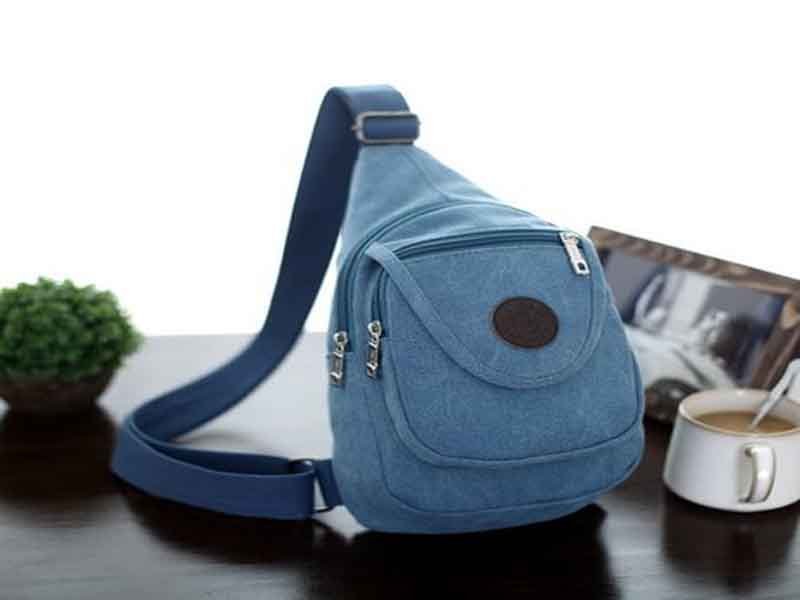
Can't find the answers?
No worries, please contact us and we will answer all the questions you have during the whole process of bag customization.
Make A Sample First?
If you have your own artwork, logo design files, or just an idea,please provide details about your project requirements, including preferred fabric, color, and customization options,we’re excited to assist you in bringing your bespoke bag designs to life through our sample production process.