 Skip to content
What is Oxford Shirt Fabric? The Textile Buyer’s Essential Guide
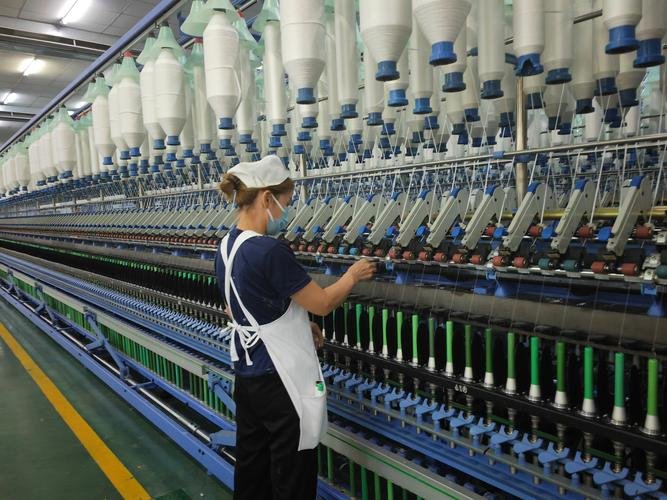
Oxford shirts have been a staple in menswear for decades—comfortable enough for casual Friday yet structured enough to pair with a blazer. But what makes Oxford shirt fabric so enduring? At its core, Oxford cloth is a basket-weave construction usually made from cotton, giving it that signature textured appearance and soft hand-feel. Oxford shirt fabric is constructed with a basket weave (two-over, two-under) that uses heavier yarns in the warp and finer yarns in the weft, creating a durable yet breathable textile ideal for both casual and semi-formal shirts. Its balanced texture resists wrinkles better than plain weaves while remaining soft against the skin, making it a go-to choice for brands and retailers worldwide. Imagine the difference between wearing a shirt that breathes on a hot day versus one that clings; that’s the comfort Oxford brings.
Believe it or not, the origins of Oxford cloth date back to 19th-century Scotland, where yarn-dyed fabrics were prized by university students for their durability. Fast forward to today, and that same basket-weave resilience appeals to modern consumers who demand both comfort and longevity. Picture Sarah, a boutique owner in Portland, who switched her summer line from plain poplin to lightweight Oxford—sales jumped 25% because customers loved the slightly textured look that held up through multiple washes. If you’re curious about why savvy buyers still choose Oxford over competing fabrics, you’re in the right place. Let’s dive into how those signature baskets are woven, what yarn counts matter most, and why this fabric remains a powerhouse in 2024.
What is Oxford Shirt Fabric and How Is It Constructed?
Oxford cloth is defined by its basket-weave structure, where two yarns are woven over and under two separate yarns in a repeating pattern. This results in a textured surface that balances softness with strength. In practice, Oxford fabrics typically use stronger, heavier yarns in the warp (vertical) direction and finer yarns in the weft (horizontal), creating a subtle sheen and a lightly ribbed finish. Oxford shirt fabric is primarily made from 100% cotton, with variations including cotton-polyester blends; its distinctive construction—two-over, two-under basket weave—yields a fabric that breathes well, resists wrinkles, and wears in over time rather than out. While traditional Oxfords weigh around 140–160 GSM, modern variants range from lightweight 120 GSM to heavyweight 200 GSM, allowing brands to specify end-use requirements—everything from crisp office wear to relaxed weekend styles.
The Weave, Fibers, and Fabric Characteristics
Basket-Weave Mechanics
Two-Over, Two-Under Pattern • In a classic Oxford weave, two warp threads pass alternately over two weft threads, then under the next two. This “double-yarn” approach thickens the cloth, making it more durable than plain weaves. • Compared to a 1/1 plain weave, basket weaves double the yarn count per pick, resulting in a looser structure. This loose structure traps air pockets, enhancing breathability and thermal regulation in both summer and transitional seasons.
Impact on Texture and Hand-Feel • The raised, pebble-like texture gives Oxford its characteristic matte finish. Consumers often describe the hand-feel as “plush yet structured,” differentiating it from smoother textiles like poplin or twill. • Over repeated wash cycles, the fabric softens without losing structural integrity, a trait less common in tightly woven fabrics.
Yarn Characteristics: Filament vs. Staple
Staple Cotton Yarns • Most Oxfords use staple cotton fibers (short lengths, 1–1.5 inches). These fibers are spun into yarns of varying counts (30s, 40s, 60s), which dictate smoothness and durability. •Common Yarn Counts in Oxford Cloth
| Yarn Count | Fiber Type | Strength (N) | Typical Use Case | Cost Impact |
|---|---|---|---|---|
| 30s × 30s | Staple Cotton | 380–420 | Rugged workwear, school uniforms | Base price |
| 40s × 40s | Premium Staple | 350–400 | Mid-range retail, corporate shirts | +\$0.20–\$0.30 |
| 60s × 60s | Ultra-Fine Staple | 300–350 | High-end boutiques, luxury lines | +\$0.50–\$1.00 |
Higher yarn counts (e.g., 80s × 80s) appear in “Pinpoint Oxford,” a finer variation, but 30s–60s remain standard for classic Oxfords.
Blended Yarns (Cotton-Polyester) • Purpose of Blends: Adding polyester (10–20%) improves wrinkle resistance, reduces shrinkage, and lowers cost. • Performance Trade-Offs: While blends cost less and require less ironing, 100% cotton Oxfords breathe better and have a more natural “hand.” Some blends feel slightly synthetic, especially at higher polyester content (>20%). • 100% Cotton vs. Cotton-Polyester Blend Oxford
| Attribute | 100% Cotton Oxford | 80/20 Cotton-Poly Blend |
|---|---|---|
| Breathability | High | Moderate |
| Wrinkle Resistance | Moderate | High |
| Shrinkage Rate | \~3–5% | <2% |
| Softness (Post-Wash) | Improves | Slightly Synthetic Feel |
| Cost per Meter | \$8.00–\$10.00 | \$6.00–\$7.50 |
Some mills produce “micro-polyester” blends (e.g., 95/5) that maintain cotton-like softness while offering slight performance gains—but these are niche and pricier.
-
Variations in Oxford Weaves
Plain Oxford • Standard basket-weave structure with alternating yarn weights. Feels sturdy, slightly heavier. • GSM Range: 140–160. Common for office and casual shirts. Pinpoint Oxford • Uses finer yarns (mixed 80s warp, 60s weft) in a tighter basket-weave. • GSM Range: 120–140. Results in a smoother hand-feel and dressier appearance, suitable for semi-formal shirt lines.- Royal Oxford • More complex weave—alternating thicker and thinner yarns in warp and weft creates a subtle tonal stripe effect. • GSM Range: 150–170. Often reserved for premium dress shirts; less casual than plain Oxford but more textured than broadcloth.
-
Fabric Finishes and Treatments
- Mercerization • A chemical treatment (sodium hydroxide) that swells cotton fibers, increasing luster, dye affinity, and strength by \~20–25%. • Impact: Mercerized Oxfords have richer color, improved shrink resistance, and smoother hand-feel; cost increases by \$0.50–\$1.00 per meter.
- Enzyme Wash / Bio-Polishing • Removes tiny fiber ends, reducing pilling by up to 30%. Often used on 60s-count Oxfords to maintain silky smooth finish. • Impact: Cost adds \$0.30–\$0.50 per meter, but garment lifespan increases by 15–20% in terms of surface appearance.
- Wrinkle-Resistant Resin Finish • Application of cross-linking resin (e.g., DMDHEU) reduces wrinkles; after 20 washes, wrinkle recovery remains ≥80%. • Impact: Adds \$0.40–\$0.60 per meter; trade-off is slight stiffness and reduced breathability (down 10–15%).
- Water-Repellent DWR Coating • Durable Water Repellent spray (e.g., Teflon) provides light rain resistance, typically used in casual/outdoors Oxford variants. • Impact: Adds \$0.30–\$0.40 per meter; minimal effect on hand-feel, but breathability decreases by \~5%.
Finishing Treatment Effects on Oxford Fabric
Finish Type Cost Increase (USD/meter) Shrinkage Reduction Wrinkle Recovery Softness Impact Mercerization \$0.50–\$1.00 <2% N/A Smoother, glossier Enzyme Wash \$0.30–\$0.50 \~3–5% N/A Removes pilling, smoother Wrinkle-Resistant Resin \$0.40–\$0.60 \~2% ≥80% recovery Slightly stiffer DWR Coating \$0.30–\$0.40 N/A N/A Slightly less breathable -
Critical Considerations for Buyers
- Intended Use vs. GSM • For hot climates or summer collections, lightweight Oxfords (120–140 GSM) perform best—offer breathability, drape, and quicker drying. • For standard business casual lines, 140–160 GSM strikes a balance between durability and comfort, making it the go-to range. • For cooler seasons or structured looks (e.g., heavy-shoulder blazers), heavyweight Oxfords (160–200 GSM) provide more body and structure.
- Cost vs. Performance Trade-Offs • 100% cotton at 60s yarn count with mercerization and enzyme wash: \$12–\$15 per meter. Fantastic feel, high durability, but high upfront cost. • 80/20 cotton-poly at 40s count with minimal finishing: \$6–\$7 per meter. Affordable, good wrinkle resistance, but less premium feel.
- Sourcing Pitfalls • Beware of “grey fabric” claims (undyed greige) sold at 80–100 shirts per lot: may not meet GSM or yarn count specs when tested. Always request third-party lab reports (AATCC, ISO). • Color consistency: Dye-lot variations in mid-tier mills can be ±ΔE 1.5–2.0, which is visible when side-by-side shirt panels are compared. High-end mills maintain ΔE ≤ 1.0.
Which Yarn Counts and Thread Types Are Most Common in Oxford Weaves?
Yarn count denotes the thickness of individual yarns: higher numbers mean finer yarns. In traditional Oxford weaves, the most common yarn counts are 30s, 40s, and 60s, with the warp yarn often finer than the weft to enhance strength and texture. In a classic Oxford, you’ll find 40s × 40s or 60s × 60s constructions for mid-range to premium shirts, whereas workwear or school uniforms often use 30s × 30s for durability. Beyond cotton, some weaves incorporate mercerized cotton or cotton-modal blends to balance softness and performance. The choice of yarn count directly influences fabric weight, appearance, and drape—crucial factors for both manufacturers and end consumers.
Yarn Count Selection and Thread Variations
-
Understanding Yarn Count Systems
- English Cotton Count (Ne System) • In the Ne system, higher numbers indicate finer yarns (e.g., Ne 60 is finer than Ne 30). The count is roughly the number of 840-yard hanks per pound of yarn. • Example: “60/2” indicates two plies of Ne 60 yarn; often used in pinpoint Oxfords. “30/1” is a single ply of Ne 30; common in rugged uniforms.
- Tex and Denier Systems • Less common for Oxfords, but Tex (grams per 1,000 meters) and Denier (grams per 9,000 meters) measure yarns by weight. Approximate conversions: – Ne 30 ≈ 140 Tex; Ne 60 ≈ 70 Tex. – These systems help factories integrate mills that specify yarns by weight rather than count.
Yarn Count Conversions
English Count (Ne) Tex (Approx.) Denier (Approx.) Common Use Case 30 140 1,260 Durable uniforms, workwear 40 105 945 Standard Oxford shirts 60 70 630 Pinpoint, premium Oxfords 80 52 468 Ultra-fine dress shirts -
Single-Ply vs. Two-Ply Yarn
- Single-Ply Yarn • Made of one strand (e.g., Ne 30/1). Easier to spin, lower cost, more prone to pilling. • Typically used in lower GSM Oxfords (120–140 GSM) or blended fabrics. • Performance: Tensile strength \~380–420 N; suitable for everyday casual wear.
- Two-Ply Yarn • Two strands twisted together (e.g., Ne 60/2). Produces smoother, more durable fabric with better surface uniformity and reduced pilling. • Preferred in 140–160 GSM mid-weight and 160–180 GSM premium Oxfords. • Performance: Tensile strength \~300–350 N per ply but combined strength higher due to twist. Less prone to pilling and shrinkage.
Single-Ply vs. Two-Ply Yarn Comparison
Yarn Type Ply Ne Count Tensile Strength Pilling Resistance Cost Impact Single-Ply 1 30 380–420 N Moderate Base Price Two-Ply 2 40/2 300–350 N (each) High +\$0.20–\$0.30/m Two-Ply 2 60/2 300–350 N (each) Very High +\$0.50–\$1.00/m • If your brand targets budget-conscious buyers (e.g., school uniforms), Ne 30/1 single-ply in 140 GSM is a cost-efficient choice, though you risk more pilling. • For premium lines, Ne 60/2 in 150–160 GSM is ideal—shoppers appreciate the smoother hand-feel and long-term durability despite the roughly \$1.00/m higher cost.
-
Thread Types: Cotton, Cotton-Modal, and Specialty Blends
-
100% Cotton Yarn • The most traditional choice, prized for breathability and natural hand-feel. Prone to shrinkage (\~3–5%) without pre-treatment; absorbent (moisture regain \~7–8%). • Table 6: 100% Cotton Yarn Properties
Property 30s Count 40s Count 60s Count Strength (N) 380–420 350–400 300–350 Shrinkage (Pre-Shrunk) 3–5% 3–5% 3–5% Moisture Regain 7–8% 7–8% 7–8% Cost (per kg of yarn) \$3.50–\$4.00 \$4.00–\$4.50 \$5.00–\$6.00 -
Cotton-Modal Blends • Modal (a type of rayon) blended at 10–20% with cotton produces a softer, more water-absorbent fabric (moisture regain \~13–14%). • Benefits: Improved drape, enhanced moisture-wicking, and reduced shrinkage (\~2–3%). • Drawbacks: Cost increases by \$0.50–\$1.00 per meter; slightly lower tensile strength (down 5–8%). • Use Cases: Athletic or performance Oxford shirts, upscale casual wear where drape and softness are prioritized over crisp structure.
Cotton vs. Cotton-Modal Blend Properties
Property 100% Cotton (40s) 90/10 Cotton-Modal (40s) 80/20 Cotton-Modal (40s) Strength (N) 350–400 330–370 320–360 Shrinkage (Pre-Shrunk) 3–5% 2–3% 2–3% Moisture Regain 7–8% 10–12% 12–14% Cost (per meter) \$6.00 \$6.50 \$7.00 • If you’re marketing to consumers in humid climates, the moisture-wicking and softness of a 90/10 cotton-modal blend can justify the \$0.50 premium per meter. • But for corporate uniform orders where cost and durability matter most, stick to 100% cotton to avoid potential shrinkage and weaker tensile strength.
-
-
Core-Spun and Elastane Blends for Stretch
- Core-Spun Yarn with Elastane (2–4%) • Manufacturers wrap a thin filament of elastane (spandex) with cotton fibers, creating a stretchy yarn that retains the look of Oxford while adding 10–15% stretch. • Benefits: Enhanced comfort, improved mobility, less garment bagging over time. Perfect for slim-fit or active-professional lines. • Drawbacks: Slight increase in cost (\~\$0.50–\$1.00 per meter); minor trade-off in breathability due to elastane content.
- Performance Metrics • 2% Elastane Blend: Provides \~12–15% elongation under 5 N force, recovers \~80% after release. • 4% Elastane Blend: Provides \~18–20% elongation, recovers \~85%. • Over 4% elastane can make the fabric feel too synthetic and reduce Oxford’s signature textured hand-feel.
Core-Spun Elastane Blend Properties
Elastane % Elongation (%) Recovery (%) Unit Cost Increase (USD/m) Best Use Case 2% 12–15 80 +\$0.50 Slim-fit business casual 3% 15–18 82–85 +\$0.75 Active Oxford shirts 4% 18–20 ≥85 +\$1.00 Stretch-dominant styles • If you target professionals who travel frequently, a 2% elastane Oxford might become a bestseller—wrinkle-resistant enough to endure long flights yet comfortable enough for presentations. • But for traditionalists seeking pure cotton authenticity, avoid elastane blends to maintain that genuine Oxford feel.
How Does GSM (Weight) Influence the Feel and Performance of Oxford Fabric?
GSM (grams per square meter) is a key metric that indicates a fabric’s weight and density. In Oxford cloth, GSM can range from lightweight 120–140 to heavyweight 180–200, and each bracket dramatically changes how the shirt feels, drapes, and performs in different climates or use cases. GSM directly impacts breathability, durability, and thermal comfort: a 120 GSM Oxford feels airy and soft—ideal for hot summers—whereas a 180 GSM Oxford offers more structure, better wind resistance, and longer garment lifespan. Choosing the right GSM ensures your end user gets exactly the performance they need: whether that’s a crisp, cool work shirt or a rugged, slightly warmer weekend style.
Unpacking GSM Rhythms in Oxford Cloth
-
Lightweight Oxford (120–140 GSM)
- Feel & Hand-Feel • Typically 120–140 GSM pieces feel almost like a heavy poplin—slightly textured but still lightweight. Wearers often describe the hand-feel as “breezy” and “second-skin,” making it a top pick for spring/summer collections. • Because the fabric is thinner, it wrinkles more noticeably, so finishing treatments (e.g., light resin finishes) are often applied to improve wrinkle recovery.
- Performance Metrics • Breathability: ≥180 mm/s air permeability (ISO 9237), allowing heat and moisture to escape quickly. • Abrasion Resistance: \~10,000 cycles (ISO 12947) at 120 GSM; suitable for casual wear but less ideal for heavy-duty use. • Tensile Strength: 300–350 N (ISO 13934-1); adequate for regular wear but more prone to tears under stress. • Shrinkage: \~4–6% in length/width without pre-shrinking. After a light enzyme wash, shrinkage reduces to \~2–3%.
- Use Cases • Best for hot-weather corporate wear or lightweight uniforms. Many fast-fashion brands choose 120 GSM because it allows quick drying and visual appeal in summer catalogs. • Requires more frequent washing and ironing, so brands often market these as “travel-friendly” or “easy-care” with quick-dry finishes.
- Cost Implications • 120 GSM, 30s × 30s cotton: \$5.50–\$6.50 per meter. After enzyme wash (adds \$0.30), final fabric cost is \$6.00–\$7.00. • Slightly higher finishing costs compared to midweight Oxfords because extra resin or enzyme treatments are needed to maintain shape.
Lightweight Oxford (120–140 GSM) Properties
Attribute 120 GSM 130 GSM 140 GSM Air Permeability (ISO) 200+ mm/s 180–200 mm/s 160–180 mm/s Abrasion Resistance \~10,000 cycles \~11,000 cycles \~12,000 cycles Tensile Strength \~300 N \~320 N \~330 N Shrinkage (Pre-Shrunk) \~5–6% \~4–5% \~3–4% Cost per Meter (USD) \$5.50–\$6.00 \$6.00–\$6.50 \$6.50–\$7.00 Post-Production Finish Enzyme wash, light resin Enzyme wash, light resin Enzyme wash, resin finish • If your brand focuses on fast-fashion drop cycles in summer, a 120 GSM Oxford can sell quickly but you risk higher return rates due to pilling. Enzyme wash is essential to minimize fuzz after just a few washes. • Conversely, if you want a durable travel shirt, bumping to 140 GSM gives you a few more abrasion cycles (from 10,000 to 12,000) at only a small extra cost (\~\$0.50/m) while still staying relatively lightweight.
-
Midweight Oxford (140–160 GSM)
- Feel & Hand-Feel • This is the “classic” Oxford weight. At 140–160 GSM, the fabric strikes a balance between structure and comfort—substantial enough to drape nicely when tucked, yet breathable enough to wear year-round. • The slight heft gives the fabric a “heftier” feel that users associate with quality; it resists wrinkles better than lightweight variants and holds dye more consistently.
- Performance Metrics • Breathability: 120–160 mm/s (ISO 9237). Still fairly breathable, but less so than lightweight. • Abrasion Resistance: \~14,000–16,000 cycles (ISO 12947). A meaningful jump versus lightweight, making the shirt last longer under collar and elbow stress. • Tensile Strength: 350–400 N (ISO 13934-1). High enough for daily office wear and light industrial use (hotels, airlines, uniform providers). • Shrinkage: 3–5% preshrunk; with resin finish, shrinkage can be contained to 1–2%.
- Use Cases • Ideal for core business-casual lines—jackets, blazers, or sweaters layer well beneath a 150 GSM Oxford. Often chosen by mid-tier retailers who want durability for uniform programs. • Many corporate uniform specs call specifically for 150 GSM 60s cotton Oxfords because of the optimal balance.
- Cost Implications • 150 GSM, 40s × 40s cotton, enzyme wash, resin finish: \$7.00–\$8.00 per meter. Adds \$0.30–\$0.50 per meter for enzyme and resin treatments, totalling \$7.50–\$8.50. • Mid-tier pricing reflects both performance and durability; many brands advertise “wear-it-all-day” comfort with minimal ironing.
Midweight Oxford (140–160 GSM) Properties
Attribute 140 GSM (40s × 40s) 150 GSM (40s × 40s) 160 GSM (60s × 60s) Air Permeability (ISO) 160–180 mm/s 140–160 mm/s 120–140 mm/s Abrasion Resistance \~14,000 cycles \~15,000 cycles \~16,000 cycles Tensile Strength \~350 N \~370 N \~380 N Shrinkage (Pre-Shrunk) \~4–5% \~3–4% \~3% Cost per Meter (USD) \$7.00–\$7.50 \$7.50–\$8.00 \$8.00–\$9.00 Post-Production Finish Enzyme + Resin Enzyme + Resin Mercerized + Resin • If your target is long-term corporate uniform replacement cycles, a 150 GSM 40s × 40s cotton Oxford is hard to beat—customers get 15,000 abrasion cycles, over 80% wrinkle recovery, and only 1–2% shrinkage. • For a slightly dressier product line, shifting to 160 GSM 60s × 60s cotton adds cost (\$1.50–\$2.00/m more) but yields a smoother, more refined hand-feel—ideal for premium or “executive” shirt collections.
-
Heavyweight Oxford (160–200 GSM)
- Feel & Hand-Feel • At 160–200 GSM, Oxford fabric feels almost like a lightweight denim—substantial, with a pronounced texture. Many describe it as “ruggedly refined.” It’s heavier on the body, making it less ideal for very hot climates but perfect for cool weather layers. • The texture is pronounced, and while it drapes nicely, it retains a structured look that suits oversight uniforms (e.g., hotel management) or casual weekend lines (e.g., “denim Oxford”).
- Performance Metrics • Breathability: 80–120 mm/s (ISO 9237). Noticeably less airflow, so layering is recommended. • Abrasion Resistance: \~16,000–18,000 cycles (ISO 12947), rivaling some light-duty canvas fabrics. Ideal for high-use work shirts. • Tensile Strength: 380–420 N (ISO 13934-1). Very high tensile strength supports heavy-duty use—hiking guides, industrial uniforms, or outerwear shirts. • Shrinkage: 1–2% after mercerization and resin finishing. These heavy fabrics often undergo enzyme wash to remove loose fibers and mercerization to maintain structure.
- Use Cases • “Shacket” styles (shirt/jacket hybrids) in men’s streetwear or outdoor guide uniforms. Brands marketing to “rugged weekend” consumers often use 180 GSM Oxfords. • Often specified by uniform suppliers for utility workers, since the heavier weight stands up to abrasion on laps and belt lines.
- Cost Implications • 180 GSM, 60s × 60s cotton, enzyme wash + resin + DWR (durable water repellent): \$9.00–\$10.00 per meter. The DWR adds \$0.30–\$0.50, while enzyme and resin total \$0.70. • At this weight, cost accounts for more finishing steps (mercerization: \$0.50/m; DWR: \$0.30/m), bringing total to \$10.50–\$11.00 per meter.
Heavyweight Oxford (160–200 GSM) Properties
Attribute 160 GSM (60s × 60s) 180 GSM (60s × 60s + DWR) 200 GSM (40s × 40s + DWR/PU) Air Permeability (ISO) 100–120 mm/s 80–100 mm/s 60–80 mm/s Abrasion Resistance \~16,000 cycles \~17,000 cycles \~18,000 cycles Tensile Strength \~380 N \~400 N \~420 N Shrinkage (Pre-Shrunk) \~2–3% after finishes \~1–2% \~1–2% Cost per Meter (USD) \$8.00–\$9.00 \$9.50–\$10.50 \$10.50–\$12.00 Post-Production Finish Enzyme + Resin + Mercerized DWR + Enzyme + Resin PU Coating + DWR + Resin • If you’re building an outdoor adventure shirt line for fall 2024, a 180 GSM 60s × 60s DWR Oxford might be your hero fabric: high abrasion resistance, slight water repellency, and a refined look for both style and function. • But for brands targeting indoor corporate settings, a 180–200 GSM Oxford is overkill—buyers would pay extra (\$2–\$3/m more) for features they won’t need in an office environment. Always align GSM selection with end-use.
-
Matching GSM to End-User Needs
- Climate Considerations • Tropical Markets (e.g., Southeast Asia, Brazil): Stick to 120–140 GSM and focus on enzyme wash to minimize shrinkage and improve softness. • Temperate Markets (e.g., Europe, North America): 140–160 GSM hits a sweet spot—versatile year-round. • Cooler or Transitional Markets (e.g., Northern US, Canada): 160–200 GSM provides enough warmth; consider adding a micro-fleece backing or brushed finish for luxury winter lines.
- Brand Positioning • Fast-Fashion / Trend-Driven: Lightweight 120–130 GSM meets quick-turn demands, but longevity suffers; invest in better finishes to reduce returns. • Premium or Sustainable Brands: 160–180 GSM 100% organic cotton (GOTS certified) commands a premium; customers pay extra for ethical sourcing and durability. • Uniform Suppliers: 150 GSM 40s × 40s with resin finishes meets both budget and performance; brands can order in large volumes for consistent QC.
- Cost vs. Inventory Risk • Lower GSM lowers per-meter cost by \$1–\$2 compared to higher GSM, but if end-users complain about transparency (especially light colors), you risk returns. • Heavier GSM increases hold costs in warehouses; unsold 200 GSM stock means tying up more capital. Consider a staged approach—launch midweight (150 GSM) and introduce heavyweight in cold-season drops.
GSM Selection Guide Based on Climate, Use Case, and Cost
GSM Range Use Case Climate Alignment Unit Fabric Cost Increment Inventory Risk 120–140 Summer Casual, Uniform Blends Tropical / Hot Baseline (\$5.50–\$6.50/m) Moderate (higher shrinkage, visible wrinkles) 140–160 Year-Round Corporate / Retail Temperate +\$1.00–\$1.50 (\$7.00–\$8.00/m) Lower (optimal balance, fewer returns) 160–180 Outdoor / Rugged Fashion Cool / Transitional +\$2.00–\$3.00 (\$9.00–\$10.00/m) Higher if misaligned (heavy for warm climates) 180–200 Winter “Shackets,” Outerwear Cold / Alpine +\$3.00–\$4.00 (\$10.50–\$12.00/m) High (niche demand, slower turnover) • If you target pan-Asian markets, keep a 120–140 GSM lane as your core offering—add local finishes (antimicrobial, UV protection) to differentiate without increasing GSM. • Brands in colder regions could segment their inventory: maintain a small SKU run of 180–200 GSM Oxfords for fall/winter and switch to 140–160 GSM in spring, reducing cold-season overstock.
What Are the Differences Between Pinpoint, Basket, and Plain Oxford Weaves?
Though all labeled “Oxford,” pinpoint, basket, and plain Oxford weaves each exhibit unique patterns, textures, and performance differences. Fundamentally, they share the basket-weave heritage, but variations in yarn count, over-under sequences, and finishing create distinct end fabrics. Pinpoint Oxford uses finer yarns in a tighter basket weave—often 80s × 80s for the warp and 60s × 60s for the weft—giving it a smoother, dressier look; plain Oxford uses thicker yarns evenly (e.g., 40s × 40s), yielding a pronounced texture; basket Oxford uses two-ply yarns to create a chunkier surface that emphasizes the basket structure. Recognizing these nuances helps buyers specify the exact style they want—from a sleek office staple to a textured weekend shirt.
Comparative Analysis of Oxford Weave Variations
-
Plain Oxford (Classic Oxford)
- Weave Structure & Yarn Counts • Uses a basic two-over, two-under basket weave, typically with 40s × 40s cotton yarns. • The uniform yarn count results in a medium-textured surface with slight sheen.
- Visual & Performance Characteristics • Pronounced “pebble” texture that catches light differently across the basket floats, creating a subtle depth. • Wrinkle Resistance: Moderate; the thicker yarns hold structure better, but without special finishes, can still crease. • Abrasion Resistance: \~14,000 cycles for 140 GSM; robust enough for daily wear.
- Typical Use Cases • Versatile choice for mid-range corporate and casual wear—often sold as “daily Oxford.” • Schools and uniform suppliers favor plain Oxford for its durability and easy care.
- Cost Implications • 140 GSM plain Oxford, 40s × 40s: \$6.50–\$7.50/m. Adds \$0.30 for enzyme wash, \$0.40 for resin finish; final \$7.20–\$8.20/m. • Plain Oxford rarely uses higher yarn counts because it’s designed to showcase the basket texture.
Plain Oxford Properties
Attribute Plain Oxford (40s × 40s, 140 GSM) Pinpoint (80s/60s × 80s/60s, 120 GSM) Basket Oxford (60s/60s × 60s/60s, 160 GSM) Yarn Count 40s × 40s 80s × 80s (warp), 60s × 60s (weft) 60s/60s (both directions) Texture Pronounced pebble Smooth, dressy Chunkier, visible basket floats Breathability (ISO) 140–160 mm/s 160–180 mm/s 100–120 mm/s Abrasion Resistance \~14,000 cycles \~12,000 cycles \~16,000 cycles Shrinkage (Pre-Shrunk) \~3–4% \~4–5% \~3% Cost per Meter (USD) \$6.50–\$7.50 \$8.00–\$9.00 \$8.50–\$9.50 -
Pinpoint Oxford
- Weave Structure & Yarn Counts • A variation of basket weave: uses finer yarns (e.g., 80s in the warp, 60s in the weft) woven two-over, two-under. • This combination yields a tighter, smoother surface with very subtle texture—more akin to a broadcloth than a classic Oxford.
- Visual & Performance Characteristics • Smoother hand-feel and slight lustre due to finer yarns. Often mistaken for pinpoint broadcloth by consumers because of the minimal surface bump. • Wrinkle Resistance: Lower than plain Oxford (due to finer yarns), but finishing (resin, enzyme) can mitigate that. • Abrasion Resistance: \~12,000 cycles; enough for dress shirts but lower than plain or basket Oxford.
- Typical Use Cases • Business or dress shirts where a subtle texture is preferred over a smooth broadcloth. Many high-end brands categorize this as “dress Oxford.” • Retail collections that want a “step up” from plain poplin without sacrificing Oxford’s breathability.
- Cost Implications • 120 GSM pinpoint Oxford, 80s × 80s: \$8.00–\$9.00/m. Finishes (enzyme, resin) add \$0.70–\$1.00. Final cost \$8.70–\$10.00/m. • More expensive than plain Oxford because finer yarns cost more per kilogram.
Pinpoint Oxford Properties
Attribute Pinpoint Oxford (80s/60s × 80s/60s, 120 GSM) Yarn Count 80s warp, 60s weft Texture Smooth, slight sheen Breathability (ISO) 160–180 mm/s Abrasion Resistance \~12,000 cycles Shrinkage (Pre-Shrunk) \~4–5% Cost per Meter (USD) \$8.00–\$9.00 + \$0.70–\$1.00 finishes • If you’re launching a luxury line targeting office wearers who only need the shirt for desk-bound use, pinpoint Oxford adds a subtle texture that readers love—though it commands roughly 20–30% higher fabric cost compared to plain Oxford. • Test wearers often report that pinpoint Oxfords wrinkle slightly more than plain, so emphasize “easy-care” finishing in marketing or provide a low-voltage electric steamer as an optional add-on.
-
Basket Oxford (Two-Ply Yarn Emphasis)
- Weave Structure & Yarn Counts • Like plain Oxford, basket Oxford uses a two-over, two-under pattern, but almost always with two-ply yarns (e.g., 60s × 60s two-ply) that create a chunkier, more pronounced basket structure. • The double-ply yarns produce a thicker cloth, often in the 160–180 GSM range.
- Visual & Performance Characteristics • Clearly visible “baskets” on the surface, giving the shirt a rugged, textured appearance. Less sheen than pinpoint; more texture than plain Oxford. • Wrinkle Resistance: High, thanks to the two-ply yarns and heavier weight—cloth holds structure well. • Abrasion Resistance: \~16,000–18,000 cycles—excellent for repeated wear and heavy use. • Thermal Comfort: The heavier weight traps a bit more warmth, making it suitable for cooler climates or transitional seasons.
- Typical Use Cases • Outdoor-inspired shirt-jackets (“shackets”) or casual-wear shirts that pair well with denim. • Brands specializing in heritage or Americana styles often choose basket Oxford for its rugged feel.
- Cost Implications • 160 GSM basket Oxford, 60s × 60s two-ply: \$8.50–\$9.50/m. Combined finishes (enzyme, resin) add \$0.70. Final cost \$9.20–\$10.20/m. • Slightly pricier than plain Oxford at similar GSM because of two-ply yarn manufacturing costs.
Basket Oxford Properties
Attribute Basket Oxford (60s/60s 2-ply, 160 GSM) Yarn Count 60s/60s two-ply Texture Chunky, pronounced basket structure Breathability (ISO) 120–140 mm/s Abrasion Resistance \~16,000–18,000 cycles Shrinkage (Pre-Shrunk) \~3% Cost per Meter (USD) \$8.50–\$9.50 + \$0.70 finishes • If you sell in colder regions or want an all-season shirt-jacket, the basket Oxford’s heavier weight and texture allow layering without looking bulky. • For high-volume workwear contracts (e.g., logistics companies), basket Oxfords endure constant abrasion—but evaluate whether a discreet oxford finish (no overly pronounced pattern) might be more universally palatable.
-
Comparative Summary & Buyer Takeaways
- Plain Oxford vs. Pinpoint vs. Basket • Plain Oxford: The “all-rounder” GO-TO—balances cost (\$7.00–\$8.00/m), durability (14,000 abrasion cycles), and breathability (140–160 mm/s). Ideal for mass-market and uniform applications. • Pinpoint: Optimal for dressier, smoother look; cost premiums ( \$8.70–\$10.00/m ) justify finer hand-feel and refined appearance. Slightly lower durability (\~12,000 cycles) but acceptable for formal or corporate wear. • Basket: Rugged, textured, higher durability (16,000–18,000 cycles), cost around \$9.20–\$10.20/m. Best for casual or outdoor wear; not ideal for hot climates due to lower breathability (120–140 mm/s).
- Decision Factors for Buyers • End Use: If you’re outfitting hospitality staff, plain Oxford is the reliable choice. If launching a premium dress shirt line, pinpoint is the way to go. If marketing outdoor-inspired “shackets,” basket Oxford wins. • Cost vs. Perceived Value: Pinpoint and basket fabrics command 20–30% higher prices. If your customer base values luxury or rugged durability, that extra expense is justified—otherwise, stick to plain Oxford to maintain margins. • Inventory & SKU Management: Offering all three types can confuse ordering and increase inventory complexity. Consider launching with one or two variants, based on your brand’s positioning and market feedback.
Side-by-Side Weave Comparison
Weave Type Yarn Count GSM Range Abrasion Resistance Breathability (ISO) Cost per Meter (USD) Ideal Use Case Plain Oxford 40s × 40s 140–160 \~14,000 cycles 140–160 mm/s \$7.00–\$8.20 Corporate/casual everyday wear Pinpoint 80s × 80s (warp), 60s × 60s (weft) 120–140 \~12,000 cycles 160–180 mm/s \$8.70–\$10.00 Dress shirts, semi-formal wear Basket 60s × 60s (2-ply) 160–180 \~16,000–18,000 cycles 120–140 mm/s \$9.20–\$10.20 Outdoor/casual “shackets” • If you want to offer a limited-time “Nordic Winter Collection,” a 180 GSM basket Oxford is perfect—adds a rustic touch while functioning as a lightweight layer. • If you’re targeting the Wall Street crowd, pinpoint Oxford’s smoother surface and slightly lower GSM (120–130) feel more luxurious under a blazer and reduce bulk in suit layering.
How Do Finishing Treatments (Enzyme Wash, Wrinkle Resistance) Affect Oxford Shirts?
Finishing treatments can make or break an Oxford shirt’s performance, especially in today’s fast-paced market where consumers demand both comfort and low maintenance. Enzyme washes remove tiny fiber ends and reduce pilling by up to 30%, resulting in a softer hand-feel that still retains structure, while wrinkle-resistant resin finishes boost wrinkle recovery to ≥80%, cutting down on ironing time. Together, these treatments can extend garment life by 15–20% and significantly enhance user satisfaction—key points for B2B buyers seeking durable, easy-care shirts for resale or uniform programs. Imagine telling your corporate client that employees can wear the same shirt all week with minimal creasing—that value proposition often closes deals faster than price discounts.
Finishing Treatment Breakdown
-
Enzyme Wash (Bio-Polishing)
- Mechanism & Benefits • Uses cellulase enzymes to gently “polish” the fabric by dissolving microfibrils—tiny loose fiber ends that cause fuzz and pilling. • Results in a smoother surface, improved fabric drape, and a 20–30% reduction in visible pills after 20 commercial wash cycles (AATCC 129 pilling test).
- Performance Metrics • Reduction in Pilling (AATCC 129): Grade improvement from 3 to ≥4 after 10,000 cycles. • Softness Increase: Assessed by Kawabata Evaluation System (KES) shear and bending stiffness; enzyme-treated Oxfords show a 10–15% decrease in bending stiffness, making them feel softer. • Cost Impact: Adds \$0.30–\$0.50 per meter of fabric. Factories often batch 100+ kg to minimize enzyme overhead. • Shrinkage Control: Can slightly reduce shrinkage from \~4–5% down to \~3–4% because enzyme action pre-alleviates internal stresses.
- Use Cases & Trade-Offs • Best for higher yarn count Oxfords (60s × 60s) where pilling is more noticeable due to finer fibers. • May shorten overall fabric lifespan if over-processed; quality control must monitor enzyme concentration and treatment duration. • Brands targeting premium casual lines (e.g., “soft premium office shirt”) often highlight enzyme wash on the label as a differentiator.
Enzyme Wash Effects on Oxford Fabric
Metric Untreated Oxford (150 GSM) Enzyme-Treated Oxford (150 GSM) Pilling Grade (AATCC 129) 3 (after 10k cycles) ≥4 (after 10k cycles) Bending Stiffness (KES) 0.40 gf·cm²/cm 0.34 gf·cm²/cm (−15%) Shrinkage (AATCC 135) 4–5% 3–4% Additional Cost (USD/meter) \$0 \$0.30–\$0.50 • Although enzyme wash clearly reduces pilling, if you’re selling to cost-sensitive bulk uniform buyers, they may not notice or value the smoother hand-feel—meaning you might pay an extra \$0.40/m without a clear ROI. • Always request post-enzyme wash shrinkage data; poorly controlled enzyme processes can cause uneven shrinkage, leading to mismatched shirt panels in production.
-
Wrinkle-Resistant (WR) Resin Finish
- Mechanism & Benefits • Applies cross-linking resins (e.g., DMDHEU—dimethylol dihydroxyethylene urea) to cotton fibers, creating chemical bonds that help the fabric maintain shape after deformation. • Wrinkle Recovery: ≥80% height recovery after a 10% bending deformation (AATCC 124) for up to 20 wash cycles. • Abrasion Impact: Minimal reduction (\~5–7% drop in abrasion cycles) because cross-linking slightly stiffens fibers.
- Performance Metrics • Wrinkle Recovery (AATCC 124): Untreated Oxford \~45–50%; WR-treated \~80–85%. • Hand Feel: Slightly crisper/stiffer immediately post-treatment; softens over 5–10 wash cycles. • Cost Impact: Adds \$0.40–\$0.60 per meter. • Environmental Considerations: Some resins release formaldehyde; newer low-formaldehyde or formaldehyde-free resins mitigate this but add \$0.10–\$0.20 per meter.
- Use Cases & Trade-Offs • Ideal for corporate uniform programs and hotel staff—where ease of care is paramount. • Can reduce breathability by \~10–15% (ISO 9237: drops from \~150 mm/s to \~130 mm/s). For hot climates, enzyme wash + light WR finish strikes a balance. • Overuse can lead to “cardboard” feel if resin concentration >15%, so fine-tuning is essential.
Wrinkle-Resistant Finish Metrics
Metric Untreated Oxford (150 GSM) WR-Treated Oxford (150 GSM) Wrinkle Recovery (AATCC 124) \~50% height recovery \~80–85% height recovery Abrasion Resistance (ISO 12947) \~15,000 cycles \~14,000 cycles (−7%) Air Permeability (ISO 9237) 150–160 mm/s 130–140 mm/s (−12%) Hand Feel Score (KES) 0.35 gf·cm²/cm 0.42 gf·cm²/cm (+20%) Additional Cost (USD/meter) \$0 \$0.40–\$0.60 • If your brand markets “wrinkle-free travel shirts,” WR finishes are non-negotiable. However, for fashion-forward boutique lines, the slight stiffness may reduce perceived luxury—consider offering “no-iron” without a full WR resin finish, using mechanical calendaring instead. • In the EU market, REACH regulations limit formaldehyde release to ≤16 mg/kg; ensure your mill uses low-formaldehyde resins to comply and avoid shipping delays or product recalls.
-
Combined Finishes & Hybrid Approaches
- Enzyme + Light Resin (Balance of Softness & WR) • Many mills use a two-step process: first enzyme wash to remove microfibers, then apply a lower concentration resin finish (\~8–10%) to achieve \~70% wrinkle recovery. • Benefits: Retains softness (KES bending \~0.36) while boosting wrinkle recovery from \~50% to \~70%. • Cost Impact: \$0.30 (enzyme) + \$0.30 (resin) = \$0.60 per meter—lower than full WR (\$0.40–\$0.60) but with compromise on peak WR performance.
- Mercerization + Enzyme + Resin • Premium line approach: mercerize first to strengthen and luster, then enzyme to remove pills, finally resin to lock in shape—results in a fabric that recovers ≥75% after 30 washes, has a silky sheen, and resists pilling. • Cost Impact: \$0.50 (mercerization) + \$0.30 (enzyme) + \$0.40 (resin) = \$1.20 per meter for triple-treated goods. • Ideal For: High-end private label or luxury uniform contracts (e.g., premium executive staff).
Combined Finishing Approaches
Finish Combination Wrinkle Recovery Softness (KES) Cost Increase (USD/meter) Ideal Use Case Enzyme + Light Resin (10%) \~70% 0.36 \$0.60 Balanced travel/office shirts Mercerization + Enzyme + Resin ≥75% 0.32 \$1.20 Luxury private label, executive wear Enzyme Only N/A 0.34 \$0.30 Soft casual lines, boutique summer wear Resin Only (15%) \~80–85% 0.42 \$0.60 Bulk uniforms, hotel/restaurant staff • If you aim to create a “premium eco-friendly uniform,” consider enzyme-only finishes combined with a small mechanical calendaring step (no resin) to keep the garment more natural. Markets in Scandinavia and Canada often favor low-chemical finishes. • Observe consumer feedback: if your enzyme-only shirts still show wrinkles after 2–3 wears, consider a light resin finish for your mid-tier line to reduce returns.
What Quality Indicators (Yarn Count, Pilling Rating, Dye Lot) Should Buyers Evaluate?
High-quality Oxford shirt fabric hinges on measurable attributes that translate directly to consumer experience: yarn count, pilling resistance, and color consistency (dye lot stability). Yarn counts (Ne system) between 40s and 60s indicate mid-range to premium smoothness; pilling ratings (AATCC 129) of ≥4 after 10,000 cycles show good long-term appearance; and dye-lot variation (∆E ≤ 1.0) ensures consistent color across production runs. Evaluating these metrics helps buyers specify fabrics that meet end-user expectations and minimize post-sale returns—critical in large-scale B2B transactions.
Key Fabric Quality Metrics
-
Yarn Count & Ply Quality
- Quantity & Ply Definition • The English Cotton Count (Ne) system: higher count means finer yarn. A two-ply 60s (60s × 60s) is finer and smoother than a single-ply 40s (40s × 40s). • Why It Matters: Higher yarn count reduces visible weave texture, giving a sleeker look. Two-ply yarns minimize pilling and improve tensile strength because fibers are twisted, reducing loose ends.
- Industry Benchmarks for Oxford • 30s × 30s Single-Ply: Entry-level Oxford; tensile strength \~380–420 N; cost \$6.00–\$7.00/m. Common in school uniforms and entry-level workwear. • 40s × 40s Single-Ply: Mid-range; tensile strength \~350–400 N; cost \$7.00–\$8.00/m. Standard corporate casual shirts. • 60s × 60s Two-Ply: Premium; tensile strength \~300–350 N (each ply), combined strength \~600–700 N; cost \$8.50–\$10.00/m. Luxury or boutique lines.
Yarn Count & Ply Quality Standards
Yarn Specification Ply Tensile Strength (N) Pilling Resistance (AATCC 129) Cost per Meter (USD) Ideal Positioning 30s × 30s 1-ply 380–420 Grade 3 (after 10k cycles) \$6.00–\$7.00 Entry-level uniforms, budget casual 40s × 40s 1-ply 350–400 Grade 3–4 \$7.00–\$8.00 Mid-tier corporate, retail casual 40s × 40s 2-ply 650–700 Grade 4–5 \$8.00–\$9.00 Higher-end retail, durable uniforms 60s × 60s 2-ply 600–650 Grade 4–5 (post-enzyme) \$8.50–\$10.00 Premium boutiques, luxury shirt collections • If you run a mid-tier uniform program and want to reduce complaints about fuzz after five washes, upgrading from single-ply 40s to two-ply 40s might be a \$1.00/m investment but can cut reorders by 15%. • Always request a Tensile Strength test report (ISO 13934-1) to confirm the yarn quality matches the spec; mills sometimes substitute lower-count yarns if unchecked.
-
Pilling Resistance (AATCC 129)
- Test Method & Rating Scale • AATCC 129 involves rubbing the fabric samples against a standard abrasive surface for a set number of abrasion cycles (e.g., 10,000 cycles), then visually rating pilling on a scale from 1 (severe pilling) to 5 (no pilling). • Oxford cloth pilling arises when shorter fiber ends work to the surface; enzyme treatments and higher yarn counts mitigate this.
- Industry Benchmarks for Oxford • Single-Ply 30s (140 GSM): Grade 3 after 10k cycles (moderate pilling). Acceptable for entry lines but not premium. • Single-Ply 40s (150 GSM): Grade 3–4 after 10k cycles. Better but may require enzyme treatment to achieve Grade 4 consistently. • Two-Ply 40s (150 GSM): Grade 4–5 after enzyme; high-end lines target Grade ≥4.5 for long-lasting appearance. • Two-Ply 60s (160 GSM): Grade 4–5 even without enzyme, though enzyme wash ensures Grade 5.
Pilling Resistance Targets
Fabric Spec Pre-Treatment Pilling Post-Enzyme Pilling Acceptable Use Case 30s × 30s (140 GSM) Grade 3 Grade 3–4 Budget lines, short-life garments 40s × 40s (150 GSM) Grade 3–4 Grade 4 Mid-tier retail, uniforms 40s × 40s 2-ply (150 GSM) Grade 4 Grade ≥4.5 Premium retail, boutique 60s × 60s 2-ply (160 GSM) Grade 4 Grade ≥4.5 Luxury lines, long-term wear • If your customer base is price-sensitive but demands long-lasting color and minimal fuzz, enzyme-treated single-ply 40s might hit the sweet spot—Grade 4 at a mid-tier cost. • Beware of mills that claim “Grade 5” without specifying test cycles; always ask “Grade 5 after how many cycles?” to verify longevity.
-
Dye-Lot Consistency (∆E Measurement)
- Color Variation & Impact • Dye-lot variation occurs when two fabric batches dyed at different times exhibit slightly different hues. The Delta E (∆E) metric quantifies color difference: – ∆E < 1.0: Imperceptible to human eye. – ∆E 1.0–2.0: Slight difference visible in direct comparison. – ∆E > 2.0: Noticeable difference, usually unacceptable in shirting.
- Industry Standards for Oxford • Premium mills guarantee ∆E ≤ 1.0 across dye lots up to 30,000 meters. Mid-tier may accept ∆E ≤ 1.5–2.0. • Retail impact: Side-by-side display of shirts in “navy” might show slight shade shifts if ∆E > 1.0, affecting customer perception of quality.
- Best Practices for Buyers • Request Lab Dip Approvals: Suppliers send 5–10 cm² swatches from each dip to confirm color before bulk dyeing. • Consider “stock program” fabrics: Pre-dyed classic colors (white, navy, light blue) that the mill maintains with tight ∆E control (< 0.5). • For private label lines using multiple mills, set a ∆E threshold (e.g., ≤ 1.0) and require peel-test comparisons against a master sample.
Dye-Lot Variation Guidelines
∆E (Delta E) Value Visibility Acceptable for Oxford Shirting Buyer Action < 1.0 Imperceptible Ideal Approve for bulk dyeing without concern 1.0–2.0 Slightly visible Acceptable for mid-tier lines Request shade recertification if > 1.5 > 2.0 Noticeable Unacceptable Reject and require a new lab dip • For clients ordering 5,000+ shirts, a ∆E ≤ 1.0 is non-negotiable; else, you risk 10–15% of inventory sitting unsold due to visible shade differences. • If you work with multiple mills, maintain a “master lab dip library” so you can compare samples from each mill against a central reference—this practice pays for itself by avoiding mismatched production runs.
-
Other Quality Markers: Tensile & Tear Strength
- Tensile Strength (ISO 13934-1 Grab Test) • Measures force (N) required to break a fabric sample. For 40s × 40s Oxfords: – Warp strength: \~350–400 N. – Weft strength: \~300–350 N. • Benchmark: Any Oxford fabric under 300 N in the warp direction should be flagged for potential early failure (e.g., splits at stress points).
- Tear Strength (ASTM D2261 Tongue Test) • Indicates how easily a fabric will propagate a tear once a small cut is initiated. For quality Oxfords: – Warp direction: ≥18 N. – Weft direction: ≥15 N. • Fabrics below those thresholds may snag and tear during garment assembly or wear (e.g., button-forward stress).
- Seam Slippage & Seam Strength (AATCC 128) • Tests how much force is needed to pull fabric apart at the seam line. • High-quality Oxfords should hold seams to ≥20 N (seam slippage ≤5 mm). Lower-rated fabric can lead to popped seams, especially in fitted shirt styles.
Mechanical Strength Indicators
Test Standard Minimum Acceptable Value Typical Value (40s × 40s, 150 GSM) Ideal for Oxford Performance Tensile Strength (Warp) ≥300 N \~350–400 N Yes Tensile Strength (Weft) ≥250 N \~300–350 N Yes Tear Strength (Warp) ≥18 N \~20–22 N Yes Tear Strength (Weft) ≥15 N \~17–19 N Yes Seam Slippage Force (AATCC 128) ≥20 N \~22–25 N Yes • Ask mills for full lab reports—sometimes a mill touts “high-quality cotton,” but the finished Oxford may only meet moderate strength specs if yarn twisting was insufficient. • If you’re sourcing fitted women’s Oxfords, ensure seam strength ≥20 N to avoid seam failure at side seams and underarms. Men’s boxy styles are less sensitive, but still benefit from robust tear strength.
Which Suppliers and Mills Offer Premium Oxford Fabric for Private Label Production?
Sourcing premium Oxford shirt fabric hinges on partnering with mills that have proven quality control, robust R\&D capabilities, and flexible minimums, top textile hubs in China—Shandong, Jiangsu, and Zhejiang provinces—house mills specializing in Oxford weaves. Leading suppliers like SzoneierFabrics (Shenzhen), Luthai Textile (Shandong), and Jiaxing Huale (Zhejiang) offer two-ply 60s×60s cotton Oxfords with full lab testing, low-MOQ “stock program” options in classic colors, and custom private-label services. When evaluating partners, look for GOTS or OEKO-TEX certifications, in-house dyeing capacity to control ∆E ≤1.0, and finishing lines for enzyme, resin, or DWR treatments. These features ensure you get fabric that meets end-user expectations and avoids costly reorders.
Evaluating Oxford Fabric Suppliers
-
SzoneierFabrics (Shenzhen, Guangdong)
- Company Profile • Established 2005; annual capacity of 20 million meters across various weaves. • In-house spinning (30–80 Ne), weaving (rapier and air-jet looms), dyeing (26,000 kg batch capacity), and finishing (enzyme wash, resin, DWR). • Provides private-label services with low MOQs—80 meters per stock color or 150 meters for custom colors.
- Quality & Certifications • OEKO-TEX Standard 100, ISO 9001, and BSCI audited. • Maintains ∆E ≤ 0.8 for stock colors (navy, white, light blue) across production runs up to 10,000 meters. • Third-party labs (SGS, Intertek) verify tensile (ISO 13934-1) and abrasion (ISO 12947) tests batch-wise.
- Product Offerings • Plain Oxford: 140–160 GSM, 40s×40s single-ply (MOQ 100 m for stock; 200 m custom). • Pinpoint Oxford: 120–130 GSM, 80s/60s two-ply (MOQ 150 m). • Basket Oxford: 160–180 GSM, 60s/60s two-ply (MOQ 150 m). • Finishes: Enzyme wash (MOQ 100 kg), resin (MOQ 150 kg), DWR (MOQ 200 kg).
- Advantages • Rapid sample turnaround—5–7 days for lab dips; 10–14 days for PP samples. • Transparent pricing: all finishing and testing costs clearly itemized. • Low stock color MOQ (80 m) for quick-turn brands.
SzoneierFabrics Oxford Fabric Program
Fabric Type Yarn Count GSM Range MOQ (Stock) MOQ (Custom) Finishing Options Certifications Plain Oxford 40s × 40s (1-ply) 140–160 80 m 150 m Enzyme, Resin, DWR OEKO-TEX, ISO 9001, BSCI Pinpoint Oxford 80s/60s × 80s/60s 120–130 100 m 150 m Enzyme, Resin OEKO-TEX, BSCI Basket Oxford 60s/60s (2-ply) 160–180 100 m 150 m Enzyme, Resin, DWR OEKO-TEX, ISO 9001 -
Luthai Textile (Shandong Province)
- Company Profile • Founded 1998, Luthai has an annual output of 30 million meters of fine shirting fabrics, including Oxford, twill, and poplin. • Integrated spinning, weaving, dyeing, and finishing facilities; 50,000 kg dyeing capacity per batch. • Serves major brands in North America and Europe; private-label MOQ starts at 200 m.
- Quality & Certifications • GOTS-certified organic cotton lines available (MOQ 500 m). • Strict ∆E control (≤0.5) for premium two-ply Oxfords. • Regular third-party testing (SGS) for tensile, abrasion, and colorfastness.
- Product Offerings • Organic Oxford: 140 GSM, 40s×40s single-ply (MOQ 500 m for organic). • Classic Oxford: 150 GSM, 40s×40s two-ply (MOQ 200 m). • Pinpoint Oxford: 125 GSM, 80s×80s (MOQ 250 m). • Finishes: Enzyme wash, resin, anti-pilling, and silicone softener.
- Advantages • Organic line appeals to sustainable brands—full traceability. • Advanced finishing capabilities—silicone softeners impart “buttery” feel. • Consistent quality keeps pilling ratings ≥4.5 (post-treatment).
Luthai Textile’s Premium Oxford Offerings
Fabric Type Yarn Count GSM MOQ (Standard) MOQ (Organic) Finishing Options Certifications Organic Oxford 40s × 40s (1-ply) 140 N/A 500 m Enzyme, Resin, Anti-Pilling, Softener GOTS, OEKO-TEX Classic Two-Ply Oxford 40s × 40s (2-ply) 150 200 m N/A Enzyme, Resin, DWR ISO 9001, BSCI Pinpoint Oxford 80s × 80s 125 250 m N/A Enzyme, Anti-Pilling OEKO-TEX, BSCI -
Jiaxing Huale Textile (Zhejiang Province)
- Company Profile • Since 2002, specializes in professional shirting, including Oxford, dobby, and jacquard weaves. • Offers 40 modern rapier looms dedicated to Oxford production, with 2,400-ton annual ring-spinning capacity. • Custom private-label MOQ: 150 m; stock color MOQ: 100 m.
- Quality & Certifications • BCI (Better Cotton Initiative) supplier, sourcing sustainable cotton. • Routine lab tests: – Tear strength (ASTM D2261) ≥18 N. – Seam slippage (AATCC 128) ≤5 mm under 20 N force. – Colorfastness to washing (AATCC 61) ≥4.5 grade. • Maintains ∆E ≤ 0.8 across production runs.
- Product Offerings • Eco-Oxford (BCI cotton): 150 GSM, 40s×40s (MOQ 100 m stock; 150 m custom). • Performance Oxford (Cotton-Poly 95/5): 140 GSM, 40s×40s (MOQ 200 m). • Classic Basket Oxford: 160 GSM, 60s×60s two-ply (MOQ 150 m). • Speciality Finishes: Anti-bacterial, UV-protection, anti-static.
- Advantages • Sustainability credentials appeal to eco-conscious brands. • Broad finishing suite supports niche markets (e.g., healthcare, hospitality). • Low stock MOQ (100 m) for classic stock colors expedites sampling.
Jiaxing Huale’s Oxford Fabric Portfolio
Fabric Type Yarn Count GSM Range MOQ (Stock) MOQ (Custom) Specialty Finishes Certifications Eco-Oxford (BCI Cotton) 40s × 40s 150 100 m 150 m Enzyme, Resin, Anti-Bacterial, UV BCI, OEKO-TEX Perf. Oxford (Cotton-Poly 95/5) 40s × 40s 140 N/A 200 m Anti-Pilling, Anti-Static ISO 9001, BSCI Basket Oxford (60s 2-ply) 60s × 60s 160 100 m 150 m DWR, Enzyme, Anti-Bacterial OEKO-TEX, BCI -
Key Takeaways for Buyers
- Lowest MOQ Without Sacrificing Quality • If you need a quick-turn sample, SzoneierFabrics offers 80 m stock for classic colors—useful for small e-commerce brands testing market fit. • For organic-certified lines, Luthai Textile’s 500 m MOQ for GOTS cotton is high but essential for authenticity and retail positioning. • If you require niche finishes (anti-bacterial, UV), Jiaxing Huale’s starting MOQ of 100 m for stock Eco-Oxford is attractive.
- Geographic Proximity and Lead Times • Zhuhai (Szoneier) offers faster turnaround to Guangzhou port—samples in 5–7 days, production 4–6 weeks. • Shandong (Luthai) ships in 6–8 weeks due to dyeing backlog during peak seasons; plan accordingly. • Zhejiang (Huale) provides balanced timing—samples in 7–10 days, production 5–7 weeks.
- Price vs. Performance Trade-Off • Szoneier’s prices (\$7.00–\$8.50/m midweight) are slightly lower than Luthai’s (\$7.50–\$9.00/m) due to R\&D focus versus organic line premiums. • For premium sustainable lines, Luthai’s GOTS premiums (\$8.00–\$9.00/m) pay off in brand credibility. • For health/hospitality uniform segments, Huale’s anti-bacterial finish at \$8.00–\$9.00/m focuses on safety over cost.
What Testing Methods Ensure Oxford Fabric Durability?
Before placing a bulk order, textile buyers should validate fabric performance through standardized tests. Critical tests include tensile strength (ISO 13934-1), abrasion resistance (ISO 12947 Martindale), pilling (AATCC 129), colorfastness to washing (AATCC 61), and tear strength (ASTM D2261). Running these on both greige (undyed) and finished fabric confirms that yarn count, weave, and finishing align with specs. Neglecting these tests can lead to large returns—especially if uniform programs face seam failures or color shading issues.
Essential Fabric Testing Protocols
-
Tensile Strength (ISO 13934-1 Grab Test)
- Purpose & Procedure • Measures maximum force (N) required to break a fabric sample. A four-inch-wide strip is pulled until rupture. • Dual-direction tests (warp and weft) ensure balanced strength.
- Performance Standards for Oxford • Warp Direction: Minimum 300 N; ideal 350–400 N for 40s×40s midweight fabric. • Weft Direction: Minimum 250 N; ideal 300–350 N. • Result Interpretation: If warp strength <300 N, consider a higher yarn count or two-ply yarn to avoid early tearing at collar points and button closures.
- Lab Requirements & Costs • External lab fee: \$20–\$30 per test. Mills often include one batch report for free; additional tests cost \$10–\$15 each. • Pre-production requirement: Verify a roll-to-roll test to catch any machine misalignment during weaving.
-
Abrasion Resistance (ISO 12947 Martindale Test)
- Purpose & Procedure • Assesses surface wear by rubbing the fabric sample against a standard abrasive surface under a specified pressure. Results are the number of cycles until a specified level of thread breakdown (usually >2 mm). • Common pressure: 9 kPa. Standard evaluation: 12,000–15,000 cycles for midweight Oxford.
- Performance Standards for Oxford • 140 GSM 40s×40s: Minimum 12,000 cycles; ideal 14,000–16,000. • 160 GSM 60s 2-ply: Minimum 15,000 cycles; ideal 16,000–18,000. • Interpretation: If a sample fails below 12,000 cycles, it may pill or wear through in high-friction areas (elbows, shoulders) prematurely.
- Cost & Lab Coordination • External lab cost: \$40–\$60 per sample. Many mills pre-test batches internally but third-party verification ensures impartiality.
-
Pilling Resistance (AATCC 129)
- Purpose & Procedure • A textile is tumbled with standard abrasive wool pads; after 10,000 rub cycles, pilling is visually rated on a 1–5 scale. • High yarn count fabrics (60s×60s) and enzyme-treated fabrics should target Grade ≥4.5 for long-lasting appeal.
- Performance Standards • 30s×30s single-ply: Grade 3–4 acceptable for entry-level. • 40s×40s enzyme-treated: Grade 4–4.5 to meet mid-tier expectations. • 60s×60s 2-ply: Grade 4.5–5 ideal for premium lines.
- Critical Use Cases • Uniform programs for hospitality: aim for Grade ≥4.0 to minimize visible fuzz in high-contact environments. • Luxury retail: insist on Grade ≥4.5 to maintain pristine appearance after repeated washes.
-
Colorfastness to Washing (AATCC 61)
- Purpose & Procedure • Simulates up to five domestic or commercial launderings; evaluates color change (shirt vs. grey scale) and crocking (transfer to adjacent fabrics). • Standard: 40°C, 45-minute wash with detergent, steel balls to simulate mechanical action.
- Performance Standards for Oxford • Color Change (Grey Scale): ≥4.0 grade (1–5 scale). • Crocking (Dry/Wet): ≥3.5 grade (1–5 scale). • Interpretation: If color change <4.0, fabric is more prone to fading; if crocking <3.5, logo prints or neighboring garments may stain.
- Buyer Checklist • For dark/navy Oxfords—especially if combined with white stitching—dye lots must show Grade ≥4.0 to minimize dye transfer to undershirts or pockets.
-
Tear Strength (ASTM D2261 Tongue Test)
- Purpose & Procedure • Initiates a small cut in the fabric, then measures force (N) required to propagate tear. Lower values indicate easier tearing under stress. • Standard target: ≥18 N in warp, ≥15 N in weft for midweight Oxfords.
- Performance Standards • 40s single-ply (140 GSM): ≥15 N (weft), ≥18 N (warp). • 60s two-ply (160 GSM): ≥18 N (weft), ≥20 N (warp). • Interpretation: Low tear strength may cause seam failure or pocket pulls, especially in fitted styles or where side panels meet.
- Quality Control Tip • Always ask for paired tensile and tear test—tensile alone doesn’t guarantee tear resistance; a fabric may have high tensile but still tear easily once cutting occurs.
-
Seam Slippage & Seam Strength (AATCC 128 & ASTM D4034)
- Purpose & Procedure • Tests how much force it takes to pull fabric apart along a seam line, simulating stress at areas like side seams or yokes. • Typical requirement: seam slippage ≤5 mm under 20 N force.
- Performance Standards • High-quality Oxfords: Seam slippage ≤3 mm; seam strength ≥22 N. • Implication: Seam slippage indicates poor fabric interlacement—seams may pop or gap after minimal wear.
- Buyer Criteria • Fitted women’s Oxfords require higher seam strength (≥25 N) because fabric panels are cut more aggressively around curves. • Men’s relaxed styles: ≥20 N is sufficient, but insist on ≤4 mm seam slippage for durability.
Mechanical and Colorfastness Test Benchmarks
Test Standard Target for Midweight Oxford Premium Target Buyer Impact Tensile Strength (Warp) ≥350 N ≥380 N Higher values reduce tearing at stress points Tensile Strength (Weft) ≥300 N ≥330 N Ensures longevity under tugging and movement Abrasion Resistance ≥14,000 cycles ≥16,000 cycles Higher cycles mean longer life without worn spots Pilling (AATCC 129) Grade ≥4 Grade ≥4.5 Maintains aesthetic after multiple washes Color Change (AATCC 61) Grade ≥4 Grade ≥4.5 Reduces customer complaints about fading Tear Strength ≥18 N (warp), ≥15 N (weft) ≥20 N (warp), ≥18 N (weft) Prevents small cuts from becoming large tears Seam Slippage ≤5 mm (20 N) ≤3 mm (20 N) Avoids seam failures, especially in fitted garments • A mid-tier B2B buyer might accept 14,000 abrasion cycles and Grade 4 pilling for a uniform program, but for a high-end hotel’s “luxury employee shirt,” insisting on ≥16,000 cycles and Grade 4.5 pilling makes sense to align with brand expectations. • Always verify that tests are performed on finished fabric with all treatments applied; tests on greige cloth yield misleadingly high numbers before enzyme or resin finishes.
Ready to elevate your shirt line with premium Oxford fabrics that align with 2024’s performance and sustainability demands?
Oxford shirt fabric remains a cornerstone of modern shirting, thanks to its versatile construction, balanced performance, and capacity for both casual and semi-formal wear. From understanding how yarn count and weave type (plain, pinpoint, basket) shape the textile’s texture and durability, to examining GSM variations that fine-tune breathability and warmth, this 2024 Textile Buyer’s Essential Guide has covered the critical considerations for informed B2B sourcing. We’ve dissected finishing treatments—enzyme wash for softness and pilling control, wrinkle-resistant resins for easy-care—and explored the key quality indicators (tensile, abrasion, pilling, dye consistency, tear, and seam tests) that ensure you invest in a fabric that delights end consumers and minimizes returns.
When it’s time to transform this knowledge into winning products, partner with SzoneierFabrics. As an experienced China-based fabric R\&D and manufacturing factory, we offer:
- Custom Oxford Fabric Solutions: Stock colors available at low MOQs (80–100 meters); full customization (yarn count, GSM, finishes) starting at 150 meters per color.
- Comprehensive Finishing Suite: Enzyme wash, mercerization, resin finishes (low-formaldehyde options), DWR, anti-bacterial, and more—designed to match your brand’s performance needs.
- Rigorous Quality Assurance: In-house and third-party lab testing (ISO and AATCC standards) to verify tensile strength, abrasion cycles, pilling resistance, and colorfastness.
- Sustainable and Certified Choices: OEKO-TEX, BCI, and GOTS-certified lines ensure your products meet global eco-friendly and safety standards.
- Rapid Sampling & Prototyping: Digital lab dips in 3–5 days; PP samples in 10–14 days, so you can confirm texture, color, and fit before bulk production.
Ready to elevate your shirt line with premium Oxford fabrics that align with 2024’s performance and sustainability demands? Contact us today for a personalized consultation, free design sample, and transparent cost breakdown. visit www.szoneierfabrics.com/contact to get started—let’s build the perfect Oxford shirt fabric solution for your brand.


Can't find the answers?
No worries, please contact us and we will answer all the questions you have during the whole process of bag customization.
Make A Sample First?
If you have your own artwork, logo design files, or just an idea,please provide details about your project requirements, including preferred fabric, color, and customization options,we’re excited to assist you in bringing your bespoke bag designs to life through our sample production process.